Content Marketing for Manufacturers: A Guide to Industry Success

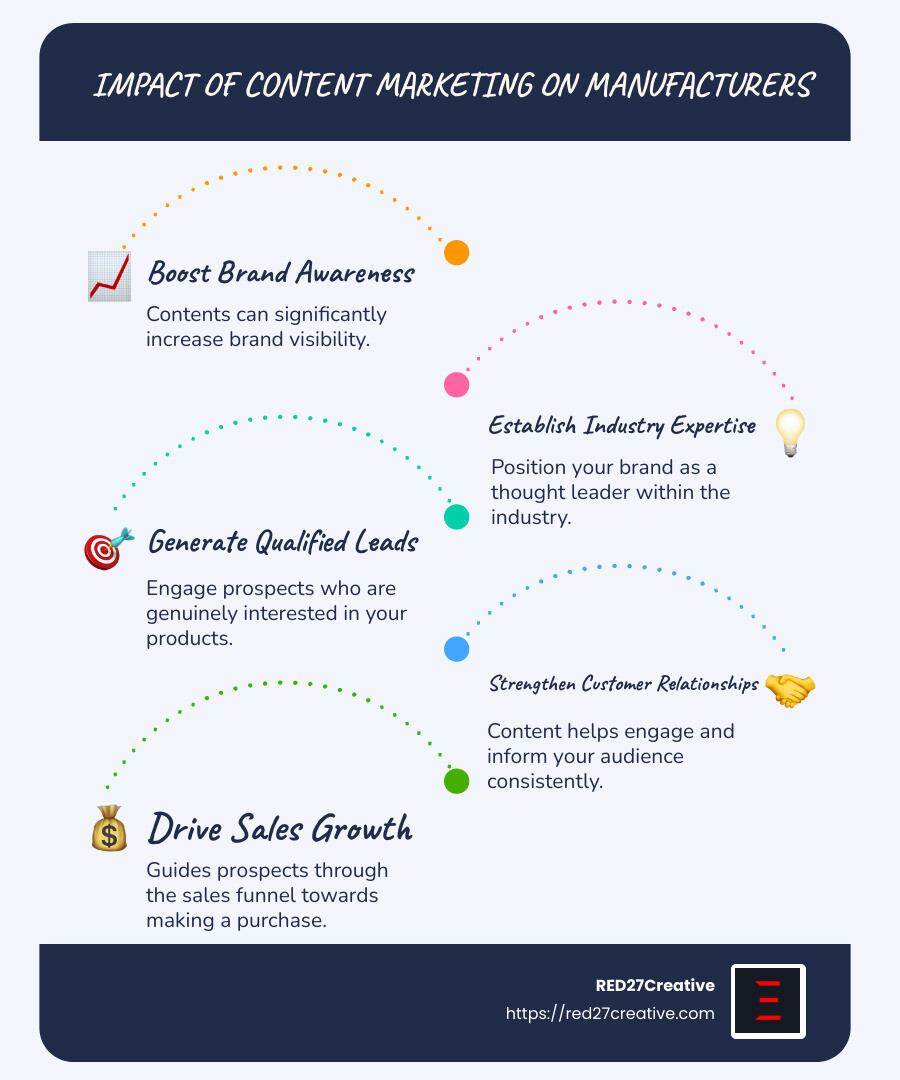
Content marketing for manufacturers is increasingly vital in today’s digital world, especially for those in the B2B space eager to stay competitive. Here’s why it’s essential:
- Boost Brand Awareness: Helps put your brand on the map.
- Establish Industry Expertise: Positions you as a thought leader.
- Generate Qualified Leads: Attracts prospects who are genuinely interested.
- Strengthen Customer Relationships: Engages and informs your audience.
- Drive Sales Growth: Guides prospects toward making a purchase.
However, manufacturers face unique challenges:
- Complex products: Translating technical details into simple content.
- Long sales cycles: Requires consistent engagement over time.
- Diverse audience needs: Catering to both technical and non-technical stakeholders.
I’m Kiel Tredrea, with over two decades of experience in brand positioning and digital marketing, including Content marketing for manufacturers. My approach integrates clear strategies that improve B2B visibility and facilitate measurable growth.
Why Content Marketing is Essential for Manufacturers
In the manufacturing sector, content marketing is not just a buzzword—it’s a game-changer. Let’s break down why it’s crucial for manufacturers aiming for success.
Boost Brand Awareness
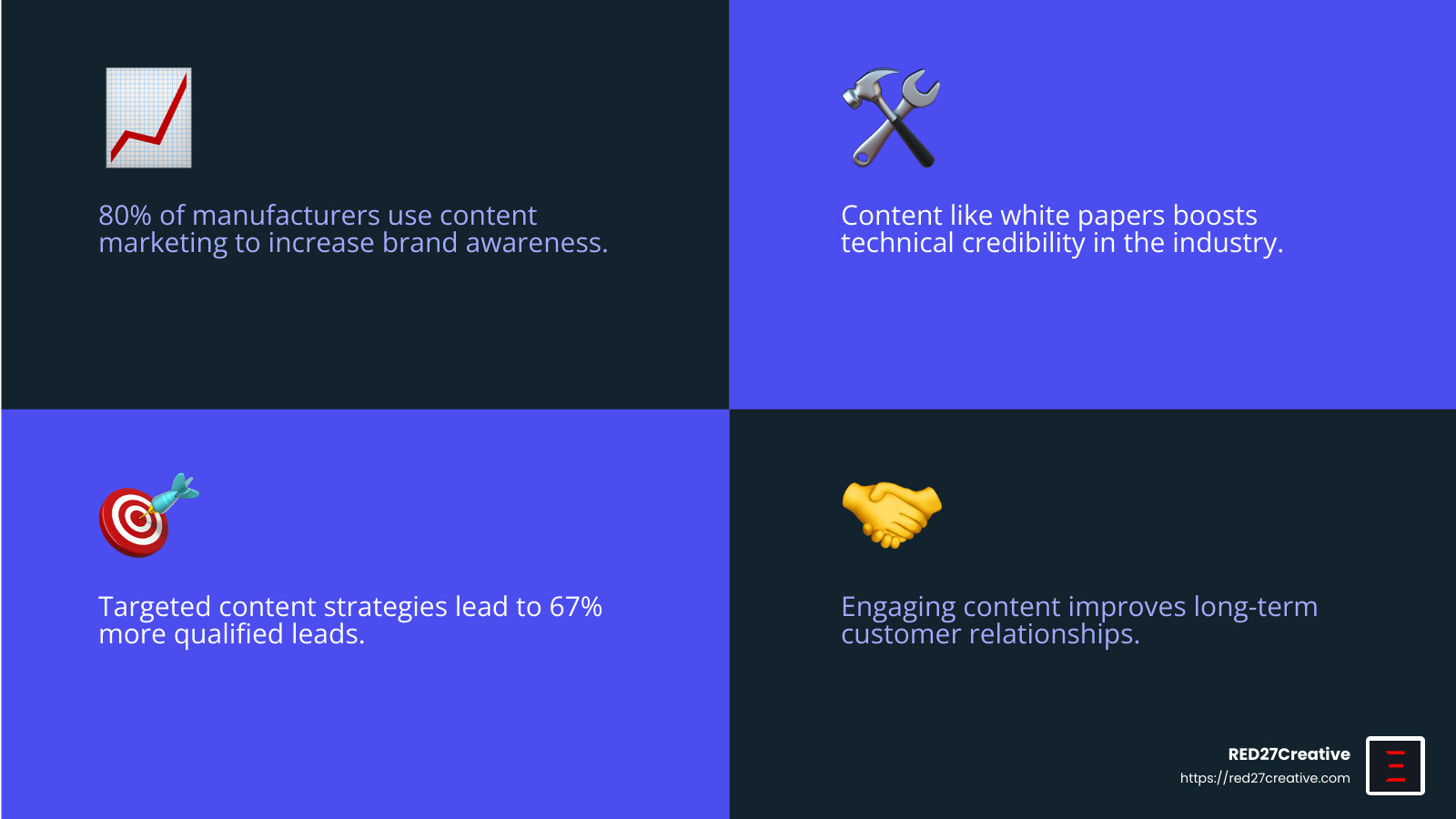
In a crowded market, standing out is everything. Content marketing for manufacturers lifts your brand’s visibility. By sharing insightful and relevant content, you position your company as a go-to resource. This increased visibility helps potential clients recognize your brand and remember it when making purchasing decisions.
Establish Industry Expertise
Manufacturers thrive on technical prowess. By creating content like white papers and case studies, you showcase your expertise. This positions your brand as a thought leader in the industry, building trust and credibility with your audience.
Generate Qualified Leads
Not all leads are created equal. Content marketing helps attract the right audience—those genuinely interested in your products or services. By targeting specific industry pain points and providing solutions, you pull in leads that are more likely to convert into customers.
Strengthen Customer Relationships
Content isn’t just for attracting new customers; it’s also vital for keeping existing ones engaged. Regular, valuable content nurtures relationships, turning customers into loyal advocates. They come to rely on your insights, deepening their connection to your brand.
Drive Sales Growth
The goal is to boost sales. Content that addresses customer needs and pain points guides them toward making a purchase. It’s about showing them how your product is the solution they’ve been searching for. This trust-building journey transforms readers into buyers, leading to increased revenue.
In summary, content marketing for manufacturers is essential for building brand awareness, establishing expertise, generating leads, nurturing relationships, and driving sales. It’s a comprehensive strategy that aligns perfectly with the needs of the B2B manufacturing world.
Types of Content Marketing for Manufacturers
When it comes to content marketing for manufacturers, variety is key. Different types of content serve different purposes and audiences. Let’s explore some of the most effective types of content you can leverage.
White Papers
White papers are in-depth reports that dig into complex industry topics. They showcase your expertise and position your company as a thought leader. For example, a white paper on how robotics can improve manufacturing efficiency can attract partners interested in advanced solutions.
Infographics
Infographics simplify complex data into visually appealing graphics. They are perfect for illustrating processes like the product lifecycle, from raw materials to distribution. This not only improves understanding but also highlights your company’s attention to detail and efficiency.
Blog Posts
Blog posts are a versatile tool for sharing insights and expertise. A series on sustainable manufacturing practices can position your brand as a leader in eco-friendly innovation. Blogs engage readers interested in green initiatives and showcase your commitment to sustainability.
Social Media
Social media platforms offer a dynamic way to connect with your audience. Share behind-the-scenes glimpses of your factory or product creation process. This approach humanizes your brand and boosts transparency, engaging followers with a real-time look at your operations.
Email Marketing
Email marketing keeps your audience informed and engaged. Regular newsletters can update subscribers on industry trends, new technologies, or company news. This fosters a sense of community and keeps your brand top of mind.
Video Marketing
Videos are an engaging way to showcase your expertise and products. Create instructional videos explaining manufacturing techniques or product demos. This visual content demystifies complex processes and improves customer understanding.
Case Studies
Case studies demonstrate your company’s expertise and real-world impact. Highlight successful projects or partnerships, focusing on challenges faced and results achieved. These stories build credibility and trust with potential clients.
Webinars
Webinars provide an interactive platform for sharing knowledge. Host sessions on advanced production technologies or supply chain management. Webinars position your company as a thought leader while engaging a broader audience interested in manufacturing developments.
By integrating these diverse content types, manufacturers can effectively communicate their expertise, engage their audience, and drive business growth. Next, let’s dig into how to develop a robust content marketing strategy.
Developing a Content Marketing Strategy
Creating a successful content marketing for manufacturers strategy involves several key steps. Let’s break them down.
Audience Understanding
First, know your audience. Manufacturers often deal with a B2B market, so understanding your buyers’ needs and pain points is crucial. Talk to your sales team, analyze customer feedback, and conduct market research. These insights help tailor your content to address specific challenges and interests.
Content Creation
Next, focus on creating valuable content that speaks directly to your audience. Whether it’s a blog post, a white paper, or a video, ensure the content is informative and engaging. Simplify technical jargon to make it accessible. Highlight how your products solve real-world problems. This approach builds trust and positions your brand as a solution provider.
SEO Optimization
SEO is essential for making your content visible. Use relevant keywords that your audience searches for. Optimize titles, meta descriptions, and images. A strong SEO strategy helps your content rank higher in search results, attracting more organic traffic. Visibility leads to more leads and sales.
Content Distribution
Once your content is ready, distribute it through the right channels. LinkedIn is ideal for B2B engagement, while your company website serves as a content hub. Use email newsletters to keep your audience updated. Consider YouTube for video content and industry forums for niche discussions. Choosing the right platforms ensures your content reaches the intended audience.
Performance Tracking
Finally, track your content’s performance. Use analytics to measure website traffic, engagement, and conversion rates. This data reveals what’s working and what needs improvement. Regularly reviewing these metrics helps refine your strategy and maximize growth.
By understanding your audience, creating relevant content, optimizing for SEO, distributing through the right channels, and tracking performance, you can develop a robust content marketing strategy that drives success in the manufacturing industry.
Next, let’s explore best practices for content marketing in the manufacturing sector.
Content Marketing for Manufacturers: Best Practices
To master content marketing for manufacturers, follow these best practices: conduct market research, leverage technical expertise, maintain consistency, integrate digitally, and automate content processes.
Market Research
Start with thorough market research. Understand your industry’s trends and your competitors’ strategies. This knowledge helps you identify gaps and opportunities. Use tools like SparkToro to gain insights into where your audience spends time online. Knowing your audience’s behavior lets you tailor content that resonates and engages.
Technical Expertise
Manufacturers have a wealth of technical knowledge. Use this to your advantage by creating content that showcases your expertise. Write detailed case studies about successful projects, or produce infographics that simplify complex data. This not only establishes your brand as an industry leader but also builds trust with potential clients.
Consistency
Consistency is key in content marketing. Develop a content calendar to plan your posts. Regular updates keep your audience engaged and your brand top-of-mind. Whether it’s weekly blog posts or monthly newsletters, a consistent schedule helps maintain audience interest and fosters loyalty.
Digital Integration
Integrate your content marketing efforts across digital platforms. Your website should be the central hub, but don’t stop there. Use social media to share behind-the-scenes looks at your manufacturing process. Email marketing keeps your audience informed about new developments. This multi-channel approach ensures your message reaches a wider audience.
Content Automation
Automation tools can streamline your content marketing. Use platforms like HubSpot for scheduling posts and tracking engagement metrics. Automating repetitive tasks frees up time for creative and strategic activities. This efficiency allows you to focus on producing high-quality content that drives results.
By implementing these best practices, manufacturers can improve their content marketing efforts, leading to increased brand visibility, stronger customer relationships, and ultimately, business growth.
Next, we’ll address some frequently asked questions about content marketing for manufacturers.
Frequently Asked Questions about Content Marketing for Manufacturers
What are the 5 P’s of content marketing?
When it comes to content marketing for manufacturers, the 5 P’s play a crucial role:
-
Product: Showcase your products through detailed content like blogs, videos, or case studies. Highlight unique features and real-world applications to attract potential buyers.
-
Price: Be transparent about pricing. Use content like infographics or comparison charts to explain the value and cost-effectiveness of your products.
-
Promotion: Promote your content through various channels such as social media, email newsletters, and online ads. This helps to reach a broader audience and drive traffic to your website.
-
Place: Ensure your content is accessible where your audience is. This includes your website, industry forums, and social media platforms like LinkedIn.
-
People: Tailor your content to the needs of your target audience. Understand their pain points and create content that provides solutions, building trust and credibility.
How can manufacturers effectively use content marketing?
Manufacturers can use content marketing effectively by integrating several strategies:
-
Advertising: Use paid ads to promote your high-value content, such as white papers or webinars, to reach a targeted audience quickly.
-
Public Relations: Leverage PR to share success stories and company news. This can help build a positive brand image and industry leadership.
-
Direct Marketing: Send personalized content through emails to nurture leads and maintain relationships with existing customers.
-
Online Marketing: Focus on SEO to improve your website’s visibility. Create keyword-rich blog posts and optimize your site to attract organic traffic.
What are the benefits of content marketing for manufacturers?
Content marketing for manufacturers offers several key benefits:
-
Brand Awareness: Consistent and valuable content helps increase visibility and keeps your brand in the minds of potential customers.
-
Industry Leadership: By sharing insights and expertise, you position your brand as a leader in your field, which can attract more business opportunities.
-
Lead Generation: High-quality content can attract potential customers and convert them into leads. Case studies and webinars are excellent tools for this purpose.
These strategies and benefits underscore the importance of a well-rounded content marketing approach, helping manufacturers to thrive in a competitive market.
Conclusion
In the changing landscape of manufacturing, standing out is more crucial than ever. At RED27Creative, we understand the unique challenges manufacturers face in today’s digital world. Our comprehensive suite of services is designed to lift your brand and scale your business, ensuring you remain at the forefront of the industry.
Growth and Online Presence
Our approach is simple yet effective. By integrating content marketing strategies custom specifically for manufacturers, we help you build a robust online presence. This isn’t just about being seen; it’s about being remembered. We focus on creating content that resonates with your audience, turning potential leads into loyal customers.
Comprehensive Services
With expertise in SEO, lead generation, and visual media, our team crafts strategies that drive real results. Whether it’s through engaging blog posts, informative webinars, or captivating video content, we ensure your message reaches the right audience. Our focus on digital integration and content automation means your marketing efforts are consistent and effective, freeing you to focus on what you do best.
Partnering for Success
Choosing RED27Creative means choosing a partner committed to your success. We work closely with you to understand your goals and tailor our services to meet your specific needs. From Geneva to Chicago, our presence across key locations ensures we’re always within reach, ready to support your growth.
When content is king, let us help you wear the crown. Explore our services and find how we can transform your content marketing strategy today.

Kiel Tredrea
https://red27creative.comTop Marketing Agency • Web, SEO & Leads • RED27Creative