The Manufacturer’s Guide to B2B Marketing

Navigating B2B Marketing in a Digital-First World
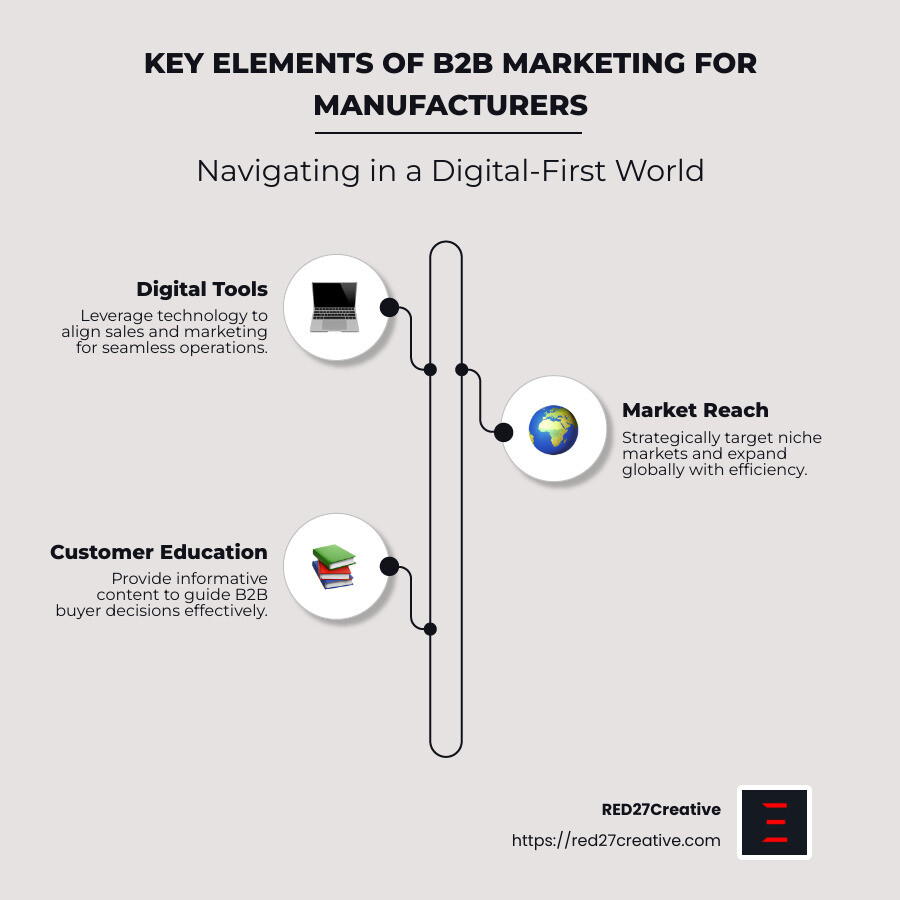
B2B marketing for manufacturers is about adapting strategies to excel in the digital-first world. Here’s a quick summary of its essentials:
- Digital Tools: Use technology to align sales and marketing teams.
- Market Reach: Target niche markets and expand globally with limited resources.
- Customer Education: Provide informative content to guide B2B buyer decisions.
In today’s digital environment, manufacturing companies are challenged to stand out and build long-term B2B relationships. Using digital marketing strategies is key to overcoming these challenges. It’s no longer just about showcasing products but about educating, engaging, and leading with value to reach decision-makers effectively.
I’m Kiel Tredrea, a strategic marketing leader with over 20 years of experience in B2B marketing for manufacturers. My journey in brand positioning and web development has empowered businesses to leverage B2B marketing for manufacturers to achieve growth and establish a dominant presence in the industry.
Understanding B2B Marketing for Manufacturers
B2B marketing for manufacturers is a unique landscape. Unlike B2C, it focuses on building relationships between businesses. This section explores how manufacturers can differentiate themselves and adopt a customer-first approach to succeed.
B2B Manufacturing: A Complex Landscape
Manufacturers in the B2B sector often deal with intricate products and long sales cycles. Products like machinery or components aren’t bought on impulse. Instead, they’re carefully evaluated by multiple stakeholders. This complexity requires a marketing approach that emphasizes precision and technical expertise.
For example, an industrial robot manufacturer must create marketing materials that detail how their robots function, integrate with production lines, and deliver ROI. This information must be clear and accessible to different stakeholders, like engineers, procurement teams, and executives.
Differentiation: Standing Out in a Crowded Market
In a competitive industry, differentiation is vital. It’s not just about having the best products but also about what makes your company unique. Differentiation can be achieved through:
- Vertical Differentiation: Competing on measurable factors like price and quality.
- Horizontal Differentiation: Catering to personal preferences and tastes.
- Mixed Differentiation: Combining objective factors with subjective preferences.
For instance, a customer may choose a supplier not just for their competitive pricing but also because they offer custom solutions that align with the customer’s unique needs.
Adopting a Customer-First Approach
Modern B2B marketing shifts the focus from products to customers. Understanding your customers’ needs and pain points is crucial. Developing detailed buyer personas helps tailor marketing messages to address these needs.
A customer-centric approach involves:
- Engaging Content: Providing valuable content like whitepapers, case studies, and webinars that educate and inform.
- Feedback Mechanisms: Actively seeking customer feedback to improve products and services.
- Custom Messaging: Customizing messages to highlight how your products solve specific customer problems.
A well-known example is a company using feedback to improve their CNC machines’ software compatibility, addressing a common customer concern and improving satisfaction.
By focusing on differentiation and adopting a customer-first strategy, manufacturers can build stronger relationships and stand out in the B2B market. This approach not only attracts new clients but also fosters loyalty and long-term partnerships.
Next, we’ll explore key strategies for effective B2B marketing, including market research, SEO, and content marketing.
Key Strategies for Effective B2B Marketing
In the changing world of B2B marketing for manufacturers, several key strategies can help you stand out and drive growth. Let’s explore these strategies, including market research, SEO, content marketing, social media, and video production.
Market Research: Your Foundation for Success
Market research is the backbone of any successful marketing strategy. It helps you understand your target audience, their needs, and how your products can meet those needs. By gathering insights about your competitors and industry trends, you can position your brand effectively.
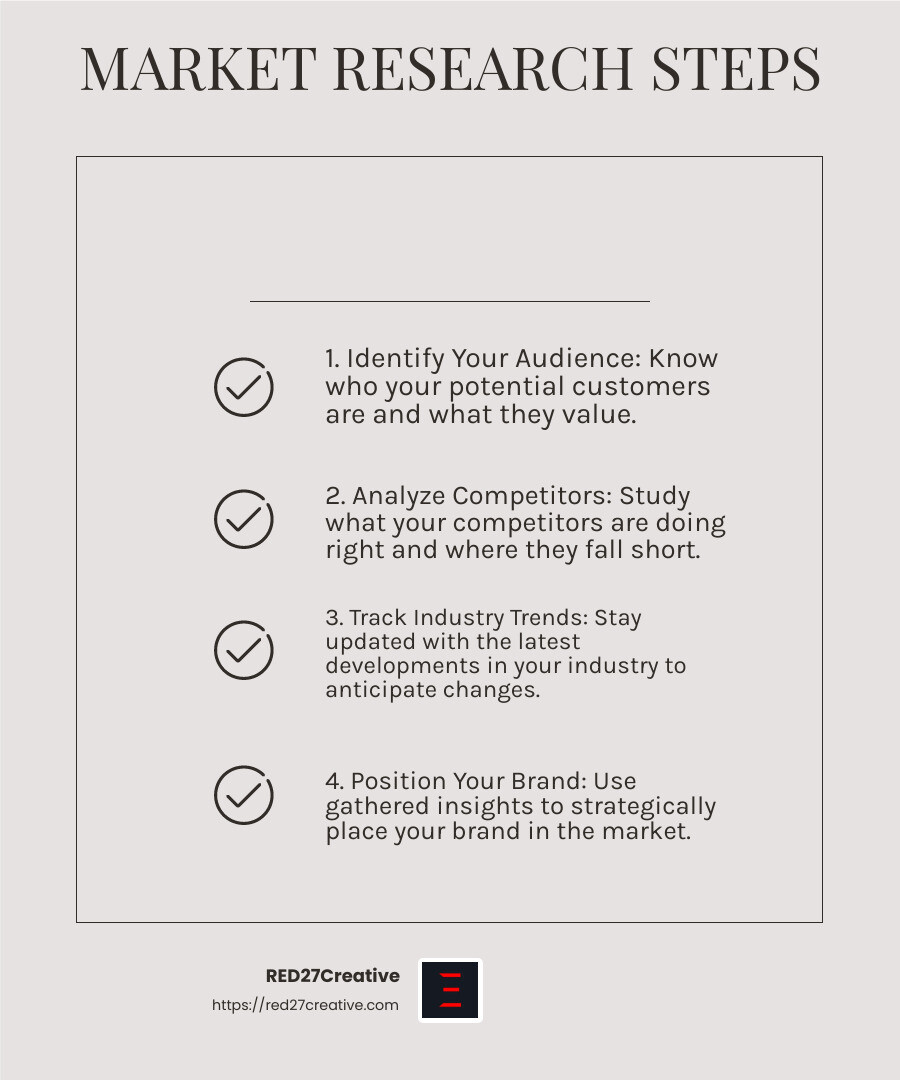
Steps for Effective Market Research:
- Identify Your Audience: Know who your potential customers are and what they value.
- Analyze Competitors: Study what your competitors are doing right and where they fall short.
- Track Industry Trends: Stay updated with the latest developments in your industry to anticipate changes.
SEO: Boosting Your Online Visibility
Search Engine Optimization (SEO) is crucial for increasing your website’s visibility on search engines. With 12% of product searches starting on search engines, not investing in SEO means missing out on potential customers.
SEO Essentials:
- Keyword Research: Identify the terms your audience is searching for and incorporate them naturally into your content.
- On-Page SEO: Optimize your website’s structure, meta tags, and content for better search engine ranking.
- Technical SEO: Ensure your website loads quickly and is mobile-friendly to improve user experience and search rankings.
Content Marketing: Educate and Engage
Content marketing is about creating valuable content that attracts and retains your target audience. This could be in the form of blog posts, whitepapers, eBooks, and more.
Content Marketing Tips:
- Create Valuable Content: Focus on industry trends, customer pain points, and solutions your products offer.
- Use a Variety of Formats: Mix blog posts, videos, and infographics to keep your audience engaged.
- Consistent Publishing: Regularly update your content to keep it fresh and relevant.
Social Media: Building Connections
Social media platforms like LinkedIn, Facebook, and Instagram are powerful tools for connecting with your audience. They allow you to share content, engage with customers, and build brand awareness.
Social Media Best Practices:
- Platform Selection: Choose platforms where your audience is most active.
- Engage Regularly: Respond to comments and messages to build relationships.
- Content Balance: Follow the 80/20 rule—80% informative content, 20% promotional.
Video Production: Captivating Your Audience
Video marketing is a must-do for B2B companies. Videos are engaging and can explain complex products simply and effectively. According to HubSpot, marketers using video see 49% faster revenue growth than those who don’t.
Video Marketing Ideas:
- Product Demos: Showcase how your products work and their benefits.
- Customer Testimonials: Share success stories to build trust.
- Behind-the-Scenes: Offer a glimpse into your manufacturing process to humanize your brand.
By implementing these strategies, manufacturers can effectively reach and engage their target audience, driving growth and establishing a strong market presence. Next, we’ll explore how to build a strong digital presence through website optimization and user experience.
Building a Strong Digital Presence
In today’s digital-first world, having a robust online presence is essential for manufacturers. Your website is not just a digital business card—it’s a powerful tool that can make or break potential partnerships. Let’s explore how website optimization, user experience, and Growth Driven Design (GDD) can lift your B2B marketing for manufacturers.
Website Optimization: The Foundation of Digital Success
Your website’s performance directly impacts your business’s credibility and visibility. A well-optimized website ensures that visitors can find what they need quickly and efficiently.
Key Optimization Strategies:
- Speed Matters: Ensure your website loads quickly. Slow load times can drive potential customers away.
- Mobile-Friendly Design: With over 90% of global internet users accessing the web via mobile, your site must be responsive and easy to steer on any device.
- Clear CTAs: Use call-to-action buttons that encourage visitors to take the next step, like requesting a quote or downloading a resource.
User Experience: Putting Customers First
A positive user experience (UX) is about more than just aesthetics. It’s about creating a seamless journey for your visitors.
UX Best Practices:
- Intuitive Navigation: Make it easy for users to find information. Use clear menus and search functions.
- Engaging Content: Provide valuable content that addresses your audience’s needs. This builds trust and keeps visitors engaged.
- Accessibility: Ensure your site is accessible to everyone, including those with disabilities, by following web accessibility guidelines.
Growth Driven Design: Continuous Improvement
Growth Driven Design (GDD) is a dynamic approach to web design that focuses on continuous learning and improvement. Instead of a one-time overhaul, GDD involves ongoing updates based on real user data.
GDD Principles:
- Launch Quickly: Get a functional site up and running, then improve it over time.
- Data-Driven Decisions: Use analytics to understand user behavior and make informed changes.
- Iterative Improvements: Regularly test and tweak your site to improve user experience and conversion rates.
For example, by monitoring the percentage of visitors who complete a desired action—like signing up for a newsletter—you can assess the effectiveness of your calls-to-action and adjust accordingly.
By focusing on these elements, manufacturers can create a digital presence that not only attracts potential clients but also converts them into loyal partners. Up next, we’ll explore how leveraging content marketing can drive growth and strengthen your B2B marketing strategy.
Leveraging Content Marketing for Growth
In B2B marketing for manufacturers, content is king. It’s not just about producing content; it’s about creating value that resonates with your audience. Let’s explore how inbound marketing, valuable content, and understanding the buyer’s journey can propel your business forward.
Inbound Marketing: Attracting the Right Audience
Inbound marketing is all about drawing customers to you. Instead of pushing out messages, you create content that naturally attracts potential clients. This approach is particularly effective for manufacturers, where decision-makers often research extensively before making a purchase.
Key Inbound Strategies:
- SEO-Optimized Content: Use keywords that your target audience is searching for. This increases your visibility on search engines and draws in organic traffic.
- Educational Resources: Offer guides, whitepapers, and webinars that provide real value. This positions your company as an industry expert and builds trust with potential clients.
Valuable Content: Meeting Audience Needs
Creating content that speaks directly to the needs and challenges of your audience is crucial. According to Forrester Research, 68% of B2B buyers prefer suppliers who provide helpful content.
Types of Valuable Content:
- Blog Posts: Address industry trends and common challenges. This helps establish your brand as a thought leader.
- Case Studies: Showcase real-world applications of your products. This provides social proof and demonstrates your expertise.
- Videos: Use video content to explain complex processes or showcase your manufacturing capabilities.
The Buyer’s Journey: Custom Content for Every Stage
Every potential client goes through a journey—from awareness to consideration to decision. Tailoring your content to each stage ensures you address their specific needs at the right time.
Stages of the Buyer’s Journey:
-
Awareness: At this stage, buyers are identifying a problem. Create content that educates them about industry challenges and trends.
-
Consideration: Here, buyers are evaluating options. Provide content that explores different solutions and how your products stand out.
-
Decision: Finally, buyers are ready to make a choice. Offer detailed case studies, testimonials, and product comparisons to help them decide confidently.
By aligning your content marketing strategy with the buyer’s journey, you not only attract potential clients but also nurture them into loyal partners. Up next, we’ll address common questions about B2B marketing for manufacturers to further improve your strategy.
Frequently Asked Questions about B2B Marketing for Manufacturers
What are the 4 types of B2B marketing?
Producers, resellers, governments, institutions
What are the 4 C’s of B2B marketing?
Customer Wants and Needs, Cost Convenience, Communication
What are the 7 P’s of B2B marketing?
Product, Price, Place, Promotion, People, Process, Physical Evidence
Frequently Asked Questions about B2B Marketing for Manufacturers
What are the 4 types of B2B marketing?
1. Producers: These are businesses that create products or services used by other companies. In the manufacturing sector, producers often supply essential components or raw materials. For instance, a company like Intel supplies processors to computer manufacturers.
2. Resellers: These businesses purchase products to sell them to other companies. Resellers in the B2B space might include wholesalers or distributors who buy goods in bulk and sell them to retailers or end-users.
3. Governments: Government agencies often engage in B2B transactions by purchasing goods and services from manufacturers for public projects. This can include anything from office supplies to large infrastructure components.
4. Institutions: These include non-profit organizations, educational institutions, and hospitals that require specific products or services. Manufacturers might supply these entities with specialized equipment or materials.
What are the 4 C’s of B2B marketing?
1. Customer Wants and Needs: B2B marketing is centered around understanding and meeting the specific needs of your business clients. This involves tailoring products and services to solve their unique challenges.
2. Cost: In B2B transactions, cost goes beyond just the price. It includes the total cost of ownership, which encompasses maintenance, operational costs, and any potential downtime.
3. Convenience: Businesses value convenience in the purchasing process. This means providing easy access to information, straightforward procurement processes, and reliable delivery schedules.
4. Communication: Effective communication is crucial in B2B marketing. It involves not only conveying product benefits but also listening to client feedback and maintaining a transparent relationship.
What are the 7 P’s of B2B marketing?
1. Product: In B2B marketing, products are often complex and require detailed explanations. It’s essential to highlight features, benefits, and how they meet industry standards.
2. Price: Pricing strategies in B2B can include discounts for bulk purchases or long-term contracts. It’s important to consider how pricing aligns with the value delivered to the client.
3. Place: This refers to the distribution channels used to deliver products to customers. Efficient logistics and supply chain management are vital in B2B markets.
4. Promotion: B2B promotion involves targeted advertising, trade shows, and digital marketing strategies to reach decision-makers within businesses.
5. People: Building strong relationships with clients is key. This includes having knowledgeable sales teams and providing excellent customer service.
6. Process: The processes involved in delivering your product or service should be efficient and transparent. This includes everything from order processing to after-sales support.
7. Physical Evidence: In B2B marketing, physical evidence can include case studies, testimonials, and product demonstrations that showcase your expertise and reliability.
By understanding these fundamental elements of B2B marketing for manufacturers, businesses can create strategies that effectively target their ideal customers and drive growth.
Conclusion
In the changing landscape of B2B marketing for manufacturers, adopting a growth-driven strategy is not just beneficial—it’s essential. At RED27Creative, we specialize in crafting comprehensive marketing solutions that lift brands and drive business growth.
Our Growth-Driven Strategy
Our approach is all about aligning marketing efforts with your business goals. We focus on creating a robust digital presence that attracts and retains the right customers. By leveraging cutting-edge SEO techniques, engaging content, and dynamic web design, we ensure your brand stands out in a crowded market.
Comprehensive Services
Our suite of services is designed to cover every aspect of your marketing needs. From lead generation to visual media, we offer solutions that are custom to your business. Our team is dedicated to enhancing your online presence, ensuring that your brand is not only visible but also impactful.
Why Choose RED27Creative?
-
Custom Solutions: We understand that every business is unique. Our strategies are customized to meet your specific needs and objectives.
-
Expertise and Experience: With a team of seasoned professionals, we bring a wealth of knowledge and experience to the table, ensuring your marketing efforts are in capable hands.
-
Results-Driven Approach: Our focus is on delivering measurable results. We use data-driven insights to refine our strategies and maximize your ROI.
In conclusion, partnering with RED27Creative means more than just improving your marketing—it means setting your business on a path to sustained growth. Ready to boost your website traffic and improve your digital presence? Explore our services and see how we can help you achieve your business goals.
Frequently Asked Questions
What is a growth-driven strategy in B2B marketing?
A growth-driven strategy focuses on continuous improvement and real-time data analysis to optimize marketing efforts. It involves adapting to market changes and customer feedback to improve business growth.
How can RED27Creative help my manufacturing business?
We provide custom marketing solutions that improve your brand’s digital presence. Our services include SEO, content marketing, and web design, all aimed at driving traffic and increasing conversions.
Why is a comprehensive service package important for manufacturers?
A comprehensive service package ensures all aspects of your marketing are aligned and working together to achieve your business goals. It streamlines efforts and maximizes the impact of your marketing strategy.

Kiel Tredrea
https://red27creative.comTop Marketing Agency • Web, SEO & Leads • RED27Creative