Unlock Your Brand’s Potential by Building a Winning Social Media Strategy

Why Your Business Needs a Strategic Approach to Social Media Success
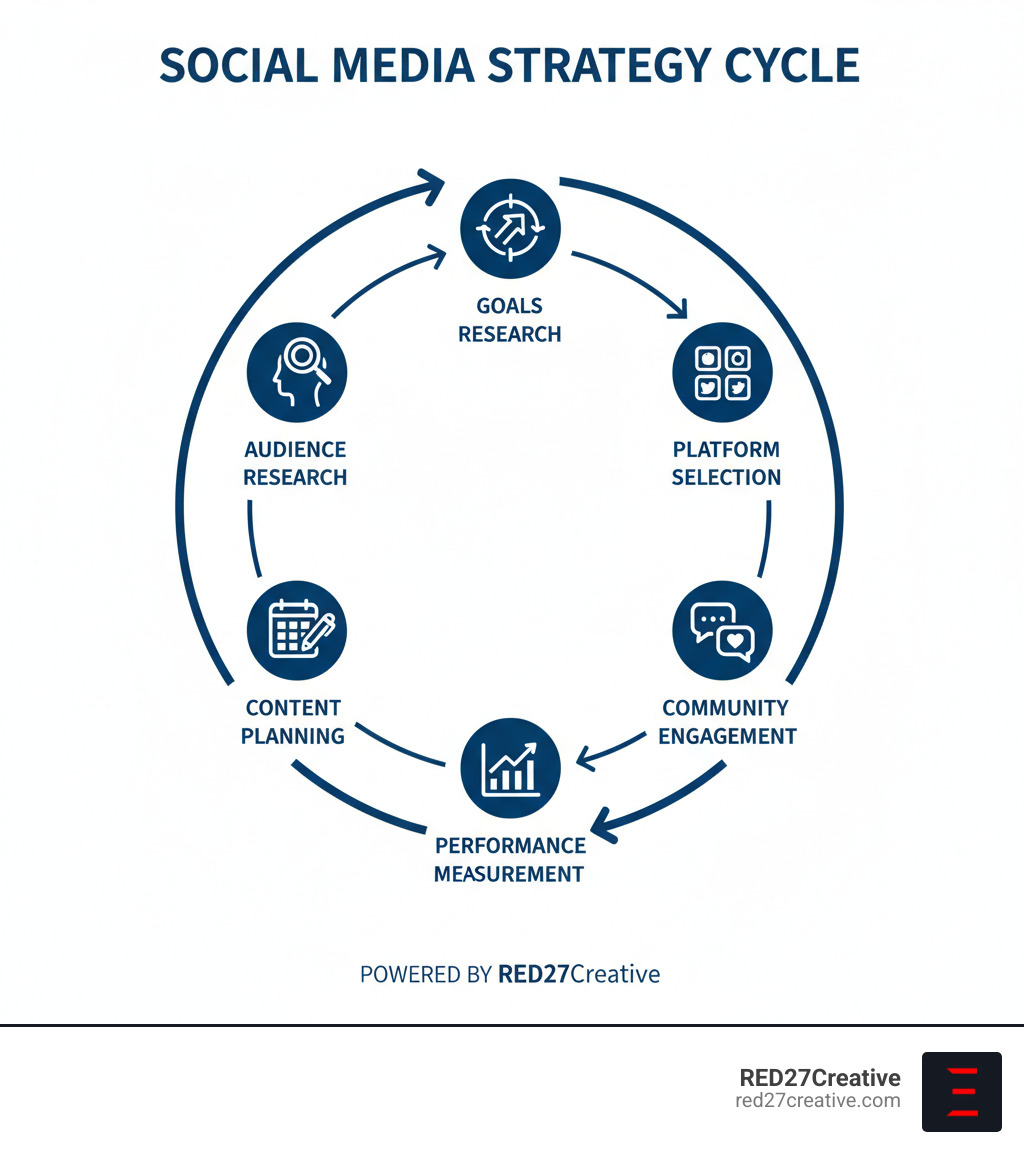
A Social media strategy is a comprehensive plan that outlines how your business will use social platforms to achieve specific marketing and business objectives. Here’s what an effective social media strategy includes:
Core Components:
- Clear Goals – Brand awareness, lead generation, conversions, community building
- Target Audience Definition – Demographics, behaviors, pain points, platform preferences
- Platform Selection – Choosing the right channels where your audience is active
- Content Strategy – Planning valuable, engaging content that drives action
- Performance Measurement – Tracking KPIs and ROI to optimize results
- Community Engagement – Building relationships and fostering brand loyalty
The digital landscape has fundamentally shifted how businesses connect with customers. 78% of consumers agree that a brand’s social media presence has a larger impact on whether or not they trust that brand – and that number jumps to 88% for Gen Z.
Meanwhile, 46% of Gen Z prefers searching on social instead of traditional search engines, making social platforms critical for product findy. With 81% of consumers using social media to shop around for their next purchase, having a strategic approach isn’t optional anymore – it’s essential for survival.
Without a clear strategy, you’re essentially posting content into the void, hoping something sticks.
The stakes are higher than ever. 68% of marketers in 2024 expressed ROI worries, yet businesses with structured social media strategies consistently outperform those winging it. The difference lies in having a systematic approach that aligns every post, comment, and campaign with measurable business outcomes.
I’m Kiel Tredrea, founder of RED27Creative, and I’ve spent over 20 years helping B2B companies develop high-impact social media strategy frameworks that drive measurable revenue growth. Our integrated approach combines strategic planning with conversion optimization to ensure your social media efforts directly contribute to your bottom line.
Why a Social Media Strategy is Essential for Business Success in 2025
Let me tell you something that might surprise you: your social media presence is now more powerful than your website when it comes to earning customer trust.
In 2025, having a well-defined social media strategy isn’t just another marketing task on your to-do list—it’s become the foundation of how successful businesses connect with their customers. The digital world has completely transformed, and businesses that understand this shift are the ones thriving.
Building authentic trust has never been more important. When 78% of consumers say a brand’s social media presence impacts whether they trust that brand, we’re talking about a fundamental change in how business relationships are built. Your social media isn’t just advertising anymore—it’s your storefront, your customer service desk, and your brand personality all rolled into one.
What’s really fascinating is how consumer behavior has shifted in ways many businesses haven’t caught up with yet. Today, 81% of consumers use social media to shop around for their next purchase. Think about that for a moment. Your potential customers are already on social platforms, researching, comparing, and making buying decisions. If you’re not part of that conversation, you’re missing out on sales.
Here’s where it gets even more interesting. The rise of social search is reshaping how people find information entirely. While we used to think of Google as the go-to search engine, 25% of American adults now use social media as their primary search channel. And if you’re trying to reach younger customers? 46% of Gen Z prefers searching on social platforms over traditional search engines.
This shift means your social media strategy needs to think beyond just posting pretty pictures. Your content needs to be findable, helpful, and optimized for how people actually search on these platforms. When someone searches for your type of service on Instagram or TikTok, your business should show up.
The businesses winning in 2025 understand that social media success isn’t accidental. It requires a strategic approach that connects every post, every interaction, and every campaign back to real business goals. Our Lead Generation Social Media services help businesses turn this social media activity into measurable growth.
Without a clear strategy, you’re essentially throwing content at the wall and hoping something sticks. But with the right approach, your social media becomes a powerful engine that builds trust, drives findy, and ultimately grows your business.
How to Build a Powerful Social Media Strategy in 7 Steps
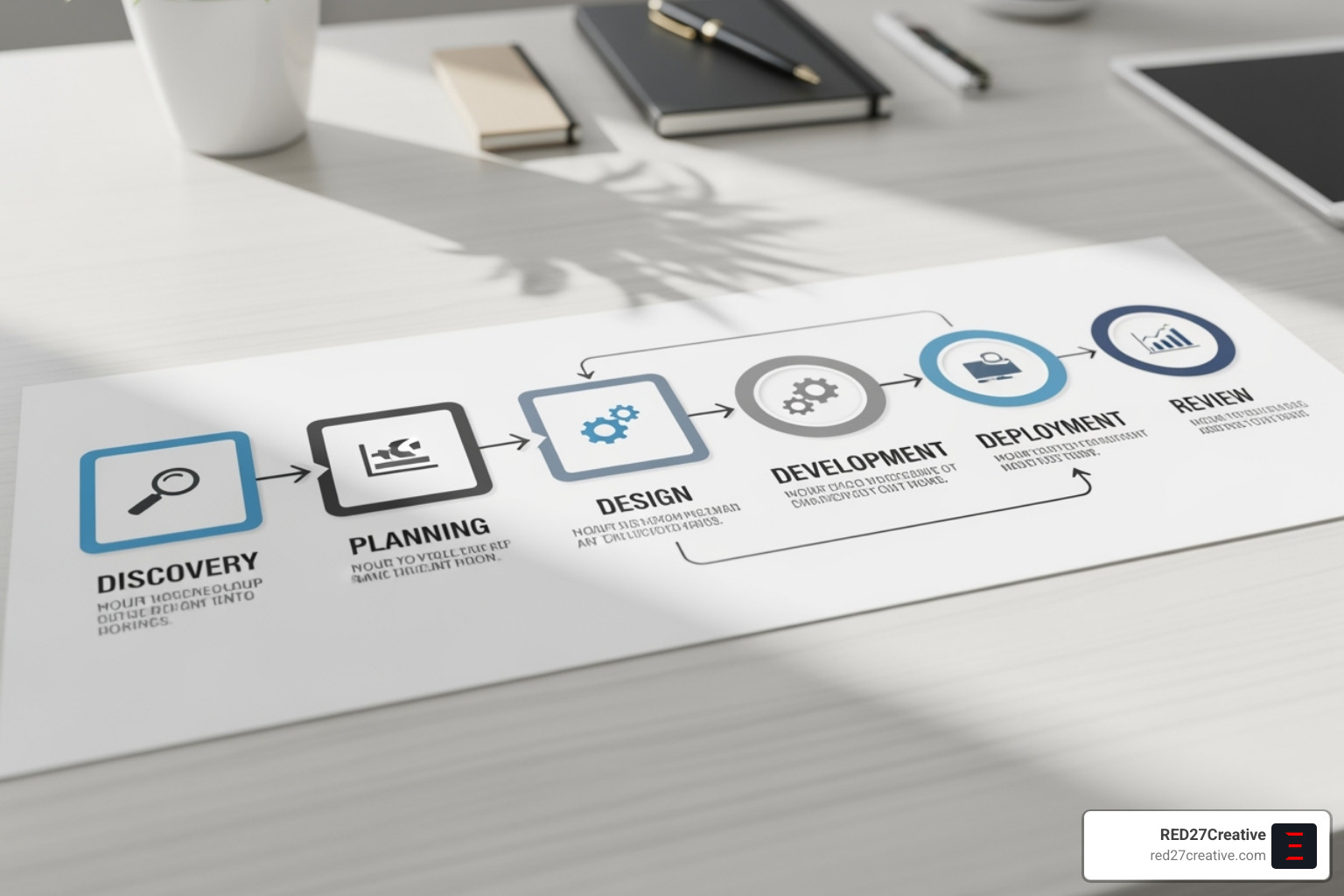
Creating a powerful social media strategy doesn’t have to feel overwhelming. Think of it like building a house – you need a solid foundation, a clear blueprint, and the right tools. These seven core elements form an actionable framework that transforms scattered social media efforts into a cohesive system designed to drive real business results.
Step 1: Set Clear, Measurable, and Achievable Goals
Every successful social media strategy starts with knowing exactly where you’re headed. Without clear goals, you’re essentially throwing content at the wall and hoping something sticks – not exactly a recipe for success.
Your social media goals should follow the SMART framework: Specific, Measurable, Achievable, Relevant, and Time-bound. This isn’t just marketing jargon – it’s what separates businesses that see real results from those that wonder why their social media “isn’t working.”
The most effective social media goals typically focus on brand awareness (a priority for 79% of marketers), lead generation, conversions (driving purchases or sign-ups), and community engagement. Interestingly, 69% of marketers prioritize conversion rate or click-throughs for ROI, which makes sense when you consider the bottom-line impact.
Here’s what makes goals truly powerful: they must connect directly to your business objectives. If your company aims to increase revenue, your social media goal might be to drive 30% more qualified leads through social channels. This alignment ensures every post and campaign contributes to something meaningful.
Step 2: Deeply Understand and Define Your Target Audience
You can’t have a meaningful conversation with someone you don’t know. The same principle applies to social media – understanding your audience isn’t just helpful, it’s absolutely essential for creating content that resonates and drives action.
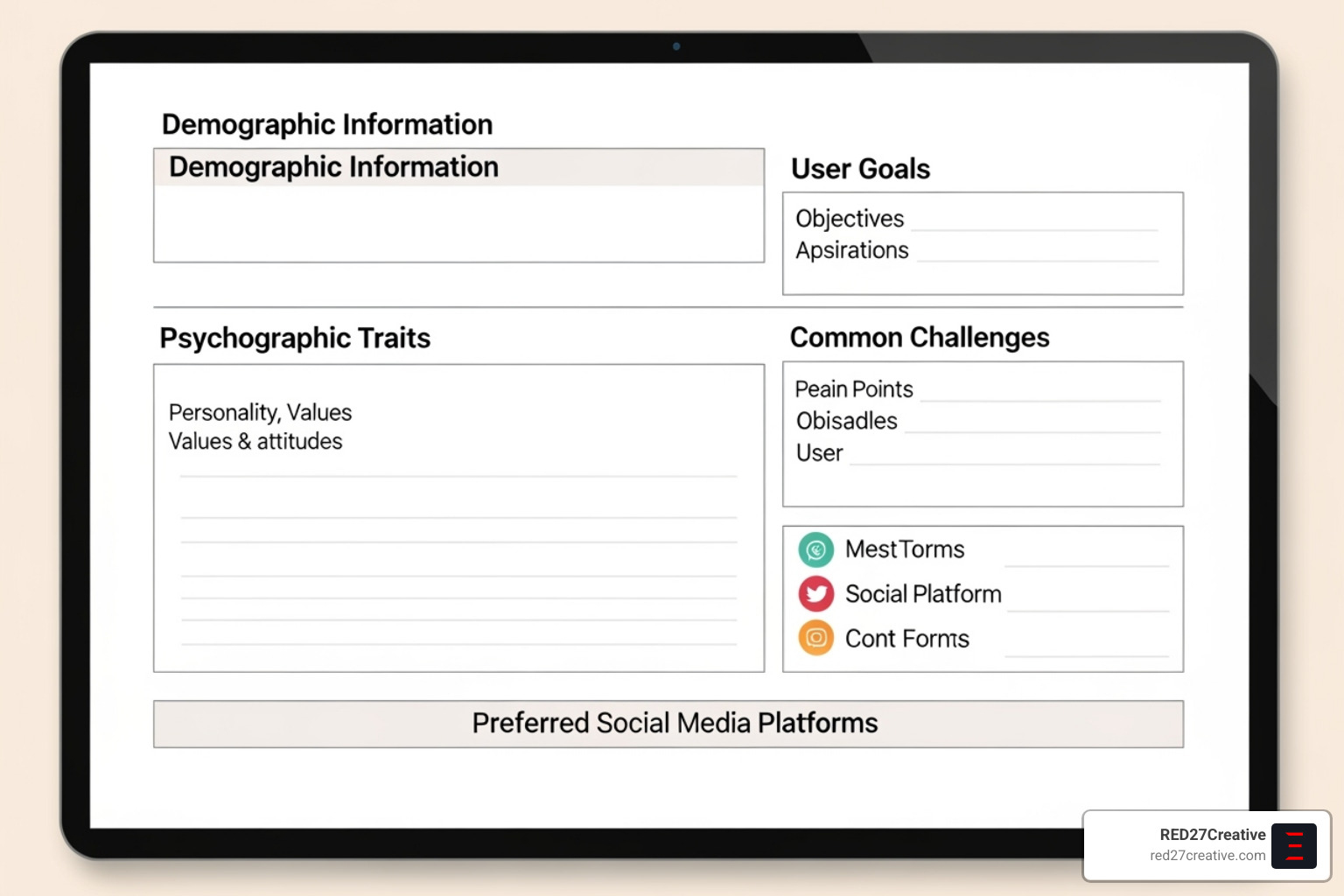
Effective audience research goes far beyond basic demographics. While demographics are a starting point, the real magic happens when you understand their psychographics – their interests, values, pain points, and motivations.
Demographics tell you who your audience is, but psychographics tell you why they buy. What problems keep them awake at night? What solutions are they actively searching for? Which social platforms do they trust for recommendations?
The best insights come from combining platform analytics with social listening tools. For example, one company found that their most valuable customers were 18-34 and used Android devices, an insight that allowed them to create targeted campaigns that reduced referral costs by 40%.
Step 3: Choose the Right Platforms and Optimize Your Profiles
Here’s a truth that might save you hours of wasted effort: you don’t need to be on every social platform. You need to be where your audience is most active and engaged. Quality always beats quantity in social media.
Facebook remains a powerhouse with nearly 3 billion users, making it ideal for broad reach and community building. Its sophisticated advertising platform excels for targeted campaigns, which is why our Facebook Ads for Med Spas service delivers strong results.
Instagram thrives on visual storytelling with over 3 billion active users. If your business relies on showcasing products or lifestyle imagery, Instagram should be a priority. We help businesses Boost Engagement on Instagram through strategic content.
LinkedIn stands apart as the professional network where 4 out of 5 users drive business decisions. For B2B companies, LinkedIn isn’t optional – it’s essential for thought leadership and networking. Our B2B LinkedIn Lead Generation Service helps businesses tap into this powerful platform.
TikTok has revolutionized short-form video content, especially for reaching younger audiences. The platform’s influence on purchasing decisions is remarkable – 78% of users have bought products after watching creator videos.
Once you’ve selected your platforms, profile optimization is crucial. Use consistent branding, strategic keywords in your bio to improve findability, and provide clear contact information. Pursue profile verification where available to boost credibility.
Step 4: Conduct a Strategic Competitive Analysis
Your competitors are already active on social media, and they’re providing valuable lessons – both in what to do and what to avoid. A strategic competitive analysis isn’t about copying; it’s about understanding the landscape and finding your unique opportunity.
Start by identifying both direct and indirect competitors and auditing their presence. Which platforms do they prioritize? How frequently do they post? What’s their engagement rate?
Content performance analysis reveals what resonates with your shared audience. Are educational posts getting more engagement than promotional content? Do behind-the-scenes videos outperform polished product shots? These insights help you identify content gaps you can fill.
Social listening takes this to the next level by tracking mentions of competitors and industry keywords to gain real-time insights. In fact, 1/3 of brands in 2024 relied on social listening to stay ahead of trends, making it invaluable for strategic planning.
This process naturally leads to a SWOT analysis (Strengths, Weaknesses, Opportunities, Threats) that informs your strategy and helps differentiate your brand.
Step 5: Create Engaging Content and a Consistent Calendar
Content is where strategy meets execution. Without engaging content that provides real value, your strategy won’t drive results. Different content types serve different purposes in your customer journey.
Video marketing dominates social media, with short-form videos being 2.5 times more engaging than long-form content. Platforms prioritize Reels, TikToks, and YouTube Shorts because users love them. Our Instagram Video Marketing services help businesses create compelling video that drives engagement.
User-generated content builds authenticity and trust in ways branded content can’t. When customers share genuine experiences, it creates powerful social proof.
Successful content strategies follow the 80/20 rule: 80% of your posts should inform, educate, or entertain, while only 20% directly promote. This balance is crucial, as 34% of users find overly promotional content to be a major turn-off.
Content pillars – 3-5 recurring themes aligned with your goals – provide structure. These might include industry insights, customer success stories, and educational tutorials.
A well-planned content calendar ensures consistency and avoids the stress of last-minute content creation. Our Social Media Content Creation and Creative Social Media Content services can help you develop and execute a comprehensive content strategy.
Step 6: Track Key Metrics and Measure ROI
A social media strategy without measurement is just expensive guesswork. Focus on metrics that matter for your business goals.
Reach and impressions show how many people see your content, while engagement rate (likes, comments, shares) indicates how well it resonates. Click-through rate measures traffic to your website, and conversion rate reveals what percentage of that traffic takes desired actions.
For paid campaigns, track cost per lead and cost per acquisition to understand the value of your investment. Given that 68% of marketers in 2024 expressed concerns about ROI, demonstrating tangible results is essential.
UTM parameters on all social media links allow you to track exactly where website traffic and conversions originate. This attribution is crucial for calculating true ROI and optimizing your strategy.
Use platform analytics tools like Facebook’s Page Insights and third-party tools to get a comprehensive view of your social media impact.
Step 7: Adapt and Evolve Your Social Media Strategy
The social media landscape changes constantly. Your social media strategy must be flexible enough to adapt while staying true to your core objectives.
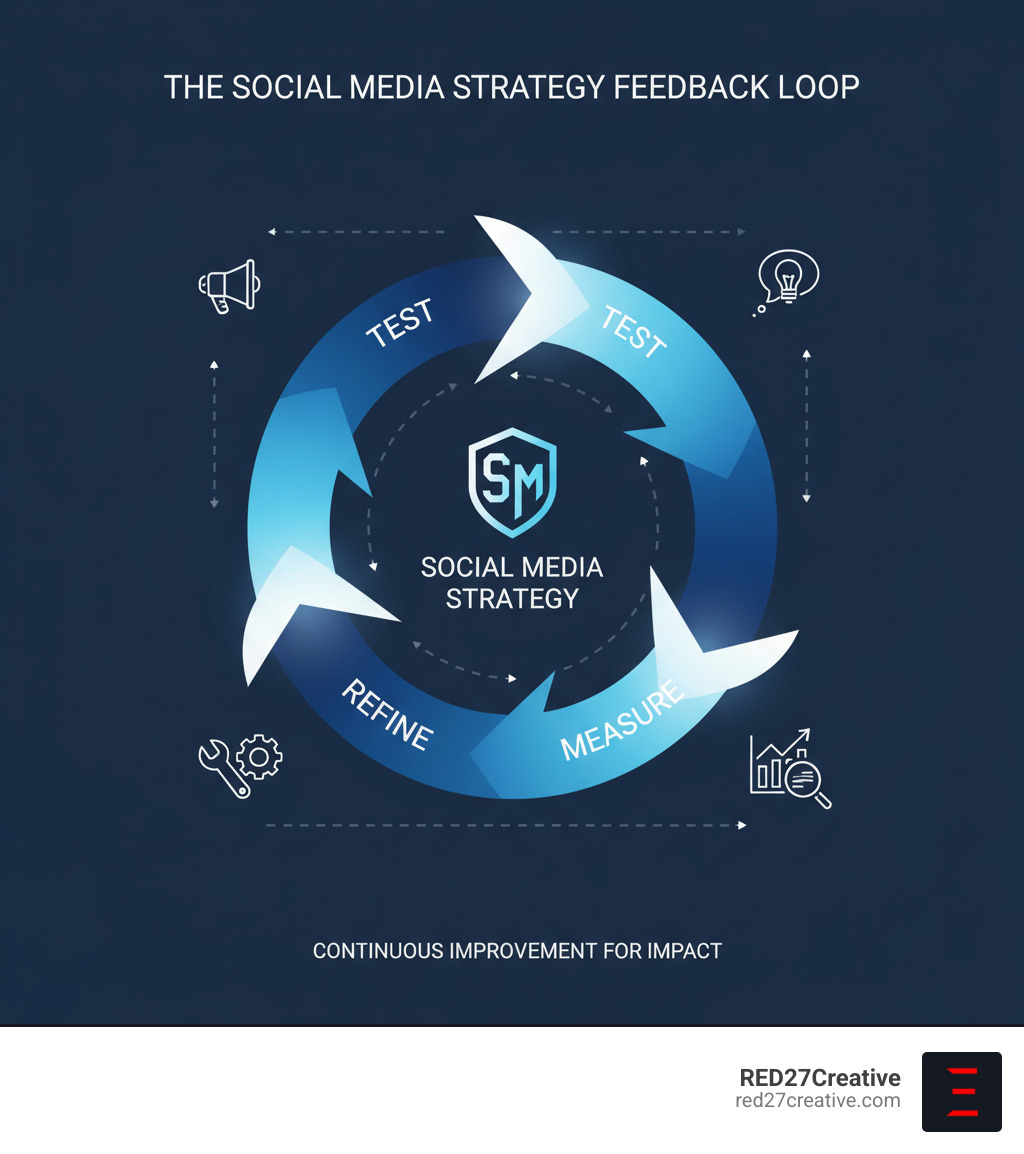
Regular performance reviews (weekly or monthly) are necessary to assess what’s working and what needs adjustment. Look for the story behind the data to make informed decisions.
A/B testing different content formats, captions, and calls-to-action is key to optimizing your unique approach.
Algorithm changes are inevitable. Stay informed about updates and adjust your distribution tactics to ensure your content continues to reach your audience.
Trend awareness requires balance. Successful brands participate authentically in trends that align with their values and audience.
Audience feedback provides invaluable insights. Pay attention to comments and messages to stay connected to your community’s evolving needs.
Essential Tactics and Tools to Execute Your Strategy

Once we have our foundational social media strategy in place, it’s time to boost our efforts with proven tactics and the right tools. Think of these as the secret weapons that transform a good strategy into an exceptional one.
Influencer marketing has become a game-changer for brands looking to expand their reach authentically. When we partner with influencers who genuinely connect with our target audience, magic happens. 90% of marketers report that sponsored influencer content performs better in terms of engagement compared to organic content posted on their brand accounts. The key is finding influencers whose values align with our brand and whose followers match our ideal customers.
Employee advocacy is another powerful tactic that many businesses overlook. When our team members share our content, it carries more weight than traditional brand posts. Posts employees share have an 8x higher engagement rate than brand content, and they reach 20x more people than all organic channels combined. It’s like having a built-in network of brand ambassadors who can speak authentically about our company culture and values.
Video marketing continues to dominate social media, and for good reason. Short-form videos are particularly effective, generating 2.5 times more engagement than long-form videos. Whether we’re creating Instagram Reels, TikToks, or YouTube Shorts, video content helps us tell our story in a compelling, visual way. Our Instagram Video Marketing services can help you master this essential format.
Social commerce is changing how people shop online. Instead of leaving social platforms to make purchases, customers can now buy directly within the apps they’re already using. This seamless experience has contributed to social commerce reaching $24.71 billion in the U.K. by 2023, with projections to hit $83.27 billion by 2029. The numbers are even more impressive globally – 90% of consumers in China made purchases through social media in 2023.
AI and automation are revolutionizing how we manage our social media presence. 61% of organizations now rely on AI-powered insights to help lighten the analytical load, allowing teams to focus on strategy and creativity rather than data crunching. At RED27Creative, we’ve seen how our AI Chatbot Lead Generation solutions can streamline customer interactions and capture leads around the clock.
The right tools make all the difference in executing our social media strategy effectively. Scheduling and publishing tools help us maintain consistency across platforms without being glued to our phones all day. Analytics and reporting platforms turn raw data into actionable insights that guide our decisions. Social listening tools act as our ears on the internet, monitoring brand mentions and industry conversations. Content creation tools empower us to produce professional-quality visuals and videos, while community management tools ensure we never miss an important customer interaction.
The beauty of these tactics and tools is that they work together synergistically. When we combine employee advocacy with video content, use AI insights to optimize our influencer partnerships, and leverage social commerce features in our content calendar, we create a powerful ecosystem that drives real results for our business.
Frequently Asked Questions about Social Media Strategy
When businesses start developing their social media strategy, certain questions come up again and again. Let me address the most common concerns I hear from clients across Geneva IL, Batavia IL, Aurora IL, and beyond.
What are the core components of a social media strategy?
A solid social media strategy has several core components: clear goals aligned with business objectives, a deep understanding of your target audience, strategic platform selection where your audience is active, a content plan that provides value, and systems for tracking performance and managing your community.
How often should I post on social media?
Posting frequency varies by platform and audience, but consistency always trumps quantity. A single high-quality post that sparks conversation will always outperform multiple mediocre ones.
As a general guideline:
- Instagram & Facebook: 3-5 times per week.
- X (Twitter): 1-3 times per day.
- LinkedIn: 2-3 times per week.
These frequencies favor quality content that generates meaningful engagement. The goal is to add value, not just to post.
How do I measure the ROI of my social media efforts?
Measure ROI by tracking the revenue generated from social media against your total investment (ad spend, tools, time). The formula is: (Revenue – Investment) / Investment x 100 = ROI %.
The key is accurate tracking. Use UTM parameters on your links to attribute website conversions and sales back to specific social channels and posts. This prevents valuable social traffic from being mislabeled as “direct traffic.”
Combine platform-native tools (like Facebook Insights) with third-party analytics platforms for a comprehensive view. Accurate tracking is challenging, which is why 68% of marketers expressed ROI concerns in 2024, but it’s essential for proving value.
Build Your Winning Strategy Today
Building a successful social media strategy isn’t a one-time effort – it’s an ongoing journey that requires dedication, creativity, and continuous adaptation. The seven steps we’ve explored together form the foundation for changing your social media presence from scattered posts into a powerful business growth engine.
The most effective social media strategy is one that evolves with your audience and the ever-changing digital landscape. What works today might need tweaking tomorrow, and that’s perfectly normal. The businesses that thrive are those that accept this constant evolution rather than fighting it.
Your brand has unique stories to tell and valuable connections to make. By setting clear goals, understanding your audience deeply, choosing the right platforms, creating content that truly resonates, and measuring what matters, you’re positioning your business for sustainable growth in 2025 and beyond.
The data we’ve shared throughout this guide shows just how critical social media has become for building trust, generating leads, and driving sales. With 78% of consumers judging brands based on their social media presence and 46% of Gen Z turning to social platforms for their searches, there’s never been a more important time to get your strategy right.
At RED27Creative, we’ve helped countless businesses across Geneva IL, Batavia IL, Aurora IL, St. Charles IL, Plainfield IL, Oswego IL, Naperville IL, and Chicago IL transform their social media from afterthought to revenue driver. We understand that every business is unique, which is why our approach combines proven frameworks with customized solutions that fit your specific goals and audience.
Ready to stop guessing and start growing? Your competitors aren’t waiting, and neither should you. Take the next step with our expert business consulting services and let’s build a social media strategy that delivers real results for your business.
The tools, tactics, and knowledge are all here. Now it’s time to put them into action and watch your brand reach its full potential.

Kiel Tredrea
https://red27creative.comTop Marketing Agency • Web, SEO & Leads • RED27Creative