Will Chatbots Soon Tutor Your Children? The Future of AI in Schools

The Rise of AI in the Classroom
An AI chatbot for education is changing how students learn and teachers teach across institutions worldwide. These intelligent systems provide:
- 24/7 student support for questions and guidance
- Personalized learning paths adapted to individual needs
- Automated administrative tasks like grading and scheduling
- Multilingual assistance for diverse student populations
- Instant feedback on assignments and coursework
The numbers tell a compelling story. Over 70% of higher education administrators now hold a positive view of AI, while AI tutors like Bloom achieve a 94% satisfaction rate among thousands of students. Teachers using platforms like Humy save an average of 8 hours per week, and 85% of surveyed middle school students want to use AI learning tools regularly.
But this isn’t just about efficiency. AI chatbots are creating safer spaces for shy students to ask questions, providing round-the-clock support that human staff simply cannot match, and offering personalized instruction that adapts to each learner’s pace and style.
The shift is happening now. From elementary classrooms to university campuses, AI chatbots are moving beyond simple question-and-answer tools to become sophisticated learning companions that tutor, coach, and guide students through complex educational journeys.
As Kiel Tredrea, founder of RED27Creative with over 20 years of experience in digital change and strategic marketing, I’ve witnessed how emerging technologies reshape entire industries. My work helping businesses implement scalable digital systems has shown me that AI chatbot for education represents one of the most significant opportunities to improve learning outcomes while reducing operational costs for educational institutions.
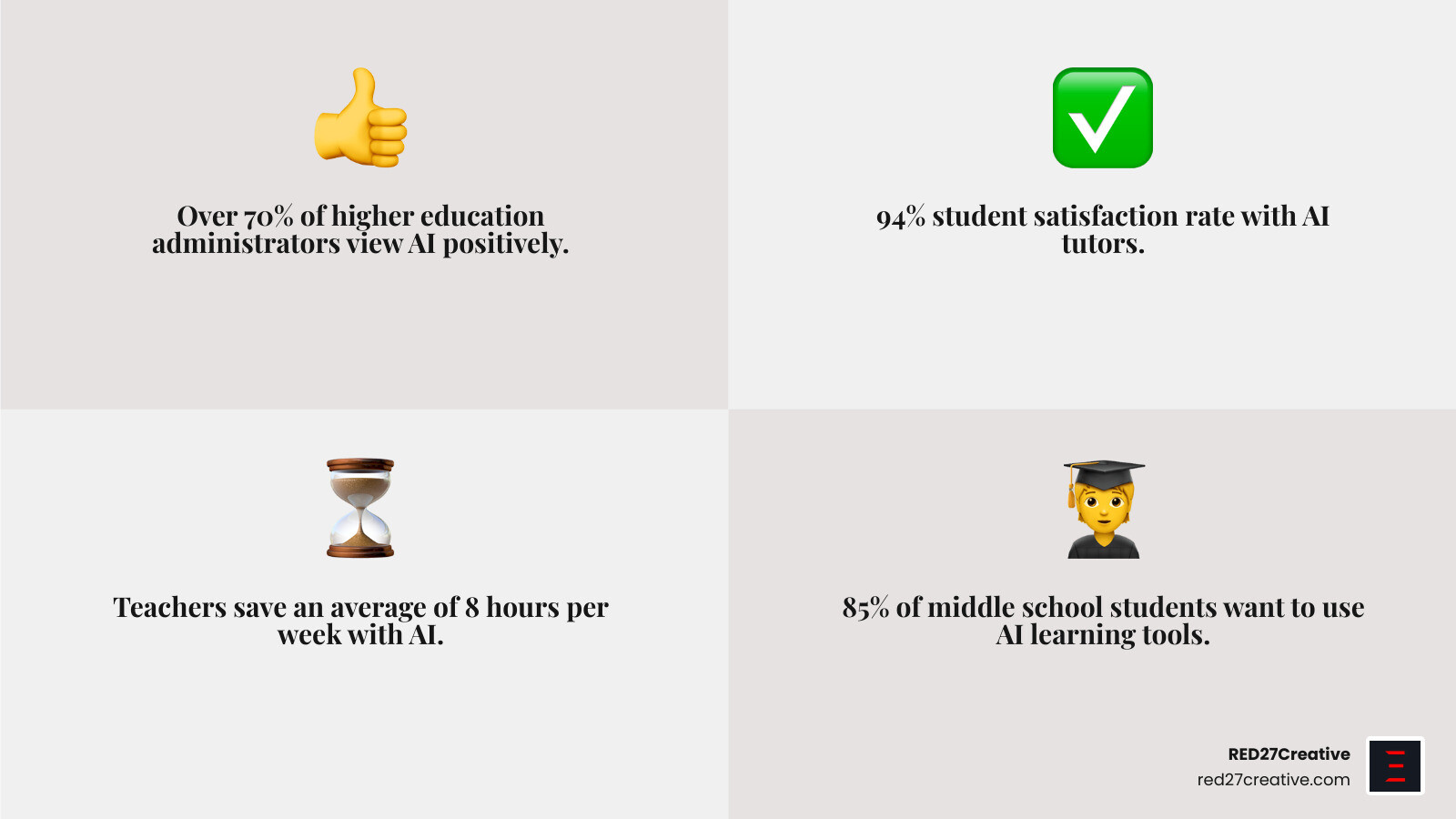
AI chatbot for education terms at a glance:
How AI Chatbots are Revolutionizing the Learning Experience
Picture a college sophomore stuck on a chemistry problem at 2 AM. Instead of waiting for office hours, she opens her course’s AI chatbot for education. Within minutes, she gets personalized, step-by-step guidance that helps her understand the concept—not just the answer.
This scenario is playing out daily on campuses worldwide. AI-powered tools are fundamentally changing how students learn and institutions operate, providing 24/7 support with instant, personalized responses that improve recruitment, retention, and student outcomes.
The impact goes far beyond convenience. Educational chatbots are creating smoother campus interactions by reducing wait times from days to seconds. Students spend less time navigating administrative problems and more time focusing on what matters most—their learning journey.
For higher education institutions, the message is clear: those who accept these AI solutions now are setting themselves up for success, while those who delay risk falling behind student expectations and missing critical operational efficiencies. As we explore in The Competitive Edge of Data-Driven Marketing, staying ahead of technological trends is essential for institutional growth.
Personalized Learning Paths for Every Student
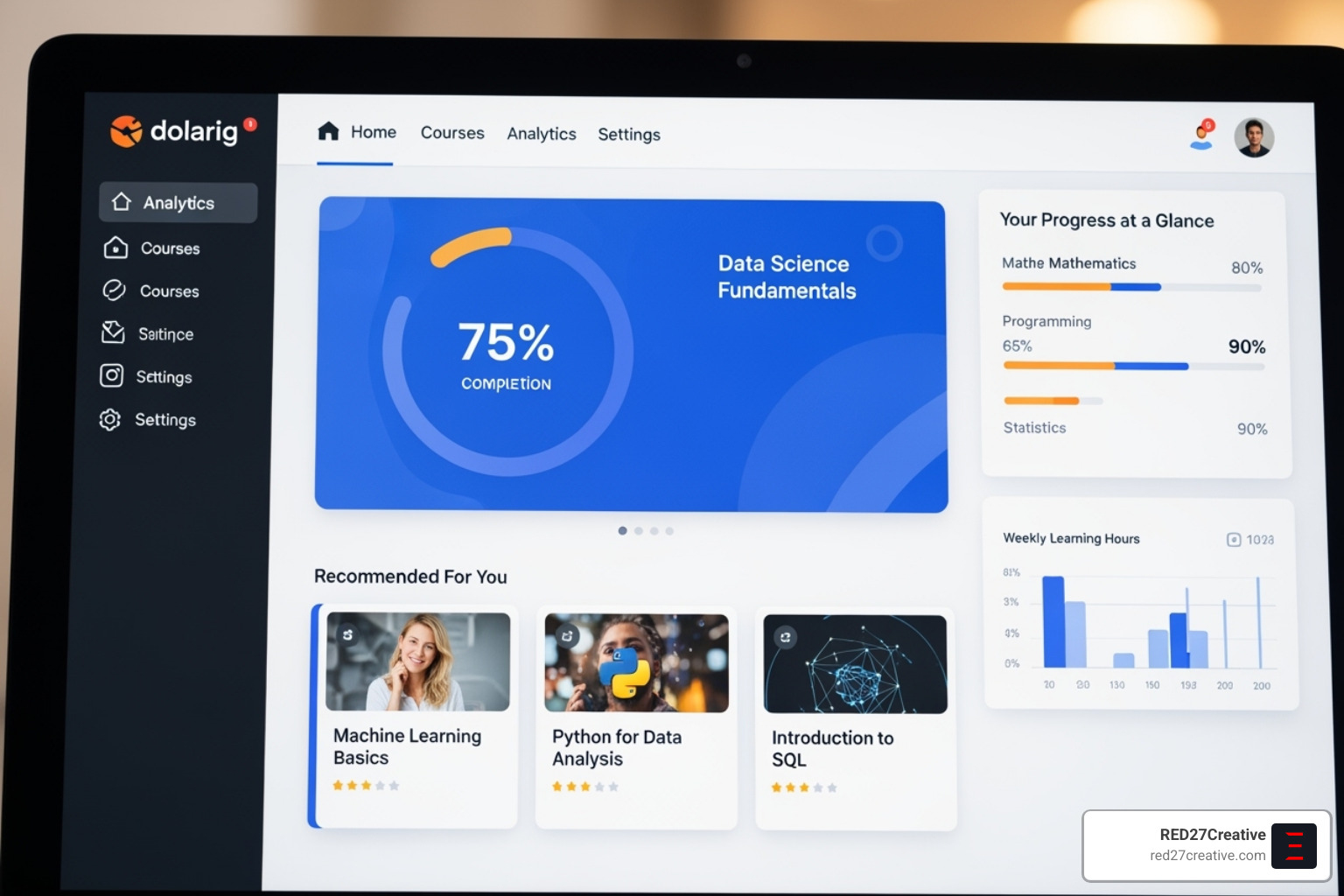
The most exciting aspect of an AI chatbot for education is its ability to create truly personalized learning experiences. These systems use adaptive learning technology to understand each student’s unique pace, strengths, and areas needing improvement.
Take Bloom AI Tutor, which achieves an impressive 94% student satisfaction rate. This platform doesn’t just answer questions—it adapts its explanations to each student’s level and uses the Socratic method to encourage critical thinking rather than simply providing direct answers. When a student struggles with calculus, the AI might ask guiding questions that help them find the solution themselves.
Course-specific training means these AI tutors become genuine subject matter experts. They provide instant feedback on assignments, break down complex concepts with custom instruction custom to individual learning styles, and offer practice problems that match each student’s skill level.
The beauty lies in the accessibility. Whether you’re a visual learner who needs diagrams or someone who grasps concepts better through repetition, AI tutors adjust their teaching approach in real-time. This level of personalized instruction, available round-the-clock, ensures every student can learn at their optimal pace.
Boosting Student Engagement and Support
Beyond personalization, AI chatbots for education are powerful catalysts for student engagement. They create interactive learning environments where students feel comfortable asking questions—even those they might hesitate to ask a human instructor.
This “safe space for questions” is invaluable for shy or introverted learners. Students can explore topics, make mistakes, and learn without fear of judgment. The AI responds with patience and encouragement, building confidence alongside knowledge.
Multilingual support represents another game-changing feature, especially for international students. Advanced educational chatbots support dozens of languages, ensuring every student can access information and support in their preferred language. This bridges communication gaps and creates truly inclusive learning environments.
The round-the-clock accessibility means students never have to wait. Whether it’s a Sunday evening panic about an assignment or a quick question between classes, help is always available. This reduced wait time eliminates the frustration of waiting for office hours or administrative responses, creating an improved student experience that keeps learners engaged and motivated.
These capabilities align perfectly with modern educational needs, much like how businesses benefit from comprehensive digital solutions. Learn more about implementing these technologies at AI Chatbot Solutions for Businesses.
The Evolving Role of the AI Chatbot for Education
The AI chatbot for education landscape has matured far beyond basic question-and-answer systems. Today’s educators are finding that custom chatbots can serve specific, purposeful learning goals when thoughtfully integrated into their teaching strategies.
Modern educational chatbots excel at scaffolding student learning—providing just enough support to help learners progress without simply handing over answers. This approach transforms AI from a shortcut tool into a genuine learning partner that builds student confidence and understanding.
One particularly fascinating application involves making the hidden curriculum more visible to students. These unwritten academic rules and social expectations—like how to participate in class discussions or steer office hours—are rarely taught explicitly. An AI chatbot for education can guide students through these unspoken norms, helping them succeed in complex academic environments.
These intelligent systems also reduce cognitive load by breaking overwhelming tasks into manageable steps. When students aren’t struggling with procedural confusion, they can focus their mental energy on actually understanding new concepts. This intentional design ensures AI serves as a true learning companion rather than just another piece of technology.
Four Purposeful Roles for Chatbots in the Classroom
Educators at Boston College have identified four distinct ways an AI chatbot for education can meaningfully support classroom learning, each serving a specific educational purpose:
The Course Assistant role handles the practical side of learning. These chatbots answer questions about syllabi, deadlines, and grading policies while directing students to specific readings or resources. By managing these logistical queries, they free up valuable class time for actual learning rather than administrative confusion.
As an Assignment Tutor, chatbots provide guided help without giving direct answers. They offer hints, prompts, and scaffolding that lead students toward solutions. For example, a “Stuckbot” developed for data analytics courses helps students work through programming challenges by nudging them in the right direction, fostering independent problem-solving skills.
The Process Coach role shines with complex, multi-step projects like research papers or lab reports. These chatbots break intimidating tasks into manageable chunks, providing step-by-step guidance and feedback at each stage. This approach makes daunting assignments feel achievable while building essential academic skills.
Perhaps most sophisticated is the Reflective Guide role, which encourages metacognition—thinking about your own thinking. These chatbots ask open-ended questions that prompt students to articulate their understanding, reflect on learning strategies, and connect new information to existing knowledge. While students might initially resist this deeper reflection, many eventually appreciate the push toward better self-awareness and improved learning habits.
Streamlining Education: More Than Just a Teaching Tool
While student learning is paramount, an AI chatbot for education is also a powerful tool for streamlining institutional operations. These AI assistants boost efficiency by providing administrative support, reducing teacher workload, and offering data-driven insights for strategic decisions. This mirrors how automation transforms workflows across industries, a concept we highlight in Marketing Automation Simplifies Your Efforts for our clients.
Think of it this way: when teachers spend less time on repetitive tasks and administrators can handle inquiries more efficiently, everyone wins. Students get better attention, staff feel less overwhelmed, and institutions can focus resources where they matter most.

Reducing Teacher Workload and Boosting Efficiency
Teachers are often overwhelmed with administrative tasks, leaving less time for what they love most: teaching. An AI chatbot for education can be a true lifesaver in this regard. These intelligent tools can handle many of the mundane tasks that eat up precious hours – automated grading for certain assignments, lesson plan generation that provides a solid starting point, and answering common queries from students or parents.
The numbers are impressive. Platforms like Humy can generate an assignment or lesson plan in just 30 seconds. Teachers using these tools save an average of 8 hours per week. That’s an entire workday returned to them!
This newfound efficiency allows educators to focus on what truly matters: designing engaging curricula, providing personalized instruction, and fostering meaningful student connections. When AI handles the repetitive duties, teachers can pour their energy into creating those “aha!” moments that make education magical.
The result? Less teacher burnout, more engaging classrooms, and ultimately better educational outcomes for everyone involved.
Optimizing Institutional Operations
The benefits of AI chatbot for education extend far beyond individual classrooms, reaching into the heart of how educational institutions operate day-to-day. These intelligent systems can transform various operational processes, making everything from the admissions process to ongoing student support more efficient and effective.
Consider the admissions office during peak season. An AI chatbot can handle high-volume inquiries about financial aid, deadlines, and program requirements with instant, 24/7 responses. This improves response times and keeps prospective students engaged.
But the benefits don’t stop there. AI chatbots excel at campus navigation support, helping new students find their way around. They’re perfect for event promotion, ensuring students never miss important deadlines or opportunities. The systems also excel at streamlining communication and automating follow-ups, which significantly improves student recruitment efforts.
Real-world results speak volumes. Some universities have seen call volume reduced by 50% and agent workload cut in half, saving significant operational costs. By making campus interactions smoother and more responsive, these tools allow students to focus more on their academic journey and less on navigating administrative challenges.
The bottom line? When institutions run more efficiently, everyone benefits – from prospective students getting faster answers to current students receiving better support throughout their educational journey.
Choosing and Implementing the Right AI Chatbot Solution
Choosing the right AI chatbot for education requires a strategic approach, as one size does not fit all. Institutions must assess their unique needs, student population, budget, and technical infrastructure. It’s also crucial to consider the broader implications of this technology, as implementation is about reshaping learning, not just buying software. Partnering with an expert can help steer these decisions and avoid costly mistakes.
Key Features to Look for in an AI chatbot for education
When you’re evaluating potential AI chatbot for education solutions, certain features separate the winners from the wannabes.
Customization sits at the top of the list. Your chatbot should sound like it belongs at your institution, not like a generic robot reading from a script. It needs to understand your curriculum, speak in your voice, and reflect your values.
Integration capabilities can make or break your implementation. The best chatbots play nicely with your existing Learning Management System like Canvas or Blackboard, and your Student Information System. When everything talks to each other, students get accurate, personalized responses instead of frustrating “I don’t know” messages.
Advanced analytics turn your chatbot into a goldmine of insights. Which questions come up most often? Where are students getting stuck? This data helps you spot curriculum gaps and improve your programs.
Enterprise-grade security and compliance isn’t optional – it’s essential. Look for solutions that treat FERPA compliance seriously, offer encrypted data storage, and provide features like Single Sign-On and Role-Based Access Control. Regular security testing should be standard, not an add-on.
No-code flow builders empower your faculty to customize and update the chatbot without calling IT every time. When professors can tweak responses and add new content themselves, your chatbot stays current and useful.
Multilingual capabilities ensure every student gets help in their preferred language. With increasingly diverse student populations, this feature often determines whether your chatbot truly serves everyone or just some.
Navigating Challenges and Ethical Considerations
Even the best AI chatbot for education comes with challenges that require thoughtful planning and ongoing attention.
Data privacy and student protection is the highest priority. Since students trust you with sensitive information, choose solutions that operate in a secure “walled garden” environment, keeping institutional data separate from external training models. Ensure any vendor can clearly explain how they protect student data and comply with educational privacy laws.
Over-reliance concerns are real and worth addressing upfront. While AI support is incredibly valuable, students still need to develop critical thinking skills and maintain human connections. The goal is enhancing education, not replacing the human elements that make learning meaningful.
Implementation costs vary dramatically across solutions. Basic plans might start around $19 per user monthly, while enterprise solutions can cost thousands. Budget for both the initial investment and ongoing costs, but also consider the long-term return on investment through improved efficiency and student satisfaction.
Equity and accessibility considerations ensure your AI tools help all students succeed. Technology should bridge gaps, not widen them. Make sure your chosen solution works for students regardless of their economic background or tech access level.
The most important principle? Keeping educators as the human in the loop. As researchers at Boston College wisely noted, “Chatbots need teachers too.” Your faculty remains the heart of education – AI just gives them superpowers to do their job better.
The right AI chatbot for education becomes a trusted partner in your mission, not a replacement for the human expertise that makes education changeal.
Frequently Asked Questions about AI Chatbots in Education
Let’s address the most common questions educators and administrators have about implementing AI chatbot for education solutions in their institutions.
How do AI chatbots support students with different learning needs?
AI chatbots for education support diverse learning needs through personalized, one-on-one tutoring that adapts to each student’s pace and style. They patiently provide extra explanations, present information in various formats for visual learners, and offer conversational interaction.
Multilingual support for 50-100+ languages is a game-changer for international students, allowing them to learn in their native language. Finally, 24/7 accessibility ensures students with any schedule, work commitment, or time zone can get help whenever they need it.
What is the main role of a teacher when AI chatbots are used?
When AI chatbots for education enter the classroom, teachers don’t become obsolete – they become more valuable than ever. The educator’s role evolves from being the primary source of information to becoming a facilitator of deeper learning.
Teachers shift their focus to designing meaningful curricula that leverage the chatbot’s capabilities while maintaining human connection. They guide students through complex problem-solving that requires creativity, empathy, and critical thinking – areas where human insight remains irreplaceable.
The most important aspect is providing deep, meaningful mentorship. While a chatbot can explain concepts and provide feedback, teachers offer encouragement during difficult moments, celebrate breakthroughs, and help students connect their learning to real-world applications and personal goals.
Teachers also become curators of the AI experience, training chatbots with course-specific content and ensuring the technology serves pedagogical objectives rather than replacing genuine educational relationships.
Are AI chatbots safe for students to use?
Yes, when implemented correctly, AI chatbots can be very safe for educational use. The key lies in choosing reputable solutions that prioritize student data protection.
Quality educational chatbots operate in a secure “walled garden” environment, meaning they only access and use approved institutional data rather than training on external or unverified sources. This controlled environment ensures students receive accurate, appropriate responses.
Robust data encryption protects all student interactions, both during transmission and when stored on servers. The best solutions feature comprehensive privacy controls that give institutions full oversight of how student data is handled.
FERPA compliance is non-negotiable for educational chatbots. Reputable providers design their systems specifically to meet these strict privacy standards, ensuring student information remains confidential and secure.
The safest implementations also maintain human oversight, with educators monitoring chatbot interactions and having the ability to intervene when necessary. This “human in the loop” approach ensures technology improves education while maintaining appropriate boundaries and safety measures.
The Future is Now: Embracing AI for Smarter Education
The change is happening right before our eyes. AI chatbot for education solutions have moved from theoretical possibilities to practical tools that are reshaping classrooms and campuses across the globe. These intelligent systems aren’t waiting for tomorrow—they’re delivering results today.
What makes this shift so remarkable is how these tools are creating a more efficient, equitable, and effective learning landscape. Students who once struggled to get help outside office hours now have 24/7 support. International students who faced language barriers can access assistance in their native tongue. Teachers who spent weekends grading papers can now focus on what they do best—inspiring and mentoring students.
The benefits extend far beyond convenience. We’re seeing real improvements in student engagement, retention rates, and learning outcomes. When a shy student can ask questions without fear of judgment, or when a struggling learner gets personalized tutoring at 2 AM, education becomes more accessible to everyone.
The urgency for institutions to accept these solutions is clear. Student expectations are evolving rapidly, and those who delay risk falling behind in both operational efficiency and educational effectiveness. The institutions leading this change aren’t just keeping up—they’re setting new standards for what modern education can achieve.
As educational organizations steer this exciting change, having the right partner makes all the difference. At RED27Creative, we understand that implementing AI solutions requires more than just technology—it demands strategic thinking, seamless integration, and ongoing support.
Our team brings deep expertise in digital change, helping organizations leverage innovative strategies to achieve their growth and engagement goals. Whether you’re a small college or a large university system, we work with institutions to create AI solutions that align with their unique mission and values.
Ready to find how AI can revolutionize your educational institution? The future of learning is happening now, and we’re here to help you be part of it. Learn more about our AI Chatbot Solutions for Businesses and take the first step toward smarter education.

Kiel Tredrea
https://red27creative.comTop Marketing Agency • Web, SEO & Leads • RED27Creative