Niche Navigators: Finding the Perfect AI Chatbot for Your Industry

Why AI Chatbots Are Revolutionizing Legal Practice
An AI chatbot for lawyers is changing how law firms operate, offering 24/7 client support, automated intake processes, and streamlined administrative tasks. Here are the top solutions for legal professionals:
Best AI Chatbots for Lawyers:
- Clio Duo – Integrated practice management with AI assistance
- CoCounsel – Advanced legal research and document review
- Harvey AI – Enterprise-grade legal AI for large firms
- LawDroid – Client-facing chatbots with video capabilities
- ChatGPT – Versatile AI for document drafting and research
- Diligen – Contract review and due diligence automation
The legal industry is experiencing a digital revolution. 79% of potential clients expect a response within 24 hours, yet traditional law firms often struggle to meet this demand. Meanwhile, research shows that 44% of legal tasks could be automated, presenting a massive opportunity for firms to improve efficiency while reducing costs.
AI chatbots are no longer just customer service tools; they’re becoming essential practice management solutions. These intelligent systems can handle client intake, schedule consultations, provide case updates, and assist with legal research and document creation. This allows lawyers to focus on high-value legal work while their AI assistants handle routine tasks.
The adoption rate speaks volumes: 79% of legal professionals now use AI in some capacity at their firms. From solo practitioners to large corporate legal departments, forward-thinking lawyers are leveraging AI chatbots to stay competitive, improve client satisfaction, and boost profitability.
As a digital marketing strategist with over 20 years of experience, I’ve seen how an AI chatbot for lawyers transforms client acquisition and operational efficiency. The right AI implementation can increase lead conversion rates by 300% while significantly reducing administrative overhead.
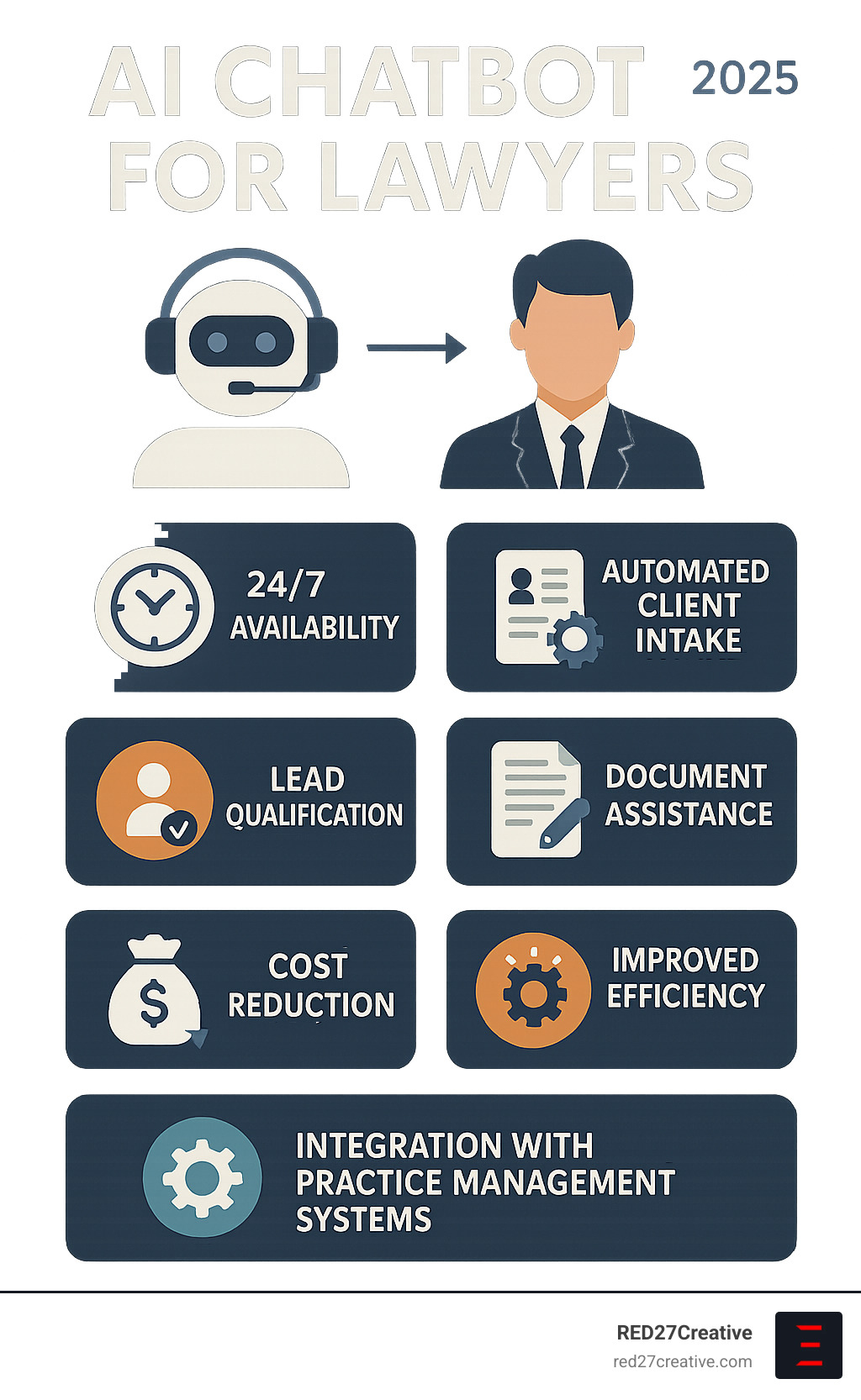
AI chatbot for lawyers terms to learn:
What is an AI Chatbot for Lawyers and How Does It Work?
An AI chatbot for lawyers is a smart digital assistant that works 24/7. Using technologies like Natural Language Processing (NLP) and machine learning, it understands user queries beyond simple keywords, unlike basic automated response tools.
Their key features are 24/7 availability and natural, helpful automated responses. Unlike a human receptionist, an AI assistant is always available to help potential clients, answer questions, and start the intake process.
The difference between a generic chatbot and a legal one is specialization. Legal AI chatbots are trained on vast legal databases, understanding legal terminology and client needs. They can differentiate between practice areas like personal injury and family law, responding appropriately. To see how this applies more broadly, see our guide on AI Chatbot Solutions for Businesses.
Understanding the structure and architecture of chatbots helps lawyers appreciate how these tools can transform their practice from reactive to proactive client service.
How AI Chatbots Function in a Legal Setting
Several sophisticated processes work together seamlessly. Keyword detection forms the foundation—when someone types “I was injured in a car accident,” the chatbot recognizes this as a potential personal injury case and activates the appropriate conversational flow.
These conversational flows act like a trained intake specialist, guiding potential clients through a logical sequence to gather essential information naturally.
Behind the scenes, database integration connects your chatbot to your firm’s knowledge base. Whether it’s office hours, attorney bios, or FAQs about your practice areas, the chatbot pulls accurate, up-to-date information instantly.
The real power comes through API connections to case management software. Your chatbot can automatically create new client records, schedule consultations in your calendar, and send follow-up emails—all without human intervention. This seamless integration means no leads fall through the cracks.
Perhaps most impressive is the continuous learning capability. Every interaction teaches your chatbot something new. It learns which questions clients ask most often, how to better phrase responses, and identifies patterns in client needs that can inform your marketing strategy.
For client-facing interaction, these chatbots serve as your digital front door, greeting website visitors and qualifying leads even when your office is closed. Simultaneously, internal workflow automation helps your team by summarizing client conversations, flagging urgent matters, and preparing preliminary case information.
The Difference Between Basic and Advanced Legal AI
Not all legal chatbots are created equal. Rule-based chatbots operate like sophisticated phone trees, following predetermined scripts and responding to specific keywords. They’re excellent for simple Q&A tasks like providing office hours but struggle with complex or unexpected questions.
AI-powered chatbots represent a quantum leap forward. These systems use generative AI capabilities to create original, contextually appropriate responses. Instead of just matching keywords, they demonstrate true contextual understanding, remembering what was discussed earlier in the conversation.
The most advanced systems offer predictive analysis, helping identify which leads are most likely to convert or suggesting optimal times for follow-up. While powerful, this technology always requires human oversight to ensure accuracy.
For larger firms considering enterprise-level solutions, our AI Chatbot for Enterprise services provide the scalability and customization needed for complex legal operations.
While basic chatbots can handle simple tasks, advanced AI-powered solutions truly augment your legal practice, handling nuanced client interactions and automating sophisticated workflows.
The Verdict is In: Key Benefits of AI Chatbots for Law Firms

The legal profession is changing, and AI chatbots for lawyers are leading the charge. These intelligent tools aren’t just fancy widgets—they’re essential business assets that reshape how law firms operate.
The numbers tell a compelling story. 79% of legal professionals now use AI in some capacity at their firms, according to recent industry research. This isn’t just a trend; it’s a fundamental shift toward more efficient, profitable, and client-focused legal practice.
The widespread adoption is due to immediate and far-reaching benefits, from administrative tasks to strategic growth.
Boost Efficiency and Profitability
Running a law firm involves repetitive work that doesn’t require a law degree. An AI chatbot for lawyers excels at handling these time-consuming tasks, freeing up your team for what they do best: practicing law.
Automating repetitive tasks is a key strength. A chatbot can instantly answer common questions about office hours, practice areas, or consultation fees. This allows your team to focus on complex, revenue-generating legal work.
Client intake automation transforms a traditionally cumbersome process. Instead of playing phone tag, your chatbot can collect initial case details, qualify leads, and book appointments automatically. This streamlined approach ensures no potential client slips through the cracks while reducing the administrative burden.
The time savings translate directly into profitability. When paralegals and attorneys aren’t bogged down with routine administrative tasks, they can dedicate more hours to billable work. Document generation becomes faster, with chatbots assisting in drafting standard agreements, letters, and forms.
Consider this: Goldman Sachs estimates that 44% of legal tasks could be automated. For a typical law firm, this represents enormous potential for cost reduction and efficiency gains. By reducing administrative overhead, firms can operate with leaner support staff while maintaining higher service levels. This is particularly valuable for smaller firms looking to compete with larger organizations. The broader applications of AI efficiency extend beyond legal practice, as explored in AI in Marketing Transforms Business Growth.
Lift the Client Experience
Today’s legal clients have different expectations. They’re accustomed to instant responses, 24/7 availability, and seamless digital experiences. An AI chatbot for lawyers helps firms meet these modern demands.
Instantaneous responses address a critical client pain point. 79% of potential clients expect a response within 24 hours. Your chatbot provides immediate answers, ensuring prospects don’t get frustrated waiting for callbacks. This often makes the difference between winning and losing a new client.
24/7 support recognizes that legal issues don’t follow business hours. Whether someone needs information at 2 AM or during their lunch break, your chatbot is always available. This constant accessibility is a significant competitive advantage.
Automated appointment scheduling eliminates the back-and-forth of booking consultations. Clients can see available times and book appointments directly through the chat interface, integrated with your calendar systems.
For existing clients, case status updates become effortless. Instead of calling the office, clients can get automated updates through the chatbot. This reduces incoming calls while keeping clients informed and satisfied.
Perhaps most importantly, chatbots ensure consistent communication. Every client receives accurate, up-to-date information in a professional manner. This consistency reflects positively on your firm’s attention to detail and commitment to quality service.
The result is a client experience that feels modern, efficient, and genuinely helpful—exactly what today’s legal consumers are looking for.
From Intake to Insights: Core Applications of an AI Chatbot for Lawyers
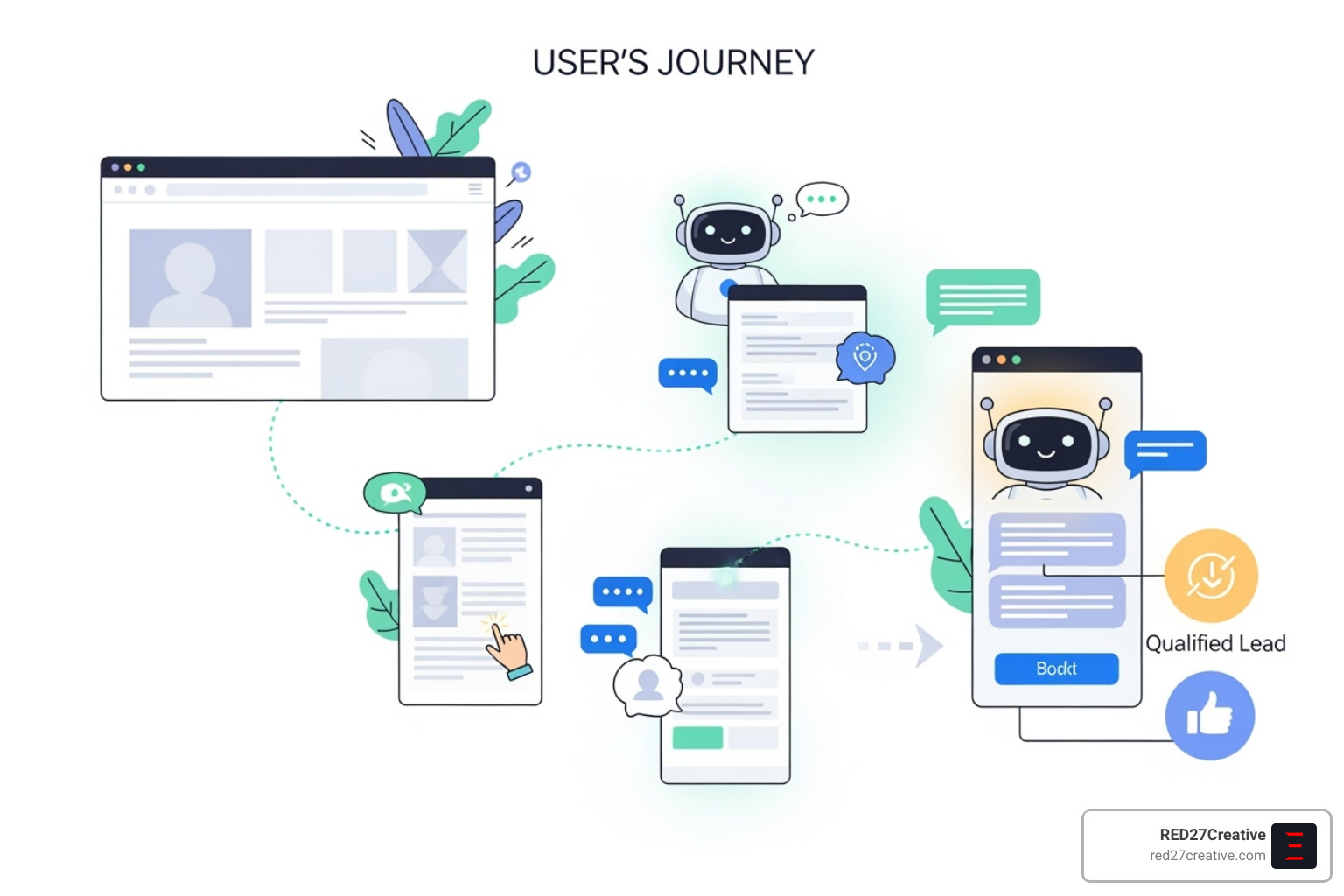
The versatility of an AI chatbot for lawyers is its key strength. It can transform your practice, from initial website visits to complex legal research, acting as a dedicated assistant.
Your potential clients might be browsing your website at 2 AM or frantically searching for legal help on their lunch break. An AI chatbot meets them exactly where they are, when they need it most. This immediate availability can make the difference between a lost opportunity and a new client.
Streamlining Client Intake and Lead Generation
When a visitor lands on your website, an AI chatbot for lawyers can immediately start an interactive conversation, turning passive browsing into an opportunity to generate qualified leads.
Instead of hoping someone will fill out a contact form, your chatbot can engage visitors with friendly questions. This qualifying approach helps you understand if a potential client’s needs align with your practice areas before anyone spends valuable time on unsuitable cases.
The initial case detail collection process becomes surprisingly comprehensive through conversational AI. The bot can gather contact information, understand the nature of the legal issue, and collect relevant dates and circumstances, acting like a skilled intake specialist available around the clock.
When it comes to scheduling consultations, the friction disappears. Once the chatbot determines someone is a good fit, it can instantly offer available time slots and book appointments directly into your calendar. No more phone tag or delayed responses.
This streamlined approach significantly reduces friction in your client acquisition process. Modern clients expect self-service options, and your chatbot delivers while capturing crucial information for a more productive consultation. For more on this, explore AI Chatbot Lead Generation strategies.
During intake, your chatbot can systematically collect: client contact details, legal issue type, brief situation description, relevant dates, other parties involved, desired outcomes, consultation availability, and referral sources. This ensures your attorneys are well-prepared.
Assisting with Legal Research and Document Creation
Beyond client-facing interactions, an AI chatbot for lawyers becomes an invaluable research assistant and document creation tool, amplifying your legal expertise.
Legal research takes on a new dimension when your AI assistant can quickly process case law and provide concise summaries. Instead of spending hours on lengthy opinions, you can get straight to the key facts, rulings, and precedents. The chatbot can identify relevant statutes by understanding your legal questions.
The document creation capabilities are equally impressive. For routine documents like NDAs or demand letters, your AI assistant can generate initial drafts based on your parameters. This provides a solid starting point for you to refine and customize.
Contract analysis becomes far more efficient when AI can quickly scan documents to identify specific clauses, extract key data, or highlight potential risks. It’s like having a meticulous paralegal who can review contracts in minutes.
The clause generation feature helps ensure consistency. Your AI can suggest standard boilerplate language or generate specific clauses based on your requirements, maintaining your firm’s preferred standards.
Crucially, these tools help ensure consistency and accuracy. By automating routine research and drafting, you reduce the risk of human error while maintaining high standards. However, every piece of AI-generated content must be reviewed and verified by a qualified attorney. The technology improves your capabilities, but your professional judgment remains irreplaceable.
Upholding the Law: Ethical and Security Considerations

When implementing an AI chatbot for lawyers, the excitement about efficiency gains must be balanced with the weighty responsibilities of the legal profession. As a legal professional, you are bound by the sacred nature of attorney-client privilege and data confidentiality. With AI, these considerations become even more critical.
The legal profession is built on trust, and that foundation doesn’t change with new technology. In fact, it makes ethical obligations more important. Issues like Unauthorized Practice of Law (UPL) take on new dimensions, and transparency with clients is often a legal requirement.
Ensuring Data Privacy and Security
Handling sensitive client information means client data protection is your top priority. Clients trust you with personal details, and that trust must extend to any technology you use, including AI chatbots.
The foundation of secure AI implementation starts with secure databases using industry-standard encryption standards. All data, whether at rest or in transit, must be secure. You’ll also need to decide between on-premise vs. cloud hosting.
Cloud solutions offer scalability and robust security, but some practices prefer the control of in-house hosting for highly sensitive cases. The right answer depends on your firm’s specific needs, technical capabilities, and comfort level.
The real challenge is vetting third-party vendors. Not all AI providers understand legal security requirements. Dig deep into their security policies, look for certifications like ISO 27001 or SOC 2, and understand their data handling practices. A critical question: “Is our client data used to train your general AI models?” The answer must be no. For maximum control, consider options to host your own chatbot.
Maintaining Ethical Boundaries and Compliance
From an ethics standpoint, disclosing AI identity is increasingly a legal requirement. For example, California’s chatbot disclosure law requires bots to identify themselves as non-human. Even where not mandated, transparency builds client trust.
The biggest ethical minefield is avoiding legal advice. Your AI chatbot for lawyers can provide legal information and perform administrative tasks. But the moment it gives specific advice on a client’s unique situation, you enter UPL territory. This distinction is crucial.
Fact-checking AI outputs is where your legal training is essential. AI models can “hallucinate”—generate information that sounds authoritative but is wrong. Every piece of research, draft, or summary needs human verification. Think of AI as a capable assistant that still requires supervision.
The FTC has been clear about avoiding exaggerated claims regarding AI capabilities. This applies to how vendors market their tools and how you communicate with clients. Honesty about limitations is both ethical and practical, preventing disappointment and potential liability.
Implementing AI doesn’t change your fundamental ethical obligations. It provides new tools to fulfill them more efficiently, provided you approach the technology with care.
Frequently Asked Questions about AI Chatbots for Lawyers
When law firms consider implementing an AI chatbot for lawyers, they naturally have questions about capabilities, limitations, and practical considerations. These are the most common concerns I hear from legal professionals exploring AI solutions.
Can an AI chatbot give legal advice?
No, an AI chatbot for lawyers cannot provide legal advice. Doing so would constitute the Unauthorized Practice of Law (UPL). These tools are for general information, administrative tasks like scheduling, and research assistance. All AI-generated information requires review by a qualified attorney, and chatbots must include disclaimers to protect your firm and clients.
How do law firms ensure client confidentiality when using a chatbot?
Firms ensure confidentiality by using secure, encrypted chatbot platforms and thoroughly vetting vendors for strong data protection policies (like SOC 2 compliance). Key steps include ensuring client data isn’t used for general AI training and choosing solutions that offer data control, such as private cloud or on-premise hosting, to uphold ethical obligations.
Can a chatbot for lawyers integrate with existing firm software?
Yes, integration is a key feature. Modern AI chatbots connect seamlessly with existing law firm software like practice management systems (Clio, MyCase), CRMs, and scheduling tools (Calendly). This automates workflows by syncing client data, creating new records, and booking appointments directly, making the chatbot an efficient part of your firm’s operations.
Conclusion: The Future of Law is Automated, Efficient, and Client-Focused
The legal world is changing fast, and AI chatbots for lawyers are leading this exciting change. Throughout this guide, we’ve seen how these smart tools work – from simple keyword recognition to advanced generative AI that can actually understand context and create original content.
The benefits are clear and compelling. These AI assistants boost efficiency by handling repetitive tasks, dramatically improve client satisfaction with instant 24/7 responses, and free up lawyers to focus on the complex, strategic work that truly requires human expertise. When your chatbot can handle client intake, schedule consultations, and even assist with legal research, you’re not just saving time – you’re revolutionizing how your practice operates.
But with great power comes great responsibility. We’ve emphasized how crucial it is to maintain ethical standards, protect client data with robust security measures, and always be transparent about when clients are interacting with AI rather than humans. The key is implementing these tools responsibly while maximizing their potential.
AI chatbots for lawyers aren’t just a trendy tech upgrade – they’re becoming essential for staying competitive. The statistics don’t lie: 79% of legal professionals already use AI in some capacity, and 44% of legal tasks can be automated. Law firms that accept this technology now will have a significant advantage over those who wait.
The legal industry’s digital change is accelerating, and it’s creating a more automated, efficient, and client-focused future. For forward-thinking law firms, this isn’t just about keeping up with technology – it’s about redefining what’s possible in legal practice and delivering the kind of responsive, professional service that today’s clients expect.
Ready to transform your law firm with cutting-edge AI solutions? RED27Creative specializes in implementing digital marketing strategies that drive real results. Our comprehensive approach combines AI chatbots with expert SEO, web design, and lead generation services custom specifically for legal professionals. Learn more about our AI Chatbot services and find how we can help your firm thrive in this exciting new era of legal practice.

Kiel Tredrea
https://red27creative.comTop Marketing Agency • Web, SEO & Leads • RED27Creative