B2B Lead Generation 101: How to Attract and Convert Ideal Buyers

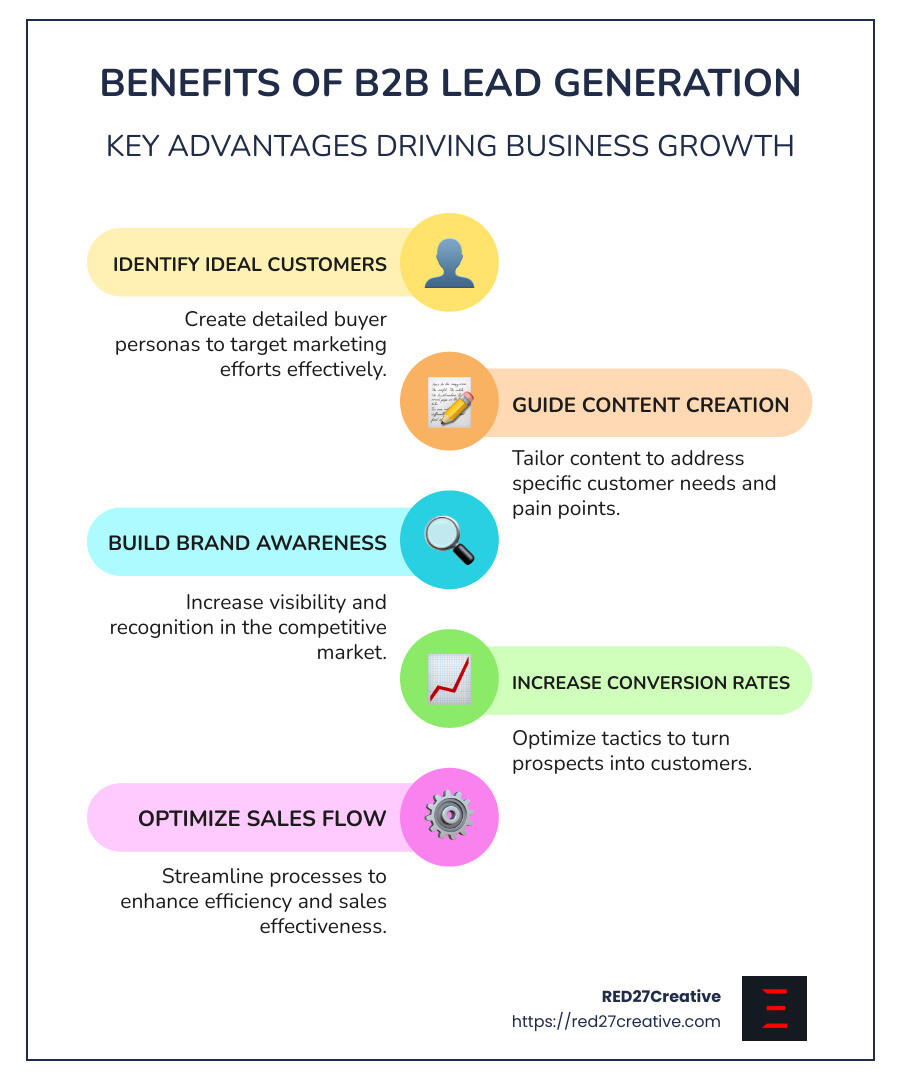
B2B lead generation is essential for the health and growth of any business aiming to thrive in the competitive landscape. It fuels your sales pipeline, driving conversions and securing customers. Without it, there are no new leads, and eventually, no business. In a nutshell, here’s what b2b lead generation brings to the table:
- Identifies your ideal customers
- Guides content creation
- Builds brand awareness
- Increases conversion rates
- Optimizes sales flow
Effective b2b lead generation starts by identifying your ideal customers. This involves creating detailed buyer personas to ensure your marketing efforts are targeted and precise. By understanding who your potential clients are, you can tailor your marketing strategy to meet their specific needs and pain points.
I’m Kiel Tredrea. With over 20 years of experience in crafting robust marketing strategies and enhancing brand presence through B2B lead generation, I specialize in digital innovation and business growth. Let’s explore how a strategic approach to b2b lead generation can revolutionize your business journey.
Understanding B2B Lead Generation
B2B lead generation is the process of identifying potential business clients and enticing them to engage with your products or services. It’s the lifeline that connects your marketing efforts to actual sales. Without a steady stream of leads, your sales funnel can dry up, leaving your business struggling to grow.
The Sales Funnel
Imagine your sales funnel as a journey your potential customers take from being aware of your brand to becoming loyal clients. This journey typically involves three stages:
- Awareness: Here, prospects first learn about your business and what you offer. They might find you through a social media post, a blog article, or a Google search.
- Consideration: At this point, leads are evaluating your products or services against competitors. They might download a whitepaper or sign up for a webinar to gather more information.
- Decision: Finally, the lead is ready to make a purchase decision. They might request a demo or talk to your sales team to finalize their choice.
Marketing Channels
To effectively generate leads, you need to leverage both inbound and outbound marketing channels:
-
Inbound Marketing: This approach attracts leads to you. By creating valuable content like blogs, videos, and social media posts, you draw in prospects who are already interested in what you offer. Inbound leads often have shorter sales cycles and higher conversion rates.
-
Outbound Marketing: This involves reaching out to potential leads. Think cold emails, direct mail, and cold calls. While these leads may take longer to convert, they can be nurtured into valuable customers over time.
Why B2B Lead Generation Matters
Simply having a great product or service isn’t enough. You need to actively seek out and engage with potential clients. By understanding the dynamics of b2b lead generation, you can build a robust pipeline that fuels your business growth.
Next, we’ll dive into proven strategies that can help you attract and convert your ideal buyers.
Proven Strategies for B2B Lead Generation
Generating high-quality leads is crucial for any B2B business aiming for growth. Here are some proven strategies that can help you achieve this goal:
Content Marketing
Content marketing is a powerful way to attract potential clients. By creating valuable and informative content, like blog posts, whitepapers, and case studies, you can position your business as an authority in your industry.
Consider the example of Snack Nation, which crafted an epic post on “employee wellness.” This post not only captured attention but also propelled them to the #1 spot on Google for their target keyword, resulting in a steady stream of leads over the years.
To succeed with content marketing:
- Focus on quality: Ensure your content is engaging and informative.
- Use SEO: Optimize your content with relevant keywords to improve visibility.
- Repurpose content: Share your content on different platforms like LinkedIn or Medium to reach a wider audience.
Social Media Outreach
Social media platforms like LinkedIn and Twitter are essential for B2B lead generation. They allow you to connect directly with potential clients and industry influencers.
For instance, LinkedIn offers specific targeting criteria that can help you reach C-level decision-makers. By using LinkedIn lead generation ads, companies like Netguru have successfully targeted fintech firms with personalized ebooks, attracting high-value leads.
Tips for effective social media outreach:
- Engage actively: Respond to comments and messages promptly.
- Share valuable content: Post industry insights, company news, and customer testimonials.
- Join relevant groups: Participate in discussions to increase visibility and credibility.
Email Marketing
Email marketing remains a cornerstone of B2B lead generation. It allows you to send personalized messages directly to your prospects’ inboxes.
Successful email campaigns often include:
- Segmented lists: Tailor your message to specific audience segments for higher engagement.
- Compelling subject lines: Capture attention with intriguing and relevant subject lines.
- Clear calls to action: Guide recipients towards taking the next step, whether it’s downloading a resource or scheduling a demo.
SEO (Search Engine Optimization)
SEO is essential for driving organic traffic to your website. By optimizing your site for search engines, you increase the likelihood of attracting prospects who are actively searching for solutions like yours.
Consider using long-tail keywords, which are specific and less competitive, to attract more qualified leads. For example, targeting “Microsoft Teams vs Slack” can help you reach prospects who are already comparing solutions and are closer to making a decision.
Key SEO strategies include:
- Keyword research: Identify high-value terms relevant to your industry.
- On-page optimization: Use keywords strategically in your content, meta descriptions, and headers.
- Backlink building: Gain links from reputable sites to improve your domain authority.
Cold Calling
Though it may seem old-fashioned, cold calling can still be effective, especially when combined with other strategies. It provides a personal touch and allows you to directly address potential clients’ needs and concerns.
To improve your cold calling efforts:
- Research your prospects: Know who you’re calling and what challenges they face.
- Prepare a script: Have a clear and concise message ready.
- Follow up: Persistence is key; follow up with prospects who show interest.
By implementing these strategies, you can build a robust lead generation system that attracts and converts your ideal buyers. Next, we’ll explore the different types of B2B leads and how to nurture them effectively.
Types of B2B Leads
In B2B lead generation, not all leads are created equal. Understanding the different types of leads can help you tailor your approach and maximize your chances of conversion. Let’s break down the key types: Marketing-Qualified Leads (MQLs), Sales-Qualified Leads (SQLs), and the importance of lead nurturing.
Marketing-Qualified Leads (MQLs)
MQLs are potential leads identified by the marketing team as likely to purchase based on certain criteria. These leads have shown interest, maybe by subscribing to a newsletter or downloading a whitepaper, but they’re not quite ready to buy yet. They’re like a car warming up in the driveway—they’re not moving, but they’re getting there.
To nurture MQLs:
- Provide valuable content: Share educational resources like blog posts or case studies to keep them engaged.
- Use targeted email campaigns: Send personalized emails that address their specific interests and pain points.
- Monitor their engagement: Track how they interact with your content to determine when they might be ready to move to the next stage.
Sales-Qualified Leads (SQLs)
SQLs are a step ahead. These are the leads that have actively engaged with your sales team. Maybe they’ve requested a demo or reached out with specific questions. These leads are hot and ready for a sales push.
To convert SQLs:
- Respond quickly: Time is of the essence. Follow up with SQLs as soon as they show interest.
- Offer personalized solutions: Tailor your offerings to meet their unique needs and challenges.
- Build relationships: Establish trust and rapport to increase the likelihood of conversion.
Lead Nurturing
Lead nurturing is the process of building relationships with potential buyers at every stage of the sales funnel. It’s like tending to a garden; it requires patience, care, and attention.
Effective lead nurturing involves:
- Consistent communication: Stay in touch with leads through regular updates and check-ins.
- Custom content: Provide information that aligns with their stage in the buying process, whether they’re just learning about solutions or ready to make a decision.
- Feedback loops: Encourage leads to share their thoughts and questions, and use this feedback to refine your approach.
By understanding these types of leads and implementing a strong nurturing strategy, you can effectively guide potential buyers through the sales funnel, increasing your chances of turning them into loyal customers.
Next, we’ll dive into how to generate high-quality B2B leads by identifying your ideal buyer persona and leveraging both inbound and outbound marketing strategies.
How to Generate High-Quality B2B Leads
Generating high-quality B2B leads is like fishing with a fine net—it’s about precision and knowing exactly what you’re after. Let’s explore how to do this by defining your ideal buyer persona and utilizing both inbound and outbound marketing strategies.
Ideal Buyer Persona
Before you start casting your net, you need to know who you’re fishing for. An ideal buyer persona is a detailed description of the perfect customer for your product or service. Think of it as a profile that includes:
- Company attributes: Size, industry, and location.
- Job title and role: Who makes the decisions?
- Goals and challenges: What problems do they face that you can solve?
- Purchase criteria: What factors influence their buying decisions?
Creating a persona helps you tailor your marketing efforts, ensuring that your message resonates with the right audience. It’s like having a map that guides your entire strategy.
Inbound Marketing
Inbound marketing is about attracting leads to you, like a magnet. This approach focuses on creating valuable content that draws prospects in. Here’s how you can make it work:
- Content marketing: Write informative blog posts, produce engaging videos, and share insightful whitepapers. Content is king, and it helps establish your authority.
- Social media: Use platforms like LinkedIn to connect with potential leads. Share content that sparks conversation and engagement.
- SEO: Optimize your website to rank higher on search engines. This makes it easier for potential leads to find you when they’re searching for solutions.
Inbound leads often have a shorter sales cycle because they come to you with interest already piqued. They’re like a warm cup of coffee on a cold day—welcoming and ready to go.
Outbound Marketing
Outbound marketing is the proactive side of lead generation. It involves reaching out to potential leads directly. Here’s how to do it effectively:
- Cold calling and emailing: Reach out to prospects with personalized messages. Make sure to address their specific needs and interests.
- Networking: Attend industry events and trade shows. Face-to-face interactions can build strong connections.
- Direct mail: Send targeted mailers to potential leads. This can be a refreshing change in our digital world.
Outbound marketing requires more effort and patience, but it can uncover leads you might not reach otherwise. It’s like knocking on doors until you find the right one that opens.
By combining a clear understanding of your ideal buyer persona with strategic inbound and outbound marketing efforts, you can generate high-quality B2B leads. This dual approach ensures you’re both attracting interested prospects and actively seeking out new opportunities.
Next, we’ll explore the top 10 B2B lead generation techniques, including content marketing and social selling.
Top 10 B2B Lead Generation Techniques
Content Marketing
Content marketing is a powerful tool in the B2B lead generation arsenal. It’s all about creating valuable content that speaks to your audience’s needs. Here’s how you can do it:
-
SEO Campaigns: Optimize your website content to rank higher in search engine results. Use tools like SEMrush to find the right keywords and content length for your core pages. This makes it easier for potential leads to find you when they’re searching for solutions.
-
Blog Posts: Regularly publish insightful blog posts that address common pain points in your industry. For example, if you’re a child support lawyer in Dallas, your blog should focus on child support issues specific to Texas or Dallas.
-
Whitepapers: Offer in-depth reports or guides that provide significant value. These can position your company as an industry leader and attract leads who are looking for detailed information.
Social Selling
Social selling leverages social media platforms to build relationships and generate leads. Here’s how to use it effectively:
-
LinkedIn: Use LinkedIn to connect with decision-makers. Share insightful content, participate in discussions, and build relationships. This approach helps establish credibility and opens doors for direct sales conversations.
-
Twitter: Engage with industry conversations on Twitter. Share updates, respond to queries, and participate in trending topics to increase visibility.
Account-Based Marketing (ABM)
Account-Based Marketing focuses on targeting high-value accounts with personalized campaigns. Here’s how to make it work:
-
Personalized Campaigns: Tailor your marketing efforts to specific accounts. Use insights about each account to create messages that speak directly to their needs.
-
High-Value Accounts: Identify and focus on accounts that offer the greatest potential value. This targeted approach ensures your efforts are concentrated on leads most likely to convert.
Referral Programs
Referral programs leverage your existing customer base to generate new leads. Here’s how to implement them:
-
Customer Referrals: Encourage satisfied customers to refer others to your business. This can be one of the most effective ways to gain new leads.
-
Incentives: Offer rewards or incentives for successful referrals. This motivates your existing clients to spread the word about your products or services.
Targeted Email Campaigns
Email marketing remains a staple in B2B lead generation. Here’s how to do it right:
-
Segmented Lists: Organize your email lists based on industry, past interactions, or other relevant criteria. This allows for more personalized and effective communication.
-
Custom Solutions: Use targeted emails to offer custom solutions and highlight relevant case studies. This increases the likelihood of conversions.
Free Trials or Demonstrations
Offering free trials or demos can be a game-changer, especially for SaaS companies:
- Product Demos: Allow potential clients to experience your product firsthand. This hands-on approach helps prospects see the value, making them more likely to convert.
Trade Shows and Industry Events
Participating in trade shows and industry events can generate leads through networking and face-to-face interactions:
-
Networking: Use these events to connect with potential clients and industry peers. Personal interactions can build stronger relationships than digital communication.
-
Face-to-Face Interactions: Demonstrate your products and services in person. This allows potential leads to ask questions and get immediate answers.
A/B Testing
A/B testing helps optimize your marketing efforts by experimenting with different elements:
-
Conversion Optimization: Test different versions of your website or marketing materials to see what works best.
-
Website Elements: Experiment with headlines, images, and calls-to-action to find the most effective combinations.
Interactive Content
Interactive content can engage your audience and capture leads:
-
Landing Pages: Create engaging landing pages with interactive elements like quizzes or calculators.
-
Pop-Ups: Use pop-ups to capture visitor information. Ensure they’re relevant and not intrusive.
Video Marketing
Video marketing is a dynamic way to showcase your products and connect with your audience:
-
YouTube: Create tutorials or product videos and share them on YouTube. This platform can significantly increase your reach.
-
Product Videos: Demonstrate how your product works and its benefits. Videos can be more engaging than text, making them a powerful tool for lead generation.
By leveraging these top 10 B2B lead generation techniques, you can effectively attract and convert ideal buyers. Next, we’ll dive into frequently asked questions about B2B lead generation.
Frequently Asked Questions about B2B Lead Generation
What is B2B lead generation?
B2B lead generation is the process of identifying and attracting potential business clients who are likely to be interested in your product or service. This involves using various strategies to capture the attention of decision-makers in other businesses. The ultimate goal is to convert these leads into paying customers, contributing to business growth and revenue.
How do I generate leads for my B2B business?
Generating leads for your B2B business involves a mix of strategies. Here are some effective methods:
-
Content Marketing: Create valuable content like blog posts, whitepapers, and case studies. These resources can attract potential leads by providing solutions to their problems.
-
Social Media Outreach: Engage with your audience on platforms like LinkedIn and Twitter. Share relevant content and participate in industry discussions to build relationships and establish credibility.
-
Email Marketing: Use targeted email campaigns with segmented lists to reach specific audiences. Personalize your messages to address the unique needs of each segment.
-
SEO: Optimize your website for search engines to increase visibility. This helps attract organic traffic from potential leads searching for solutions you offer.
-
Cold Calling: Reach out directly to potential clients through phone calls. This traditional method can still be effective when done strategically.
Which platform is commonly used for B2B lead generation?
LinkedIn is one of the most commonly used platforms for B2B lead generation. It provides a professional network where businesses can connect with decision-makers and industry leaders. LinkedIn’s targeting capabilities allow businesses to reach specific industries, job titles, and company sizes, making it a powerful tool for generating high-quality leads.
By understanding these fundamental aspects of B2B lead generation, you can effectively attract and convert your ideal buyers. In the next section, we’ll explore how RED27Creative can help improve your lead generation efforts.
Conclusion
At RED27Creative, we specialize in changing your B2B lead generation strategy into a powerful engine for growth and success. Our comprehensive services are designed to lift your brand and improve your online presence, ensuring you capture and convert the ideal buyers for your business.
Why Choose RED27Creative?
-
Results-Driven Approach: We focus on delivering measurable results that boost your sales and drive business growth. Our strategies are custom to meet your unique needs and objectives.
-
Comprehensive Services: From SEO and content marketing to social media outreach and visual media, we offer a full suite of services that work together to maximize your lead generation potential.
-
Expertise and Experience: With locations in Geneva, Batavia, Aurora, St. Charles, Plainfield, Oswego, Naperville, and Chicago, we have a deep understanding of diverse markets and industries. Our team of experts is dedicated to helping you succeed.
-
Innovative Solutions: We stay ahead of industry trends to provide you with cutting-edge solutions that set you apart from the competition. Whether it’s leveraging LinkedIn for social selling or optimizing your website for search engines, we have the tools and knowledge to help you thrive.
By partnering with us, you gain access to a wealth of resources and expertise that can transform your lead generation strategy. Let us help you attract and convert your ideal buyers, driving sustained growth and success for your business.
Explore our B2B Lead Generation Services to see how we can lift your business today.

Kiel Tredrea
https://red27creative.comTop Marketing Agency • Web, SEO & Leads • RED27Creative