Manufacturing Success: Your Guide to Digital Marketing

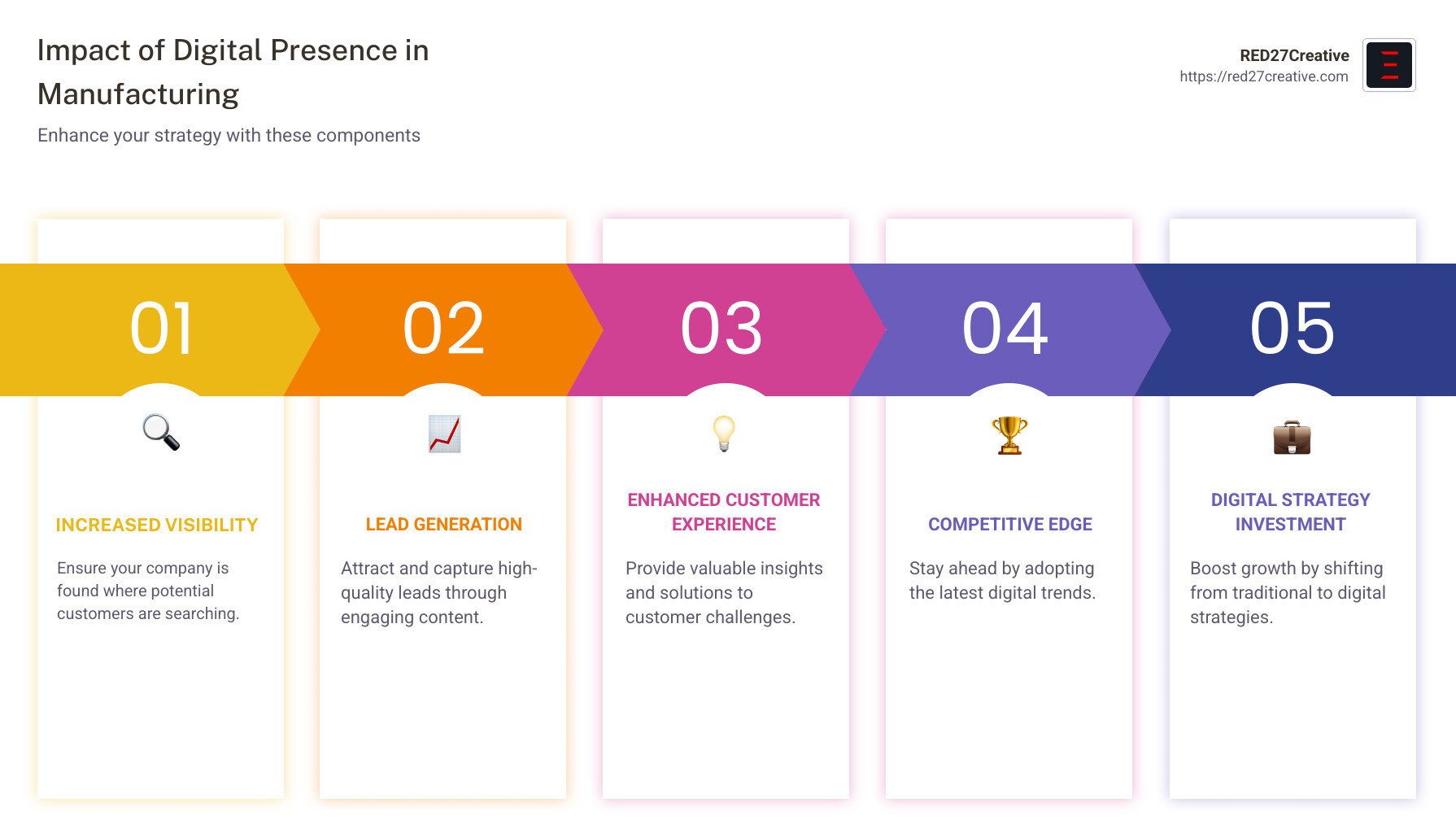
Digital marketing for manufacturing companies is crucial in today’s market. Manufacturers are shifting from traditional methods like trade shows to a robust digital presence. Why? Because nearly 70% of the buyer’s journey happens online before they contact sales. This is thanks to resources like your website and social media. Here’s why you must invest in a digital strategy:
- Increased Visibility: Be where your customers are searching.
- Lead Generation: Capture leads through optimized and engaging content.
- Improved Customer Experience: Provide valuable insights and solutions to your prospects’ problems.
- Competitive Edge: Stay ahead by adopting digital trends and savvy marketing practices.
Now, a little about me. I’m Kiel Tredrea, with over 20 years in digital marketing, specializing in strategies that help B2B businesses like yours thrive online. From SEO to web development, I’ve seen how digital marketing for manufacturing companies can open up tremendous growth.
This guide will show you the essentials to improve your digital presence and dominate your market. Stay tuned.
Understanding Digital Marketing for Manufacturing Companies
B2B Marketing: Navigating the Complex Landscape
In manufacturing, business-to-business (B2B) marketing is the backbone of success. Unlike B2C, where the focus is on individual consumers, B2B marketing targets other businesses. This means longer sales cycles, more stakeholders, and a greater need for detailed information. The key is to understand your Ideal Customer Profile (ICP) and tailor your strategies to meet their specific needs. As noted by McKinsey, even though many industrial companies are still in the early stages of digital marketing, the potential benefits are clear. Analytics-driven marketing can identify new opportunities and improve product recommendations.
Inbound vs. Outbound: Crafting a Balanced Approach
When it comes to digital marketing for manufacturing companies, it’s crucial to balance inbound and outbound strategies.
Inbound marketing focuses on drawing potential customers in through valuable content. This might include blog posts, whitepapers, and videos that address common industry challenges. By optimizing for search engines, you can ensure your content appears when prospects are searching for solutions. This strategy is about being helpful, informative, and present when your prospects need you.
On the other hand, outbound marketing involves pushing your message out to potential leads. This can include email campaigns, social media ads, and targeted LinkedIn advertising. Outbound tactics can be effective in reaching decision-makers directly, especially when combined with precise targeting, as LinkedIn allows you to interact with other business owners and decision-makers easily.
Customer-Centric Strategies: Putting the Buyer First
A successful digital marketing strategy is not just about promoting products; it’s about understanding and addressing your customers’ needs. This customer-centric approach involves creating detailed buyer personas and mapping out the customer journey. By identifying what your prospects are looking for at each stage of their buying process, you can tailor your content and marketing efforts to meet their needs.
For instance, younger engineers and technical buyers are increasingly looking for information online rather than contacting a vendor. By ensuring your website provides clear, concise answers to common questions, you’re more likely to capture their interest. Using tools like remarketing can also keep your brand top-of-mind during the long sales cycle typical in manufacturing.

Incorporating AI and Analytics for Improved Decision Making
Digital marketing is not just about reaching people but understanding them. Using AI and analytics, manufacturers can gain insights into customer behavior, optimize pricing, and improve customer experiences. According to McKinsey, thoughtful management of digital interactions can improve efficiency and revenue growth. By leveraging these tools, you can refine your strategies and make data-driven decisions that align with your business goals.
The Power of Content and SEO
Content marketing remains a cornerstone of digital marketing. By producing high-quality, relevant content, you can attract and engage potential customers. SEO optimization ensures this content is visible to search engines, increasing your chances of appearing in search results. According to a report from Manufacturing Dive, creating visibility is key, and SEO is a powerful way to achieve this.
In summary, understanding digital marketing for manufacturing companies involves a blend of B2B marketing expertise, a balance of inbound and outbound tactics, and a relentless focus on the customer. By leveraging data, analytics, and a strategic approach, manufacturers can improve their digital presence and drive business growth.
Continue reading to find the key components of a successful digital marketing strategy, including SEO, content marketing, lead generation, and more.
Key Components of a Successful Digital Marketing Strategy
In digital marketing for manufacturing companies, success hinges on several key components. These elements work together to create a robust strategy that drives traffic, generates leads, and ultimately boosts sales. Let’s dive into these essential components.
SEO: Search Engine Optimization
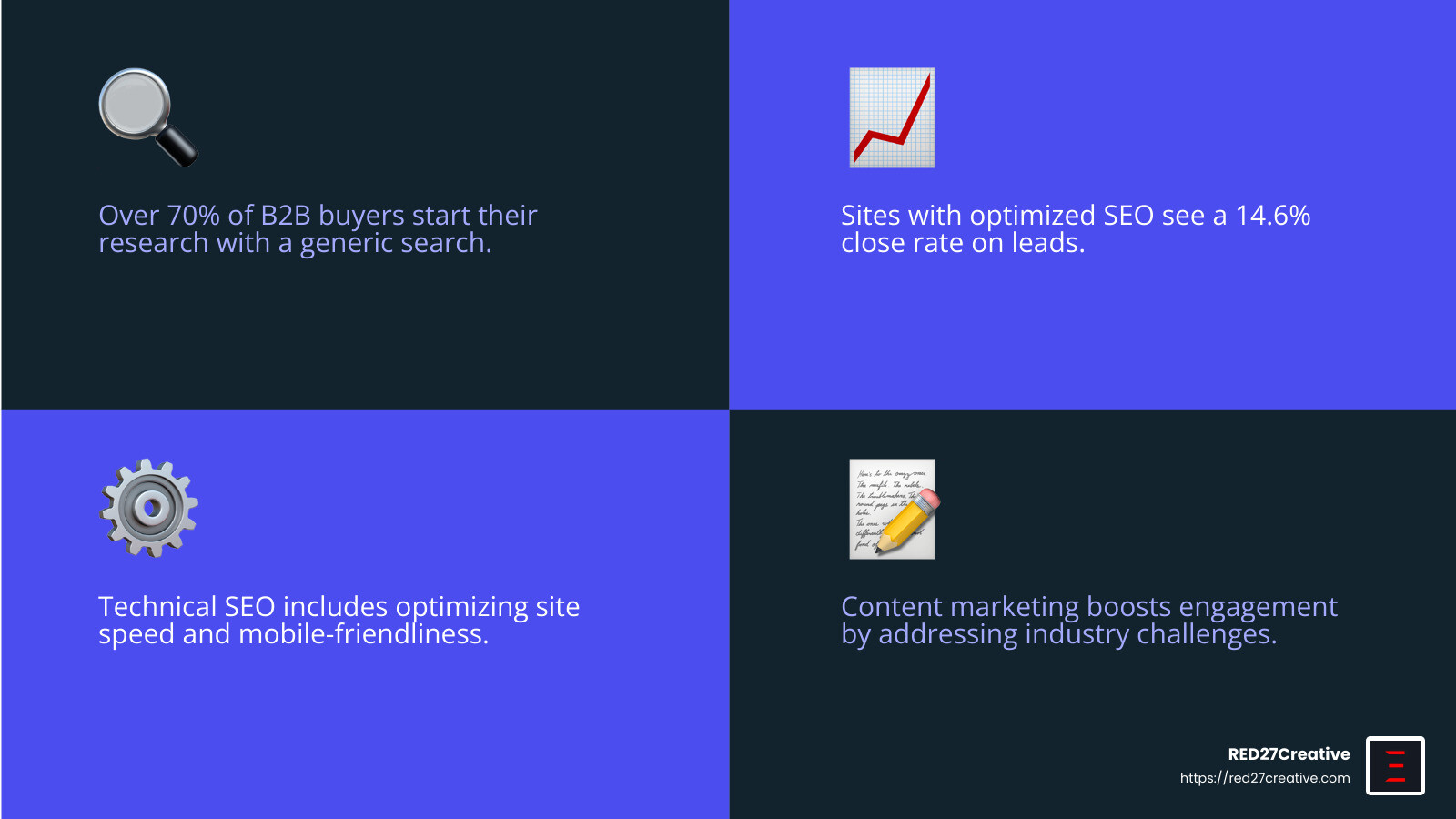
SEO is like the backbone of your digital marketing strategy. It ensures that your website ranks well on search engines, making it easier for potential customers to find you. To optimize for SEO, focus on:
- Keyword Research: Identify terms your audience uses. For instance, “industrial manufacturing solutions” or “B2B manufacturing services.”
- On-Page SEO: Optimize title tags, meta descriptions, and content. Make sure your site is easy to steer.
- Technical SEO: Ensure your website loads quickly and is mobile-friendly. This improves user experience and search engine rankings.
Content Marketing: Engaging Your Audience
Content marketing is about creating valuable content that resonates with your audience. This includes blog posts, videos, and infographics. By addressing common industry challenges, you position your brand as a thought leader.
- Blogging: Share insights and solutions. For example, write about “innovations in manufacturing” or “how to improve supply chain efficiency.”
- Videos: Use video content to explain complex processes. Videos are 50 times more likely to drive organic search results than plain text.
- Whitepapers and Case Studies: Provide in-depth analysis and success stories. These can be used to capture leads via gated content.
Lead Generation: Capturing Potential Customers
Lead generation is crucial for converting website visitors into potential customers. Effective strategies include:
- Landing Pages: Create dedicated pages for specific offers or products. Use clear CTAs (Call-to-Actions) to encourage action.
- Forms and CTAs: Collect contact information with easy-to-fill forms. Ensure your CTAs are compelling and visible.
- Lead Nurturing: Develop email campaigns to guide leads through the buying process.
PPC: Pay-Per-Click Advertising
PPC advertising allows you to target specific audiences with precision. This is especially effective for reaching decision-makers in the manufacturing sector.
- Google Ads: Use targeted keywords to reach potential customers searching for specific solutions.
- LinkedIn Ads: Target ads to professionals in the manufacturing industry. LinkedIn is a valuable platform for B2B marketing.
Social Media: Building Connections
Social media is not just for B2C companies. Manufacturing companies can use platforms like LinkedIn to connect with industry professionals and showcase their expertise.
- LinkedIn: Share company updates, industry news, and engage with followers. Join industry groups to expand your network.
- Content Promotion: Amplify your content by sharing blog posts and videos. This increases visibility and engagement.
Bringing It All Together
These components – SEO, content marketing, lead generation, PPC, and social media – form a comprehensive digital marketing strategy. By integrating these elements, manufacturers can improve their online presence and drive business growth.
Continue reading to explore how digital marketing complements the industrial buying cycle, focusing on long sales cycles and customer journeys.
Top Digital Marketing Tactics for Manufacturers
In the field of digital marketing for manufacturing companies, certain tactics stand out as particularly effective. Let’s explore these key strategies: website optimization, video content, email marketing, and automation.
Website Optimization
Your website is the heart of your digital presence. It’s more than just an online brochure; it’s a marketing machine designed to attract and convert leads.
- SEO-Optimized Content: Ensure your site is rich with keywords like “industrial solutions” or “manufacturing services” to rank higher in search results. Use clear headings and concise language for easy navigation.
- User Experience (UX): A well-designed site should load quickly and be mobile-friendly. A seamless UX keeps visitors engaged and reduces bounce rates.
- Lead Capture Forms: Include forms to gather visitor information. This helps in building a database for further engagement.
Video Content
Video is a powerful tool in digital marketing. It’s engaging and can convey complex information simply.
- Explainer Videos: Create short videos that explain your manufacturing processes or showcase your products. Videos are 50 times more likely to drive organic search results than text alone.
- Customer Testimonials: Videos featuring satisfied clients can build trust and credibility.
Email Marketing
Email remains a vital channel for engaging with potential and existing customers.
- Personalized Campaigns: Use data to send targeted emails. Personalized content increases open and click-through rates.
- Regular Updates: Keep your audience informed about new products, industry news, or special offers. Consistent communication helps maintain interest and loyalty.
Automation
Automation streamlines your marketing efforts, saving time and increasing efficiency.
- Email Automation: Set up automated email sequences to nurture leads. This ensures timely communication without manual intervention.
- Social Media Scheduling: Use tools to schedule posts, ensuring a consistent online presence without daily effort.
- Analytics Tools: Automate data collection to track performance and adjust strategies accordingly.
By leveraging these tactics, manufacturing companies can improve their digital marketing efforts. This not only improves brand visibility but also drives meaningful engagement with potential customers.
Continue reading to find how digital marketing complements the industrial buying cycle, focusing on long sales cycles and customer journeys.
How Digital Marketing Complements the Industrial Buying Cycle
In digital marketing for manufacturing companies, understanding how digital strategies align with the industrial buying cycle is crucial. Let’s explore the key aspects: long sales cycles, buyer personas, and customer journeys.
Long Sales Cycle
Manufacturing sales cycles are notoriously long and complex. Decisions often involve multiple stakeholders and require thorough research and evaluation.
- Nurturing Leads: Digital marketing allows for continuous engagement with prospects over time. Email campaigns, targeted content, and retargeting ads keep your brand top-of-mind as potential buyers progress through their decision-making process.
- Educational Content: Providing valuable resources such as white papers and case studies can help educate potential clients, assisting them in making informed decisions.
Buyer Personas
Creating detailed buyer personas is essential for targeting your digital marketing efforts effectively.
- Understanding Needs: Each persona represents a specific segment of your audience, such as engineers or procurement officers. By understanding their unique needs and challenges, you can tailor your content to address their specific concerns.
- Personalized Marketing: Use insights from buyer personas to craft personalized marketing messages that resonate with each audience segment. This approach increases engagement and conversion rates.
Customer Journey
Mapping out the customer journey helps you deliver the right content at the right time.
- Awareness Stage: At this stage, prospects are identifying their needs. Use SEO and social media to increase visibility and drive traffic to your website.
- Consideration Stage: Prospects are evaluating different solutions. Offer detailed product information, comparison guides, and testimonials to aid their research.
- Decision Stage: Prospects are ready to make a purchase decision. Provide clear calls-to-action, easy contact options, and compelling offers to facilitate conversion.
By aligning digital marketing strategies with the industrial buying cycle, manufacturing companies can effectively guide prospects from initial awareness to final purchase, ensuring a seamless and efficient customer journey.
Continue reading to explore frequently asked questions about digital marketing for manufacturing companies, including best practices and strategies for success.
Frequently Asked Questions about Digital Marketing for Manufacturing Companies
What is the 3-3-3 rule in marketing?
In marketing, especially digital marketing for manufacturing companies, the 3-3-3 rule emphasizes concise messaging and impactful communication. Here’s how it works:
- 3 Seconds: Capture attention within the first three seconds. This is crucial in a digital world where users quickly scroll through content.
- 3 Words: Use three key words to convey your main message. This ensures clarity and makes your communication memorable.
- 3 Times: Repeat your message three times across different channels to reinforce it and improve recall.
By following the 3-3-3 rule, manufacturers can create messages that are both clear and compelling, ensuring they stand out in a crowded marketplace.
What are the 7 C’s of digital marketing?
The 7 C’s of digital marketing provide a framework for creating customer-centric strategies. Let’s break them down:
- Customer: Understand your target audience deeply. Know their needs, preferences, and behaviors to tailor your marketing efforts accordingly.
- Content: Create valuable, relevant, and engaging content. This could include blogs, videos, and white papers that address customer pain points.
- Context: Deliver the right message at the right time and place. Consider the context in which your audience will consume your content.
- Community: Build and nurture a community around your brand. Engage with your audience on social media and forums to foster relationships.
- Convenience: Make it easy for customers to interact with your brand. This includes having a user-friendly website and accessible customer support.
- Cohesion: Ensure all marketing efforts are consistent and aligned. This creates a unified brand experience across all channels.
- Conversion: Focus on turning prospects into customers. Use clear calls-to-action and optimize your website for conversions.
By focusing on these 7 C’s, manufacturing companies can improve their digital marketing strategies and build stronger connections with their audience.
How to do digital marketing for a company?
Implementing digital marketing for a manufacturing company involves several key components:
- SEO (Search Engine Optimization): Optimize your website to rank higher in search engine results. Use keywords strategically in your content to attract organic traffic.
- Content Creation: Develop informative and engaging content that resonates with your audience. This includes blogs, videos, and case studies that highlight your expertise.
- Social Media: Leverage platforms like LinkedIn and Twitter to connect with industry professionals and potential customers. Share updates, engage in conversations, and promote your content.
- Email Marketing: Use targeted email campaigns to nurture leads and keep your brand top-of-mind. Personalize your emails based on customer segments for better engagement.
By integrating these tactics, manufacturing companies can create a robust digital marketing strategy that drives engagement, builds brand awareness, and ultimately increases sales.
Continue reading to find how digital marketing complements the industrial buying cycle and explore more strategies for success.
Conclusion
In the rapidly evolving world of digital marketing for manufacturing companies, establishing a robust online presence is essential. At RED27Creative, we are dedicated to guiding manufacturing businesses through this digital landscape with our comprehensive suite of services. From SEO and content marketing to web design and lead generation, our tailored solutions are designed to elevate brands and drive business growth effectively.
Enhancing Growth and Online Visibility
In today’s competitive market, growth is closely tied to visibility and engagement. Our expertise in digital marketing ensures that your manufacturing company not only reaches but also resonates with your target audience. By employing innovative strategies, we help you build a strong online presence that drives conversions and fosters long-term client relationships.
With locations in Geneva, Batavia, Aurora, St. Charles, Plainfield, Oswego, Naperville, and Chicago, RED27Creative is strategically positioned to support manufacturing companies across these regions. Our local presence allows us to understand the unique challenges and opportunities within these markets, providing personalized solutions that deliver tangible results.
Why Partner with RED27Creative?
Our commitment to excellence and results-driven approach sets us apart. We believe in crafting strategies that are as unique as the businesses we serve. Whether you’re looking to enhance your SEO, create compelling content, or optimize your website, we’re here to help you achieve your goals.
Ready to elevate your digital marketing efforts? Discover how our SEO Marketing Services can transform your online presence and drive success for your manufacturing company. Contact us today to embark on your journey toward growth and visibility in the digital age.

Kiel Tredrea
https://red27creative.comTop Marketing Agency • Web, SEO & Leads • RED27Creative