Don’t Just Get Leads, Get Qualified Leads: Your How-To Guide

Why Qualified Leads Are the Engine of Sustainable Growth
Generate qualified leads isn’t just a marketing goal—it’s the difference between wasting resources on prospects who’ll never buy and building a pipeline full of customers ready to say yes. Here’s what you need to know:
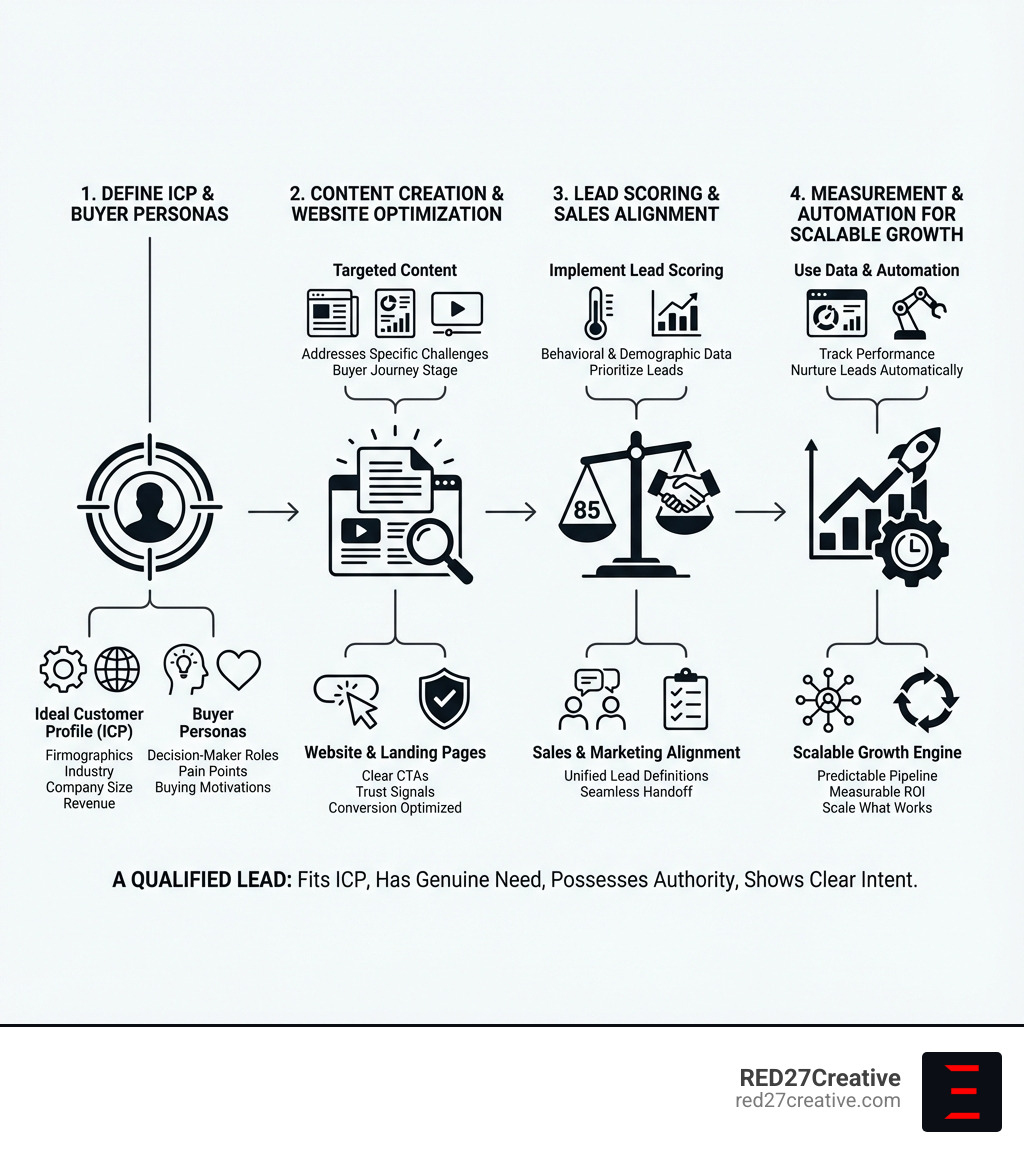
- Define your Ideal Customer Profile (ICP) using firmographics like industry, company size, and revenue
- Create detailed buyer personas with decision-maker roles, pain points, and buying motivations
- Build targeted content that addresses specific challenges at each stage of the buyer journey
- Optimize your website and landing pages for conversion with clear CTAs and trust signals
- Align sales and marketing teams on lead definitions and implement lead scoring
- Use data and automation to track performance, nurture leads, and scale what works
Most businesses generate plenty of traffic and collect contact information, but they struggle with a critical problem: the leads don’t convert. Research shows that 84% of business leaders cite the marketing-to-sales handoff as one of their biggest challenges. When marketing passes unqualified leads to sales, time gets wasted, costs rise, and frustration builds on both sides.
The shift from quantity to quality changes everything. Organizations that prioritize content aligned with their sales process see a 12% higher acceptance rate from sales teams. Companies that focus on lead engagement by content type avoid the 10% drop in acceptance that comes from ignoring this crucial step. And with over 20 touchpoints typically required before a prospect becomes sales-ready, every interaction needs to be intentional, targeted, and built around the right audience.
A qualified lead isn’t just someone who downloaded an ebook or filled out a form. It’s a prospect who fits your ICP, has a genuine need, possesses buying authority, and shows clear intent to purchase. These are the leads that move through your pipeline faster, convert at higher rates, and deliver measurable ROI.
I’m Kiel Tredrea, founder and president of RED27Creative, and over the past 20+ years I’ve helped hundreds of businesses build marketing systems that generate qualified leads through strategic SEO, conversion-focused web design, and data-driven campaigns. This guide will show you how to attract the right prospects, nurture them effectively, and turn your marketing into a predictable growth engine.
The Foundation: Defining Your Ideal Customer
Before you can attract the right leads, you need to know exactly who they are. Skipping this step is like marketing without a map. The first step is to create a clear Ideal Customer Profile (ICP)—the type of company or individual who benefits most from your solution and brings the most value to your business.
We start by outlining your ICP using firmographics such as industry, company size, revenue, and location. This gives us a macro-level view of your target market. For businesses in Geneva, Batavia, Aurora, St. Charles, Plainfield, Oswego, Naperville, or Chicago, this might involve focusing on local demographics and business types that align with our service areas.
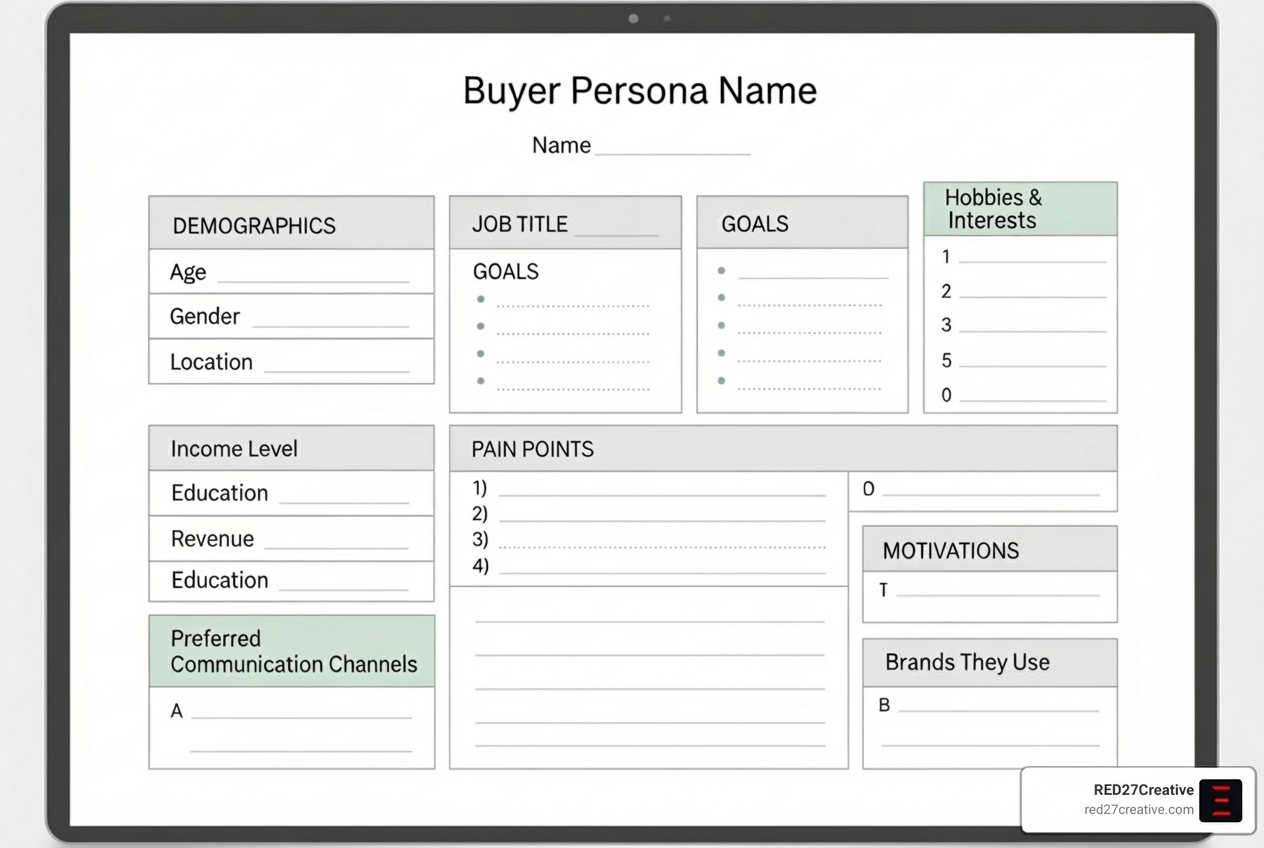
Next, we develop buyer personas—semi-fictional profiles of the decision-makers and influencers within your ICP. These include details like job titles, goals, pain points, and motivations. We use frameworks such as BANT (Budget, Authority, Need, Timing) or CHAMP (Challenges, Authority, Money, Prioritization) to further qualify your personas. This ensures we’re targeting those with the power and intent to buy, rather than just anyone who shows a passing interest.
Top Strategies to Generate Qualified Leads in Today’s Landscape
With your ICP and personas defined, we can focus our efforts on the channels and tactics that attract the right prospects. We avoid a scattergun approach; targeted strategies will bring in more qualified leads and improve your conversion rates. This precise approach is a hallmark of an effective marketing strategy consultant.
Content Marketing: Attract and Nurture Qualified Leads
Content is the foundation of trust in digital marketing. By providing valuable, relevant information, we position your brand as an expert and guide prospects through their buying journey. Research shows that companies aligning content with the sales process see higher lead quality and conversion rates.
We create content for every stage of the funnel:
- Top of Funnel (TOFU): Blog posts, guides, and social media to build awareness. These address general questions and pain points your ICP might have.
- Middle of Funnel (MOFU): Ebooks, case studies, and webinars to capture leads and nurture interest. These offer deeper insights in exchange for contact information.
- Bottom of Funnel (BOFU): Demos, free trials, and consultations to convert prospects into customers. This content directly addresses why your solution is the best fit.
We align your content with a robust SEO strategy to ensure your ideal customers find you when searching for solutions. This means optimizing for keywords your target audience in Chicago, Naperville, or any of our service areas might be using.
Website and Landing Page Optimization for Lead Conversion
Your website is your most important digital asset for lead generation. A seamless user experience can be the difference between a new lead and a lost opportunity. We optimize your site for speed, clarity, and conversion.
- Use clear calls-to-action (CTAs) on every key page. These guide visitors toward the next step, whether it’s downloading a guide or booking a consultation.
- Build trust with testimonials, case studies, and reviews from platforms like G2 or TrustRadius. Social proof is a powerful motivator.
- Analyze user behavior with tools like session recordings to identify and remove friction points. Watching how users interact with your forms can reveal critical areas for improvement.
- Ensure your site is built on a strong foundation with professional web design services focused on conversion. A well-designed site ensures visitors from Geneva, Batavia, or Aurora have a positive and productive experience.
Targeted Digital Advertising and Social Media
Paid media can deliver immediate, highly targeted traffic. We use platforms that allow you to reach your ICP based on job title, industry, or search intent. For example, search advertising captures users actively looking for your services, while social media advertising builds brand awareness and targets specific professional demographics. LinkedIn, in particular, is a powerful platform for B2B lead generation.
Retargeting is also essential—by serving ads to users who have previously visited your website, we keep your brand top-of-mind and encourage them to return and convert. This is especially effective for prospects who might have been interrupted, like a potential client in St. Charles who visited your site but didn’t convert immediately.
Aligning Sales and Marketing for Seamless Lead Handoffs
Generating qualified leads is only effective if your sales and marketing teams are aligned. Misalignment can result in lost opportunities and wasted resources. Both teams should agree on what defines a Marketing Qualified Lead (MQL) and a Sales Qualified Lead (SQL).
- MQL: A lead who has engaged with marketing content (e.g., downloaded an ebook, attended a webinar) and is more likely to become a customer.
- SQL: An MQL that sales has accepted as a viable prospect, indicating they are ready for a direct sales conversation.
Research indicates that 84% of business leaders acknowledge the marketing-to-sales handoff as a significant challenge. However, when sales and marketing teams are aligned, 42% of businesses notice faster connections with qualified leads. This alignment is crucial for efficient growth.

Lead Scoring: Identifying and Prioritizing Qualified Leads
Lead scoring assigns points to leads based on their attributes and actions. For example, a lead who requests a demo scores higher than one who only downloads a guide. This system helps us prioritize leads and ensures your sales team focuses on the most promising opportunities.
Leads that reach a certain score become MQLs and are passed to sales, while others are nurtured until they’re ready. Implementing a lead scoring system helps avoid the scenario where sales reps spend significant time filtering out low-quality leads, which is often cited as a major inefficiency.
Ensuring a Smooth Marketing-to-Sales Transition
A seamless handoff relies on process and technology. We use a Customer Relationship Management (CRM) system to track lead interactions and automate assignments. We establish a Service Level Agreement (SLA) between marketing and sales to define responsibilities and follow-up timelines. Regular feedback loops help refine your targeting and lead scoring over time, ensuring continuous improvement in lead quality. This collaborative approach is vital for any business looking to hire fractional CMO services, as it ensures all departments work in concert.
Measuring, Automating, and Overcoming Lead Generation Challenges
To consistently generate qualified leads, we adopt a data-driven approach. We measure what works, automate repetitive tasks, and proactively address challenges to build a scalable lead generation engine. This strategic oversight is a core component of our fractional CMO services.
Data and Automation: Scaling Qualified Lead Generation
We use analytics tools to track which channels and campaigns generate the most qualified leads. Key metrics include Cost Per Lead (CPL), MQL-to-SQL conversion rate, and Customer Lifetime Value (CLV). Proving ROI justifies further investment and guides optimization. Businesses using marketing automation software have reported an 82% increase in lead generation.
Marketing automation software streamlines email nurturing, lead scoring, and campaign management. We integrate buyer intent data to further personalize outreach and improve targeting. This data can tell us when a prospect in Plainfield or Oswego is actively researching solutions, allowing for timely and relevant engagement. A unified marketing strategy brings these tools together for maximum impact.
How Can Businesses Leverage Buyer Intent Data to Improve Lead Quality?
Buyer intent data provides insights into a prospect’s online behavior, indicating their likelihood to purchase. We leverage this data in several ways:
- Prioritize leads: Assign higher scores to leads showing strong intent signals (e.g., visiting pricing pages, comparing products).
- Personalize content: Deliver custom content based on the specific topics a prospect is researching.
- Account-Based Marketing (ABM): Use intent data to identify in-market accounts and develop highly targeted ABM campaigns.
By understanding what your potential customers are actively looking for, we can ensure our efforts to generate qualified leads are incredibly precise.
Common Lead Generation Challenges and Solutions
Even with the best strategies, challenges can arise. Here’s how we address them:
- Low-quality leads: We continuously refine your ICP and personas, implement stricter lead scoring, and focus on high-intent content. This ensures we’re always attracting the right fit.
- High cost-per-lead: We optimize landing pages, A/B test messaging, and invest in organic channels like SEO and content marketing to drive down acquisition costs.
- Sales and marketing misalignment: We schedule regular meetings, co-create an SLA, and use shared dashboards to track progress. Clear communication and shared goals are paramount.
How Can Businesses Measure the ROI of Their Lead Generation Efforts?
Measuring ROI is crucial to understanding the effectiveness of your lead generation strategies. We track key metrics throughout the entire customer journey:
- Visitor to Leads: The percentage of website visitors who convert into leads.
- Leads to Opportunities: The rate at which leads progress to sales opportunities.
- Opportunities to Customers: The final conversion rate from opportunity to closed-won business.
- Customer Lifetime Value (CLTV): The total revenue a customer is expected to generate over their relationship with your business.
By carefully tracking these metrics, we can attribute revenue directly to our lead generation efforts, allowing us to optimize campaigns for maximum profitability.
Frequently Asked Questions about Generating Qualified Leads
What is a qualified lead?
A qualified lead is a prospect who fits your Ideal Customer Profile, has a clear need, authority to purchase, and a higher likelihood of becoming a customer. They demonstrate behaviors and characteristics that align with your best customers.
How long does it take to generate qualified leads?
Timelines vary. Paid campaigns can deliver leads quickly, but nurturing is often required. SEO and content marketing take 3–6 months to build momentum but typically yield higher-quality, more sustainable leads over time for businesses in areas like Oswego or Naperville.
What is the first step to generate qualified leads?
The first step is defining your Ideal Customer Profile (ICP) and buyer personas. This ensures all marketing efforts are targeted and effective, preventing wasted resources on prospects who are not a good fit for your business.
Conclusion: Build Your Engine for Growth
Focusing on qualified leads transforms your marketing and sales results. By understanding your ideal customer, using targeted strategies, and aligning your teams, you create a predictable, scalable system for growth. RED27Creative can help you build a data-driven engine that connects your website, SEO, and marketing into a unified strategy for consistent, qualified opportunities across Chicago, St. Charles, and beyond.
Explore our marketing strategy and consulting services to start turning your visibility into real business growth.

Kiel Tredrea
https://red27creative.comTop Marketing Agency • Web, SEO & Leads • RED27Creative