Manufacturing Clicks: Boosting Traffic to Your Website

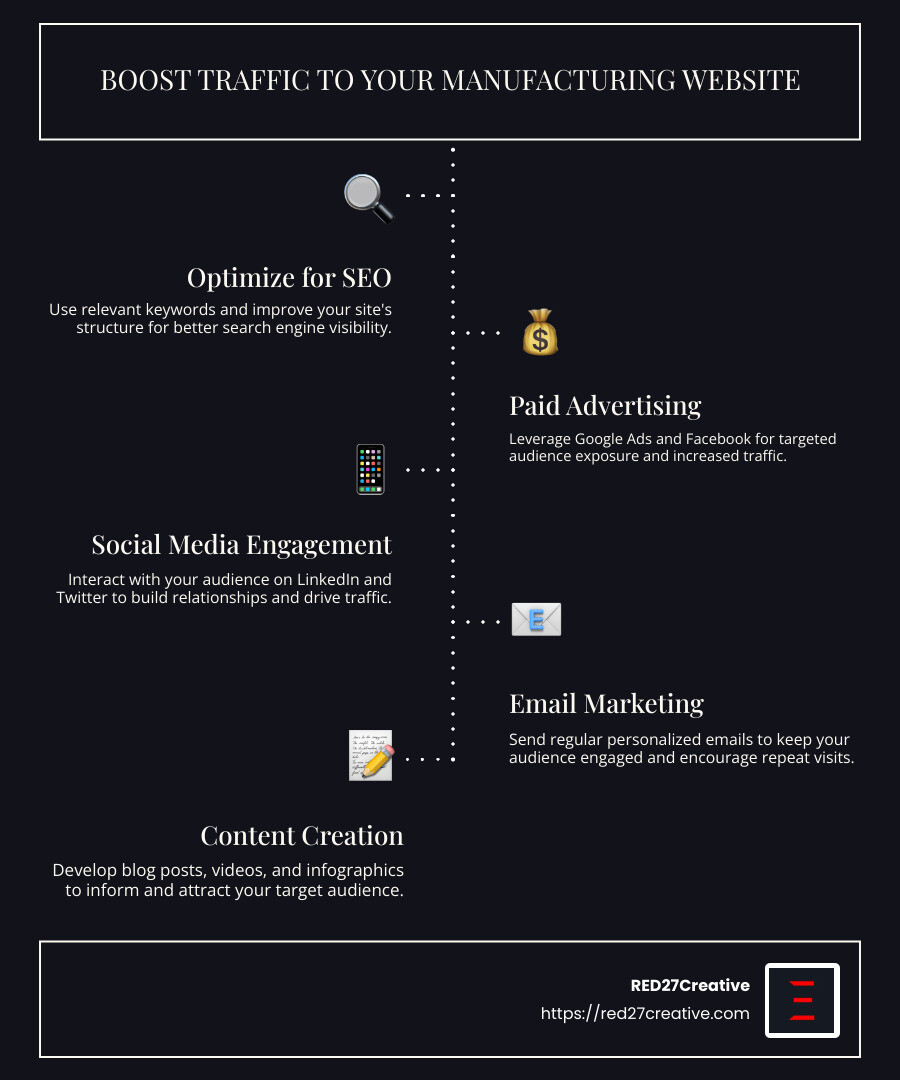
How to get more traffic to our manufacturing website can make or break a business in today’s digital world. Quick strategies include:
- Optimizing for Search Engines (SEO): Use relevant keywords and improve your site’s structure.
- Paid Advertising: Leverage Google Ads and Facebook for targeted exposure.
- Social Media Engagement: Connect with your audience through platforms like LinkedIn and Twitter.
- Email Marketing: Regular, personalized emails can drive repeat visits.
- Content Creation: Write informative blog posts, create videos, and design infographics.
Standing out is critical for manufacturing businesses. The industry’s online landscape is crowded, and just having a website is not enough. To truly succeed, you need a robust digital marketing strategy, including SEO and compelling content, to draw leads and boost brand presence.
As Kiel Tredrea, I’ve spent over 20 years helping companies understand how to get more traffic to our manufacturing website, focusing on brand positioning and effective web development strategies. My expertise enables businesses to thrive through innovative digital marketing and strategic growth.
Implementing SEO for Manufacturing Websites
For manufacturing businesses, SEO strategy isn’t just a buzzword; it’s a necessity. Without it, your site might as well be invisible in the vast ocean of the internet. Let’s explore how to get more traffic to our manufacturing website using effective SEO techniques.
Keyword Research: The Foundation of SEO
Start with intention-based keywords. These are the terms your potential customers type into search engines when they’re looking for solutions you offer. Tools like Google Search Console, MOZ, and SEMrush can help identify these keywords. Long-tail keywords are your friends. They’re less competitive and more likely to bring in relevant traffic.
Technical SEO: Behind-the-Scenes Optimization
Technical SEO is like tuning a car engine. It keeps your website running smoothly and efficiently. Ensure your site loads quickly, is mobile-friendly, and has a solid internal linking structure. Use tools like Google’s PageSpeed Insights to check your site’s performance and address any issues.
Metadata: Your Website’s Business Card
Metadata is what search engines see first. It’s crucial to optimize your title tags, meta descriptions, and header tags with relevant keywords. This not only improves your site’s visibility but also makes it more appealing to users browsing search results.
Search Engines: Your Gateway to Visibility
Search engines are the primary way people find your website. Ensuring your site is indexed properly is crucial. Implementing structured data, like Schema markup, can improve your site’s search result snippets, potentially increasing click-through rates.
“Search engines recognize high-performance websites and direct relatively more traffic to these websites because they offer a better user experience.”
Continuous Monitoring and Adjustment
SEO isn’t a one-and-done task. It requires ongoing analysis and adjustment. Regularly check your keyword performance and adapt your strategy to capture new opportunities. Use analytics tools to monitor traffic patterns and see which tactics are driving the most visitors to your site.
Implementing a solid SEO strategy can significantly improve your online presence, bringing more qualified traffic to your manufacturing website. Next, we’ll explore how content marketing can further lift your brand and attract even more visitors.
Content Marketing Strategies
Content marketing is a powerful way to drive traffic to your manufacturing website. It’s all about providing valuable information that your audience is searching for. Let’s take a look at some effective content marketing strategies.
Blog Articles: Building Trust and Authority
Blogs are a cornerstone of content marketing. They help build trust and establish your brand as an industry leader. According to research, over 34% of readers make unplanned purchases because of a blog post. Regularly updated blogs keep your site relevant and provide fresh material to share across platforms.
Key Tips for Blog Articles:
– Focus on relevant topics that answer your audience’s questions.
– Use a clear call to action at the end of each post.
– Share blog posts on social media and newsletters to drive traffic back to your site.
Videos: Engaging and Informative
Videos can be more engaging than text and are a great way to explain complex manufacturing processes. A well-produced video can capture attention and convey your message quickly. Platforms like YouTube are perfect for hosting and sharing your videos.
Ideas for Video Content:
– Tutorials or “how-to” guides for using your products.
– Behind-the-scenes looks at your manufacturing process.
– Customer testimonials and success stories.
Infographics: Simplifying Complex Information
Infographics are perfect for breaking down complex data into digestible visuals. They are highly shareable and can drive traffic back to your site when shared on social media or included in blog posts.
Creating Effective Infographics:
– Use clear, simple visuals to convey information.
– Include your logo and website link for branding.
– Make them easy to share by providing an embed code.
Case Studies: Showcasing Success
Case studies provide real-world examples of how your products or services solve problems. They offer social proof and can be a persuasive tool in the decision-making process for potential clients.
How to Craft a Compelling Case Study:
– Start with a clear problem your client faced.
– Explain how your product or service provided a solution.
– Include measurable results and quotes from satisfied customers.
By leveraging these content marketing strategies, you can effectively boost traffic to your manufacturing website. Each type of content serves a unique purpose and can attract different segments of your target audience. Next, we’ll explore how social media can amplify your content and further increase your website traffic.
Leveraging Social Media for Traffic
Social media is a powerful tool to boost traffic to your manufacturing website. With nearly 4 billion people using social platforms, the potential reach is enormous. But how do you tap into this vast audience effectively?
Building Brand Awareness
Social media is perfect for building brand awareness. By consistently sharing valuable content, you position your brand as a trusted industry leader. According to research, over 95% of consumers say they are more likely to buy from a brand they follow on social media.
Tips for Building Brand Awareness:
– Maintain a consistent brand voice across all platforms.
– Share a mix of content, including blog posts, videos, and infographics.
– Engage with your audience by responding to comments and messages promptly.
Using Hashtags for Findability
Hashtags are essential for increasing your content’s findability. They help categorize your posts and make them easier to find by users interested in similar topics. Platforms like Instagram and Twitter are particularly effective for hashtag use.
Effective Hashtag Strategies:
– Use a mix of popular and niche hashtags to reach a wider audience.
– Create a unique branded hashtag to encourage user-generated content.
– Research trending hashtags in your industry and incorporate them into your posts.
Driving Engagement through Interactive Content
Engagement is key to driving traffic from social media to your website. The more users interact with your content, the more likely they are to visit your site.
Ways to Increase Engagement:
– Post interactive content like polls, quizzes, or Q&A sessions.
– Encourage followers to share their experiences with your products.
– Host giveaways or contests that require participants to visit your website.
Choosing the Right Platforms
Not all social media platforms will suit your brand. It’s crucial to identify where your target audience spends their time.
Platform Selection Tips:
– Use LinkedIn for B2B networking and sharing industry insights.
– Leverage YouTube for video content, as it drives significant traffic with links from video descriptions.
– Use Facebook and Instagram to reach a broader audience with engaging visuals.
By strategically leveraging social media, you can significantly increase traffic to your manufacturing website. The key is to engage your audience with valuable content and encourage interaction. Next, we’ll dig into how email marketing can provide direct engagement with your audience and further improve your traffic-driving efforts.
Email Marketing for Direct Engagement
Email marketing is a direct and effective way to engage with your audience and drive traffic to your manufacturing website. It’s personal, targeted, and can yield impressive results when done right. Here’s how to get started.
Crafting Effective Email Campaigns
An email campaign is not just about sending messages; it’s about building relationships. Start with a clear goal and tailor your content to meet that objective.
Key Elements of a Successful Campaign:
– Compelling Subject Lines: Capture attention with concise and intriguing subject lines. A/B testing different versions can reveal what resonates best with your audience.
– Personalized Content: Use the recipient’s name and tailor the message to their interests. Personalization increases open rates and engagement.
Segmentation for Targeted Messaging
Not all subscribers are the same. Segmentation allows you to divide your email list into smaller groups based on specific criteria, such as location, industry, or past interactions.
Benefits of Segmentation:
– Increased Relevance: Send content that is more relevant to each group, increasing the likelihood of engagement.
– Improved Metrics: Segmented campaigns can lead to higher open and click-through rates compared to non-segmented ones.
A/B Testing for Optimization
A/B testing involves sending two variations of an email to see which performs better. This process helps refine your strategy over time.
What to Test:
– Subject Lines: Test different lengths, tones, and formats.
– Call-to-Actions (CTAs): Experiment with wording, placement, and color to see what drives the most clicks.
– Send Times: Determine the optimal time and day for sending emails to maximize open rates.
Engaging CTAs
A strong call-to-action is crucial for converting email recipients into website visitors. Your CTA should be clear, compelling, and action-oriented.
CTA Tips:
– Use action verbs like “Explore,” “Find,” or “Join.”
– Make it visually stand out with buttons or bold text.
– Align the CTA with the content of the email for consistency.
The Power of Newsletters
Newsletters are an excellent way to keep your audience informed and engaged. They can include company news, industry insights, and links to your latest blog posts or videos.
Newsletter Best Practices:
– Consistent Schedule: Send newsletters regularly, whether it’s weekly, bi-weekly, or monthly.
– Valuable Content: Provide information that your audience finds useful and interesting.
– Clear Structure: Use headings, bullet points, and images to make the content easy to digest.
By implementing these email marketing strategies, you can establish a direct line of communication with your audience, keeping them engaged and driving them to your manufacturing website. Next, we’ll explore how Pay-Per-Click (PPC) campaigns can further boost your site traffic.
Pay-Per-Click (PPC) Campaigns
Pay-Per-Click (PPC) campaigns are a powerful tool for driving targeted traffic to your manufacturing website. Unlike organic methods, PPC offers immediate visibility in search engine results through paid ads. Here’s how to effectively use PPC to boost your website traffic.
Understanding PPC Basics
PPC is an advertising model where you pay a fee each time someone clicks on your ad. It’s a way to buy visits to your site rather than earning them organically. Google Ads and Bing Ads are popular platforms for running PPC campaigns.
Key Benefits of PPC:
– Immediate Results: See an instant increase in traffic once your campaign goes live.
– Targeted Reach: Ads are shown to users actively searching for related keywords.
– Measurable ROI: Track the performance of your ads in real-time.
Using Long-Tail Keywords
Long-tail keywords are specific and less competitive phrases that potential customers might search for. They are crucial for a cost-effective PPC strategy.
Advantages of Long-Tail Keywords:
– Lower Costs: Typically cheaper than broad keywords, reducing your cost-per-click.
– Higher Conversion Rates: Attract users who are closer to making a purchase decision.
– Less Competition: Easier to rank for these keywords, maximizing your ad’s visibility.
Optimizing Landing Pages
A well-designed landing page is essential for converting PPC traffic into leads or customers. Your landing page should align with the ad’s promise and provide a seamless user experience.
Landing Page Best Practices:
– Clear and Relevant Content: Ensure the content matches the user’s search intent and the ad’s message.
– Strong Call-to-Action (CTA): Guide users to take the desired action, such as filling out a form or making a purchase.
– Fast Loading Speed: A slow page can lead to high bounce rates and wasted ad spend.
Crafting Effective Bidding Strategies
Bidding strategies determine how much you’re willing to pay for a click. A strategic approach can maximize your budget and improve ad placement.
Bidding Strategy Tips:
– Set a Budget: Define how much you’re willing to spend daily or monthly.
– Use Automated Bidding: Platforms like Google Ads offer automated bidding to optimize for clicks or conversions.
– Monitor and Adjust: Regularly review your campaign performance and adjust bids based on what’s working.
By implementing these PPC strategies, you can effectively increase traffic to your manufacturing website. Whether you’re using long-tail keywords to reach specific audiences or optimizing landing pages for better conversions, PPC campaigns offer a direct path to attracting potential customers. Next, we’ll explore how to get more traffic to our manufacturing website using a combination of these strategies.
How to Get More Traffic to Our Manufacturing Website
Increasing website traffic might seem daunting, but by using a mix of SEO, content marketing, social media, email marketing, and PPC, you can make it happen. Let’s break these down into simple steps.
SEO: The Foundation
SEO (Search Engine Optimization) is about making your website more visible to people who are searching for what you offer. It’s like setting up a signpost that says, “Here we are!”
-
Keyword Research: Find out what words your potential customers use when searching for products like yours. Use these keywords throughout your website.
-
Technical SEO: Make sure your site loads quickly and is easy to steer. Use tools like Google’s Lighthouse to spot and fix issues.
-
On-Page Optimization: Use keywords in your titles, headers, and meta descriptions. This helps search engines understand your content better.
Content Marketing: Share Your Expertise
Content is king. By providing valuable information, you can attract and retain visitors.
-
Blog Articles: Write about topics your audience cares about. “How-To” articles are especially popular and can drive significant traffic.
-
Videos and Infographics: Create engaging visual content. This can make complex information easier to digest and share.
-
Case Studies: Show real-life examples of how your products or services have helped others. This builds trust and authority.
Social Media: Connect and Engage
Social media is a great way to increase brand awareness and drive traffic.
-
Choose the Right Platforms: Focus on where your audience hangs out. LinkedIn and Twitter are great for B2B, while Facebook and Instagram work well for B2C.
-
Engage Regularly: Post updates, respond to comments, and use hashtags to increase findability.
-
Promote Content: Share your blog posts, videos, and infographics to reach a wider audience.
Email Marketing: Direct Connections
Email marketing is like having a direct line to your customers.
-
Build a Subscriber List: Offer something valuable in exchange for an email address, like a discount or free guide.
-
Segment and Personalize: Group your subscribers by interest and tailor your messages to each group.
-
A/B Testing: Try different subject lines or content to see what works best.
PPC: Quick Visibility
While SEO and content take time to build, PPC offers immediate results.
-
Target Long-Tail Keywords: These are more specific and have less competition, making them cost-effective.
-
Design Effective Landing Pages: Ensure they align with your ads and have a clear call-to-action.
-
Monitor and Adjust: Keep an eye on your campaigns and tweak them for better performance.
By combining these strategies, you can effectively boost traffic to your manufacturing website. Whether it’s through engaging content, targeted ads, or direct email connections, each approach plays a crucial role in attracting more visitors. Next, we’ll tackle some frequently asked questions about increasing website traffic.
Frequently Asked Questions about Increasing Website Traffic
How do I get massive traffic to my website?
To get massive traffic, leverage social media platforms. Platforms like LinkedIn, Twitter, and Instagram can be powerful tools. Engage with your audience by posting regularly and using hashtags to increase your reach. Hashtags help people find your content, especially if they are searching for specific topics.
Landing pages are another essential tool. Design them to be clear and focused, with a strong call-to-action. This encourages visitors to take the next step, whether it’s signing up for a newsletter or downloading a resource.
Email marketing is also key. Build an email list by offering something valuable in exchange for email addresses, like a free ebook or discount. Send regular, personalized updates to keep your audience engaged and drive them back to your site.
How can I get 1000 visitors to my website?
Start by utilizing SEO to improve your site’s visibility. Use keyword research to find out what terms potential visitors are searching for. Implement these keywords naturally throughout your content.
Next, focus on your blog. Regularly publish informative and engaging articles. Topics that answer common questions or solve problems for your audience tend to attract more readers.
Don’t forget about email marketing. Send out newsletters with links to your latest blog posts or special offers. This can encourage repeat visits and share your content with new audiences.
Lastly, engage in PR activities. Reach out to industry publications or influencers to feature your content. This can expose your site to a broader audience and drive more traffic.
How to generate traffic on a website?
Generating traffic involves a mix of strategies. Organic social media engagement is essential. Share your content on platforms where your audience is active. Use engaging visuals and compelling captions to attract attention.
Building a strong email list is crucial. Encourage visitors to subscribe by offering exclusive content or deals. Once you have their emails, send targeted campaigns that encourage them to revisit your site.
SEO remains a cornerstone strategy. Ensure your site is optimized for search engines with the right keywords, fast loading times, and mobile-friendly design.
Finally, consider PR efforts. Collaborate with other businesses or participate in industry events to increase your visibility. This can lead to more backlinks and higher search engine rankings, ultimately driving more traffic to your website.
These strategies, when combined, can significantly boost your website’s traffic. By focusing on engaging content, targeted outreach, and continuous optimization, you can attract and retain a larger audience.
Conclusion
At RED27Creative, we understand the challenges of increasing website traffic, especially for manufacturing companies. Our comprehensive suite of services is designed to address these challenges and help your business thrive in the digital space.
Lead Generation is at the heart of what we do. We focus on attracting potential customers to your site and guiding them through the sales funnel. By leveraging custom strategies and targeted campaigns, we ensure that your business captures the interest of the right audience.
SEO is another cornerstone of our approach. We employ advanced techniques to optimize your website, ensuring it ranks high on search engines. This involves meticulous keyword research, technical SEO improvements, and crafting compelling metadata. Our goal is to make your website easily findable and appealing to search engines and users alike.
Visual Media plays a crucial role in engaging visitors. We create high-quality visuals, from videos to infographics, that captivate your audience and convey your brand message effectively. These elements not only improve the user experience but also boost your site’s appeal, encouraging visitors to stay longer and explore further.
By combining these elements, we provide a holistic approach to boosting your website’s traffic. Our custom solutions are designed to meet the unique needs of your manufacturing business, ensuring sustainable growth and improved online presence.
Ready to lift your brand and drive more traffic to your manufacturing website? Find how RED27Creative can help you achieve your goals.
With our expertise and dedication, your business can thrive in the competitive digital landscape.

Kiel Tredrea
https://red27creative.comTop Marketing Agency • Web, SEO & Leads • RED27Creative