Demystifying IT Consulting: Roles, Responsibilities, and Rewards

Why Understanding IT Consulting Matters for Your Business Growth
An it-consultant is a professional advisor who helps businesses use technology to achieve specific goals. Unlike in-house IT teams focused on daily maintenance, consultants tackle strategic projects, offering specialized expertise and an objective perspective to solve complex challenges and drive growth.
Quick Overview: What IT Consultants Do
- Analyze current IT infrastructure to find gaps and opportunities.
- Design technology roadmaps aligned with business objectives.
- Implement new systems, software, and security measures.
- Optimize processes to improve efficiency and reduce costs.
- Advise on emerging technologies like cloud, cybersecurity, and AI.
- Train teams to maximize technology investments.
Businesses often hire an IT consultant at a critical juncture—when outdated systems hinder growth, security threats increase, or a major technology transition is needed. The value of their expertise is reflected in their compensation, with average salaries around $105,500 and senior consultants earning over $163,500.
Today’s IT consultants are strategic partners who understand both technology and business. They bridge the gap between technical possibilities and financial realities, turning technology from a cost center into a competitive advantage for businesses of all sizes, from service companies needing Lead Generation IT Consulting to manufacturers modernizing operations.
I’m Kiel Tredrea, founder of RED27Creative. For over 20 years, I’ve collaborated with it-consultant professionals to integrate marketing technology and data analytics, seeing how strategic advice transforms business outcomes.
What Is an IT Consultant and What Do They Do?
At its core, an it-consultant is a strategic technology advisor. They help businesses make smarter decisions about their IT infrastructure, focusing on major upgrades, security vulnerabilities, and aligning technology with business growth. Unlike an in-house IT team handling daily tasks, a consultant provides an objective, big-picture perspective to solve specific challenges.
Great IT consultants possess dual expertise in technology and business. They analyze your hardware, software, and security to provide recommendations that make financial sense and align with your core objectives. They create technology roadmaps that are not just technically sound but strategically aligned with your company’s future.
A Day in the Life: The Core Responsibilities of an IT Consultant
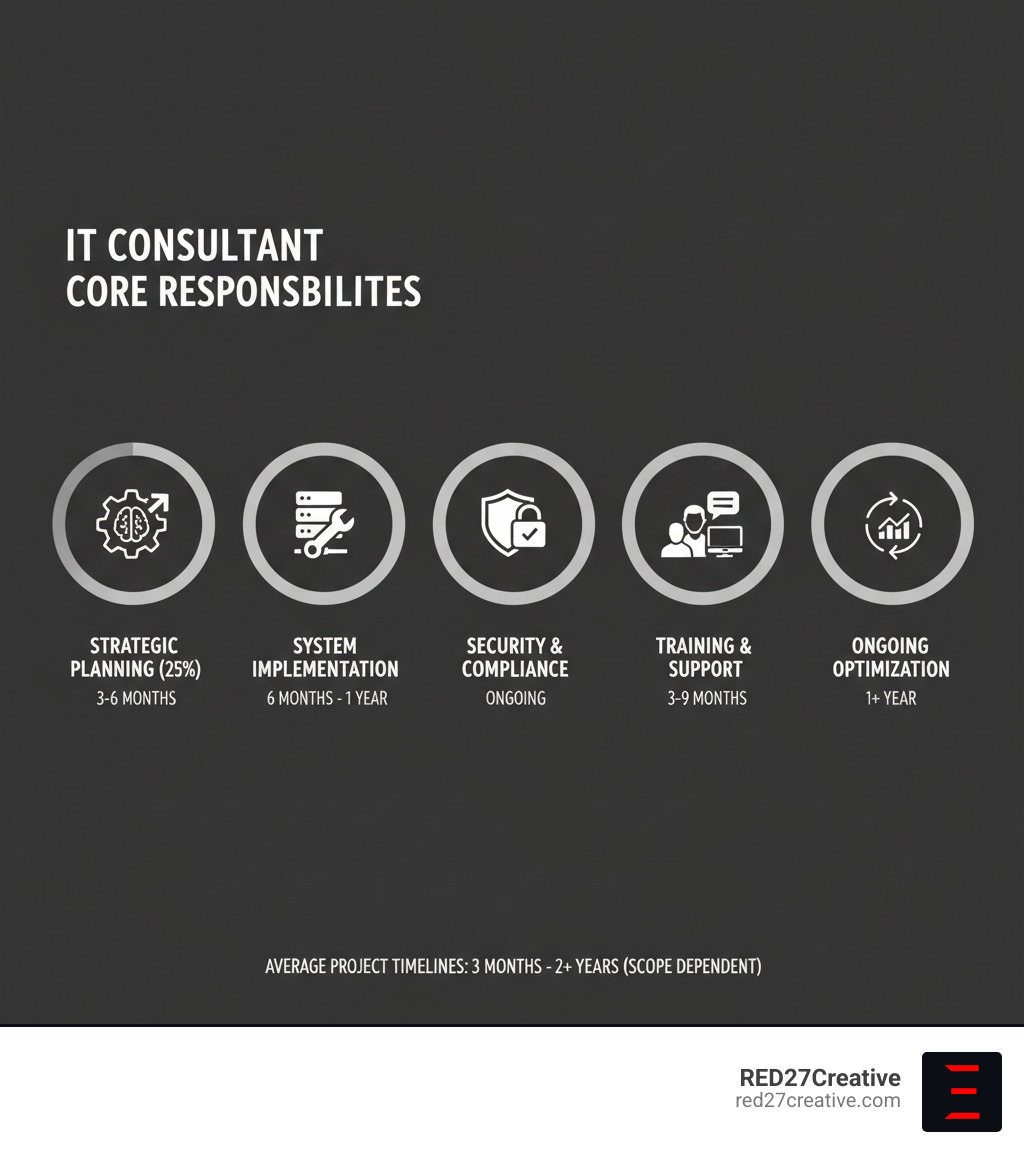
The daily work of an it-consultant is dynamic and project-driven. A typical engagement involves several key responsibilities:
Analysis and Assessment: The consultant begins by understanding your business, pain points, and goals. They examine your current technology landscape to identify vulnerabilities, inefficiencies, and opportunities for improvement.
Strategic Planning: After the assessment, they design a comprehensive IT strategy. This includes defining project scope, timelines, and budgets, and selecting the right technologies while applying principles from Information Technology Project Management for efficiency.
Solution Implementation: The consultant oversees the execution of the plan, such as deploying new hardware, installing software, or migrating data. They manage the process to ensure a smooth transition with minimal disruption to your operations.
Problem-Solving: When complex technical issues arise, like system downtime or security breaches, the consultant steps in to diagnose and resolve them quickly, leveraging their broad experience.
Training and Support: To ensure a return on investment, consultants train your team to use new systems effectively. This hands-on support is crucial for successful technology adoption and turning a new system into a competitive advantage.
Staying Updated: Technology evolves rapidly, so consultants continuously learn about emerging trends like AI and advanced cybersecurity. This commitment ensures they can always offer the most relevant and effective solutions.
The Different Types of IT Consultants
The field of IT consulting is diverse, with most successful it-consultant professionals specializing in specific technical domains. This focus allows them to offer deep, targeted expertise for particular business challenges. Understanding these specializations helps businesses find the right partner for their needs.

In-Demand Specializations
Demand for it-consultant expertise shifts with technology trends. Currently, demand is high in cloud computing, cybersecurity, and data analytics.
Cybersecurity Consultants: These experts are critical for protecting businesses from data breaches and ransomware. They assess vulnerabilities, design security architectures, and create disaster recovery plans to ensure business continuity.
Cloud Solutions Consultants: As businesses adopt platforms like AWS, Azure, and Google Cloud, these consultants guide cloud migrations and optimize infrastructure for performance and cost. They help companies realize the benefits of scalability and flexibility.
Data and Analytics Consultants: These professionals help organizations turn raw data into actionable insights. They design data collection systems and implement business intelligence tools, empowering data-driven decision-making.
Digital Change Consultants: They act as architects of organizational change, guiding companies through large-scale technology shifts. Their work involves helping teams adopt modern tools and cultivate a culture of innovation.
Systems and ERP Consultants: Specializing in enterprise resource planning (ERP) software like SAP or Oracle, they manage the complex implementation of systems that integrate finance, HR, and supply chain management.
Program Management Specialists: These consultants orchestrate large, complex IT initiatives. Applying principles from Information Technology Project Management, they ensure projects are delivered on time, within budget, and to specification.
Skills, Salary, and Job Outlook for an IT Consultant
A career as an it-consultant demands a unique blend of technical expertise and people skills. While a bachelor’s degree in a field like computer science is a common starting point, hands-on experience and specialized certifications are often more valuable to employers.
Essential Skills and Qualifications for an IT Consultant
Successful consultants balance hard and soft skills. Technical expertise in domains like cloud platforms (AWS, Azure), cybersecurity, or networking is crucial. This is complemented by knowledge of project management methodologies, as noted in works on Information Technology Project Management.
Equally important are soft skills. An it-consultant must be an excellent communicator, capable of explaining complex topics in simple terms. Strong analytical thinking, a solution-oriented mindset, and adaptability are essential for navigating the ever-changing tech landscape and building strong client relationships.
Key Certifications for IT Consultants
Certifications validate expertise and boost credibility. Highly respected credentials include:
- Project Management Professional (PMP)
- Certified Information Systems Security Professional (CISSP)
- Certified Cloud Security Professional (CCSP)
- Certified Information Security Manager (CISM)
- AWS Certified Solutions Architect
- Microsoft Certified: Azure Solutions Architect Expert
Salary Expectations and Job Outlook
The demand for skilled it-consultant professionals is strong and growing, driven by digital change and cybersecurity needs. The U.S. Bureau of Labor Statistics projects faster-than-average growth for technology management roles.
In the U.S., the average salary for an it-consultant is approximately $105,500 per year, with senior and executive roles exceeding $163,500. Compensation varies by location, experience, and specialization. The robust job market offers excellent opportunities, and the demand for IT Consulting Companies Chicago reflects this trend.
The Business Value: Why Hire an IT Consultant?
Hiring an it-consultant is a strategic investment in your business’s future. The right consultant provides specialized expertise, an objective perspective, and strategic thinking to build a foundation for sustainable growth.

Key Benefits for Your Business
Expertise on Demand: Gain access to experts in areas like cloud migration or cybersecurity without the overhead of a full-time hire. This is ideal for short-term projects or niche challenges where your team lacks experience.
Objective Perspective: An external it-consultant brings fresh eyes, unburdened by internal politics. They identify inefficiencies and challenge outdated practices, leading to breakthrough solutions.
Cost Savings and Optimized ROI: A skilled consultant prevents costly mistakes and optimizes systems, improving your ROI. They ensure you invest in the right technology, whether for Manufacturing Lead Generation or other business goals.
Focus on Core Business: Outsourcing complex IT projects allows your team to concentrate on core business activities. This focus on sales, operations, and marketing directly translates into productivity and growth.
Improved Security and Compliance: A cybersecurity consultant protects your data, ensures system resilience, and helps you meet industry regulations. This proactive approach prevents the high costs associated with data breaches.
Accelerated Innovation: Consultants introduce your business to cutting-edge tools and best practices. This exposure gives you a competitive advantage by helping you stay ahead of industry trends.
For more on how strategic guidance transforms operations, see our Business Consulting Solutions Ultimate Guide. Finding the right IT Consulting Companies Chicago is key to success.
IT Consultant’s Role in Project Management
An it-consultant acts as the strategic glue in project management, bridging the gap between business goals and technical implementation. Their leadership is crucial for the success of major initiatives like cloud migrations or cybersecurity overhauls.
Key project management roles include:
- Defining Scope and Objectives: They establish clear, measurable milestones to prevent scope creep, ensuring projects stay on track.
- Resource and Budget Planning: Consultants identify necessary resources, create realistic timelines, and develop sound budgets to ensure project viability.
- Risk Management: They proactively identify potential technical, operational, and budget risks, developing mitigation strategies to keep projects moving forward.
- Stakeholder Communication: They maintain clear and consistent communication with all stakeholders, translating complex technical details into understandable business terms.
- Quality Assurance: Consultants oversee rigorous testing to ensure new systems meet performance and security standards before launch.
- Change Management: They guide the human side of technology adoption, providing training and support to ensure user acceptance and a smooth transition.
This strategic oversight ensures IT projects deliver real business value, a disciplined approach that applies to everything from SEO Project Management to enterprise-level implementations.
Staying Ahead: How IT Consultants Steer a Changing Landscape
For an it-consultant, staying current in the technology world is essential. Clients rely on them to distinguish between genuine innovation and hype, which requires a commitment to continuous learning and adaptation.
Continuous Learning is Non-Negotiable: Staying relevant means pursuing formal certifications, reading technical journals, and gaining hands-on experience with emerging technologies. This dedication ensures their skills remain sharp and their knowledge is up-to-date.
Tracking Trends: Consultants monitor industry research and follow thought leaders to anticipate future client needs. This proactive approach allows them to recommend forward-thinking strategies for AI, hybrid work, and cybersecurity.
Community Engagement: They actively participate in conferences, online forums, and peer networks. These connections provide real-world insights and collective wisdom that can’t be gained in isolation.
Testing and Validation: Before recommending a new technology, consultants often run pilot projects or internal tests. This practical approach reveals challenges and benefits that aren’t apparent in marketing materials.
Learning from Clients: Every client engagement offers new lessons. Experience across different industries and company sizes provides a broad perspective on how to adapt technology for unique business contexts.
Frequently Asked Questions about IT Consultants
What is the main difference between an IT consultant and managed IT services?
An it-consultant typically works on a project basis to provide strategic advice, solve a specific problem, or oversee an implementation. Managed IT services, on the other hand, involve a long-term partnership where a provider proactively manages and maintains a company’s entire IT infrastructure for a fixed monthly fee.
How do I choose the right IT consultant for my business?
Look for a consultant with proven experience in your industry and with projects similar to yours. Check their references and case studies. Most importantly, choose a partner who takes the time to understand your business goals and communicates clearly, like the experts at a Top Chicago IL Marketing Agency or a Top Naperville IL Marketing Agency.
Can a small business benefit from an IT consultant?
Absolutely. Small businesses can benefit immensely by gaining access to enterprise-level expertise without the high overhead. A consultant can help a small business scale efficiently, improve security, and make smart technology investments that support long-term growth, turning technology from a burden into a strategic asset.
How do IT consultants contribute to a business’s long-term success?
IT consultants contribute by aligning technology strategies with business goals, optimizing processes for efficiency, enhancing cybersecurity, and guiding digital change. They provide objective insights and expertise that lead to sustainable growth, innovation, and improved competitive advantage over time.
What are the typical project durations for IT consulting engagements?
Project durations for IT consulting engagements can vary widely, from a few weeks for a specific assessment or audit to several months or even years for large-scale system implementations or digital changes. The length depends on the complexity and scope of the client’s needs.
Partner with a Strategic Expert to Drive Your Growth
An it-consultant is essential for sustainable growth. They provide the strategic vision and technical expertise to transform your IT infrastructure from a cost center into a competitive advantage. Aligning technology with business objectives leads to improved efficiency, reduced risk, and a solid foundation for the future.
At RED27Creative, we apply this strategic mindset to marketing. For over 20 years, our Geneva-based team has created data-driven systems that unify your website, SEO, and lead generation into a powerful growth engine. We don’t just build things; we build systems that deliver measurable results.
Like a top it-consultant, we start by understanding your goals, assessing your current marketing, and building a roadmap to turn visibility into qualified leads. We have the technical expertise and strategic thinking to help manufacturers, service businesses, and growing companies achieve their objectives.
Ready to transform your business with a data-driven strategy that delivers? Explore our Marketing Strategy and Consulting Services to learn how we can help you achieve measurable growth. For a direct discussion of your challenges, contact us today.

Kiel Tredrea
https://red27creative.comTop Marketing Agency • Web, SEO & Leads • RED27Creative