Local SEO for Manufacturers: A Step-by-Step Guide

Why Local SEO for Manufacturers Matters
Local SEO for manufacturers helps your company show up online when local clients search for manufacturing products and services you offer.
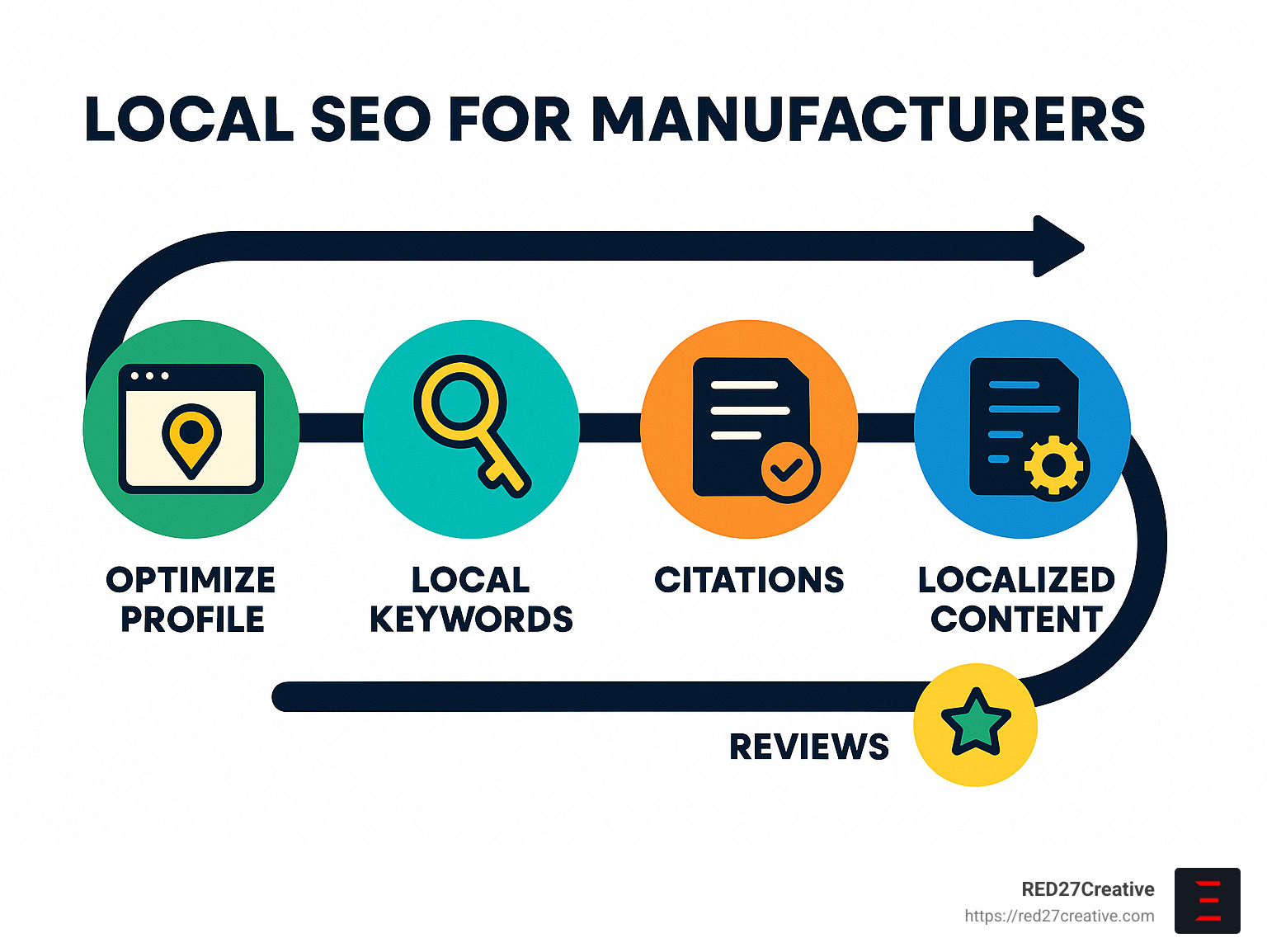
Here’s a quick rundown of how to improve your Local SEO for manufacturers:
- Optimize your Google Business Profile: Claim and regularly update your listing with accurate information.
- Use local-specific keywords: Include your city or region in your website and content.
- Build local citations and backlinks: Get listed on local directories and partner with community businesses.
- Create localized content: Write blogs, showcase events, and highlight customer success stories from your community.
- Encourage online reviews: Ask satisfied customers to leave reviews and be sure to respond promptly.
Manufacturing buyers trust and recognize local brands more, so showing up prominently in local searches makes you the clear choice when decision-makers are ready to buy. According to Google, 46% of searches have local intent, meaning nearly half of your prospects start their manufacturing service search online, looking specifically in their local area.
I’m Kiel Tredrea, founder of RED27Creative, and I’ve spent over 20 years developing marketing strategies, specializing in digital growth and Local SEO for manufacturers. In this guide, I’ll walk you through actionable steps to boost your visibility, attract more local leads, and position your brand as a market leader.
Local SEO for manufacturers basics:
- B2B marketing for manufacturers
- Lead generation for manufacturers
- how to get more traffic to our manufacturing website
Understanding Local SEO for Manufacturers
Local SEO for manufacturers is a targeted digital marketing strategy designed specifically to help manufacturing businesses connect with customers in their local area. Unlike traditional SEO, which aims to reach audiences nationally or globally, local SEO focuses on enhancing your visibility among customers actively searching for manufacturing products and services in specific communities—such as Geneva, Aurora, or Chicago, IL.
Why is local SEO crucial for manufacturing companies? While manufacturers often serve national or international markets, many valuable and profitable partnerships come from businesses located near your facility. Shorter distances simplify logistics, facilitate in-person meetings, and foster stronger relationships built on trust and regular interaction.
This local focus is backed by real data. Research presented by SEMrush at Google’s Secrets of Local Search conference revealed that 46% of all Google searches have local intent. Nearly half of your potential customers are actively searching for nearby solutions your manufacturing business can provide. Consistently appearing in these local searches opens significant opportunities for growth.
Optimizing your local presence ensures your business prominently appears in several key areas:
- Google’s Map Pack—the top three local businesses showcased alongside a map on Google’s search results page.
- Local organic search results, capturing attention when customers search for manufacturing services nearby.
- “Near me” searches made by mobile users ready to engage or purchase.
- Voice searches (such as those made through Alexa or Siri), which are increasingly local in nature.
For manufacturing companies, achieving this visibility is essential. Industrial buyers and procurement teams often favor local suppliers for reliability, speed, and relationship-building. Local SEO positions your business directly in their line of sight, ensuring your company is their first choice.
Why Local SEO Matters for Manufacturing Companies
Manufacturing companies often rely heavily on word-of-mouth referrals and longstanding relationships. While valuable, these methods alone can limit growth potential. A focused Local SEO for manufacturers strategy helps bridge this gap.
First, local SEO provides a clear competitive advantage. Industry research from Gartner highlights an intriguing gap: 84% of industrial buyers start their research online, yet only about 79% of manufacturers have adopted a structured SEO strategy. This presents a significant opportunity for manufacturers who proactively optimize their local digital presence.
Second, local SEO effectively reaches local decision-makers. B2B buyers typically conduct multiple online searches before contacting a potential manufacturing partner. Consistent visibility in localized search results positions your business front and center exactly when decision-makers are most interested, allowing you to connect at precisely the right time.
Additionally, optimizing for local searches increases facility visits. If your manufacturing business offers custom fabrication, plant tours, or in-person consultations, appearing prominently in local searches naturally boosts foot traffic and nurtures personal relationships with prospective clients.
Lastly, local SEO significantly improves brand awareness. Even if prospects aren’t immediately ready to buy, consistent visibility in local search results builds familiarity and trust. When potential clients are ready to move forward, your business will already be top-of-mind as their reliable local manufacturing solution.
Sam Yadegar, CEO of a prominent industrial marketing agency, emphasizes the importance of tracking local SEO progress: “Tracking is an essential part of any SEO campaign, especially for manufacturing firms. We use granular tracking to understand every step of the buyer journey so we can optimize towards a higher ROI year over year.”
At RED27Creative, we’ve witnessed how Local SEO for manufacturers transforms businesses in Naperville, St. Charles, and throughout Illinois. By optimizing your digital visibility within your local community, your manufacturing company positions itself as the natural choice, connecting you with local businesses who need your services most.
Step 1: Optimize Your Google Business Profile
Your Google Business Profile (formerly known as Google My Business) is the heartbeat of an effective Local SEO for manufacturers strategy. This free tool places your manufacturing business right at the fingertips of local customers actively searching for your services. Optimizing your profile helps you appear prominently in Google’s Map Pack, Google Maps, and local search results—exactly where your potential customers are looking.

First things first, you’ll want to claim and verify your listing. If you’ve never done this before, don’t worry—it’s simple. Google typically confirms your identity by sending you a postcard, calling your business number, or emailing you directly. This verification builds trust and signals to Google that your business is legitimate and active.
Once you’ve claimed your listing, pay attention to your NAP (Name, Address, and Phone) information. Accuracy is crucial—your profile’s NAP info should be identical to what’s listed on your website and across other online directories. Even minor discrepancies, like spelling out “Street” versus abbreviating it, can confuse Google and hurt your local rankings.
Next, crafting a compelling and keyword-rich business description is essential. Clearly articulate your core manufacturing services, unique capabilities, and the key locations you serve—such as Geneva, Batavia, Aurora, St. Charles, Plainfield, Oswego, Naperville, and Chicago IL. Think of this description as your digital elevator pitch, highlighting exactly why local clients should choose you over competitors.
When selecting categories, it’s best to be as specific as possible. Rather than simply choosing “Manufacturer,” pick something that closely describes your specialization, like “Metal Fabricator” or “Custom Industrial Equipment Supplier.” You can also add secondary categories to broaden your visibility in relevant searches.
Now, let’s talk visuals. High-quality images and videos give prospective customers a sneak peek into your world. Share professional photos of your facility, machinery, products, and team. According to Google, businesses with quality photos receive 42% more requests for driving directions and see significantly higher engagement overall.
Don’t forget to clearly define your service areas within your profile. Specifying exact regions or cities ensures you appear in searches made by local customers specifically seeking manufacturing expertise like yours.
Why is all this effort worth it? A Google representative noted that “46% of searches have a local intent,” meaning nearly half of your potential clients begin their purchasing journeys looking for local solutions. Optimizing your Google Business Profile places you squarely in front of these motivated buyers.
Tips for Maximizing Your Google Business Profile for Local SEO
To truly get the most out of your Google Business Profile—and boost your Local SEO for manufacturers results—it’s important to follow a few extra best practices.
Consistency remains key. Keep your NAP information consistent across your website, Google Business Profile, and every other online directory or listing. This consistency clearly signals to Google that your business details are reliable, boosting your local rankings.
When writing your profile description, make sure it’s rich in relevant keywords without feeling forced. Naturally incorporate key terms related to your manufacturing specialty and location—for example, “trusted metal fabrication services in Chicago IL” rather than just “fabrication services.”
Another important habit is to actively respond to customer reviews. Whether feedback is glowing or critical, your professional and timely responses show Google—and potential clients—that you genuinely care about customer satisfaction. Engaging consistently sends positive trust signals and boosts rankings in local search results.
Keep your Google Business Profile lively by sharing regular posts and updates. Highlight facility upgrades, exciting completed projects, special events, or major company news. Regular posts keep your audience informed, demonstrate activity, and further strengthen your local search visibility.
Finally, make use of all available profile features. Clearly list your services, answer frequently asked questions, and select relevant business attributes. The more detailed and informative your profile, the higher Google’s confidence in presenting you to local searchers.
One of our manufacturing clients in Aurora IL experienced the power of optimizing their Google Business Profile. After fine-tuning and regularly engaging with their profile, they noted, “We’ve seen a 40% increase in qualified leads directly from Google. It’s become our second-biggest source of new business after word-of-mouth referrals.”
Ready to dive deeper into maximizing your online presence? Check out our comprehensive guide on Local SEO Insights.
Step 2: Conduct Local Keyword Research for Manufacturers
Effective local SEO for manufacturers starts with understanding exactly what your potential customers are typing into Google when they need the services you provide. This process—known as local keyword research—is all about finding the right search terms, so your business appears prominently at the moment when local decision-makers are seeking manufacturing partners.
Local keyword research isn’t just guessing or taking wild stabs in the dark (though that might sound kind of fun). It’s a strategic process that begins with clearly defining your primary services. Think about what you offer—like CNC machining, injection molding, metal fabrication, or precision tooling—and jot down each service you provide.
Next, add location modifiers to these services. For instance, instead of just “metal fabrication,” consider phrases potential customers might use like “metal fabrication Chicago IL,” “CNC machining services Naperville,” or “custom plastic molding Aurora IL.” These combinations of services plus locations are key to reaching local customers looking specifically in your area.
Now that you’ve got your initial ideas, it’s time to validate them with real data. Tools like Google Keyword Planner, Ahrefs, and SEMrush help you find actual search volumes, competition levels, and related search terms that real people use. This isn’t just guesswork; it’s data-driven research that ensures you’re targeting keywords your audience truly cares about.
As you explore keywords, don’t overlook the power of “long-tail keywords.” These are highly specific phrases, often longer and more detailed, such as “custom stainless steel fabrication for food industry Naperville.” Although these terms might not have huge search volume, they’re incredibly valuable because they attract searchers who know exactly what they need—and these individuals are far more likely to convert into customers.
Here’s the reality: About 75% of people never venture past the first page of Google results. If you’re not ranking for the right local keywords, you’re essentially invisible to many potential clients. That’s why precision in keyword targeting is essential to the effectiveness of your local SEO for manufacturers strategy.
For more tips on managing your local keywords and listings effectively, check out our guide: Steer the Maze: How to Choose Your Local SEO Listings Management.
Best Practices for Local SEO Keyword Research
Want to maximize the impact of your keyword research and dominate local search results? Here are some pro tips we’ve found work wonders for manufacturing clients throughout Illinois, including Geneva, Aurora, and Naperville.
First, include location modifiers at various geographic levels. Don’t limit yourself to your city name alone. Broaden your scope to include neighborhoods, counties, and larger regions. If your facility is in Aurora IL, you might also consider “Fox Valley,” “DuPage County,” or even “Chicago metro area.”
Next, incorporate industry-specific terminology. Use the language your customers naturally speak and search for regularly. Instead of generic terms like “metal cutting,” drill down to specifics such as “laser cutting,” “waterjet cutting,” or “plasma cutting.” Industry-specific keywords help you attract highly qualified prospects who know exactly what they’re looking for.
Also, don’t be shy about doing a little detective work. Analyze competitor keywords to uncover hidden opportunities. Tools like Ahrefs or SEMrush reveal exactly which keywords your competitors rank for, giving you insights into terms you might have overlooked or where your competition is weak. (It’s not spying—it’s strategic research!)
Finally, always align your keywords with user intent. Think about your buyer’s journey stages. A business searching “types of CNC machining” is still in research mode, while another searching “CNC machining quote Naperville” is practically ready to hand over their credit card. By targeting keywords that match your customers’ buying intent, you’re more likely to attract leads who are genuinely interested—and ready—to do business with you.
Here’s a real-world scenario: One of our manufacturing clients in St. Charles IL finded through keyword research that prospects were searching specifically for material capabilities like “titanium machining services St. Charles.” Once they optimized their website and content for these targeted phrases, they saw a remarkable 32% rise in qualified inquiries—in just three months.
Local SEO for manufacturers isn’t about chasing high traffic numbers that don’t convert. It’s about bringing the right visitors to your site—those who are located nearby and genuinely need your manufacturing capabilities. Even a modest volume of highly targeted local searches can significantly boost your bottom line and grow your business sustainably.
Step 3: Create Localized Content
Content creation is more than just filling pages on your website; it’s about connecting with your local community and showing potential customers that you understand their unique needs and challenges. For Local SEO for manufacturers, creating localized content means developing blog posts, case studies, and stories that resonate specifically with people in your area.
By doing this, you’re not only improving your visibility in local searches—you’re also positioning your manufacturing business as a trusted and authoritative voice in your community.
Localized content can showcase your expertise while naturally boosting your SEO rankings. For instance, you might write blog posts about specific local manufacturing challenges. Let’s say your business provides metal fabrication services—consider creating content like “How Our Metal Fabrication Helps Chicago-Area Food Processors Meet Strict Standards.” Sharing insights on how local regulations impact businesses and how your services can help tackle these issues shows local businesses you’re genuinely invested in their success.
Another fantastic way to localize your content is through regional case studies. Highlight successful projects you’ve completed for clients in your community—whether that’s a metalworking job for a food manufacturer in Geneva or custom injection molding for an automotive parts supplier in Aurora. These stories demonstrate your capabilities while emphasizing that you’re already trusted by businesses right in your prospect’s backyard.
Don’t overlook the power of community involvement content either. People love seeing businesses that actively engage with the local community. If you’ve recently participated in job fairs, partnered with local schools, or supported community events around Naperville or St. Charles, write about these experiences. It humanizes your brand and builds goodwill, making local customers more likely to choose your manufacturing business.
Finally, consider covering local supply chain insights. Perhaps there’s a regional shortage of specific materials or transportation problems unique to the Chicago area. Sharing your insights or solutions on these topics can position your company as a valuable resource for local businesses facing these challenges.
According to industry research, nearly 84% of people searching for manufacturing services start online. Creating content custom specifically for your local customers ensures your manufacturing company is visible and relevant when those critical searches happen. For more comprehensive strategies and tips, check out our guide: Content Marketing for Manufacturers.
How to Develop Engaging Local Content
Developing content that resonates locally doesn’t have to be difficult. Start by highlighting local events and your participation in them. Did your team recently attend an Illinois chamber of commerce manufacturing expo? Write about your experience—share insights, lessons learned, or interesting interactions with other local businesses.
You can also showcase your community involvement initiatives. If your manufacturing facility offers apprenticeships to local high school or college students, share stories from students who’ve grown their skills through your program. Or perhaps your factory regularly hosts tours for local engineering students—an article about these efforts not only boosts SEO but also helps build your local reputation.
Addressing local customer needs directly is another powerful approach. For example, a post titled “How Chicago-Area Food Manufacturers Can Meet New Stainless Steel Component Requirements” directly addresses a specific need within your local market.
When creating any content, don’t forget to optimize meta tags and headers. Include location-specific keywords like “Aurora,” “Chicago,” or “DuPage County” in your titles and headings. This simple step signals to search engines that your content is highly relevant to those local searches.
Some effective content ideas that work especially well for local manufacturing include:
- “Top 5 Considerations When Choosing a Metal Fabricator in Chicago IL”
- “How Our Aurora Manufacturing Facility Supports the Local Automotive Industry”
- “Case Study: Helping a Naperville Medical Device Company Scale Production”
- “The Advantages of Working with a Local CNC Machine Shop in DuPage County”
- “Meet Our Team: The Skilled Machinists Behind Our St. Charles Manufacturing Success”
Take inspiration from a manufacturing client of ours in Plainfield IL: After publishing a series of blog posts highlighting their collaboration with local businesses, they appeared on the first page of Google for 15 location-specific keywords. Within six months, they saw a remarkable 28% increase in leads coming directly from local companies.
Quality is far more important than quantity. You don’t need to churn out dozens of posts a month—one thoughtful, well-written, and genuinely informative localized article per month will deliver far better results than multiple generic posts that lack local relevance.
Creating localized content is all about genuinely connecting to your local market. When you do this well, the results—both on Google and in your community—can be extraordinary.
Step 4: Build Local Citations and Backlinks
Establishing strong local citations and backlinks is a vital component of successful Local SEO for manufacturers. Think of these citations and backlinks as your digital version of word-of-mouth referrals—when other reputable websites mention your manufacturing business, search engines take notice and boost your rankings.
First things first: what exactly are local citations? Simply put, they’re online mentions of your business’s name, address, and phone number (often called NAP). For manufacturers, citations typically appear in directories like Google Business Profile, Bing Places, Yelp, and the good old Yellow Pages. But don’t stop there—industry-specific directories like ThomasNet, MFG.com, Thomasnet Regional, and IQS Directory are especially valuable for reaching targeted manufacturing buyers.
Don’t overlook your local community either! Listings with your local Chamber of Commerce, regional business associations, and Illinois-specific industrial directories can significantly boost your visibility. Here’s the catch, though: consistency is key. Make sure your NAP details match exactly across all of these listings—right down to abbreviations and suite numbers. Even small discrepancies can confuse search engines and hurt your local rankings.
Now, let’s talk backlinks. Local backlinks are links from other websites directing visitors straight to your pages. Think of these as votes of confidence from other trusted sites. Search engines love them because they signal credibility, relevance, and community involvement. In fact, a recent study found that 57% of B2B marketers consider SEO—including backlinks—the most powerful lead generation strategy available.
So how can you earn valuable local backlinks that truly benefit your Local SEO for manufacturers?
One effective approach is participating in local industry events. Consider hosting or sponsoring manufacturing expos, trade shows, or industry workshops in your local area—whether that’s Geneva, Naperville, Aurora, or Chicago. Afterward, many of these events will naturally link to your business website in event recaps or promotional materials.
Another great tactic is issuing press releases about your local achievements and milestones. Did you recently expand your Aurora production facility or receive a manufacturing excellence award in Naperville? Celebrate these accomplishments through press releases distributed to local news outlets, who often include backlinks to your site when highlighting your news.
Consider partnering with complementary local businesses, too. For instance, if you’re a metal fabrication company in Geneva, teaming up with a local industrial coating specialist in St. Charles can benefit both businesses. You can recommend each other on your websites, creating authentic, relevant backlinks—and boosting referrals in the process.
Don’t underestimate the power of sponsoring local organizations or community causes. Supporting local sports teams, charitable initiatives, educational programs, or community events will often result in an acknowledgment on their websites. These mentions create highly valuable backlinks that also showcase your community involvement and build goodwill with local clients.
Finally, take an active role in community outreach and industry groups. Participating in Manufacturing Day events, hosting student tours of your facility, or joining regional manufacturing associations can significantly boost your online presence. Websites for these groups frequently provide member lists or event summaries with direct links to participating companies.
One of our manufacturing clients in Oswego, IL, took this advice to heart. They collaborated with three other local industrial suppliers to create a resource page where each recommended the others’ services. This simple yet strategic move generated valuable backlinks and increased referral traffic from local businesses by 15% over three months.
When it comes to backlinks and citations, quality always beats quantity. Just one powerful link from the Chicago Chamber of Commerce or a respected local industry association carries far more weight than dozens of links from irrelevant or low-quality sources. The key is to build relationships authentically and consistently, positioning your business as a trusted and integral member of your local manufacturing ecosystem.
Step 5: Manage Online Reviews and Reputation
When it comes to Local SEO for manufacturers, online reviews aren’t just nice-to-have—they’re a must-have. Reviews provide valuable proof to potential customers that your manufacturing business is credible and trustworthy. More importantly, they send clear signals to Google, influencing your local search rankings and visibility.

Did you know that 84% of people trust online reviews as much as personal recommendations? For manufacturers, especially when dealing with larger contracts and long-term B2B relationships, this kind of social proof can make all the difference. Reviews act like digital word-of-mouth, reassuring potential clients you’re dependable and deliver quality work.
Google pays close attention to the quantity, quality, and freshness of reviews. Manufacturers with frequent positive reviews typically enjoy higher rankings in the Local Map Pack and overall local search results. To put it simply, the better your review profile, the easier you are to find online.
To effectively leverage reviews for your Local SEO for manufacturers strategy, start by creating a simple, systematic approach for requesting reviews from satisfied customers. Consider sending a polite, personalized email after completing a successful project, making sure to include a direct link to your review profile. The easier you make it for customers, the more likely they’ll take the time to write a glowing review.
Timing matters, too—ask for feedback when a customer is happiest, such as right after completion of a successful order or resolution of an issue. While Google reviews should be your main focus (as they’re most impactful for local SEO), it’s also wise to gather feedback on industry-specific platforms like ThomasNet or general business sites such as Yelp. This helps build credibility across multiple platforms, enhancing your overall online presence.
Best Practices for Online Reputation Management
Maintaining a strong online reputation isn’t just about gathering positive reviews; it’s also about how you engage with them. Regular monitoring is essential—set up alerts or check your profiles weekly so you never miss feedback.
Always address feedback constructively. For positive reviews, respond warmly and sincerely thank customers for their kind words. This not only builds stronger customer relationships but also demonstrates to potential clients how much you value your customers.
For negative reviews (hey, nobody’s perfect), take a deep breath and respond calmly and professionally. Acknowledge the customer’s concerns, apologize if appropriate, and offer practical solutions or invite them to contact you offline to resolve the issue privately. Handling negative feedback gracefully can often turn an unhappy customer into an advocate—and shows everyone else how committed you are to customer service.
Encourage customers to share specific experiences. Reviews that mention particular details—like the quality of your metal fabrication or your team’s responsiveness—are more valuable for SEO. Google picks up on these specifics, helping match your services to people searching for exactly what you offer.
It’s also wise to periodically check your broader online presence beyond reviews. Are there mentions of your company on industry forums or social media that you need to address? Staying proactive can help you catch and resolve potential reputation issues early.
Here’s a real-world example: One of our manufacturing clients in Chicago IL implemented a simple automated email that requested reviews about 30 days after project completion. Within six months, their Google reviews increased from just 7 to an impressive 43. Thanks to this proactive review management strategy, they secured a coveted spot in Google’s local map pack for critical search terms.
One particularly effective review read: “Their precision machining services exceeded our expectations, and the fact that they’re located right here in Chicago meant we could visit their facility and collaborate closely on our project. Highly recommend to any local business needing custom parts.” Specific, authentic reviews like this are gold for your online reputation—and your rankings.
One final reminder: authenticity matters. Never offer incentives for positive reviews or create fake ones. It’s not just ethically questionable; Google actively penalizes businesses that violate these policies. Keep it honest, keep it real, and your customers—and Google—will reward you.
At RED27Creative, we’ve helped numerous manufacturing companies in locations such as Aurora, Naperville, and throughout Chicago IL build winning reputation strategies. For more insights on driving high-quality online leads, check out our detailed guide to lead generation for manufacturers.
Common Mistakes to Avoid in Local SEO for Manufacturers
Even with the best intentions, many manufacturing businesses unknowingly fall into common pitfalls that can derail their carefully planned Local SEO for manufacturers strategy. But don’t worry—these mistakes are easy to spot and even easier to correct once you’re aware of them.

One of the biggest offenders we see at RED27Creative is inconsistent NAP information. Your Name, Address, and Phone number (NAP) need to match exactly on every online platform, directory, and citation. Even minor variations—like abbreviating “Street” as “St.”—can confuse search engines and drastically reduce your local visibility.
Another common mistake is neglecting your Google Business Profile. Many manufacturers set it up initially but then forget about it. If you don’t regularly update your profile, add fresh photos, respond to reviews, and post engaging updates, you’re missing out on valuable local traffic. Google rewards activity and relevance, so keep your profile lively and accurate!
Speaking of reviews, ignoring your online reviews is a surefire way to lose credibility and harm your local SEO. When potential clients see unanswered negative comments, it sends a message that you don’t care. Make sure to actively monitor and respond to feedback—both positive and negative—to build trust and improve your reputation.
It’s tempting (we’ve all been there!) to add your keywords repeatedly across your pages. But beware: keyword stuffing—overusing phrases like “metal fabrication Chicago IL” or “plastic injection molding Aurora IL”—is no longer effective. In fact, Google can penalize your site for unnatural keyword usage. Instead, focus on creating helpful content that naturally includes local terms and industry-specific phrases relevant to your audience.
Another frequent blunder is creating duplicate content across location pages. We get it—you’re busy, and copying the same content and just swapping out the city name might seem like a clever shortcut. Unfortunately, Google considers this low-quality content and may push your site down in rankings. Instead, tailor each page to genuinely reflect each area’s unique needs and local specifics.
With more than half of all local searches happening on smartphones, another mistake manufacturers often make is neglecting mobile optimization. If your site loads slowly or is difficult to steer on a smartphone, you’re missing opportunities. Invest some time in ensuring your website offers a smooth, user-friendly mobile experience.
Finally, manufacturing companies can stumble by focusing too heavily on quantity over quality in link building. Constantly chasing low-quality backlinks might initially seem beneficial, but it’s a risky strategy that can trigger penalties from Google. Instead, prioritize relevant, high-quality links from local business partners, respected industry associations, or community organizations.
How to Avoid These Common Pitfalls
Now that we’ve covered what to steer clear from, let’s discuss how you can set things straight. Conducting regular audits is one of your best defenses. Tools like Moz Local, BrightLocal, or Semrush will quickly uncover discrepancies, errors, or outdated information. A client of ours in St. Charles IL recently finded three different versions of their address across multiple platforms. Once corrected, their local visibility jumped 24% in just two months.
To maintain accuracy, create a master spreadsheet with your exact NAP information and keep it handy whenever you add or modify your online profiles or citations. This ensures consistency everywhere online.
Google’s algorithms have evolved to prioritize quality content and natural keywords. Rather than trying to trick search engines, focus on genuinely valuable, locally-focused content that addresses the needs and questions of your ideal customers. When you put your audience first, the SEO results follow naturally.
Lastly, choose quality over quantity—every single time. Whether it’s content creation, backlink building, or online listings, prioritize relevance, authority, and value. This careful approach will always pay off better in the long run.
To explore more about effective SEO strategies, check out our detailed guide on the Advantages of Search Engine Optimization.
Measuring and Tracking Your Local SEO Success
Implementing Local SEO for manufacturers is just the beginning of your journey to growing your business locally. The real magic happens when you measure, track, and refine your approach based on how well your strategies are performing.
Think of your Local SEO efforts like steering a ship—without a compass and map, you’d drift aimlessly. Tracking your results gives clear insights into what’s working, what’s not, and exactly where you should focus your energy to gain the most ground.
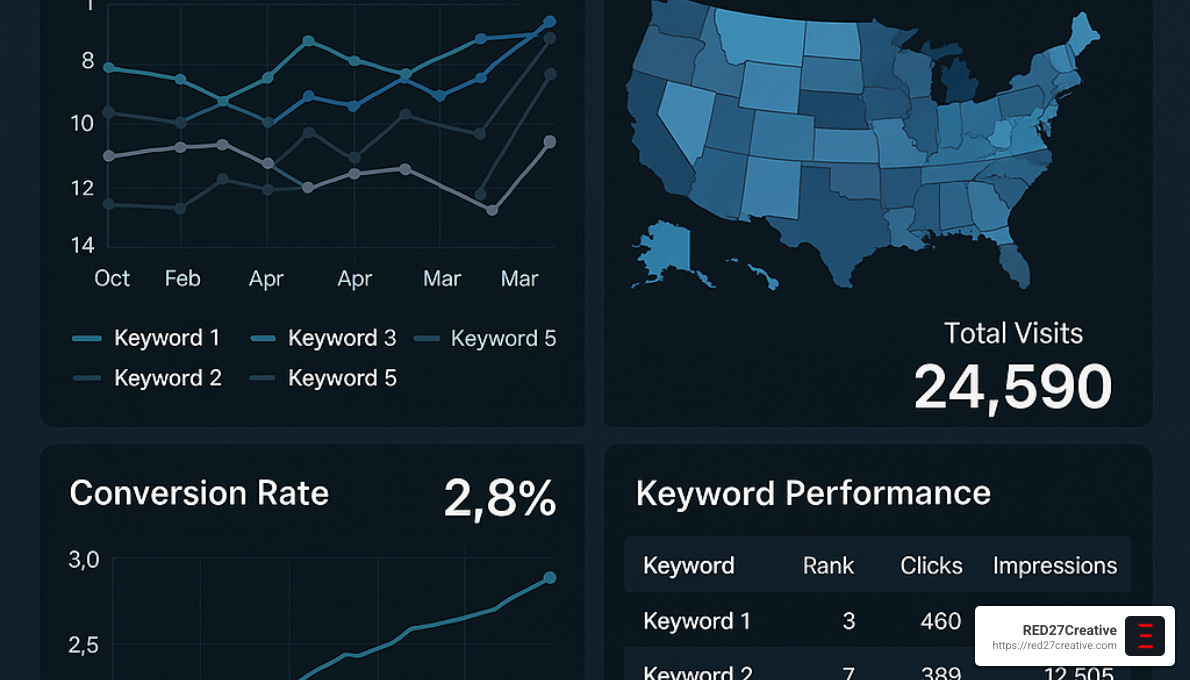
One of the most important metrics to track is your local search rankings. Regularly checking your positions for key local terms—like “metal fabrication Chicago” or “CNC machining services Naperville IL”—helps you understand how visible your business is to nearby customers.
You’ll also want to pay close attention to your Google Business Profile insights. Here, you’ll find valuable details such as how many people viewed your profile, clicked through to your website, requested directions, or called your facility directly. These actions indicate high intent and show you’re attracting real interest from local prospects.
Next, use Google Analytics to dive deeper into your website traffic. Look specifically at visitors arriving from your target geographic areas. See which localized content pages perform best, then replicate what’s working to boost your results even further.
Don’t stop at traffic—you also need to measure conversion metrics. This can mean tracking how many local visitors submit a quote request, call your facility, download a brochure, or complete a contact form. It’s not just about how many people visit your site, but how many take action and become qualified leads.
Since consistent business information matters greatly for local search visibility, regularly auditing your citation accuracy is another vital step. Tools like BrightLocal or Whitespark make it easy to check your Name, Address, and Phone number (NAP) listings across directories, helping you fix inconsistencies quickly.
Finally, monitor your online reviews, tracking the number, frequency, and overall sentiment. Reviews not only affect your rankings, but they also influence potential buyers—especially in the manufacturing industry, where trust and reliability matter immensely.
According to research we’ve seen at RED27Creative, manufacturers who actively track their Local SEO performance and make ongoing adjustments see results up to 43% stronger than those who set it and forget it. It’s clear—staying on top of the data pays off big in the long run.
Tools for Monitoring Local SEO Performance
Thankfully, measuring success doesn’t have to be complicated. You have fantastic tools at your disposal right now.
For starters, Google Analytics helps you see exactly where your visitors are coming from geographically. You can find which cities or neighborhoods send the most engaged traffic and then tailor your content to those regions.
Alongside Analytics, Google Search Console gives clarity into which keywords your prospects use to find your website. You’ll see your average ranking positions, search impressions, and click-through rates, giving you valuable clues for improving your keyword targeting in future content.
To get a clear snapshot of your local keyword rankings, use dedicated rank tracking tools such as SEMrush, Ahrefs, or Moz. These platforms show exactly where you stand compared to your local competitors for your most important search terms.
If your business relies heavily on phone calls, consider implementing call tracking software. This reveals exactly how many calls your Local SEO campaigns generate, giving you another powerful metric to measure real-world results.
Setting up goal tracking in Google Analytics is another smart move. Track key interactions like form submissions, request-for-quote completions, or downloads of product catalogs. Clearly defining these goals lets you measure exactly how effectively your Local SEO strategy drives meaningful business outcomes.
And don’t overlook specialized local SEO audit tools like BrightLocal or Whitespark. Use them regularly to monitor your citation consistency and identify any issues hurting your local visibility.
The data you collect should always guide your ongoing efforts. For example, one of our Naperville-based manufacturing clients noticed through their analytics that visitors from a specific nearby industrial park had a conversion rate 40% higher than average. Seeing this, they created targeted content specifically addressing businesses in that area. The result? A 35% boost in qualified leads within just a few months.
Local SEO isn’t a one-time event—it’s a continuous, data-driven process of measurement, learning, and refinement. With the right tools and commitment to tracking results, you’ll consistently gain ground in your local market, helping your manufacturing business thrive.
Frequently Asked Questions about Local SEO for Manufacturers
What is Local SEO and why is it important for manufacturers?
Local SEO for manufacturers is all about making sure your business shows up online when potential clients search for manufacturing services in your specific area—like Aurora, Naperville, or Chicago, Illinois. It’s a targeted approach to SEO that puts your manufacturing company front and center for local searches, connecting you with businesses right in your own backyard.
Why is this important? Well, many businesses prefer working with a local manufacturer because it’s easier to communicate, visit facilities, and get products delivered faster. These searches often indicate a strong intent to purchase, meaning people searching locally are typically ready to do business.
Building your local presence also helps establish your manufacturing business as a trusted, recognizable part of the community. Plus, many manufacturers haven’t fully acceptd digital marketing yet, giving you a competitive advantage if you jump in first.
Think about it—according to Google’s own data, 46% of all searches have local intent. Additionally, industry studies show that 84% of manufacturing buyers start their product and services search online. Clearly, showing up in local search results isn’t just nice-to-have—it’s essential for long-term growth.
How can manufacturers optimize their Google Business Profile for local SEO?
Optimizing your Google Business Profile is the single most effective thing you can do to boost your Local SEO for manufacturers. Start by claiming and verifying your listing with Google—this gives you full control over your business information.
Once that’s done, carefully complete each section of your profile. Choose the most accurate business categories, clearly list your opening hours, and add essential details about your manufacturing capabilities, certifications, industries served, and equipment.
Next, share high-quality photos and videos of your facility, team, equipment, and completed projects. Google reports that businesses showcasing photos get up to 35% more website clicks—who knew manufacturing could be so photogenic?
Make sure your Name, Address, and Phone number (also known as NAP) are exactly the same across your website and other online listings. Small inconsistencies can confuse search engines—and we don’t want confused Google bots.
Clearly identify the regions you serve. If you cater to businesses in St. Charles, Plainfield, Oswego, and other surrounding areas, list them explicitly so Google knows exactly who should be seeing you.
Encourage happy customers to leave Google reviews and reply promptly (and professionally!) when they do. Regular updates through Google Posts can also showcase recent news, completed projects, or new machinery—keeping your profile active and your audience engaged. Additionally, listing your specific services and using all available Google profile features ensures your manufacturing business truly shines online.
What are the best practices for conducting local keyword research for manufacturers?
Doing local keyword research is a foundational step to effective Local SEO for manufacturers. Start by clearly identifying your key manufacturing services—like CNC machining, metal fabrication, or injection molding. Then, pair these terms with the cities and areas you serve, like “metal fabrication Naperville” or “CNC machining Aurora IL.”
Keyword research tools such as Google Keyword Planner, SEMrush, or Ahrefs can help uncover how often people search these terms and how competitive they are. It’s also helpful to analyze what keywords your local competitors rank for; this can reveal opportunities they’re overlooking.
Pay close attention to search intent—keywords like “custom metal fabrication quote Chicago” suggest users are ready to buy, whereas terms like “types of CNC machining” might indicate someone’s still in research mode. Including detailed, industry-specific terms that your customers actually use will help you attract the right visitors.
Don’t overlook longer, highly specific phrases (known as “long-tail keywords”), like “precision machining for aerospace components Naperville.” While fewer people search these exact phrases, those who do tend to be highly qualified leads ready to engage.
Finally, thinking about different geographic levels—cities, counties, regions, and even neighborhoods—can ensure you capture everyone relevant. Aligning these carefully chosen keywords with your website content strategy makes your manufacturing business ultra-relevant to local searches, boosting your online visibility and driving more qualified leads straight to your door.
Conclusion
Implementing an effective Local SEO for manufacturers strategy isn’t just a nice-to-have—it’s an essential driver of growth in today’s digital market. Throughout this guide, we’ve explored actionable ways you can significantly boost your local online visibility, attract better-qualified leads from your community, and solidify your reputation as the go-to manufacturing partner for businesses right in your backyard.
By now, you’re familiar with the essentials. To recap: ensure you’ve fully optimized your Google Business Profile, filling it with accurate, detailed information about your manufacturing services, processes, and the specific Illinois areas you serve, such as Geneva, Batavia, Aurora, St. Charles, Plainfield, Oswego, Naperville, and Chicago.
Thorough local keyword research is the backbone of effective Local SEO. Identifying exactly what your local customers search for—whether it’s “custom metal fabrication Chicago IL,” “precision machining Naperville,” or other specialized services—ensures you’re visible when it matters most.
Creating high-quality, localized content that speaks specifically to your local audience’s needs and concerns helps your company become a trusted, authoritative resource in your industry. Sharing stories about your involvement in regional events, community partnerships, and successful local customer projects makes your business relatable and relevant.
Of course, growing your local authority means building strong local citations and backlinks. Listings on reputable directories like ThomasNet and partnerships with local businesses and industry associations will reinforce your manufacturing company’s credibility and boost your rankings in local searches.
And don’t underestimate the power of your online reputation. Managing online reviews and proactively requesting customer feedback not only strengthens your credibility—it directly impacts your visibility in local search results.
Local SEO for manufacturers isn’t a “set-it-and-forget-it” activity. Ongoing monitoring, optimization, and improvement are vital. Algorithms evolve, competitors appear, and customer behaviors shift—regularly reviewing analytics, rankings, and conversions will help you maintain a competitive edge.
At RED27Creative, we’ve seen the transformative power of local SEO strategies for manufacturers. Many of our clients right here in Illinois have experienced significant growth—such as the client who enjoyed a 43% rise in quote requests from businesses within a 50-mile radius after fully optimizing their local SEO. Many of those leads blossomed into valued, long-term partnerships.
The bottom line? Businesses that invest intelligently in Local SEO today position themselves for greater success tomorrow.
If you’re ready to generate more traffic, attract better-qualified local leads, and grow your manufacturing business, check out our dedicated guide on how to generate traffic to your website. We’d love to help you achieve the same remarkable results we’ve delivered for other Illinois manufacturers.
Your local market is ready and waiting—don’t let your competitors get there first.
Frequently Asked Questions about Local SEO for Manufacturers
What is Local SEO and why is it important for manufacturers?
Think of Local SEO for manufacturers as a specialized digital marketing effort that helps your manufacturing business pop up online whenever nearby companies search for products or services you offer. It’s about making sure local businesses find you easily when they’re ready to partner up or place an order.
But here’s why it matters specifically for manufacturers: around 46% of all Google searches have local intent, meaning almost half your potential customers are specifically looking for suppliers close to them. Additionally, studies show that 84% of manufacturing buyers start their search online. They’re hunting for local partners because face-to-face meetings, quicker deliveries, and easier collaboration matter in this industry.
In short, local SEO gives your manufacturing business a significant edge over competitors who haven’t caught on yet. Done right, it’ll draw highly qualified leads directly to your doorstep—literally and figuratively!
How can manufacturers optimize their Google Business Profile for local SEO?
Your Google Business Profile is your online “front door”—and optimizing it is one of the simplest yet most powerful ways to boost your Local SEO for manufacturers. Here’s how it works in plain language:
First, you’ll need to claim and verify your listing by proving to Google you’re the rightful business owner (it’s easy—I promise!). Next, complete every section of your profile thoroughly, including your business category, hours of operation, and a friendly, keyword-rich business description. Don’t be shy—share exactly what you do, what industries you serve, and highlight your best manufacturing capabilities and certifications.
Add a few high-quality photos of your facility, machinery, and finished products to showcase your expertise. Businesses with great pictures see significantly more clicks and interest!
Consistency is also key: make sure your Name, Address, and Phone number (NAP) are exactly the same everywhere online—your website, directories, and social profiles. Clearly specify your service areas, whether that’s Naperville, Aurora, Geneva, or Chicago IL.
And don’t forget reviews—they’re gold! Regularly request customers to leave honest feedback, respond promptly and professionally, and share frequent updates about exciting projects or company news directly through your profile.
Finally, Google Posts are a fantastic way to share timely updates, special offers, or new products directly from your profile page. Keep your content fresh and engaging, and Google will reward you with more visibility!
What are the best practices for conducting local keyword research for manufacturers?
Keyword research is like detective work—it helps you uncover exactly how local clients are searching for manufacturing partners like you. Here’s how to get it right for your Local SEO for manufacturers strategy:
Start by brainstorming keywords combining your manufacturing services with the locations you serve—like “metal fabrication Aurora IL” or “precision machining near Naperville.” Tools like Google Keyword Planner, SEMrush, or Ahrefs can help you pinpoint the search volume and competitiveness of each phrase.
Take a peek at your competitors’ websites to learn which keywords they’re targeting. This can give you valuable clues about what you’re missing or where you can stand out. Don’t forget to focus on keywords with high buying intent—phrases like “custom metal fabrication quote Chicago,” which indicate someone ready to purchase.
Also, be sure to use industry-specific terms your customers naturally use when searching, including technical processes or specific materials. Consider longer, specific long-tail keywords as well. These may have less search volume, but they often lead to higher conversions because they’re highly relevant.
Lastly, include variations like “near me” to catch local voice searches and think about targeting different geographic levels—neighborhoods, cities, counties, and regions. Aligning these keywords with your content ensures you’re speaking directly to local customers who need exactly what you offer.
Done right, keyword research will help you attract just the right traffic—businesses ready to engage with your manufacturing services right in your own backyard.

Kiel Tredrea
https://red27creative.comTop Marketing Agency • Web, SEO & Leads • RED27Creative