Case in Point: Learning from Manufacturing Success Stories

Manufacturing case studies provide a window into the transformative journeys of companies overcoming industry challenges to achieve outstanding success. These stories offer valuable insights into production processes, innovation, and strategic problem-solving. Here are some highlights from renowned manufacturing case studies:
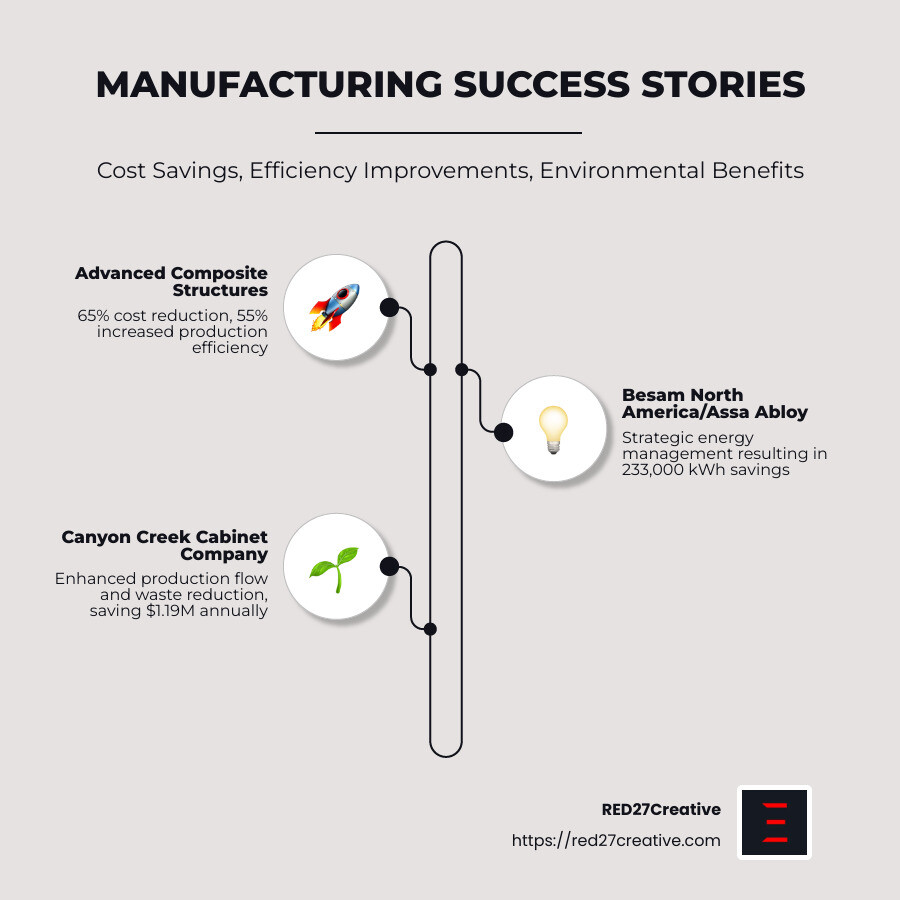
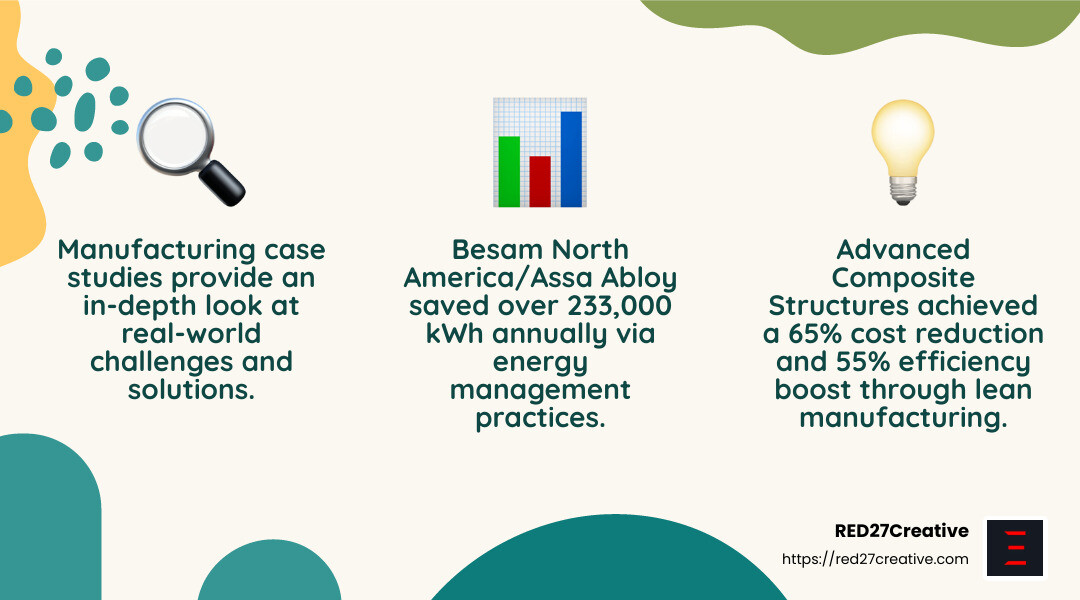
- Advanced Composite Structures: Achieved a 65% cost reduction and a 55% increase in production efficiency through lean manufacturing.
- Besam North America/Assa Abloy: Implemented strategic energy management practices, resulting in annual savings of over 233,000 kWh.
- Canyon Creek Cabinet Company: Improved production flow and reduced waste, saving approximately $1.19 million annually.
These manufacturing success stories serve as guiding examples for industry leaders aiming to enhance and innovate. They demonstrate how effective strategies and sustainable practices can lead to cost savings, increased efficiency, and environmental benefits.
I’m Kiel Tredrea, and I’ve developed strategies that help companies thrive through detailed manufacturing case studies. My expertise in branding, digital marketing, and SEO has empowered businesses to achieve growth and excellence. Let’s delve deeper into these successes.
Understanding Manufacturing Case Studies
Manufacturing case studies are detailed examinations of real-world scenarios where companies have faced challenges and devised solutions. These studies serve as educational tools that highlight problem-solving techniques and showcase tangible results. By dissecting these scenarios, businesses can gain insights into effective strategies and innovative practices.
What is a Manufacturing Case Study?
A manufacturing case study provides a comprehensive look into a company’s specific problem, the strategies employed to address it, and the outcomes achieved. It often includes:
- Background Information: A brief overview of the company and the challenge it faced.
- Problem Statement: The specific issue or hurdle the company needed to overcome.
- Solution Implementation: The strategies and processes adopted to tackle the problem.
- Results: Quantifiable outcomes, such as cost savings, efficiency improvements, or environmental benefits.
These case studies are invaluable for understanding how theoretical concepts apply in real-world settings, offering a blueprint for other companies facing similar challenges.
Problem-Solving in Manufacturing
At the heart of every manufacturing case study is problem-solving. Companies like Advanced Composite Structures have demonstrated how lean manufacturing can lead to significant cost reductions and increased production efficiency. By analyzing production processes and identifying areas of waste, they achieved a 65% cost reduction and boosted production efficiency by 55%.
Similarly, Besam North America/Assa Abloy focused on energy management. By implementing targeted energy-saving practices, they saved over 233,000 kWh annually. These examples illustrate how strategic interventions can lead to substantial improvements in performance and sustainability.
Supporting Facts and Success Metrics
Manufacturing case studies often contain supporting facts and metrics that validate the effectiveness of the solutions implemented. For instance, Canyon Creek Cabinet Company reported annual savings of approximately $1.19 million through improved production flow and waste reduction.
These success metrics provide a clear picture of the impact of strategic changes and serve as benchmarks for other organizations. They highlight the importance of adopting evidence-based approaches and underscore the potential for significant gains through well-executed strategies.
Manufacturing case studies are more than just stories; they are powerful tools that provide actionable insights and inspire innovation across the industry. By learning from these examples, businesses can better steer their challenges and pave the way for future success.
Frequently Asked Questions about Manufacturing Case Studies
What is a case study in manufacturing?
A manufacturing case study is an in-depth analysis of a company’s challenge, solution, and results, providing a detailed look at problem-solving and innovation.
How do you write a manufacturing case study?
To write a manufacturing case study, focus on the story: profile the customer, outline the challenge, describe the solution, and present quantifiable results.
Which big data use cases are for manufacturing?
Big data in manufacturing is used for demand forecasting, supply chain optimization, quality control, and production line improvement.
Top Manufacturing Case Studies
When it comes to learning from real-world examples, manufacturing case studies offer invaluable insights. Let’s explore some standout cases that highlight innovation and problem-solving in the industry.
Casa Herrera
Founded in 1951, Casa Herrera is a leader in designing and manufacturing machinery for producing tortillas and other related products. Their case study showcases how custom machinery can improve production efficiency and product quality. By tailoring equipment to meet specific production needs, Casa Herrera has helped countless businesses streamline operations and reduce waste. This focus on customization and efficiency is a hallmark of their success.
Justice Design Group
Justice Design Group (JDG), established in 1985, is renowned for its decorative lighting fixtures. Based in Los Angeles, JDG has consistently delivered high-quality, clean-lined products. Their case study highlights the importance of design innovation and customer-centric approaches in manufacturing. By focusing on aesthetics and functionality, JDG has maintained a competitive edge in the lighting industry, setting trends rather than following them.
EMG Pickups
EMG Pickups, based in Santa Rosa, California, has been at the forefront of designing specialty pickups for guitars and basses for nearly 50 years. Their case study exemplifies the power of niche specialization and continuous innovation. EMG’s dedication to quality and performance has made them a favorite among musicians worldwide, demonstrating how focusing on a specific market segment can drive success.
Pure Lab Solutions
Located in San Diego, Pure Lab Solutions specializes in lab water purification systems and is a certified Women’s Business Enterprise. Their case study underscores the importance of industry expertise and certification in building credibility and trust. By providing custom solutions that meet stringent quality standards, Pure Lab Solutions has positioned itself as a leader in its field, emphasizing the value of specialized knowledge and certification.
Rise Up Industries
Rise Up Industries, established in 2013, is a nonprofit organization dedicated to helping formerly incarcerated individuals reintegrate into society. Their case study is a powerful example of how manufacturing can have a social impact. By providing training and job opportunities, Rise Up Industries not only improves lives but also contributes to community development. This case highlights the broader societal benefits of inclusive manufacturing practices.
These manufacturing case studies illustrate diverse approaches to overcoming challenges and achieving success. Whether it’s through customization, design innovation, niche specialization, industry expertise, or social impact, these examples offer valuable lessons for businesses looking to improve their operations and make a difference.
Frequently Asked Questions about Manufacturing Case Studies
What is a case study in manufacturing?
A manufacturing case study is an in-depth analysis of a company’s challenge, solution, and results, providing a detailed look at problem-solving and innovation.
How do you write a manufacturing case study?
To write a manufacturing case study, focus on the story: profile the customer, outline the challenge, describe the solution, and present quantifiable results.
Which big data use cases are for manufacturing?
Big data in manufacturing is used for demand forecasting, supply chain optimization, quality control, and production line improvement.
Sustainable Manufacturing Practices
Sustainable manufacturing practices are more important than ever. They help businesses save money, reduce waste, and protect the environment. Let’s explore some key practices that companies are using to achieve these goals.
Lean Manufacturing
Lean manufacturing is all about efficiency. It aims to eliminate waste and improve productivity. Take Advanced Composite Structures, for example. By using the Value Mapping Process, they cut costs by 65% and increased production from 20 to 45 units per shift. They even reduced their scrap rates from 24% to just 1.8%. This shows how lean manufacturing can transform a business.
Energy Management
Energy management is another crucial practice. It focuses on reducing energy use and costs. Besam North America/Assa Abloy offers a great case study. By following recommendations from an energy management survey, they saved 233,555 kWh and $25,776 annually. Simple changes like upgrading lighting and fixing air leaks made a big difference.
Pollution Prevention
Pollution prevention aims to reduce harmful emissions and waste. Custom Print is a prime example. They cut their chemical inventory by 70% and saved $5,000 per year. They also reduced electricity costs by $2,000 per month by improving ventilation and mixing specialty colors from existing stocks. These steps not only protect the environment but also save money.
Waste Reduction
Waste reduction involves reusing and recycling materials to minimize waste. Guardian Automotive’s Ligonier Plant implemented a waste reduction program that saved over $360,000 by recycling materials like glass cullet and fiberglass. This approach not only reduces costs but also supports sustainability.
These sustainable manufacturing practices—lean manufacturing, energy management, pollution prevention, and waste reduction—are helping companies achieve economic and environmental benefits. By adopting these practices, manufacturers can improve their operations, save money, and contribute to a healthier planet.
Leveraging Big Data in Manufacturing
Big data is revolutionizing the manufacturing industry. It helps companies forecast demand, optimize supply chains, and improve quality control. Let’s explore how big data is shaping the future of manufacturing.
Leveraging Big Data in Manufacturing
Big data is revolutionizing the manufacturing industry. It helps companies forecast demand, optimize supply chains, and improve quality control. Let’s explore how big data is shaping the future of manufacturing.
Demand Forecasting
Demand forecasting is a game-changer for manufacturers. It uses historical data and trends to predict future demand. This helps companies like Alcar Ruote, which produces steel wheels, to manufacture the right products at the right time. By using Oracle Fusion Cloud applications, they can access real-time data to manage orders efficiently and keep customers happy. Accurate demand forecasting minimizes overproduction and reduces inventory costs.
Supply Chain Optimization
Supply chain optimization is crucial for smooth operations. With big data, companies can gain visibility into every part of their supply chain. For example, Construction Specialties, known for its architectural products, uses data to track orders from marketing to delivery. This ensures timely production and improves customer experience. By leveraging data, manufacturers can identify bottlenecks, streamline logistics, and reduce costs.
Quality Control
Quality control ensures products meet high standards. Big data allows manufacturers to monitor production processes in real time. Alcar Ruote uses IoT technology to analyze sensor data and predict equipment failures. This proactive approach reduces downtime and maintains product quality. By using big data, companies can quickly identify defects and implement corrective actions, ensuring consistent product quality.
Production Line Improvement
Improving production lines leads to increased efficiency and output. Big data provides insights into equipment performance and process optimization. Tata Steel, for instance, used simulation to improve crane and ladle handling, boosting throughput. Manufacturers can experiment with different layout configurations to find the most efficient setups. This data-driven approach leads to faster production and lower costs.
Big data is changing manufacturing by enhancing demand forecasting, optimizing supply chains, ensuring quality control, and improving production lines. By adopting big data strategies, manufacturers can increase efficiency, reduce costs, and deliver better products to their customers.
Frequently Asked Questions about Manufacturing Case Studies
What is a case study in manufacturing?
A case study in manufacturing offers an intricate look at how a company tackled specific challenges. It includes a detailed before-and-after explanation, showcasing the problems faced and the solutions implemented. This narrative helps others learn from real-world examples and apply similar strategies to their own situations.
How do you write a manufacturing case study?
Writing a manufacturing case study involves a story mindset. Start with a clear customer profile to set the context. Identify the challenge they faced and describe the solution offered. Use quantifiable results to highlight the impact. This approach not only tells a compelling story but also provides actionable insights.
Which big data use cases are for manufacturing?
Big data is revolutionizing manufacturing with several use cases:
- Demand Forecasting: Predict future demand using historical data to optimize production schedules.
- Supply Chain Optimization: Gain insights into supply chain operations to reduce bottlenecks and improve logistics.
- Quality Control: Monitor production processes in real-time to ensure high product standards.
- Production Line Improvement: Analyze equipment performance to improve efficiency and output.
These applications help manufacturers increase efficiency, reduce costs, and maintain high-quality standards.
Conclusion
In today’s digital world, standing out in the manufacturing industry requires more than just innovation; it demands strategic marketing, SEO, and web design. This is where RED27Creative shines. We specialize in results-driven marketing that lifts brands and scales businesses. Our comprehensive suite of services is designed to improve your online presence and drive growth.
By leveraging our expertise in SEO and web design, we ensure your brand not only reaches your target audience but also resonates with them. Our custom strategies help you dominate local markets and expand internationally, positioning your business for sustained success.
At RED27Creative, we understand the unique challenges faced by manufacturers. That’s why we offer solutions that are as dynamic as your industry. Whether it’s through engaging social media content or optimizing your website for search engines, we provide the tools you need to thrive.
Find how our services can transform your business. Visit our Social Media Content Creation page to learn more about how we can help you connect with your audience and achieve your business goals.
In conclusion, manufacturing success stories are not just about overcoming challenges; they’re about leveraging the right strategies to build a brand that stands the test of time. With RED27Creative by your side, your business is ready to reach new heights.

Kiel Tredrea
https://red27creative.comTop Marketing Agency • Web, SEO & Leads • RED27Creative