Penny Wise: Effective Cost Reduction in Manufacturing

The Importance of a Manufacturing Cost Reduction Strategy
A Manufacturing cost reduction strategy is a systematic approach to cut unnecessary expenses and boost productivity in your production process. If you’re looking for quick wins to lower manufacturing costs, here’s your straightforward answer:
- Lean Manufacturing: Identify and remove waste.
- Automation & Technology: Invest in robotics and software.
- Energy Efficiency: Upgrade equipment to reduce energy use.
- Supply Chain Optimization: Negotiate better terms and implement JIT inventory.
- Workforce Training: Cross-train employees to maximize efficiency.
Manufacturing can quickly become a black hole for expenses if costs aren’t actively managed. In fact, according to the Lean Enterprise Research Center, over 60% of production activities are considered waste if not reviewed for value. This is exactly why having a proven Manufacturing cost reduction strategy can transform your bottom line and help you stay competitive, profitable, and agile.
I’m Kiel Tredrea, and with over 20 years helping B2B and B2C companies cut costs and increase efficiency, I’ve seen how the right Manufacturing cost reduction strategy can revolutionize operations. As we dig further, I’ll share practical insights you can implement immediately.

Manufacturing cost reduction strategy word list:
Understanding Manufacturing Costs

Ever feel like your manufacturing budget is a leaky bucket? You’re not alone. Before we can patch those holes, we need to understand exactly where your money is flowing. Think of this as financial detective work – identifying the culprits behind your manufacturing expenses is the first critical step in taming them.
When we break down manufacturing costs, they typically fall into three major categories that affect your bottom line in different ways. Let’s explore what’s really eating into your profits:
Direct Materials
These are the tangible ingredients that physically become your product. The steel frame of a bicycle, the cotton in a t-shirt, or the flour in bread – these materials are the building blocks of what you sell. For most manufacturers, direct materials represent the largest slice of the cost pie, often accounting for 50-70% of total production expenses. This is why even small percentage savings here can dramatically improve your margins.
Direct Labor
Behind every great product is skilled labor. These are your frontline production heroes – the machine operators, assembly technicians, and quality inspectors who transform raw materials into finished goods. While automation has changed the landscape of manufacturing, human expertise remains essential in most production environments. These wages are straightforward to track but can be challenging to optimize without affecting quality or morale.
Overhead Costs
Here’s where things get interesting – and often overlooked. Manufacturing overhead includes all those essential expenses that don’t directly touch your product but make production possible:
- Factory utilities that keep the lights on and machines running
- Facility costs including rent, property taxes, and insurance
- Equipment depreciation and maintenance
- Indirect labor like production supervisors and maintenance staff
- Quality control systems and testing
- Administrative costs tied to production
Many manufacturers are surprised to find that overhead can account for 15-30% of total production costs. These expenses tend to hide in plain sight, making them perfect targets for a robust manufacturing cost reduction strategy.
| Cost Category     | Typical % of Total | Primary Reduction Strategies          |
|-------------------|--------------------|-----------------------------------------|
| Direct Materials  | 50-70%             | Supply chain optimization, waste reduction |
| Direct Labor      | 10-25%             | Automation, training, process improvement |
| Overhead          | 15-30%             | Energy efficiency, lean practices, maintenance optimization |
“According to research, over 80% of the production cost is determined during the design and development phase. This means early-stage decisions have the most significant impact on your overall manufacturing expenses.”
The foundation of any effective manufacturing cost reduction strategy begins with a thorough cost analysis. You’d be amazed how many business owners think they know where their money goes until they actually track it. It’s like turning on the lights in a dark room – suddenly you can see everything clearly.
For our manufacturing clients in Illinois – from Geneva to Aurora to Chicago – we’ve found that local factors create unique cost challenges. Higher energy rates during extreme seasons, specialized labor markets, and regional supply chain dynamics all require customized approaches to cost management.
You can’t improve what you don’t measure. By understanding the true composition of your manufacturing costs, you create a roadmap for targeted improvements that can transform your profitability without sacrificing quality. The most successful manufacturers don’t just cut costs blindly – they surgically target waste while preserving value.
The Importance of a Manufacturing Cost Reduction Strategy

When it comes to manufacturing, every dollar counts. But a strong Manufacturing cost reduction strategy isn’t just about trimming dollars here and there—it’s about creating lasting business advantages that have a ripple effect across your entire organization.
Let’s explore why taking a proactive approach to cutting manufacturing costs is not only beneficial but essential for your business’s long-term success.
Improved Competitive Position
In today’s global economy, competition is fierce. Companies everywhere—from Geneva to Aurora to downtown Chicago—are constantly battling for market share. When your manufacturing process runs efficiently and cost-effectively, you can offer more competitive pricing without sacrificing quality.
But pricing isn’t your only advantage. You can also keep prices steady and enjoy higher profit margins, reinvesting those savings into marketing, innovation, or expanding your operations. That flexibility is gold in a competitive market.
Improved Profit Margins
Speaking of profit margins, did you know cutting costs has a bigger impact on your bottom line than increasing revenue? It’s true. If your business currently operates at a 10% profit margin, reducing your manufacturing costs by just $100,000 has the same effect as generating an extra million dollars in sales.
One industry executive shared this insightful strategy:
“We continually reduce our manufacturing costs by identifying the production constraint (the manufacturing bottleneck) and then applying all the tools and techniques at our disposal to improve the performance of the constraint. When it is no longer the constraint we identify the new constraint and repeat.”
This quote perfectly highlights an important truth: a good Manufacturing cost reduction strategy isn’t a one-time fix. It’s a continual cycle of identifying bottlenecks, streamlining processes, and enhancing performance.
Increased Financial Resilience
Businesses that pay close attention to manufacturing costs tend to be more financially robust and stable. When your operations run lean, you build a financial cushion that can see your company safely through economic downturns, supply chain disruptions, or unexpected industry shifts.
Think of it like a rainy day fund for your business operations—when things get tough, lean organizations have fewer vulnerabilities and greater staying power.
Sustainability Benefits
Here’s a bonus: many cost reduction initiatives naturally lead to sustainability improvements. For instance, optimizing energy usage or reducing waste through lean manufacturing doesn’t just save dollars—it reduces your carbon footprint, too.
When customers (and business partners) increasingly care about environmental responsibility, your sustainability efforts can improve your brand image. By combining cost savings with eco-friendly practices, you’re creating a win-win scenario for your business and the planet.
Long-Term Business Viability
Implementing a thoughtful and consistent Manufacturing cost reduction strategy ensures long-term business viability. Manufacturing industries are especially prone to commoditization, where competitive pressures make efficiency gains essential. The companies that thrive are the ones that continuously optimize processes and eliminate unnecessary spending.

To maximize results, handle cost reduction from two complementary angles. First, spend less by eliminating waste and streamlining efficiency through lean manufacturing principles. Second, focus on making more by boosting throughput and improving productivity.
Research shows that a modest 10% improvement in Overall Equipment Effectiveness (OEE) can raise profits by up to 25%. Likewise, a 10% increase in throughput can lift your profitability by around 35%. Combine both methods together, and your business can achieve an impressive 62% boost in overall profit margins.
In short, your Manufacturing cost reduction strategy isn’t just a nice-to-have; it’s a must-have if you want your manufacturing firm to thrive today and well into the future.
Implement Lean Manufacturing Principles
Lean manufacturing remains one of the most powerful approaches for implementing your Manufacturing cost reduction strategy. Originally developed by Toyota in the mid-20th century, lean manufacturing centers around a simple but powerful idea: maximize customer value while minimizing waste.
In other words—lean helps you produce exactly what your customers need, when they need it, with as little waste as possible. Sounds great, right? Let’s break it down further.

The Seven Wastes in Lean Manufacturing
At its heart, lean manufacturing focuses on rooting out seven common types of waste (known as “muda”). When you know what these wastes look like, you can spot them easily and eliminate them before they drain your profits.
These seven wastes include overproduction (making products faster or sooner than customers need them), waiting (idle workers and equipment), transportation (unnecessary material movement), overprocessing (doing extra, unnecessary work on a product), inventory (storing more raw materials or products than needed), motion (unnecessary movement by workers), and defects (products that need rework or scrapping).
Every manufacturer sees some or all of these wastes in their processes. But here’s the good news—you can reduce or eliminate them by using proven lean tools and techniques.

Lean Manufacturing Tools and Techniques
There are several practical tools you can use to implement lean manufacturing into your daily operations. Let’s look at how they can help your Manufacturing cost reduction strategy in real, practical terms.
5S Workplace Organization: This is a simple yet powerful way to declutter and organize your workspace. The steps—Sort, Set in order, Shine, Standardize, and Sustain—create a clean and organized production environment. One local Illinois plant in Aurora implemented this method and saw a 15% reduction in production time, simply by organizing workstations better.
Value Stream Mapping: Think of this as a visual “flowchart” of your manufacturing process. It clearly shows you where bottlenecks and waste occur so you can tackle them directly. Manufacturers consistently report significant gains just by visualizing their processes in a clear and straightforward way.
Kaizen (Continuous Improvement): Kaizen is about making small, continuous improvements every day, with input from your whole team. A St. Charles manufacturer implemented a Kaizen program with amazing results—200 employee ideas and an impressive 12% reduction in manufacturing costs after implementing 85% of them.
Just-in-Time (JIT) Production: JIT means making products exactly when they’re needed—not too soon, not too late. This approach significantly reduces storage, inventory, and waste costs. With JIT, you can quickly spot quality issues, too, since products aren’t piling up in inventory.
Kanban Systems: Kanban is a clear, visual method to signal when more materials or parts are needed. It reduces waste by preventing overproduction and excess inventory. It’s literally as simple as using visual cards, color-coded signals, or digital displays to make sure the right parts move at the right time.
Lean Manufacturing as a Manufacturing Cost Reduction Strategy
The beauty of lean manufacturing is that it doesn’t just tackle one type of cost—it reduces multiple cost areas simultaneously. You lower labor costs because workers spend less time on unnecessary activities. You cut your material costs by reducing defects and overproduction waste. And you lower your overhead by needing less space, energy, and inventory.
Here’s a great local example: one Naperville, IL manufacturer saw a 23% reduction in total manufacturing costs after three years of adopting lean principles. Inventory dropped nearly in half, and productivity jumped by 18%. Lean manufacturing was a true win-win for them.
Want to achieve similar results? Here’s a straightforward way to get started:
- Map your current processes with a Value Stream Map to find waste spots.
- Prioritize and tackle improvements based on their potential impact.
- Train your entire workforce on lean practices, getting them involved in identifying and eliminating waste.
- Implement improvements step-by-step, clearly measuring results.
- Encourage continuous improvement as an ongoing habit, not a one-time event.
One experienced manufacturing manager summed it up best: “Lean isn’t a one-time project; it’s a whole new way of thinking about production. The cost savings come steadily, from consistently applying lean principles every single day.”
And if you’d like a little help keeping track of all these improvements and initiatives, Marketing Automation for Manufacturing can streamline communication and help you track your progress.
When it comes to your Manufacturing cost reduction strategy, lean manufacturing is your trusty multi-tool—simple, effective, and proven to deliver powerful results.
Implement Automation and Technology Integration
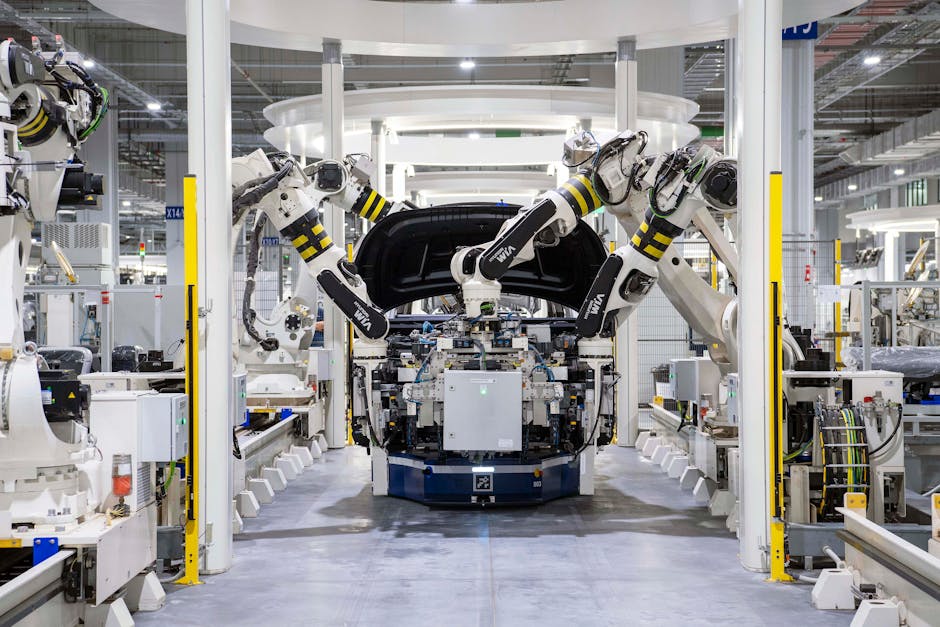
When it comes to crafting an effective Manufacturing cost reduction strategy, thoughtfully incorporating automation and integrating advanced technologies can deliver impressive results. The upfront investment in automation can make you pause (or even gulp), but the long-term savings often far outweigh the initial costs. Let’s explore how automation naturally fits into your broader cost reduction efforts and explore some practical ways to get started.
Strategic Automation Opportunities
Not every task in your manufacturing process is ideal for automation, but focusing strategically on specific areas can yield big returns. For example, repetitive tasks—those monotonous, routine activities repeated hour after hour—are prime candidates for automation. Not only does automating these reduce the need for manual labor (and coffee breaks!), but it also ensures consistent quality and output. One of our clients, a food manufacturer in Geneva, IL, automated their packaging line and achieved a remarkable 35% drop in labor costs—and boosted throughput by an impressive 28%.
Another smart area for automation involves hazardous operations. Tasks that expose workers to safety risks can lead to costly accidents, higher insurance rates, and compliance headaches. Robotics and automated machinery can step in here, keeping workers safer and your budget happier.
Automated quality control systems can also significantly reduce costs. Automated inspection tools consistently catch defects humans might miss, cutting down on product returns, warranty claims, and brand-damaging mistakes.
Lastly, automating material handling with conveyor systems or Automated Guided Vehicles (AGVs) can shave hours off manual processes. This not only reduces labor costs but also keeps production flowing smoothly from one stage to the next.
Advanced Manufacturing Technologies
Beyond basic automation, there are some exciting new technological advancements that smart manufacturers are leveraging as part of their Manufacturing cost reduction strategy. The Industrial Internet of Things (IIoT) is one such example. IIoT technology connects machines and equipment, enabling real-time monitoring. With these connected systems, predictive maintenance becomes possible—saving you from costly downtime. In fact, predictive maintenance can reduce downtime by up to 50% and significantly extend machinery life.
Artificial Intelligence (AI) and machine learning are also changing the way manufacturers approach cost control. AI-driven analytics can spot inefficiencies and opportunities for improvement that humans might overlook. A Chicago-based manufacturer implemented AI technology to optimize their production schedule, resulting in 15% shorter setup times and a 9% boost in Overall Equipment Effectiveness (OEE).
Another innovation worth mentioning is the use of digital twins—essentially digital replicas of your physical equipment and processes. With digital twins, you can simulate potential improvements without disrupting actual production, saving time, money, and headaches.
Finally, additive manufacturing—better known as 3D printing—can reduce both material waste and inventory costs by producing components exactly when and where they’re needed. This on-demand production capability can dramatically lower your overhead expenses and streamline your operations.
ROI Considerations for Automation
Before diving headfirst into automation, it’s wise to evaluate the potential return on investment (ROI). First, look at the total cost of ownership—not just the price of the equipment. This means factoring in installation, training, ongoing maintenance, and eventual replacement costs.
Consider the labor savings carefully. Automation doesn’t just reduce worker numbers; it also makes your existing staff more productive by freeing them from repetitive tasks and allowing them to focus on higher-value work.
Don’t forget quality improvements either. Reducing defects and rework through automation translates directly into cost savings and happier customers.
Additionally, automation can boost throughput. Producing more units in less time spreads your fixed costs more broadly, further enhancing profitability.
Flexibility matters too. Some automated systems allow quicker changeovers between products or tasks, significantly reducing downtime and making your overall operation more agile.
To illustrate, a manufacturer of precision parts in Plainfield, IL carefully analyzed these ROI factors before implementing robotic cells in their machining operation. Even though their initial investment was a substantial $1.2 million, their calculated payback period was just 2.3 years thanks to labor savings, quality improvements, and increased production capacity.
How Automation Fits into Your Manufacturing Cost Reduction Strategy
Automation shouldn’t be seen as a standalone silver bullet, but rather as a powerful tool within your broader Manufacturing cost reduction strategy. The most successful manufacturers first optimize processes using lean principles, then leverage automation to further improve efficiencies.
Start by identifying bottlenecks in your production process and automating those specific constraints. Engage your operators early—they often have valuable insights into practical automation opportunities. Starting with small pilot projects can also help demonstrate feasibility and success before launching larger initiatives.
Most importantly, measure your results consistently. Track performance against baseline figures to see exactly how automation is paying off, then use those insights to scale and refine future automation projects.
For manufacturers looking to effectively leverage automation technology, RED27Creative offers specialized support through Marketing Automation for Manufacturing, helping you clearly communicate successes, measure impact, and ensure your automation investment yields tangible results.
Optimize Energy Consumption
Energy costs often represent one of the biggest overhead expenses in manufacturing, second only to labor. Yet many manufacturers overlook energy efficiency when considering their overall Manufacturing cost reduction strategy. Thankfully, optimizing energy consumption can offer significant savings—often with surprisingly modest investments.
Let’s shed some light on how you can dramatically lower your energy bills and boost profitability at the same time.

Conduct a Comprehensive Energy Audit
Before you can reduce your energy bills, you need to know exactly where your energy dollars are going. That’s where an energy audit comes in handy. A professional audit will identify your biggest energy users, highlight inefficiencies, and recommend specific improvement measures along with estimated savings and a clear ROI.
For example, a metal fabrication plant in Oswego, IL finded they could save a hefty $217,000 each year with energy efficiency upgrades identified in their audit. The best part? These improvements had a payback period of under two years. Not too shabby, right?
High-Impact Energy Efficiency Measures
So, where exactly should you look when trimming your energy costs? Based on our experience working with manufacturers all around Illinois, here are a few high-impact areas to consider as part of your Manufacturing cost reduction strategy.
Simple upgrades such as replacing traditional lighting with LED lighting can immediately slash your lighting costs by up to 75%. Take it a step further by installing smart lighting systems that adjust automatically based on occupancy or natural daylight.
One of the biggest energy culprits in manufacturing is compressed air. By fixing leaks, adjusting pressure settings, and upgrading to variable speed compressors, you could reduce your compressed air energy costs by as much as 50%. A plastics manufacturer in Batavia, IL, for example, saved $43,000 annually just by repairing leaks and optimizing their system.
Don’t forget your HVAC systems. Simply upgrading to high-efficiency heating and cooling equipment, along with improving insulation and installing programmable thermostats, can translate into significant long-term savings.
Another smart move is installing variable frequency drives (VFDs) on motors. These adjust motor speed to match the actual workload, rather than running at full throttle all the time, saving you up to 50% in motor energy usage.
Finally, why not put all that heat your processes generate to good use? Installing heat recovery systems allows you to capture waste heat and reuse it for things like space or water heating—a smart way to keep energy dollars from literally floating away.
Implementing an Energy Management System
To make your energy savings stick, consider adopting a formal energy management system aligned with the ISO 50001 standard. This involves setting clear energy goals, creating plans to achieve them, and continuously tracking your progress.
Take, for example, a food processing facility in Chicago. When they adopted an ISO 50001-aligned energy management system, they achieved a 12% reduction in energy costs the very first year. Even better, they continued saving an additional 5-7% annually in following years.
Renewable Energy Options
Thinking long-term? On-site renewable energy generation can be a fantastic addition to your Manufacturing cost reduction strategy. Technologies such as rooftop or ground-mounted solar panels, combined heat and power (CHP) systems, or even wind turbines (if your location allows) aren’t just good for the planet—they can significantly reduce your reliance on the grid.
What’s more, thanks to advances in renewable technology and generous incentives, the payback periods for these systems have dramatically decreased. A manufacturer in St. Charles, IL, for instance, installed a 500kW solar array and now enjoys 35% of their electricity from clean solar power—with a projected payback period of just 7 years after incentives.
Energy Efficiency Best Practices
To maximize your energy savings—and thus your overall Manufacturing cost reduction strategy—always start with the easiest wins first. Quick fixes like repairing leaks and optimizing equipment settings cost almost nothing and offer immediate savings.
Prioritize larger improvement projects based on ROI and always explore available utility rebates and incentives to keep your costs down. Your employees play a big role too—train them on energy-conscious practices around the plant.
For more practical guidance and resources, explore the EPA’s manufacturing sector resources.
By making energy efficiency a core part of your Manufacturing cost reduction strategy, you’ll position your business for lasting competitive advantage, lower your overhead, and maybe even earn some serious green cred along the way.
Streamline Supply Chain Management
Your supply chain isn’t just a logistical necessity—it’s a golden opportunity to cut costs, boost efficiency, and ultimately create a more resilient, profitable business. When your materials and goods flow smoothly through your facilities, everyone wins: your bottom line, your customers, and your peace of mind.
Let’s explore some of the most effective ways you can streamline your supply chain as part of your broader Manufacturing cost reduction strategy.

Just-in-Time (JIT) Inventory Management
One of the pillars of a successful Manufacturing cost reduction strategy is Just-in-Time (JIT) inventory management. Instead of stockpiling a warehouse full of raw materials—tying up cash and valuable warehouse real estate—you receive exactly what you need, right when it’s needed for production.
Companies that switch to JIT often see dramatic savings. For instance, one manufacturer in Naperville, IL cut their average inventory by 62% after embracing JIT principles. This freed up $1.2 million in much-needed working capital and slashed annual carrying costs by approximately $300,000.
But let’s be honest—JIT isn’t magic. It requires thoughtful planning, accurate forecasting, and strong supplier relationships. To make it work smoothly, you’ll want to develop reliable demand forecasts, cultivate trusted partnerships with suppliers, and set up clear visual management systems to track inventory levels. You’ll also need backup plans in case of unexpected supply disruptions—because, as we’ve all learned recently, surprises definitely happen.
Strategic Supplier Relationships
Speaking of suppliers, building strong supplier relationships is another cornerstone in your Manufacturing cost reduction strategy. Your suppliers aren’t just a cost line on your balance sheet—they’re valuable partners who can help you save money in ways you might not have considered.
For example, supplier consolidation—reducing your supplier base to a few trusted partners—can lead to better volume discounts, simplified logistics, and significantly stronger relationships. One Aurora-based manufacturer streamlined their supplier list from 78 to just 32 strategic partners, achieving an impressive 7% average reduction in material costs.
Getting your suppliers involved early in product design is another money-saving tactic. Did you know that up to 80% of your product costs are set during the design phase? By inviting your suppliers into the design conversation early, you can tap into their expertise to spot cost-saving opportunities you might miss on your own.
Collaborative cost reduction is another smart move. For instance, a simple packaging redesign could lower your supplier’s material expenses and simultaneously cut your shipping costs. Everybody wins—especially your bottom line.
Long-term agreements are also a powerful tool. Suppliers appreciate predictable order volumes and steady relationships, which can translate into better pricing and terms for your business.
Logistics Optimization
Optimizing your logistics is another key aspect of a well-rounded Manufacturing cost reduction strategy. The cost of moving materials and finished goods around adds up quickly—but there’s plenty you can do to keep expenses under control.
Start by choosing the right transportation methods. Air freight might be fast, but ocean shipping offers huge cost savings if your lead times allow it. Similarly, full truckload (FTL) shipments typically beat less-than-truckload (LTL) pricing, provided your volumes are high enough.
Route optimization software can also deliver meaningful savings. A manufacturer based in Plainfield, IL invested in route optimization tools and saw a 14% reduction in delivery costs. That’s money directly saved on fuel, labor, and vehicle wear-and-tear.
Even your packaging strategy matters—lighter, smarter packaging not only reduces material costs but also shrinks shipping fees. Choosing materials that are sturdy yet lightweight, right-sizing packages to minimize empty space, and designing for easy palletization can all add up to substantial savings.
Finally, don’t overlook warehouse efficiency. A clean, logical layout and well-run warehouse management systems (WMS) can drastically reduce picking times, cut down on errors, and make the most out of your valuable space.
Supply Chain Risk Management
A truly effective Manufacturing cost reduction strategy isn’t just about saving money today—it’s about protecting your business from costly disruptions tomorrow. We’ve all seen how quickly supply chain disruptions can throw a wrench in operations, so it’s wise to plan ahead.
Start by identifying your critical components and any suppliers where you’re relying heavily on just one source. Then, create contingency plans and consider holding strategic inventory for items that could halt production if they’re delayed.
Exploring near-shoring options—sourcing key components closer to home—can reduce risk and improve agility. Plus, implementing advanced supply chain visibility tools can provide early warnings of potential disruptions, allowing you valuable time to pivot.
According to research from Deloitte, companies that invest in robust supply chain risk management experience 20% fewer disruptions and recover 40% faster when disruptions do occur. That’s peace of mind worth investing in.
To explore the latest insights on optimizing your supply chain, visit Deloitte’s research on predictive maintenance.
Improve Workforce Efficiency
Your employees aren’t just one of your biggest costs—they’re also your greatest asset. When it comes to a successful Manufacturing cost reduction strategy, investing in your workforce can dramatically boost productivity, improve morale, and even reduce overall labor expenses. When your team is happy, engaged, and well-trained, everyone wins (including your bottom line!).

Cross-Training Employees
Think of cross-training as your secret weapon for building flexibility and efficiency. By teaching your team members to handle multiple tasks, you reduce bottlenecks, smoothly cover absences, and cut down on temporary workforce costs.
As one study noted, “Cross-training employees can increase flexibility and reduce the need for specialized workers.”
A Geneva, IL manufacturer experienced this firsthand. They rolled out a structured cross-training initiative, complete with a skills matrix visually displayed on their production floor. The result? They achieved an impressive 8% reduction in direct labor costs, while also boosting their on-time delivery rates by 12%.
Implementing Effective Training Programs
Cross-training is powerful, but it’s just one part of building a skilled and efficient workforce. A comprehensive training program is essential to your overall Manufacturing cost reduction strategy. It should include technical equipment training, problem-solving methods such as Six Sigma or PDCA (Plan-Do-Check-Act), lean manufacturing principles, safety training, and leadership development for supervisors and team leads.
Here’s a real-world example: a Chicago-based food processing facility invested in thorough operator training that covered equipment, lean principles, and safety. Within just six months, they saw defects drop by 23% and overall efficiency rise by an impressive 17%. Training pays off—not just in immediate productivity gains, but also in long-term employee retention and morale.
Employee Engagement and Continuous Improvement
An engaged employee doesn’t just show up—they show up with ideas, passion, and a commitment to making things better. Encouraging this kind of enthusiastic participation should be a central part of any successful Manufacturing cost reduction strategy.
Consider implementing an employee suggestion system, where team members are encouraged to submit ideas for improvements. One manufacturer in Oswego, IL did just that, and the results were remarkable. In the first year alone, employee suggestions delivered over $400,000 in savings.
Forming improvement teams is another effective approach. Cross-functional teams bring valuable perspectives from across the business, often leading to innovative and cost-saving solutions you might never have found otherwise.
To keep improvements visible and engaging, use visual management tools like display boards that highlight key performance indicators (KPIs), ongoing projects, and team goals. Employees love seeing their contributions recognized—and speaking of recognition, be sure to celebrate people who contribute to cost reductions. Whether it’s public acknowledgment or incentives linked to savings, recognition is a simple yet powerful motivator.
Optimizing Workforce Scheduling
Getting your workforce scheduling right is a critical step in your overall cost-saving strategy. Matching staffing levels closely to actual demand helps reduce unnecessary overtime and idle hours. By carefully analyzing historical production data, you can anticipate busy periods, adjust shifts accordingly, and ensure optimal efficiency.
A manufacturer in St. Charles, IL reviewed their shift patterns and found they could reduce overtime by 62% simply by adjusting their scheduling practices. Not only did they cut labor costs significantly, but equipment utilization improved by 15% as well—proving that smart scheduling benefits more than just your payroll.
Technology to Support Workforce Efficiency
Today’s digital solutions are game changers when it comes to workforce efficiency. Imagine employees receiving digital work instructions right at their stations, helping them tackle tasks quickly and consistently.
A Chicago manufacturer put tablets with digital work instructions throughout their facility, reducing new employee training time by 40% and cutting quality issues by 27%. Other technologies like augmented reality for training, wearable devices for safety, and mobile apps for quality checks can similarly boost workforce productivity and morale.
Balancing Cost Reduction with Employee Morale
Finally, improving workforce efficiency isn’t about cutting corners or reducing headcount—it’s about enabling your team to work smarter. Clearly communicating your Manufacturing cost reduction strategy helps your employees see how improvements directly secure their future and strengthen the business.
An Aurora, IL manufacturer expertly managed this balance by framing their cost reduction efforts as “becoming more competitive to win more business,” rather than simply reducing expenses. They involved employees actively in the improvement process and committed to avoiding layoffs tied to productivity gains.
The results were outstanding: enthusiastic employee participation, impressive cost reductions that surpassed their original targets by 35%, and a positive workplace culture that attracted and retained talented workers.
By embracing these strategies to boost workforce efficiency, you can build a strong, engaged, and highly productive team that’s truly invested in your company’s long-term success.
Frequently Asked Questions about Manufacturing Cost Reduction Strategies
When talking to manufacturing leaders around Illinois, I often hear similar questions about how to effectively reduce costs. Let’s explore some of the most common questions and explore practical answers based on real-world experience.
What is the most effective manufacturing cost reduction strategy?
In my experience, combining lean manufacturing principles with targeted automation technology usually delivers the best results. Why? Because lean manufacturing focuses first on eliminating waste and streamlining your processes, ensuring you’re not automating inefficiencies. Once your processes are optimized, automation takes your efficiency to the next level.
We’ve observed that manufacturers across Illinois who blend these two approaches typically achieve a 30-40% reduction in manufacturing costs within three years. Companies relying on just lean or automation alone see savings in the 15-20% range. Bottom line: lean first, automate next—it’s the most effective path.
How does lean manufacturing reduce costs in production?
Lean manufacturing helps reduce production costs by systematically targeting waste and streamlining processes. Specifically, lean principles tackle:
- Overproduction, which locks up capital in unnecessary inventory.
- Waiting times, improving productivity and efficiency.
- Transportation and material handling, cutting unnecessary movement costs.
- Overprocessing, eliminating extra steps that don’t add customer value.
- Excess inventory, reducing storage costs and the risk of obsolescence.
- Unnecessary motion, increasing worker productivity.
- Defects, significantly lowering scrap, rework time, and waste materials.
One manufacturer we worked with in Naperville finded through lean analysis that 27% of their production activities didn’t add any value to their products. By applying lean strategies, they successfully eliminated these wasteful steps—saving an impressive $1.2 million annually.
How can automation technology lower manufacturing expenses?
Automation technology reduces manufacturing expenses in several meaningful ways. It significantly cuts down labor costs by handling repetitive tasks with robotic precision, minimizes costly human errors, increases production speed, and enables predictive maintenance to avoid unexpected downtime.
For instance, collaborative robots (cobots) can slash labor costs by 40-60% in suitable applications, while drastically improving consistency and quality. Automated quality inspection systems help reduce defects and scrap rates by up to 90%. Meanwhile, predictive maintenance technology using IoT sensors can reduce unexpected equipment downtime by 30-50%.
A Chicago-based manufacturer implemented a robotic cell for repetitive assembly tasks, achieving a remarkable payback period of just 14 months thanks to labor savings, quality improvements, and increased throughput.
What are the quickest ways to reduce manufacturing costs?
While comprehensive, long-term strategies deliver the biggest impacts, manufacturers often ask us for quick wins. Here’s what’s worked consistently for several of our Illinois clients:
-
Conduct a simple energy audit and implement basic fixes like sealing compressed air leaks, optimizing HVAC settings, and upgrading to LED lighting. These easy actions can trim energy costs by 10-15% almost immediately.
-
Review your inventory closely and eliminate obsolete or excess materials. One Geneva manufacturer identified $350,000 worth of obsolete inventory that could quickly be sold or scrapped, freeing up capital.
-
Renegotiate terms with your key suppliers. A strategic sourcing initiative for the top 20 materials provided one Plainfield manufacturer with immediate average savings of 7%.
-
Analyze overtime patterns and address root causes through better scheduling. A St. Charles manufacturer reduced overtime by 35% simply by improving their production scheduling practices.
-
Implement straightforward waste-reduction methods, such as better measurement accuracy and material handling, to quickly lower material waste. An Aurora food manufacturer cut waste by 22% with minimal investment.
How can small manufacturers implement cost reduction strategies with limited resources?
Small manufacturers often feel overwhelmed by resource constraints, but effective cost reduction doesn’t have to break the bank. Here are practical, affordable approaches we’ve seen deliver impressive results for smaller companies:
Start small and focused, choosing a single production line or process to demonstrate early success. Use free or low-cost resources like the Manufacturing Extension Partnership (MEP), offering subsidized consulting to small businesses.
Engage your employees—frontline workers often know exactly where waste hides and how to fix it. Lean methods, especially at the basic level, typically require minimal investment beyond time and training.
Finally, seek stronger supplier partnerships. Many suppliers will offer technical assistance, cost-saving ideas, and cooperative improvements as part of their relationship-building strategy.
One small manufacturer in Batavia, IL, with just 35 employees, followed these guidelines. Within a year—and with very little investment—they successfully reduced their manufacturing expenses by 17%.
Reducing manufacturing costs doesn’t have to feel daunting. By blending lean principles, targeted automation, strategic supplier relationships, energy efficiency improvements, and workforce optimization, manufacturers of all sizes can achieve meaningful savings. At RED27Creative, we’ve seen these strategies create real impact—helping businesses stay competitive, profitable, and sustainable for years to come.
Conclusion
Implementing a successful manufacturing cost reduction strategy is not a quick fix or a one-time event—it’s an ongoing journey of continuous improvement. The most effective manufacturers treat cost reduction as a team effort, embedding efficiency into their everyday operations and company culture.
Throughout this guide, we’ve explored the pillars of a powerful manufacturing cost reduction strategy. First and foremost, you need a clear, detailed picture of your costs. Without understanding exactly what you’re spending—and why—it’s nearly impossible to make meaningful cuts. Once you have that clear view, you can start systematically eliminating waste and inefficiency from your operations through proven lean principles.
Next, strategically applying automation and technology helps boost your productivity while reducing labor expenses. By thoughtfully integrating robotics, AI, and predictive maintenance, you’ll not only lower costs but also increase production reliability and consistency. Of course, energy optimization should never be overlooked. Even simple improvements—like upgrading to energy-efficient lighting or fixing leaks in compressed air systems—can deliver remarkable savings.
Your supply chain is another key area of focus. Streamlining supplier relationships, adopting Just-in-Time (JIT) inventory practices, and optimizing logistics routes can significantly cut down material and transportation costs. And let’s not forget your people—your greatest asset. Investing in employee training, cross-training, and engagement initiatives boosts productivity, reduces turnover, and encourages valuable continuous improvement ideas.
Across Illinois—from manufacturing hubs like Chicago, Naperville, Geneva, and Aurora—companies we’ve partnered with have achieved impressive results. By focusing on these proven strategies, they’ve consistently realized manufacturing cost reductions of 15–30%. More importantly, they’ve boosted quality, delivery performance, and employee satisfaction in the process.
However, remember that cost reduction shouldn’t ever mean sacrificing quality or customer satisfaction. Your goal is to eliminate unnecessary expenses and streamline operations—not cut corners or compromise on customer value. When done right, a robust cost reduction approach doesn’t just make your business more profitable—it makes you more competitive, more resilient, and better able to serve your customers.
At RED27Creative, we support manufacturers who strive for operational excellence. While our core specialties include marketing, SEO, and web design, we deeply understand that your operational strengths form the foundation of your brand story. After all, when you’ve mastered cost efficiency, you have a compelling narrative to share with your customers—one of value, quality, and reliability.
To further amplify your operational successes, consider exploring our Social Media Content Creation services. We can help showcase your manufacturing achievements to the world, boosting your brand and growing your business.
We would also love to hear from you. What cost reduction strategies have been most successful in your manufacturing operation? Have you encountered unique challenges or surprising wins? Reach out and share your experiences—we’re always here to answer questions and discuss how these proven strategies can benefit your facility.

Kiel Tredrea
https://red27creative.comTop Marketing Agency • Web, SEO & Leads • RED27Creative