The Digital Revolution: Trends Transforming the Manufacturing Industry

Why Manufacturing Industry Digital Trends Matter for Your Business
Manufacturing industry digital trends are reshaping how businesses operate, compete, and thrive in 2025. Here’s a quick overview of the key digital changes occurring right now:
- Smart Factories and Automation: Factories using sensors and robotics to automate production.
- Artificial Intelligence (AI): Predictive maintenance and real-time decision-making.
- Internet of Things (IoT): Connecting equipment and gathering real-time data.
- Additive Manufacturing (3D Printing): Rapid prototyping and on-demand production.
- Digital Twins: Virtual replicas monitoring physical processes for optimization.
- Sustainability Initiatives: Reducing environmental impact through innovative tech.
As Paul Baldassari insightfully says:
“Automation can help ease labor concerns, adapt to unbalanced demand cycles, and empower workers to up-level on more critical tasks.”
I’m Kiel Tredrea, founder of RED27Creative, and have spent over 20 years helping B2B companies leverage digital marketing and technology to drive growth. My expertise spans branding, SEO, eCommerce, and specifically, guiding manufacturers through impactful Manufacturing industry digital trends.

Related content about Manufacturing industry digital trends:
Manufacturing Industry Digital Trends: Embracing Smart Factories and Industry 4.0
The manufacturing sector today is buzzing with excitement—and for good reason. Manufacturing industry digital trends are accelerating at a pace we’ve never seen before, creating enormous opportunities for companies to innovate and grow.
In fact, recent data suggests something pretty impressive: by 2026, nearly 30% of all global digital change spending will come from discrete and process manufacturing industries. Yes, that’s right—almost a third of the entire world’s digital investment is happening right here, in factories just like yours. Clearly, adopting digital technologies is no longer optional; staying competitive in 2025’s manufacturing market demands it.

At the heart of this digital revolution is the concept of the smart factory—a sophisticated environment where automation meets real-time data analytics and the Internet of Things (IoT). Imagine a factory where cyber-physical systems seamlessly connect people, equipment, and processes, working in harmony to optimize productivity and responsiveness. That’s exactly what smart factories deliver.
And the industry agrees. A recent Deloitte study found that 86% of manufacturing executives view smart factory solutions as key drivers of competitiveness over the next five years. Simply put, the factories of the future aren’t just futuristic fantasies—they’re quickly becoming today’s reality.
The need for digital change has only accelerated in the post-pandemic era. What would have typically taken years in technology adoption was compressed into mere months. In fact, McKinsey & Co. famously called it a “decade in days,” highlighting just how quickly businesses accepted digital solutions to keep up with rapidly changing market conditions.
How Smart Factories Improve Efficiency
When you step inside a smart factory, you’ll find it’s designed entirely around efficiency. Real-time data streams continuously from smart sensors and connected equipment, allowing manufacturers to optimize every part of production.
For example, Artificial Intelligence (AI) algorithms analyze vast amounts of data to optimize production scheduling. This means your factory can make precisely what you need, exactly when you need it, reducing excess inventory and waste. Predictive maintenance solutions proactively identify potential equipment issues before breakdowns occur, significantly reducing downtime and boosting productivity.
Quality control has also received a major digital upgrade. Smart sensors instantly detect defects or inconsistencies during production, enabling rapid correction before products even leave the assembly line. The result? Manufacturers implementing smart factory solutions report rework rates dropping below 1.5%, considerably below traditional industry averages.
As one manufacturing leader pointed out, costs for aftermarket sensors and smart factory technologies keep decreasing, while their benefits—such as proactive maintenance, improved process efficiency, and reduced operating costs—continue to rise. It’s truly a win-win scenario.
The Impact of Industry 4.0 on Manufacturing
Industry 4.0, also known as the fourth industrial revolution, represents a groundbreaking shift driven by the fusion of digital, physical, and biological technologies. This wave of innovation is reshaping manufacturing in ways that were unimaginable just a decade ago.
Today, manufacturing plants are becoming highly interconnected ecosystems, where machines, people, and software seamlessly communicate and collaborate. This improved interconnectivity enables smoother workflows, faster responsiveness, and greater flexibility.
Automation within Industry 4.0 doesn’t replace humans—rather, it empowers workers by taking over repetitive tasks. This allows employees to concentrate on higher-level, strategic work, leading to better job satisfaction and higher productivity.
Another powerful benefit is the emergence of data-driven decision making. Real-time analytics provide valuable insights, enabling businesses to make more strategic, informed decisions. Manufacturers can now achieve customization at scale, efficiently producing custom products that meet unique customer needs, without sacrificing efficiency or profitability.
Perhaps one of Industry 4.0’s most critical impacts has been on supply chain resilience. Digital visibility across entire supply chains helps manufacturers quickly respond to disruptions, keeping operations running smoothly even when unexpected issues arise.
The adoption rate of these innovations has been astonishingly high. Industry research shows that an impressive 97% of manufacturers are currently adopting or plan to adopt smart manufacturing solutions within the next two years. With the Industry 4.0 market valued at around $114.3 billion in 2023 and forecasted to grow by 20% annually until 2030, it’s clear that manufacturing leaders are investing heavily—and for good reason.
Embracing these manufacturing industry digital trends positions your business not just to survive, but to thrive in tomorrow’s competitive landscape.
Learn more about leveraging these transformative trends in manufacturing by exploring our resources on B2B marketing for manufacturers, lead generation for manufacturers, and local SEO for manufacturers.
Artificial Intelligence Changing Manufacturing Operations
Artificial intelligence (AI) is quickly becoming a game-changer for manufacturers, positioning itself at the very heart of modern manufacturing industry digital trends. As companies look for smarter ways to boost productivity and efficiency in 2025, AI has emerged as a powerful ally—helping manufacturers transform their operations, improve quality control, and make better, faster decisions.
In fact, the global manufacturing AI market is booming, predicted to reach a staggering $230.95 billion by 2034, growing at an impressive annual rate of 44.2%. This rapid growth highlights how manufacturers worldwide are recognizing AI as essential for staying competitive in a digitally-driven marketplace.
AI helps manufacturing businesses in several crucial ways. Through process optimization, intelligent algorithms analyze vast amounts of data to identify inefficiencies and recommend improvements. AI-driven predictive analytics allow businesses to foresee demand fluctuations, equipment failures, and potential supply chain disruptions—giving them valuable time to proactively adjust.
Quality control is another area where AI shines. Using computer vision technology, AI systems can identify defects more accurately and consistently than human eyes ever could. Furthermore, AI is optimizing supply chain management by improving inventory forecasting, logistics efficiency, and overall responsiveness. Innovative product design has also become easier, with generative AI rapidly creating and testing new designs custom to specific manufacturing requirements.
According to Deloitte’s recent manufacturing industry outlook, AI will be driving more than 40% of all business value within the manufacturing sector by the end of 2026—a clear sign of AI’s growing importance.
AI-Powered Predictive Maintenance
One of the biggest headaches in manufacturing is equipment downtime. Unexpected breakdowns not only halt production but can also dramatically increase repair costs. Enter AI-powered predictive maintenance—a smarter approach to managing equipment health.
By using advanced machine learning algorithms, predictive maintenance systems continuously monitor equipment performance and detect subtle indicators of potential failures—often long before they become noticeable. This way, manufacturers can schedule maintenance precisely when it’s needed, not too early and certainly not too late.
The benefits of predictive maintenance are impressive. Manufacturers who adopt AI-based predictive maintenance see a noticeable reduction in unexpected downtime—up to 35% according to recent industry examples. They also experience lower maintenance costs (up to 20% reduction), longer equipment lifespans, and, importantly, improved safety for their workers by avoiding potentially dangerous breakdowns.
One manufacturer, in particular, implemented an AI-driven predictive maintenance solution to monitor vibrations, temperature, and energy consumption of their machinery. In doing so, they successfully predicted failures days or even weeks in advance, giving their teams ample time to intervene and avoid costly breakdowns.
AI Enhancing Quality Control
Traditionally, quality control in manufacturing has been labor-intensive, repetitive work, often prone to human error. Thankfully, AI is changing how manufacturers approach quality assurance, making it faster, more accurate, and far less tedious.
AI-powered automated visual inspections use sophisticated computer vision systems to rapidly analyze products and detect even the tiniest defects—some nearly invisible to human inspectors. AI also plays a crucial role in statistical process control, quickly identifying when production processes drift outside of acceptable specifications.
Root cause analysis is another major strength of AI, allowing manufacturers to pinpoint exactly what’s causing defects. AI systems can correlate defects to specific process conditions, identifying hidden relationships and patterns that humans might miss.
In practice, one automotive manufacturer implemented AI-driven quality control and saw remarkable improvements—reducing defect rates by 50% while simultaneously increasing inspection speeds by 300%. The AI system continuously learned from historical data, enabling real-time adjustments that dramatically improved product quality.
As manufacturing industry digital trends evolve further in 2025, expect AI’s capabilities in quality control to become even more sophisticated, with systems not just catching defects, but proactively predicting and preventing them before they occur.
The Internet of Things (IoT) and Edge Computing in Manufacturing
The Internet of Things (IoT) isn’t just another buzzword—it’s rapidly becoming the heart of today’s smart factories. Think of IoT as the invisible glue connecting all your devices, machines, and sensors, enabling them to seamlessly share data and insights in real-time. This isn’t futuristic anymore; it’s one of the most impactful Manufacturing industry digital trends shaping factories around the globe right now.

Industry research tells us that by 2025, billions of these interconnected IoT devices will be embedded in factories worldwide. From basic sensors monitoring temperature, humidity, and vibrations to advanced industrial equipment with integrated computing power, IoT devices are changing how manufacturing operations are managed and optimized.
Leveraging IoT for Operational Efficiency
One of IoT’s superpowers in manufacturing is providing real-time visibility across an entire production facility. By continuously collecting comprehensive data, IoT sensors let manufacturers spot inefficiencies before they become costly problems—and sometimes even before humans could notice them.
With IoT, businesses can automate processes based on changing conditions and streamline everything from inventory management to production scheduling. For instance, IoT-connected sensors placed throughout your equipment can detect subtle variations, enabling predictive maintenance and preventing unplanned downtime. This isn’t a small thing—it’s a game-changer for productivity and cost savings.
Take a food processing plant, for example. They recently implemented IoT sensors across their production lines to measure energy consumption and environmental factors. The results speak for themselves: energy use dropped by 18%, and they boosted throughput by 15%. Simply put, IoT helped them uncover hidden inefficiencies in their heating and cooling cycles, making significant operational improvements possible.
As companies recognize these benefits, investment in cloud technology and IoT infrastructure continues to surge. In fact, over the next 12 months, 44% of manufacturing businesses plan to boost their investment in cloud-based technologies to better use their IoT data. Clearly, IoT isn’t just trendy—it’s becoming indispensable.
The Role of Edge Computing
As IoT grows in popularity, the sheer volume of data being generated presents a new challenge: how to process and act on all this information quickly and efficiently? Enter edge computing—the practical hero that complements IoT perfectly.
Edge computing involves processing data close to where it’s actually produced (right on the “edge,” hence the name), rather than relying on distant cloud servers. This approach significantly reduces latency—the delay between data being generated and acted upon—allowing for rapid, real-time decision-making.
In manufacturing, every second counts. Imagine a semiconductor manufacturer producing thousands of microchips every hour. By adopting edge computing, this company reduced its response time to quality issues from minutes down to mere milliseconds. That’s not just impressive—it’s critical. Those milliseconds prevented thousands of defective chips from rolling off the production line and wasting valuable resources.
Beyond speed, edge computing also optimizes bandwidth usage by sending only essential data to the cloud, improving overall network efficiency. Plus, processing sensitive data locally improves security and ensures operations can continue smoothly, even if cloud connectivity is interrupted.
Edge computing helps manufacturers operate more reliably, securely, and cost-effectively. As these tools become increasingly sophisticated, expect IoT and edge computing integration to become standard practice across manufacturing facilities worldwide—driving even more responsive, efficient, and intelligent manufacturing systems.
This evolution firmly places IoT and edge computing at the forefront of today’s most impactful Manufacturing industry digital trends, and their importance will only continue to grow.
Additive Manufacturing and 3D Printing Revolutionizing Production
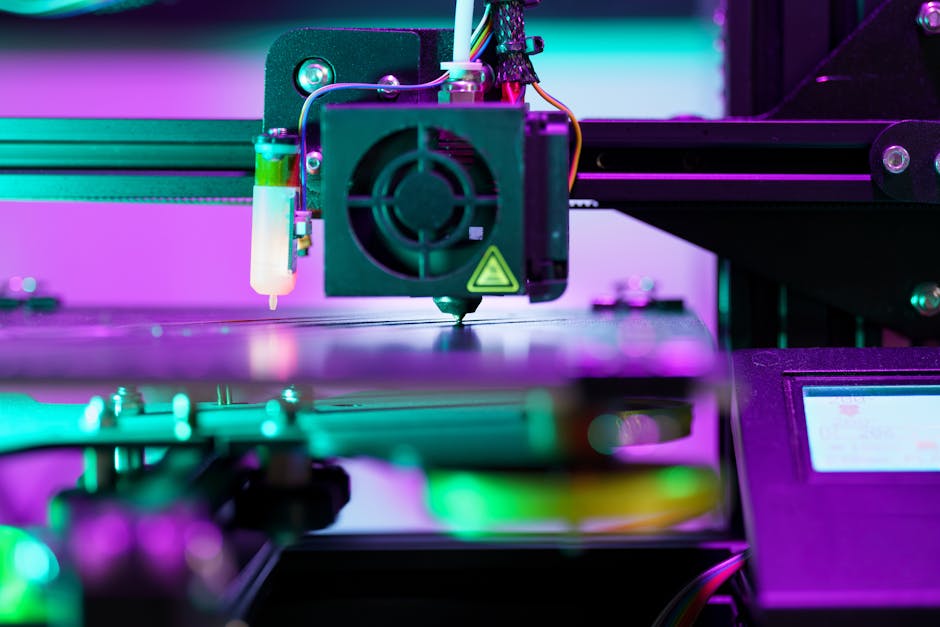
Additive manufacturing, better known as 3D printing, is one of the most exciting and disruptive manufacturing industry digital trends in 2025. Rather than carving away or shaping raw materials like traditional methods, 3D printing creates parts layer by tiny layer, directly from digital designs. Think of it as building something from scratch, one thin slice at a time—like layering frosting on a cake, but with precision lasers instead of frosting knives.
This powerful manufacturing approach has grown rapidly, with experts forecasting the global 3D printing industry to surpass $50 billion by 2026. Once limited mostly to rapid prototyping, additive manufacturing has quickly evolved, becoming a game-changer for creating finished, high-quality parts in fields like aerospace, automotive, healthcare, and consumer products.
Benefits of Additive Manufacturing
So, why exactly is additive manufacturing taking the manufacturing world by storm? First off, it offers remarkable design freedom. Complex shapes that would be impossible or overly expensive with traditional methods can easily come to life through 3D printing. Imagine designing lightweight, intricate airplane parts or medical devices precisely custom to patient anatomy—that’s now entirely achievable.
Another big win is reduced material waste. Unlike traditional manufacturing, which often cuts away large amounts of material, additive processes use exactly what’s needed—no more, no less. This means fewer scraps and significant cost savings, making your company not just leaner but greener too.
Speed is another huge advantage. Additive manufacturing significantly accelerates product development timelines. Instead of waiting weeks for prototypes, your team can create and test new designs within hours or days. Need to make an adjustment? No problem—simply update the digital file and print again. Talk about agile production!
There’s also the magic of on-demand manufacturing. Rather than storing costly inventory, you produce parts exactly when needed, wherever needed. This capability dramatically simplifies your supply chain, reducing overhead while enhancing your operational flexibility.
Finally, one of the favorite benefits manufacturers love is customization. Whether it’s personalized prosthetics, custom-fit consumer goods, or custom industrial components, additive manufacturing allows you to easily tweak designs without expensive retooling.
For example, a medical device company leveraged 3D printing to redesign a surgical instrument, resulting in a weight reduction of 35% and improved ergonomics. The newly optimized shape was virtually impossible to achieve through traditional manufacturing methods—highlighting just how transformative this technology can be.
Applications of 3D Printing in Manufacturing
The applications for additive manufacturing are expanding rapidly and changing a variety of industries. For instance, many manufacturers now regularly use rapid prototyping to quickly test and refine new ideas, cutting product development cycles from weeks or months down to mere days.
Companies are also creating custom tooling and fixtures through 3D printing. These customized jigs and molds significantly reduce lead times, improve production quality, and lower manufacturing costs compared to traditional methods.
Additive manufacturing is revolutionizing spare part production, allowing manufacturers to print replacement parts on-demand rather than maintaining extensive inventory. Picture printing an urgently needed spare component directly on the factory floor within hours—no more costly downtime waiting for delivery.
Additionally, 3D printing has become viable for low-volume production runs. Companies can economically manufacture small quantities of specialized parts without investing in expensive tooling, opening up new markets and business opportunities.
Perhaps most impressively, additive manufacturing enables complex assemblies to be printed as single integrated components, eliminating traditional assembly steps and greatly enhancing reliability. Recently, a marine company successfully 3D printed an entire 7.5-meter, two-ton boat from scratch, demonstrating how far-reaching and scalable this technology has become. Similarly, the aerospace industry has leveraged metal 3D printing to fabricate high-performance spacecraft engines, underscoring the technology’s impressive precision and capabilities.
In the building industry, additive manufacturing is even being used to construct entire houses at a fraction of traditional costs. Recent projects have shown homes printed on-site for as little as between $4,000 and $10,000—promising a more affordable, accessible way to address housing shortages worldwide.
As manufacturing industry digital trends continue to evolve and mature in 2025, there’s no doubt additive manufacturing will play an increasingly central role in modern production. By complementing traditional methods, 3D printing open ups opportunities for innovation, customization, and efficiency previously considered out of reach.
Want more insights into cutting-edge digital trends elevating manufacturing today? Explore our related articles on B2B marketing for manufacturers, lead generation for manufacturers, or local SEO for manufacturers.
Sustainability and Carbon Neutrality Initiatives in Manufacturing
In 2025, sustainability has shifted from being a nice-to-have to an essential component of modern manufacturing. Driven by regulatory changes, evolving consumer expectations, and the realization that sustainability brings real operational benefits, manufacturers are increasingly embracing manufacturing industry digital trends that support environmental responsibility and carbon neutrality.

This change has been accelerated significantly by new laws and incentives, such as the Inflation Reduction Act (IRA). Since its passage, we’ve seen nearly 200 new clean technology manufacturing facilities announced across the United States. These facilities don’t just help the planet; they’re also expected to create over 75,000 new green jobs—a clear win-win for both economic and environmental goals.

Integrating Sustainability into Manufacturing Processes
Manufacturers today aren’t just talking about sustainability—they’re actively integrating it into their everyday operations. One crucial focus area is improving energy efficiency by upgrading to smarter equipment and using IoT sensors that optimize usage in real-time. For example, one automotive manufacturer implemented a digital energy management system in their paint shop, cutting energy use by 20% and emissions by 15,000 tons annually.
Many companies are also embracing renewable energy adoption, either by installing solar panels and wind turbines directly at their plants or by purchasing green power from renewable energy providers. This commitment helps them significantly shrink their carbon footprint while often lowering their long-term energy costs.
Another major priority is waste reduction. Manufacturers are increasingly turning to circular economy practices—recycling or reusing materials in creative ways, reducing waste at every step, and opting for sustainable, environmentally friendly raw materials. They’re also making strides in water conservation, implementing processes that recycle water within production lines, significantly reducing usage and lowering costs.
On top of these actions, businesses are optimizing their supply chains to further reduce environmental impacts. By shortening transportation distances, working with eco-friendly suppliers, and streamlining logistics, they’re curbing emissions and creating healthier, more sustainable manufacturing ecosystems.
Digital tools play a key role in these sustainability efforts. Technologies like digital twins allow manufacturers to simulate and optimize production processes, pinpointing inefficiencies and reducing environmental impact. AI-powered analytics help companies proactively schedule production runs to cut energy use and resource consumption, further enhancing their green credentials.
Benefits of Carbon Neutrality
The journey toward carbon neutrality isn’t just good for the planet—it’s also great for manufacturing businesses. Adopting sustainable practices can deliver substantial cost savings by making operations leaner, smarter, and more efficient. In fact, research shows that manufacturers implementing a strong sustainability strategy generally see operational cost reductions between 5% and 10%.
Manufacturers also mitigate risk by aligning themselves with evolving regulatory standards. As environmental regulations become stricter, carbon-conscious businesses avoid steep penalties, taxes, or supply chain disruptions down the road. Moreover, demonstrating a genuine commitment to sustainability significantly boosts brand reputation. Today’s customers are increasingly eco-conscious and eager to support brands that reflect their values—this translates into stronger customer loyalty and higher market share.
Adopting sustainable practices also improves a company’s attractiveness to investors. Businesses meeting Environmental, Social, and Governance (ESG) criteria typically gain easier access to capital, a crucial advantage in competitive markets. Embracing carbon neutrality gives manufacturers a competitive edge, positioning them as forward-thinking leaders in an increasingly environmentally aware market.
One executive summed it up nicely, saying, “The transition to sustainable manufacturing isn’t just about compliance or public relations anymore—it’s a strategic necessity. If you don’t evolve now, you’ll get left behind as the market and consumer priorities shift.”
Sustainability will remain one of the most important manufacturing industry digital trends in 2025, driving innovation and long-term success. Manufacturers who act now won’t just help protect our planet—they’ll also position themselves firmly for future growth and resilience.
The Role of Digital Twins in Modern Manufacturing
Digital twins are quickly becoming one of the most exciting and essential manufacturing industry digital trends in 2025. Think of a digital twin as a high-tech, virtual replica of your physical equipment, processes, or even your entire production facility. It’s not just a static picture or model—it’s a dynamic digital “twin” that constantly updates itself in real-time based on actual data from its real-world counterpart.
What makes digital twins such a valuable tool? They’re like crystal balls for manufacturing executives and engineers—enabling you to peek into the future and see exactly how your systems would behave under different conditions. According to recent surveys, manufacturers anticipate that the industrial metaverse—which prominently features digital twins—could boost labor productivity by as much as 12%. That kind of productivity leap explains why digital twins are rapidly shifting from an innovative experiment to a must-have industry standard.

How Digital Twins Improve Production
Digital twins empower manufacturing businesses to dramatically improve production efficiency, optimize processes, and proactively prevent costly breakdowns.
For example, imagine being able to accurately predict exactly when a critical piece of equipment might fail—before it actually happens. Digital twins make predictive maintenance a reality by continuously simulating real-world conditions to spot issues early. A manufacturer of CNC machines recently created a digital twin of their equipment, allowing them to anticipate stress-induced failures and proactively replace key components. Their result? They reduced unplanned downtime by an impressive 35%.
Beyond maintenance, digital twins help drive process optimization. Instead of relying on costly trial-and-error on the production floor, you can virtually test new ideas first. This saves significant time and minimizes risk. A great practical example comes from a manufacturer who mapped out their entire supply chain using a digital twin. This allowed them to visually pinpoint supply vulnerabilities and diversify their suppliers, ultimately creating a more resilient and robust production ecosystem.
Additionally, digital twins greatly improve product quality by identifying patterns that lead to defects. They also improve employee training by providing realistic virtual simulations, allowing new team members to practice tasks safely and repeatedly in a risk-free environment.
Implementing Digital Twins
While the potential benefits of digital twins are clear, successfully implementing them requires careful planning and teamwork. Getting started means ensuring you have a strong data infrastructure in place—think IoT sensors and high-speed connectivity—to feed real-time data from your physical operations to the twin.
Integration with your existing systems, like ERP platforms and manufacturing execution systems (MES), is crucial. Your digital twin needs accurate data from multiple sources to reflect your real-world processes and operations.
You’ll also want to ensure you have the right modeling expertise on your team, either internally or through a strategic partner. Developing highly accurate, physics-based or data-driven models is the heart of creating a truly useful digital twin.
Don’t underestimate the value of visualization tools, either. Your team needs intuitive interfaces to easily understand and interact with the digital twin, making insights actionable. Good training will help your employees make the most out of these powerful tools.
And finally, cybersecurity can’t be overlooked. Protecting sensitive operational data that’s flowing between your physical facility and digital twin is paramount.
One manufacturing executive summed it up perfectly:
“Our digital twin journey started small, with just one production line. But the productivity gains and cost savings were so clear that we quickly expanded, creating digital replicas of our entire factory. It gave us visibility into operations we simply never had before.”
As manufacturing industry digital trends continue to evolve in 2025, digital twins will only grow more sophisticated. Expect them soon to integrate AI-driven autonomous optimization and extend beyond individual factories, ultimately modeling entire value chains and helping manufacturers stay ahead of the competition.
For further exploration of how digital change is reshaping manufacturing, check out Deloitte’s latest research on AI in manufacturing.
Frequently Asked Questions about Manufacturing Industry Digital Trends
What are the key digital trends changing the manufacturing industry?
When we look at what’s really reshaping manufacturing in 2025, several manufacturing industry digital trends stand out from the crowd. Smart factories have become the new standard, with automation and IoT devices working together to create unprecedented efficiency. Artificial intelligence is no longer just a buzzword but a practical tool helping manufacturers predict maintenance needs and improve quality control.
The rise of 3D printing has opened new possibilities for customization and rapid prototyping, while digital twins are giving companies a virtual sandbox to test and optimize their operations. Edge computing is making real-time data processing possible even in challenging factory environments, and sustainability initiatives powered by digital technologies are helping manufacturers reduce their environmental footprint.
What’s particularly striking is the scale of investment we’re seeing. Industry forecasts suggest nearly 30% of worldwide digital change spending will come from manufacturing by 2026. This massive financial commitment shows just how critical these technologies have become for staying competitive.
How is artificial intelligence impacting manufacturing operations?
AI has gone from an interesting possibility to an essential tool on factory floors around the world. The impact is remarkable – predictive maintenance systems powered by AI are now cutting downtime by up to 35%, giving manufacturers precious additional production hours every month.
In quality control, AI-powered vision systems are identifying defects that would be virtually impossible for human inspectors to catch consistently. One manufacturer I worked with implemented an AI quality system that could detect micro-fractures in components that were completely invisible to the naked eye.
Manufacturing industry digital trends in 2025 show AI is also changing process optimization, with typical efficiency gains of 15-20% when AI algorithms take the reins. Supply chain management has seen similar benefits, with inventory accuracy improvements of up to 85% when AI helps forecast demand and manage stock levels.
Perhaps most exciting is how AI is changing product design itself. Generative design tools can now create optimized product designs based on specific parameters like weight, strength, and material constraints – often producing solutions human engineers might never have conceived. By the end of 2026, industry analysts expect AI to drive over 40% of all business value in manufacturing.
What role does IoT play in modern manufacturing?
The Internet of Things has become the nervous system of modern factories. Think about it – thousands of connected sensors and devices constantly monitoring everything from equipment vibration patterns to temperature fluctuations, material flows, and environmental conditions.
These IoT networks create a continuous stream of operational intelligence that transforms how factories function. Maintenance teams no longer need to guess when equipment might fail – sensors detect subtle changes in performance patterns that indicate potential issues. Production managers get real-time visibility into bottlenecks and inefficiencies. Quality teams can trace problems back to their source with unprecedented precision.
The scale of data collection is staggering. Today’s manufacturing industry digital trends show that operations generate petabytes of data – that’s one million gigabytes – from their digital systems. Without IoT infrastructure, this wealth of information would remain largely untapped. Instead, manufacturers are using it to make smarter decisions, automate processes, and continuously improve their operations.
As one plant manager told me recently, “IoT gave us eyes and ears in places we couldn’t monitor before. We’re catching problems in minutes that used to take days to identify.”
How are digital twins being used in manufacturing?
Digital twins represent one of the most fascinating manufacturing industry digital trends in 2025 – creating virtual doppelgängers of physical assets that mirror their real-world counterparts in real time. Imagine having a complete virtual replica of your production line or even your entire factory that updates continuously as conditions change.
Manufacturers are using these digital twins in incredibly practical ways. Maintenance teams can simulate equipment performance under different conditions to predict exactly when components will fail. Process engineers can test changes virtually before implementing them physically – avoiding costly disruptions and mistakes.
Quality improvement initiatives benefit enormously from digital twins by identifying the complex factors that contribute to defects. Supply chain managers can visualize their entire network, spotting vulnerabilities and testing resilience strategies before problems occur.
The productivity gains are substantial. Industry surveys suggest technologies like digital twins could boost labor productivity by around 12% – a massive improvement in an industry where single-digit gains are typically celebrated.
One aerospace manufacturer I spoke with credited their digital twin program with reducing new product introduction time by 30% while simultaneously improving first-time quality rates.
What benefits does 3D printing offer to manufacturers?
3D printing has matured from a prototyping curiosity into a serious production technology that’s changing what’s possible in manufacturing. The design freedom it offers is – complex geometries that would be impossible to create with traditional methods can now be printed with relative ease.
Material efficiency is another major advantage. Unlike traditional subtractive manufacturing that creates waste by cutting away material, 3D printing uses only what’s needed for the part itself. For some components, this can reduce material waste by up to 90%.
Product development cycles have been dramatically compressed thanks to rapid prototyping capabilities. What once took weeks of tooling and preparation can now happen overnight, allowing for more design iterations and ultimately better products.
Manufacturing industry digital trends in 2025 show that on-demand production is perhaps the most transformative aspect of 3D printing. Manufacturers can produce exactly what’s needed, when it’s needed, reducing inventory costs and enabling mass customization without the traditional cost penalties.
The technology has found particular value in three key areas:
- Low-volume production of specialized components
- Manufacturing of spare parts on demand
- Creating lightweight, structurally optimized components
With the 3D printing industry projected to grow beyond $50 billion by 2026, we’re just beginning to see how this technology will reshape manufacturing.
How are manufacturers addressing sustainability challenges?
Sustainability has moved from a nice-to-have initiative to a core business imperative for manufacturers in 2025. The approach has become increasingly sophisticated, with digital technologies playing a central role in driving meaningful environmental improvements.
Energy efficiency programs powered by smart sensors and analytics are reducing consumption by 15-30% in typical facilities. Many manufacturers are also embracing renewable energy, either through on-site generation with solar panels and wind turbines or through power purchase agreements with renewable providers.
Waste reduction initiatives built around circular economy principles are changing how manufacturers think about materials. Digital systems track materials throughout their lifecycle, identifying opportunities to reuse, recycle, or repurpose resources that would previously have been discarded.
Water conservation has become another priority, with digital monitoring systems helping manufacturers reduce, recycle, and reuse water in production processes. One food processor I worked with reduced water consumption by 40% after implementing smart water management systems.
The investment in sustainability is accelerating rapidly. Since the Inflation Reduction Act passed, nearly 200 new clean technology manufacturing facilities have been announced in the US alone. These facilities aren’t just good for the environment – they’re creating tens of thousands of new jobs and helping manufacturers reduce long-term operational costs.
As one manufacturing executive put it: “Sustainability isn’t just about doing the right thing anymore. It’s about future-proofing our business against rising energy costs, regulatory changes, and changing customer expectations.”
What challenges do manufacturers face in implementing digital change?
While the benefits of digital change are clear, the journey isn’t without its obstacles. Integration complexity often tops the list of challenges – connecting new technologies with legacy systems that may be decades old requires careful planning and expertise.
Cybersecurity concerns have intensified as operational technology becomes more connected. When your production equipment is networked, it potentially becomes vulnerable to the same cyber threats that have long plagued IT systems.
The skills gap remains a persistent issue in 2025, with about 22% of industrial manufacturers citing lack of skilled workers as a significant barrier to digital change. Finding people who understand both manufacturing processes and advanced digital technologies can be extremely difficult.
Financial constraints also play a role. Despite the compelling long-term benefits, the upfront investment required for comprehensive digital change can be substantial. Many manufacturers, especially smaller ones, need to take an incremental approach.
Perhaps the most underestimated challenge is organizational resistance. Manufacturing industry digital trends often require significant changes to established workflows and processes, which can meet with resistance from employees comfortable with traditional methods.
The most successful digital changes I’ve witnessed share common elements: they start with high-value use cases that demonstrate quick wins, they ensure cross-functional collaboration between IT, operations, and business leadership, and they invest heavily in change management and training.
As one manufacturing leader told me, “The technology was actually the easy part. Getting everyone aligned and comfortable with new ways of working – that was the real challenge.”
Conclusion
The digital revolution sweeping through manufacturing isn’t merely an interesting trend—it’s fundamentally changing the way the entire industry operates in 2025. At the heart of these transformative shifts are key Manufacturing industry digital trends like smart factories, artificial intelligence, IoT, additive manufacturing (3D printing), digital twins, and sustainability initiatives. These innovations are opening exciting new doors for businesses, allowing them to reach new levels of efficiency, creativity, and competitive strength.
Throughout this article, we’ve explored how adopting digital technologies can provide real, measurable benefits for manufacturers. Companies embracing these innovative solutions are enjoying reduced operational costs, higher product quality, and significantly greater flexibility in production. They’re also building more resilient supply chains, minimizing their environmental footprint, and seeing noticeable improvements in worker safety and productivity.
Of course, transitioning into this digital future doesn’t come without its problems. Integrating sophisticated technologies into existing operations can be complex, and cybersecurity remains a genuine concern as more equipment goes online. Additionally, many manufacturers face skills gaps within their workforce and significant upfront investments that can initially seem daunting.
Yet, time and again, we’ve seen that the rewards far outweigh these challenges. Businesses that commit to digital change typically realize substantial returns, positioning themselves as leaders within an increasingly competitive marketplace.
At RED27Creative, we understand that navigating these changes can seem overwhelming, especially when you’re simultaneously running day-to-day operations. That’s why we’ve made it our mission to support manufacturers as they accept the digital age. We specialize in crafting custom, results-driven digital strategies for manufacturing companies throughout Geneva IL, Batavia IL, Aurora IL, St. Charles IL, Plainfield IL, Oswego IL, Naperville IL, and Chicago IL.
Whether your key priority is boosting your online presence, driving qualified leads, or clearly communicating your digital change story to customers and stakeholders, our experienced team is ready to help. Find how we can support your journey by exploring our dedicated Marketing Automation for Manufacturing services.
The future of manufacturing is digital—and that future is already here in 2025. As one manufacturing executive aptly put it, “The digital revolution is only beginning to take shape. Leaders in digital manufacturing are already gaining significant competitive advantages by using technology to strengthen and improve the capabilities of shop floor operators and managers.”
Keeping a close eye on Manufacturing industry digital trends and strategically implementing these technologies will set your company up for lasting success. By starting now, you’ll position yourself ahead of competitors and lead your business confidently into an exciting, digitally-driven future.

Kiel Tredrea
https://red27creative.comTop Marketing Agency • Web, SEO & Leads • RED27Creative