Manufacturing Success: How Marketing Automation Transforms the Industry
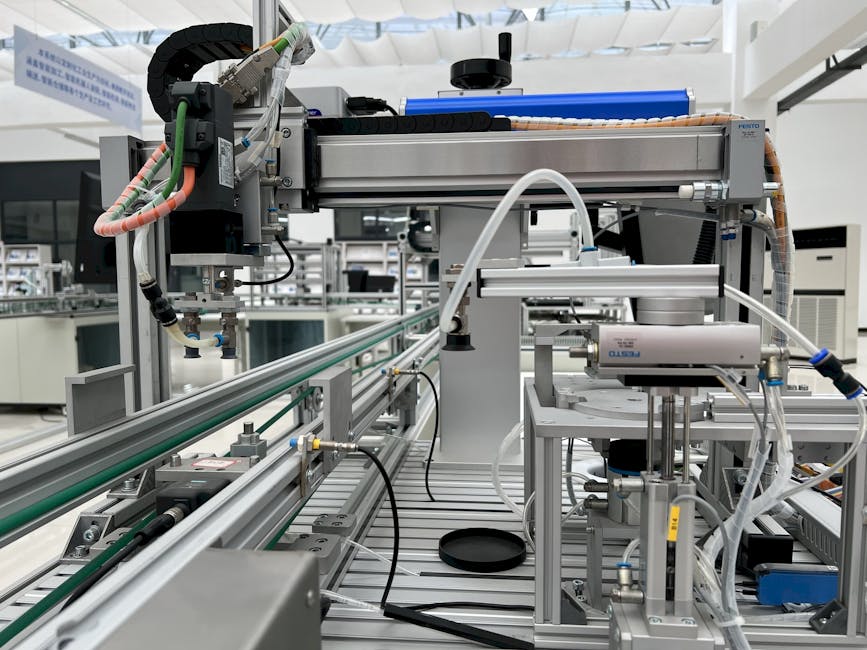
Marketing automation for manufacturing is revolutionizing industry processes, offering unparalleled benefits and reshaping how companies promote their products. At its core, marketing automation for manufacturing improves productivity by minimizing production time, increasing output volume, reducing human error, and improving workplace safety. Through automation, businesses can efficiently generate leads, nurture them with personalized interactions, and make informed, data-driven decisions to optimize their marketing strategies.
- Benefits of marketing automation in manufacturing:
- Reduces production time and increases efficiency
- Boosts higher-volume production capabilities
- Minimizes human error, improving product quality
- Improves safety by reducing manual labor in hazardous tasks
As the manufacturing industry accepts this change, it’s evident that marketing automation is not just a tool for efficiency—it is a strategic game-changer. It allows manufacturers to harness digital marketing platforms, personalize customer engagements, and integrate CRM systems for streamlined processes and stronger customer relationships.
In my 20 years of experience leading digital marketing and branding initiatives, I’ve seen how marketing automation for manufacturing can drive growth, increase brand authority, and generate measurable revenue. My journey with RED27Creative has always been about leveraging technology to empower businesses, and marketing automation stands out as a crucial element of that mission.
The Role of Marketing Automation in Manufacturing
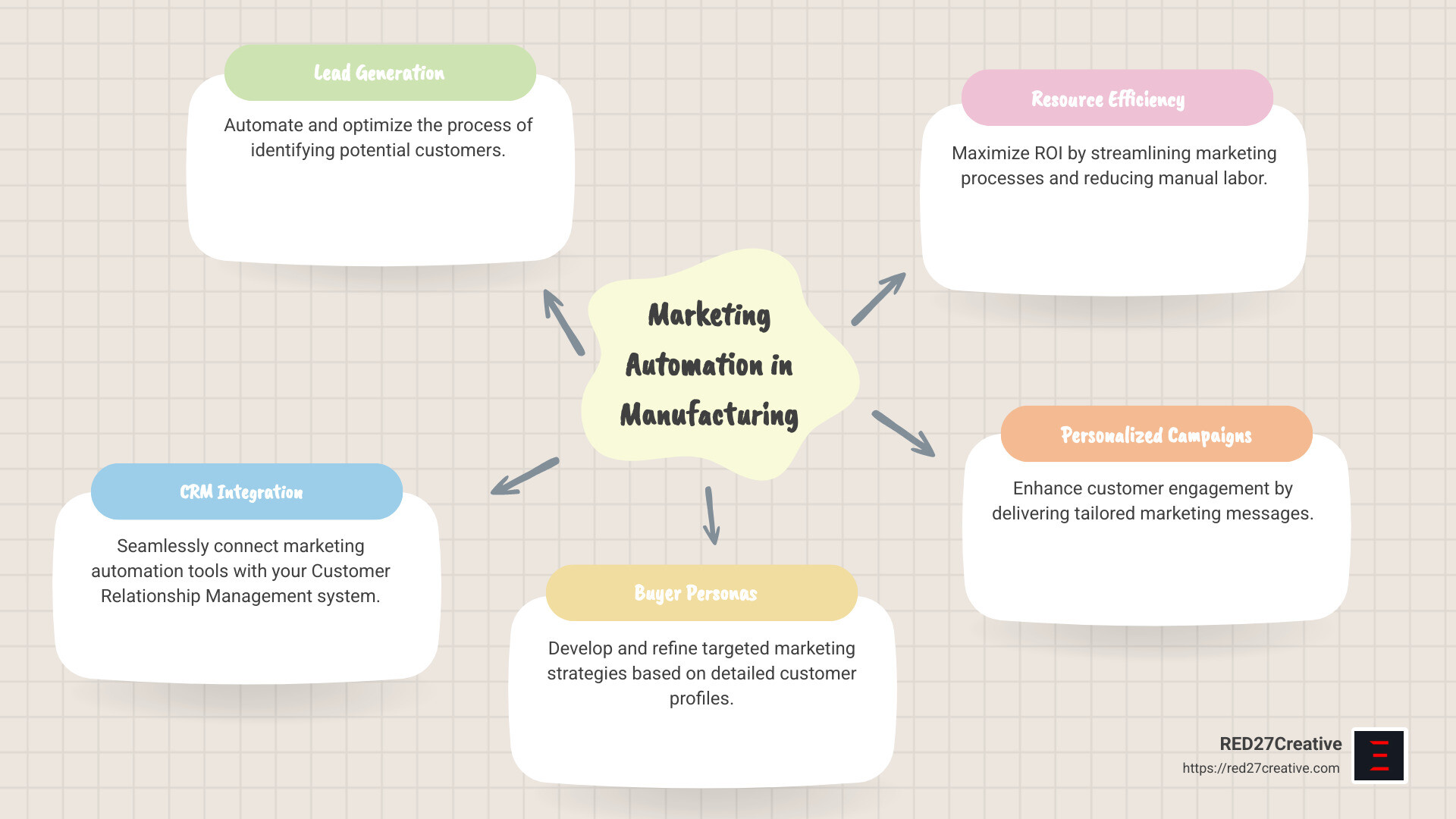
Marketing automation for manufacturing is changing how manufacturers engage with potential customers and streamline their marketing efforts. Let’s explore three critical aspects: lead generation, CRM integration, and understanding buyer personas.
Lead Generation
In the past, manufacturers relied heavily on traditional methods like tradeshows and direct mail to find leads. While these methods are still valuable, marketing automation offers a more efficient approach. By using tools like targeted paid ads and gated content, manufacturers can capture leads online with minimal effort.
For example, HubSpot’s marketing automation tools allow manufacturers to create lead-generation assets such as forms and live chat, tracking their performance in real-time. This automation not only broadens a brand’s reach but also gathers valuable data, enhancing brand awareness.
CRM Integration
Integrating CRM systems with marketing automation is a game-changer for manufacturers. It centralizes customer data, allowing for personalized marketing campaigns custom to individual customer profiles and behaviors. This integration eliminates manual processes and aligns marketing with sales, creating a streamlined workflow.
By sharing data seamlessly across business units, manufacturers can improve lead management processes, from capture to conversion, improving overall efficiency and effectiveness.
Understanding Buyer Personas
Understanding buyer personas is essential for manufacturers aiming to develop targeted marketing strategies. Marketing automation tools track and analyze customer interactions across various touchpoints, helping identify common traits and behaviors among different buyer segments.
Manufacturers often have multiple buyer personas, even in B2B sales. It’s crucial to remember that you’re still selling to individuals. Personalizing campaigns to target different buyers within the industry is key. Marketing automation helps define these personas by tracking engagement and tailoring content accordingly.
In summary, marketing automation for manufacturing plays a pivotal role in enhancing lead generation, CRM integration, and understanding buyer personas. These elements are crucial for creating efficient and effective marketing strategies that drive growth and strengthen customer relationships.
Next, we’ll dig into the Key Benefits of Marketing Automation for Manufacturing, focusing on resource efficiency, lead scoring, and ROI measurement.
Key Benefits of Marketing Automation for Manufacturing
Marketing automation for manufacturing is a powerful tool that offers several key benefits, including improved resource efficiency, effective lead scoring, and precise ROI measurement. Let’s break down each of these advantages.
Resource Efficiency
Marketing automation tools help manufacturers do more with less. By replacing manual tasks with automated processes, manufacturers can stretch their resources further. For instance, using a CRM system like HubSpot allows manufacturers to manage customer interactions without relying on outdated spreadsheets. This shift not only saves time but also ensures data accuracy and accessibility.
Aberdeen’s research highlights that companies using marketing automation see a 107% increase in lead conversion rates. This efficiency allows small teams to achieve significant results, focusing their efforts where they matter most.
Lead Scoring
Lead scoring is another critical benefit of marketing automation. It helps manufacturers prioritize their leads based on potential value. By assigning scores based on criteria like engagement level and demographic information, manufacturers can focus their sales efforts on the most promising leads.
This process ensures that sales teams are not wasting time on low-potential prospects but instead concentrating on leads that are more likely to convert. As a result, manufacturers can maximize their sales productivity and close more deals.
ROI Measurement
A challenge for manufacturers is measuring the return on investment (ROI) from marketing efforts. Marketing automation platforms provide detailed analytics and reporting tools that track the impact of marketing activities on revenue generation.
These platforms offer insights into campaign performance, conversion rates, and customer engagement. By accurately measuring ROI, manufacturers can allocate resources more efficiently and optimize strategies for better results. This data-driven approach ensures that marketing dollars are spent wisely, leading to increased profitability.
In conclusion, marketing automation for manufacturing offers substantial benefits by improving resource efficiency, enhancing lead scoring, and allowing precise ROI measurement. These advantages not only streamline marketing efforts but also drive significant business growth.
Next, we’ll explore how marketing automation improves sales and marketing alignment, focusing on CRM systems, personalized campaigns, and data analytics.
How Marketing Automation Improves Sales and Marketing Alignment
In manufacturing, aligning sales and marketing is crucial for success. Marketing automation for manufacturing plays a key role in bringing these two functions together seamlessly. Let’s explore how CRM systems, personalized campaigns, and data analytics contribute to this alignment.
CRM Systems
CRM systems are the backbone of marketing automation. They centralize customer data, making it accessible to both sales and marketing teams. This shared database ensures everyone is on the same page, eliminating the chaos of scattered information.
With CRM integration, manufacturers can track customer interactions, preferences, and purchase history. This information helps create a unified strategy that aligns marketing efforts with sales goals. By automating data entry and updates, CRM systems also reduce manual tasks, allowing teams to focus on more strategic activities.
Personalized Campaigns
Personalization is key to engaging customers and building strong relationships. Marketing automation enables manufacturers to create personalized campaigns that resonate with their audience. By analyzing customer data, manufacturers can tailor messages to specific buyer personas.
For instance, automated email workflows can be triggered based on a customer’s behavior or stage in the buyer’s journey. This approach ensures customers receive relevant content at the right time, increasing the likelihood of conversion. Personalized campaigns not only improve customer engagement but also improve the overall customer experience.
Data Analytics
Data analytics is a powerful tool in aligning sales and marketing. Marketing automation platforms provide detailed insights into campaign performance, customer behavior, and market trends. This data-driven approach allows manufacturers to make informed decisions and adjust strategies as needed.
By analyzing data, manufacturers can identify which campaigns are driving results and which need improvement. This continuous feedback loop ensures marketing efforts are aligned with sales objectives, maximizing the impact of both functions.
In summary, marketing automation for manufacturing improves sales and marketing alignment through CRM systems, personalized campaigns, and data analytics. These tools create a cohesive strategy that drives efficiency and boosts performance.
Next, we’ll explore the future trends in marketing automation for manufacturing, focusing on AI integration, customer experience, and digital marketing.
Marketing Automation for Manufacturing: Future Trends
As we look to the future, marketing automation for manufacturing is ready to evolve in exciting ways. Three key trends are set to shape this change: AI integration, customer experience, and digital marketing.
AI Integration
Artificial Intelligence (AI) is revolutionizing marketing automation. By integrating AI, manufacturers can improve their marketing efforts with more precision and personalization. AI algorithms can analyze vast amounts of data to predict customer behavior and preferences. This allows manufacturers to deliver highly targeted campaigns that resonate with their audience.
For example, AI can help manufacturers refine their lead scoring models, ensuring sales teams focus on the most promising leads. It can also automate content creation, generating personalized product recommendations and engaging copy at scale. As AI technology continues to advance, its role in marketing automation will only grow, providing manufacturers with powerful tools to stay ahead of the competition.
Customer Experience
In the future, delivering exceptional customer experiences will be more important than ever. Marketing automation plays a crucial role in this by enabling manufacturers to provide consistent, timely communication across all touchpoints. Automated workflows ensure that customers receive relevant information at each stage of their journey, from initial awareness to post-purchase support.
By leveraging data from CRM systems, manufacturers can create personalized experiences that foster loyalty and satisfaction. For instance, automated email campaigns can be custom to individual preferences, offering special promotions or product recommendations based on purchase history. A focus on customer experience not only strengthens relationships but also drives repeat business and referrals.
Digital Marketing
Digital marketing is at the forefront of the marketing automation revolution. As traditional methods like direct mail and trade shows become less effective, manufacturers are turning to digital channels to reach their audience. This shift is driven by the need for resource efficiency and the ability to measure ROI more accurately.
Marketing automation platforms enable manufacturers to manage digital campaigns across multiple channels, including social media, email, and online advertising. By automating these processes, manufacturers can maintain a consistent brand presence and engage with customers more effectively. Additionally, digital marketing provides valuable insights into customer behavior, allowing manufacturers to refine their strategies and improve results over time.
In conclusion, the future of marketing automation for manufacturing is bright, with AI integration, customer experience, and digital marketing leading the way. These trends will empower manufacturers to deliver more personalized, efficient, and impactful marketing efforts.
Next, we’ll dive into some frequently asked questions about marketing automation for manufacturing, exploring topics like lead conversion and cost benefits.
Frequently Asked Questions about Marketing Automation for Manufacturing
How does marketing automation improve lead conversion?
Marketing automation significantly boosts lead conversion by streamlining and optimizing the entire lead management process. According to Aberdeen, firms using marketing automation see a 107% improvement in lead conversions. Here’s how it works:
-
Automated Lead Nurturing: By setting up automated workflows, manufacturers can send personalized emails and content to keep prospects engaged throughout their buying journey. This consistent engagement moves leads closer to conversion.
-
CRM Integration: Integrating marketing automation with CRM systems helps in tracking customer interactions, enabling manufacturers to tailor their marketing efforts. This alignment ensures that sales teams focus on leads with the highest potential, improving conversion rates.
What are the cost benefits of marketing automation in manufacturing?
Cost reduction is a major advantage of implementing marketing automation. It helps manufacturers save time and resources while maximizing their return on investment (ROI). Here are some key benefits:
-
Efficiency Gains: Automation reduces the need for manual tasks like data entry and email management. This efficiency allows marketing teams to focus on strategy and creativity, rather than repetitive tasks.
-
Better Resource Allocation: With detailed reporting and analytics, manufacturers can measure the ROI of their marketing campaigns. This data-driven approach helps in reallocating resources to the most effective strategies, ensuring better results.
How can manufacturers personalize marketing campaigns using automation?
Personalization is crucial for enhancing customer engagement and building strong relationships. Marketing automation provides the tools needed to deliver personalized experiences at scale:
-
Buyer Personas and Segmentation: By understanding buyer personas, manufacturers can segment their audience and tailor campaigns to specific needs and preferences. Automated tools help track and analyze customer behaviors, ensuring that content is relevant and timely.
-
Dynamic Content and Recommendations: Automation platforms allow for dynamic content creation, where emails and website content adjust based on user behavior and preferences. This level of personalization increases engagement and conversion rates, as customers feel understood and valued.
These frequently asked questions highlight the transformative power of marketing automation for manufacturing. By improving lead conversion, reducing costs, and enabling personalization, manufacturers can improve their marketing efforts and achieve greater success.
Conclusion
In the rapidly evolving landscape of manufacturing, embracing marketing automation is not just beneficial—it’s essential. At RED27Creative, we understand the transformative power this technology holds for manufacturers. By leveraging marketing automation, companies can streamline processes, improve customer engagement, and drive substantial growth.
Key Benefits of Marketing Automation:
-
Efficiency and Cost Savings: Automation reduces manual tasks, freeing up valuable time and resources. This efficiency allows teams to focus on strategic initiatives rather than mundane tasks, ultimately boosting productivity and cutting costs.
-
Improved Lead Management: With tools like CRM integration, manufacturers can better manage leads, ensuring that potential customers receive the right message at the right time. This targeted approach improves lead conversion rates and strengthens customer relationships.
-
Data-Driven Insights: Marketing automation provides manufacturers with detailed analytics and reporting. These insights help in making informed decisions, optimizing marketing strategies, and enhancing overall performance.
At RED27Creative, we specialize in delivering results-driven marketing solutions custom to the unique needs of the manufacturing industry. Our expertise in lead generation and digital marketing ensures that your business not only stands out in a competitive market but also achieves sustainable growth.
Ready to transform your manufacturing business with marketing automation? Explore our B2B lead generation services and find how we can help you reach new heights. Let’s build a brighter future together!

Kiel Tredrea
https://red27creative.comTop Marketing Agency • Web, SEO & Leads • RED27Creative