Professional SEO for Tech Firms: Tips That Actually Drive Results

Why Blog SEO for Tech Firms Still Drives Real Business Growth in 2026
Blog SEO for tech firms is one of the highest-ROI growth channels available to B2B technology companies right now — and it is not slowing down.
Here is what you need to know at a glance:
- SEO still works. 96.3% of top-ranking keywords remain unaffected by AI-generated summaries.
- Organic leads convert better. The average conversion rate for SEO-driven traffic is 14.6% — far above most paid channels.
- Position matters. The #1 organic result earns a 27.6% click-through rate, and top-ranking pages get 10x more clicks than lower-ranked ones.
- AI search is growing fast. Perplexity grew from 10 million to 30 million monthly active users between April 2024 and April 2025.
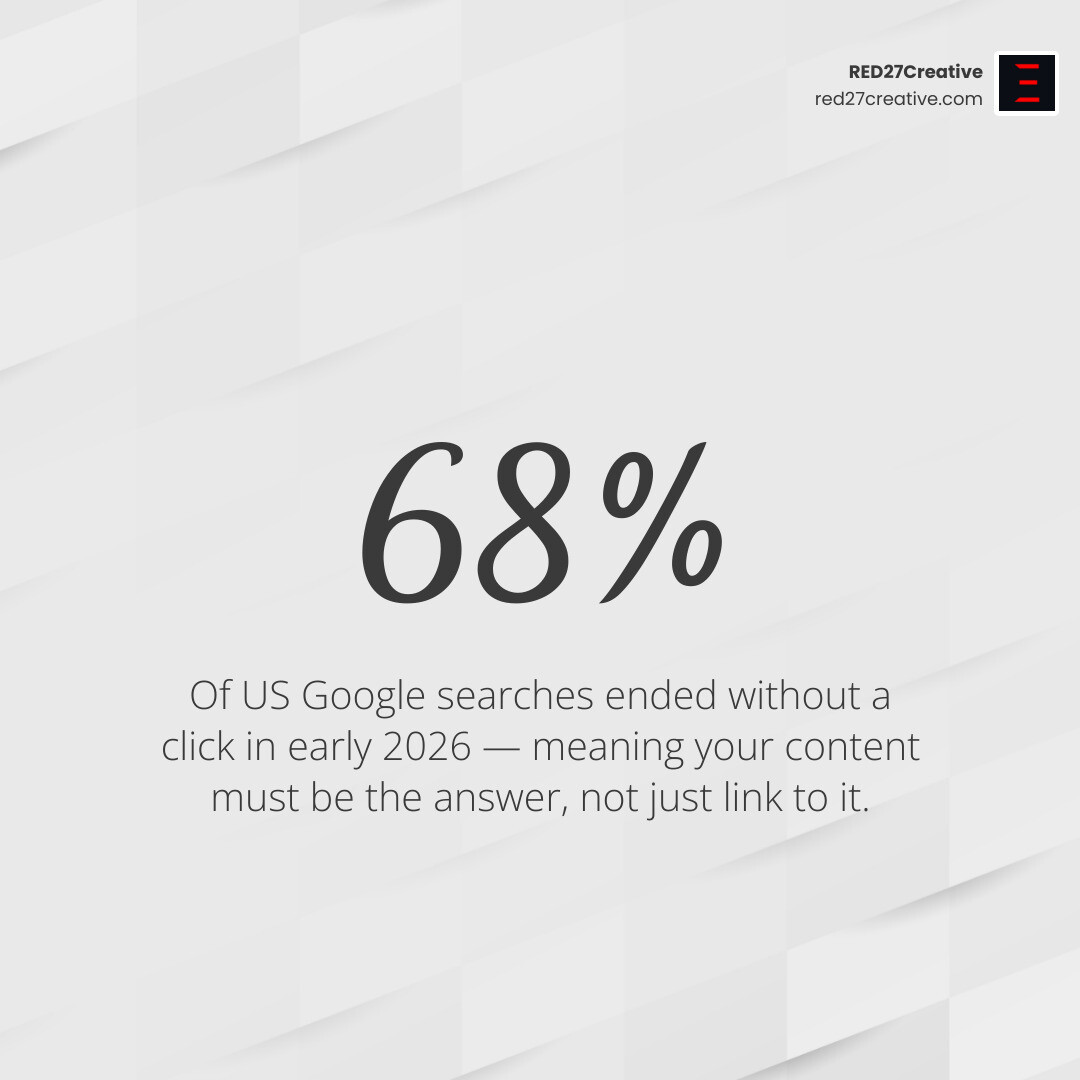
- Zero-click is rising. 68% of US Google searches ended without a click in early 2026 — meaning your content needs to be the answer, not just link to it.
- Cost efficiency is real. SEO typically reduces cost-per-lead by 70–90% compared to paid media.
The search landscape has shifted. AI tools like ChatGPT, Gemini, and Perplexity now sit between your content and your buyers. Zero-click queries are climbing. B2B short-lists have shrunk to just 2.6 products. And 66% of purchases require VP or C-suite sign-off.
That means trust and visibility are no longer optional — they are the whole game.
Yet most tech firms are still treating their blog as an afterthought. They publish inconsistently, skip technical fundamentals, and produce content that ranks for nothing and converts no one.
This guide is built to change that.
I’m Kiel Tredrea, founder of RED27Creative, and over 20 years of building SEO and digital marketing systems for B2B companies, I’ve seen how blog SEO for tech firms can transform a flat pipeline into a compounding growth engine. Let’s get into what actually works.
Basic Blog SEO tech firms vocab:
Why Blog SEO Tech Firms Are Essential for B2B Growth
The rise of zero-click searches has fundamentally altered how buyers interact with search engines; in early 2026, 68.01% of US Google searches ended without a click. This shift means your blog content must be highly authoritative and structured to serve both human readers and the AI crawlers summarizing your pages.
B2B buyers are thorough: 52% consult vendor websites and 29% turn to YouTube during their journey. Investing in a robust strategy for blog SEO tech firms ensures you capture these high-intent buyers. By aligning your blog with SEO for Tech Companies and executing proven B2B SEO Strategies, you position your brand as the definitive answer to complex industry questions.
According to the Google Search Central Blog, search engines continue to prioritize helpful, people-first content. For tech firms, this means moving away from thin marketing copy and focusing on deep, educational resources.
How Blog SEO Tech Firms Build Trust with B2B Buyers
In the B2B tech sector, trust is the primary currency. Because short-lists have shrunk to just 2.6 products, your blog must actively support buyer enablement. Modern buyers rely heavily on peer validation: 77% read user reviews and 54% speak directly to existing users before purchasing.
To stand out, your blog should publish original research, proprietary data, and deep expert insights. Adding unique statistics to your articles can improve LLM citation rates by up to 41% in generative engine optimization (GEO) benchmarks.
Building this authority also requires a strong backlink profile. Earning links from reputable industry publications through strategic B2B Link Building signals to both search engines and AI models that your content is trustworthy. Additionally, implementing structured data is non-negotiable. Referencing the Google Search Central Structured Data Guide will help you implement the correct schema markup to ensure search engines accurately parse your authors, organizations, and technical guides.
Overcoming Unique Challenges Faced by Blog SEO Tech Firms
Tech products are often highly complex, requiring deep technical explanations that can easily alienate non-technical decision-makers. Your blog must bridge this gap by catering to multiple audiences: developers want clean API documentation, while VPs and C-suite executives want to understand the business value and ROI.
To solve this, organize your blog around a clear, logical SEO Topic architecture. Create distinct content tracks for technical users and business leaders, and link them together to guide users smoothly through the decision-making process.
Local SEO Strategies for Global Tech Companies
Even if your tech company serves global enterprise clients, ignoring local search is a mistake. Regional decision-makers frequently search for local partners to ensure better collaboration. Optimizing for regional intent allows you to capture highly qualified leads in key business hubs like Chicago IL, Naperville IL, or Aurora IL.
Using dedicated Local SEO Services and following a comprehensive Local SEO Strategy Complete Guide ensures your firm shows up in local map packs and localized organic searches.
| Search Intent Type | Focus Audience | Key Target Keywords | Primary Goal |
|---|---|---|---|
| Global Intent | Enterprise CTOs, Global VPs | “Enterprise cloud migration framework” | Global brand authority & scale |
| Local Intent | Regional IT Directors, SMB Owners | “IT consulting firms Chicago IL” | High-conversion regional leads |
Technical SEO Foundations and Programmatic Scaling
High-quality blog content will not rank if your website’s technical foundation is broken. Crawlability, semantic HTML, and page speed are the absolute pillars of search visibility in 2026.
Search engines and AI crawlers must be able to parse your site quickly and without errors. Following the web.dev Core Web Vitals Guide is essential for optimizing Largest Contentful Paint (LCP), Cumulative Layout Shift (CLS), and Interaction to Next Paint (INP).
If you want to turn organic traffic into revenue, you must align technical performance with lead generation. Our guide on Technical SEO for B2B Leads outlines exactly how to eliminate crawl budget waste and optimize your site architecture.
To fix core performance issues without breaking your site’s functionality, consult our resource on Core Web Vitals Optimization. For an in-depth developer perspective, you can also review the Technical SEO Implementation Guide | Varnox.
Programmatic SEO and Structured Content
For tech firms with large databases of integrations, comparisons, or locations, manual content creation is often too slow to scale. This is where programmatic SEO becomes a massive competitive advantage.
By treating SEO as an engineering challenge rather than just a writing task, you can build systems that generate thousands of highly structured, functional pages. A programmatic SEO system can easily scale a site’s organic clicks from 1,000/week to over 6,000/week by shipping structured pages.
Instead of writing freeform prose, programmatic SEO uses strict JSON schemas to populate purpose-built frontend components. This separates your design from your content, allowing you to update your site-wide layout without regenerating a single content file.
To learn more about how this works in practice, explore The Future of SEO Is Built, Not Written | Byword. Always ensure your structured data complies with the official Schema.org Documentation to maintain perfect machine readability.
Continuous Optimization and Performance Monitoring
SEO is never a “set-and-forget” project. Algorithm updates, technical debt, and competitor content require continuous monitoring and regular technical audits.
Utilizing Advanced SEO Services allows you to track keyword performance, monitor indexation rates, and resolve crawl errors before they impact your traffic.
Furthermore, the rise of agentic tools has introduced autonomous SEO loops that can audit your site and deploy native CMS fixes automatically. To understand how these automated workflows operate, read How Autonomous SEO Works for Your Site | effectly.ai.
Optimizing Content for AI Search Engines and Perplexity Citations
AI search engines like ChatGPT, Gemini, and Perplexity do not display traditional “ten blue links.” Instead, they synthesize web content into direct, conversational answers and cite their sources as grounding context.
To stay visible in this new era, your blog must be optimized to get cited by these LLMs. Google’s official stance, as noted in the Google Search Central AI-Generated Content Guidance, confirms that optimizing for generative AI features is simply an extension of great, user-focused SEO.
To build a comprehensive strategy that addresses these AI models, many firms rely on Advanced SEO Services to align their content structure with machine-learning extraction patterns.
For empirical evidence on how AI search engines rank and filter pages, the massive study in Content Optimization Engine Insights by DEJAN AI reveals that content framing and query alignment carry far more weight with AI rankers than traditional trust badges.
To avoid the common pitfalls and myths surrounding AI optimization, read the Google AI Optimization Guide: What Everyone Gets Wrong. Additionally, you can study a real-world SaaS success story in How We Got Our SaaS Blog Cited in Perplexity: A Step-by-Step Case Study | Hobo.Video to see how a blog went from zero to 42 citations in 90 days.
Structuring Content for LLM Extraction
AI engines prioritize content that is direct, scannable, and structured for easy extraction. To optimize your blog for LLMs, you must adopt an “answer-first” writing style.
Place a direct, concise answer to the user’s query within the first 100 words of your article. Use clear H2 headings framed as questions, and follow them immediately with plain-language answers.
Implementing proper FAQ schema markup and semantic HTML ensures that crawlers can easily parse and quote your content. For a complete blueprint on structuring your site for modern search, consult our Strategic SEO Services Complete Guide.
Balancing Organic SEO with Paid Advertising
While paid advertising offers immediate visibility, relying solely on PPC is an expensive and unsustainable strategy. Organic SEO typically reduces cost-per-lead by 70–90% compared to paid media, making it highly resilient during economic downturns.
The most effective marketing engines balance long-term SEO investments with short-term paid campaigns. Use paid ads to test keyword conversions and capture immediate demand, while building out your blog to capture compounding organic traffic over time.
To understand how to allocate your budget effectively across organic and paid channels, check out our guide on Enterprise SEO Pricing.
Frequently Asked Questions About Tech SEO
Why is SEO still critical for tech companies in 2026?
SEO remains critical because 96.3% of top-ranking keywords are unaffected by AI summaries. Organic search drives highly qualified B2B leads, converting at an average rate of 14.6%. It provides a compounding, long-term ROI that reduces cost-per-lead by 70-90% compared to paid advertising.
How do you optimize a tech blog for AI search engines?
Optimize by placing direct, clear answers in the first 100 words of your pages. Use semantic HTML, structured data, and FAQ schema to help AI crawlers parse your site. Focus on publishing original research and structured data, which significantly improve your LLM citation rates.
What is the role of programmatic SEO in tech marketing?
Programmatic SEO allows tech firms to build structured, functional pages at scale using database taxonomies and strict JSON schemas. Instead of writing manual posts, it generates useful resource hubs, integration pages, and comparisons that drive massive organic traffic and capture high-intent search queries.
Conclusion
Building a successful blog for your tech firm requires a deliberate blend of technical excellence, programmatic scale, and AI-optimized content. At RED27Creative, based in Geneva, Illinois, we help tech businesses across Batavia IL, Aurora IL, St. Charles IL, Plainfield IL, Oswego IL, Naperville IL, and Chicago IL build unified marketing engines that turn organic search visibility into measurable revenue.
Led by founder Kiel Tredrea, our team of designers, developers, and search experts is ready to help you dominate the SERPs and secure your citations in AI search.
Ready to scale your organic growth? Explore our SEO Services and Schedule a Strategy Call with our team today.

Kiel Tredrea
https://red27creative.comTop Marketing Agency • Web, SEO & Leads • RED27Creative