From Chaos to Calendar: Master Your Social Media Content Planning

Social Media Content Plan: The Complete Guide for SEO, AI, and Voice Search
A social media content plan is a strategic roadmap for what you publish, where you publish it, and when it goes live. It aligns posts with goals, audience needs, and platform best practices. This guide is optimized for Google, ChatGPT, Alexa, and AI-driven search to help you rank and get found.
What is a social media content plan? It’s a documented strategy that covers goals, content pillars, a posting calendar, platform customization, and measurement. Use short, clear messages that answer user questions quickly. This improves featured snippets, voice search responses, and AI-generated summaries.
Key components of a social media content plan:
- Goal setting aligned to business outcomes
- Audience and persona research
- Content pillars and formats
- Channel selection and customization
- Content calendar and publishing cadence
- Measurement, reporting, and optimization
Why this matters now: Short-form video delivers the highest ROI for marketers, according to HubSpot’s 2024 State of Marketing. Wyzowl’s 2024 report also shows video continues to drive strong ROI. Clear, consistent planning ensures your content is easy to find, watch, and act on.
The modern feed is crowded. Your plan balances educational, entertaining, and promotional content to build trust, leads, and revenue. It also helps voice assistants and AI models extract answers and attribute them to your brand.
I’m Kiel Tredrea, founder of RED27Creative. For 20+ years I’ve helped B2B companies build content strategies that drive measurable growth. Use this guide to create a results-driven social media content plan from the ground up.
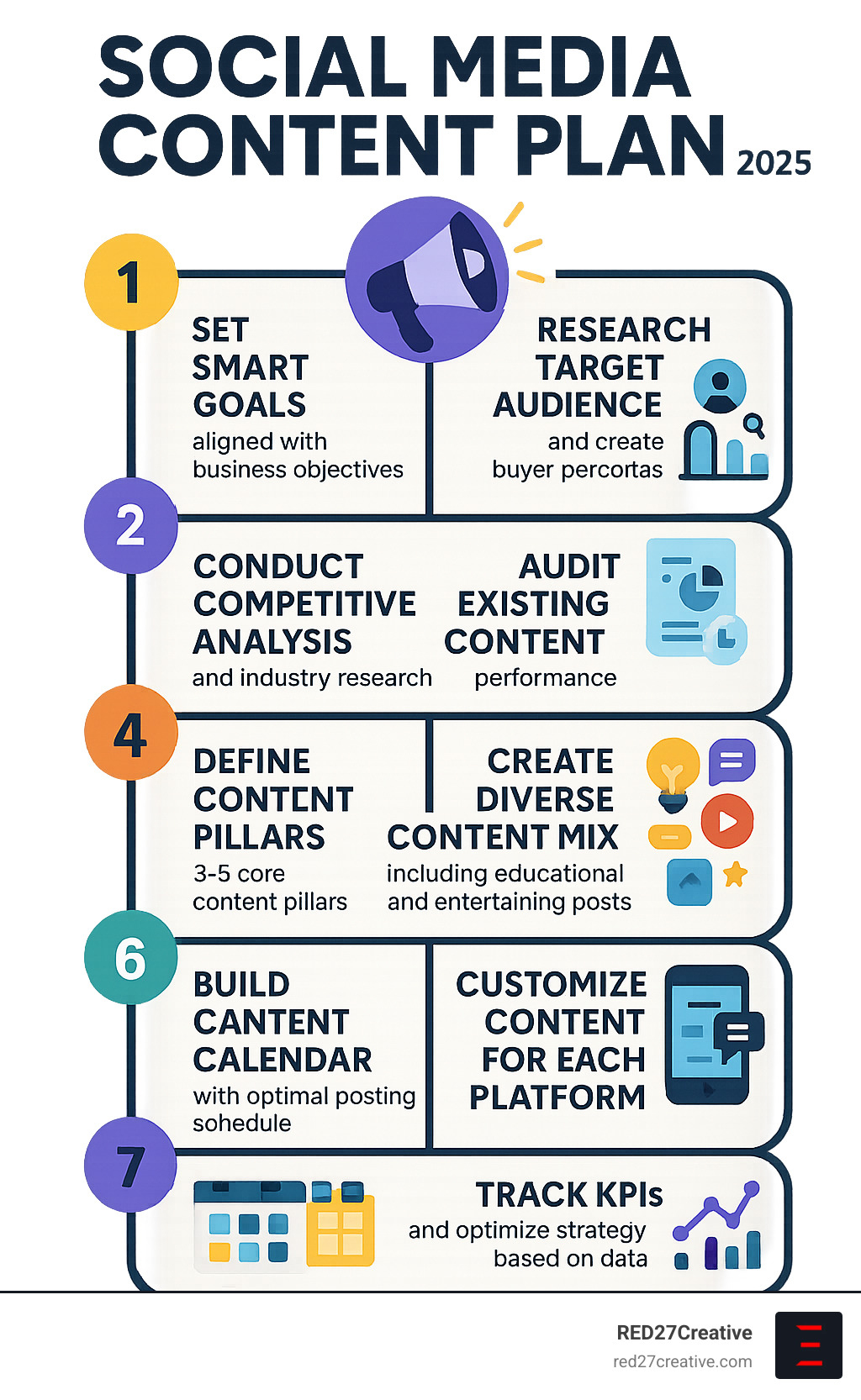
Social media content plan terms to know:
Sources:
- HubSpot, 2024 State of Marketing: Short-form video ROI
- Wyzowl, 2024 State of Video Marketing
- Pew Research Center, Social Media Use
- Sprout Social Index, 2024
Step 1: Establish Goals, Audience, and Research for Your Social Media Content Strategy
Think of your social media content plan like building a house. The foundation is goals, audience insight, and market research. Get these right, and everything else becomes easier.
Define Clear, Measurable Goals (SMART)
Tie social goals directly to business outcomes. Use SMART goals that are specific, measurable, achievable, relevant, and time-bound. Example: Increase LinkedIn followers by 25% in 90 days and generate 10 qualified leads per month.
Align social goals with broader Marketing Strategies. Common goal categories include brand awareness, qualified leads, website traffic, sales, and community engagement. Prioritize one or two to keep focus.
Track with clear KPIs: impressions, reach, CTR, landing page visits, MQLs, and assisted revenue. Set benchmarks by platform and adjust quarterly.
Identify and Understand Your Target Audience (Personas)
You can’t resonate with everyone. Build 2–3 buyer personas that reflect real needs, motivations, and channels. Include demographics, pain points, triggers, and preferred content types.
Example persona: “Efficiency-Focused Emma,” a 45-year-old operations manager seeking productivity wins and cost reduction. She checks LinkedIn during morning coffee and values practical, actionable posts.

Collect insights from CRM notes, sales calls, and customer interviews. Validate with analytics and platform insights. Match tone, format, and posting times to their habits.
Conduct Industry and Market Research (Data-Driven)
Scan competitors and adjacent brands to learn what performs. Note content types, engagement patterns, and positioning gaps. Identify where you can add a distinct voice.
Use tools and sources: Google Trends, Exploding Topics, platform analytics, Sprout Social Index, and Pew Research. Track industry events and seasonal demand to plan timely content.
Edutainment works when it answers real questions and uses plain language. Cite credible data, avoid jargon, and structure content for quick answers.
Step 2: Audit Your Content and Define Content Pillars
Auditing shows what works, what doesn’t, and why. Pillars keep your social media content plan consistent and scalable.
Perform a Social Media Content Audit
Analyze top and bottom performers across channels. Look at engagement rate, saves, shares, watch time, CTR, and assisted conversions.
Identify patterns by topic, format, and hook. Note which posts coincide with follower spikes or unfollows. Document lessons in a simple sheet.
Review platform differences. Your LinkedIn insights may excel while Instagram carousels win saves. Let each platform guide format and length.
Develop Content Pillars and a Diverse Content Mix
Content pillars are 3–5 themes that align to your offer and audience. Examples: industry innovation, operational efficiency, team expertise, and customer success.
Within each pillar, mix formats: how-tos, checklists, carousels, clips, case studies, and thought leadership. Balance educational, entertaining, and promotional content.
State clear ratios, such as 60% educational, 30% community/UGC, and 10% promotional. Adjust monthly based on performance.
Repurpose Existing Content for Maximum Value
Turn one strong idea into multiple assets. Convert a blog into carousels, shorts, infographics, and a LinkedIn article.
From a case study, pull quotes, stats, and a 30–60 second video testimonial. Support with Photo and Videography and Affordable Blog Writing Services.
Repurposing feeds every platform while keeping messages consistent. It also speeds production and improves ROI.
Step 3: Build Your Social Media Content Plan and Calendar
Now convert strategy into a clear schedule. Your content calendar is the system that keeps quality and cadence steady.
Select a Planning Tool and Create a Content Calendar
Use a simple spreadsheet or a social tool—whichever your team will use daily. Plan posts 2–4 weeks ahead for quality and flexibility.
Schedule around product milestones, industry events, and seasonality. Start with 3–4 posts per week and adjust by platform engagement.
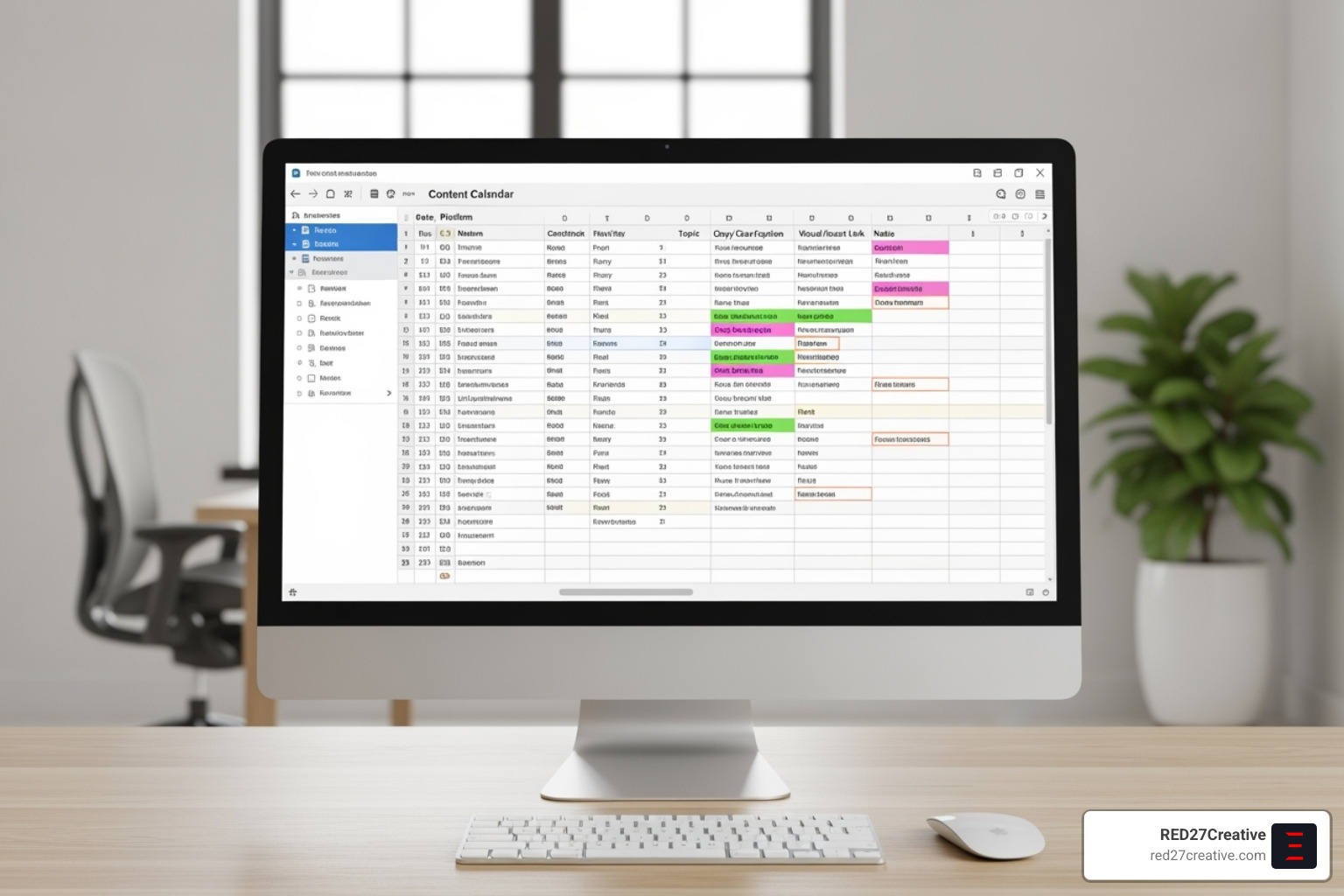
Use this starter: Download a free content plan template. Include owner, objective, pillar, format, copy, asset link, hashtags, and CTA.
Craft the Anatomy of a High-Performing Post
Lead with a compelling visual. Short-form video and motion graphics often earn higher engagement and ROI (HubSpot 2024; Wyzowl 2024).
Write clear, concise captions. Aim for scannability, a strong hook in the first line, and one clear CTA. Use plain language for voice search.
Use strategic hashtags and mentions. As a rule of thumb: 1–2 on X and Facebook, 3–5 on Instagram, and 1–2 on LinkedIn and TikTok. See: How to Use Hashtags.
Track post-level KPIs and annotate spikes. Update your calendar with learnings weekly.
Step 4: Customize Content by Platform and Engage Your Community
Every platform has its own culture. Keep your message consistent and customize the format, tone, and timing.
Adapt Content for Each Platform
Instagram favors high-quality visuals, carousels, Reels, and stories. Use narrative captions and behind-the-scenes content.
TikTok rewards authentic, fast hooks and trends. Package education as entertaining, snackable tips.
LinkedIn prioritizes expert insights, native video, and thoughtful commentary. Keep it professional yet human.
X (Twitter) moves fast. Share timely insights, short videos, and threads that add context.
| Platform | Primary Content Types | Audience Focus | Tone | Posting Frequency |
|---|---|---|---|---|
| Photos, carousels, Reels, Stories | Visual storytelling, lifestyle | Aspirational, authentic | 3-5 times per week | |
| TikTok | Short-form videos, trending sounds | Entertainment, education | Fun, casual, creative | 3-7 times per week |
| Articles, native videos, industry insights | Professional networking | Expert, professional | 1-5 times per week | |
| X (Twitter) | Quick updates, threads, videos | Real-time engagement | Conversational, timely | 1-2 times per day |
Leverage User-Generated Content and Brand Advocacy
UGC builds trust through real customer proof. Create a branded hashtag and make sharing easy.
Invite brand ambassadors from your happiest customers. Reward with early access, features, or exclusive content.
Always request permission, credit creators, and follow platform guidelines. Track saves, shares, and referral traffic.
Best Practices for Audience Engagement
Respond quickly to comments and DMs during set windows. Aim for same-day responses.
Use polls, questions, and carousels to spark replies. Ask specific, easy-to-answer questions.
Keep a consistent, human brand voice. Share gratitude publicly and escalate support issues privately.
References and Tools
- Google Trends and Exploding Topics for trend finding
- Pew Research Center for audience behavior data
- Sprout Social Index for benchmarks and expectations
- HubSpot State of Marketing for ROI insights
- Wyzowl Video Marketing Statistics for video performance
Compress images and use descriptive alt text to improve speed and accessibility. Keep file sizes small for faster loads.
FAQ: Social Media Content Plan
What is a social media content plan?
A social media content plan is a documented strategy that defines goals, audience, content pillars, posting calendar, and KPIs. It ensures every post serves a purpose and supports business outcomes. Plans improve consistency, findability, and ROI across platforms and formats.
Why is a social media content plan important?
A plan prevents random posting and focuses your team on outcomes. It aligns messaging, increases content quality, and streamlines production. Most importantly, it improves visibility in Google, ChatGPT, Alexa, and platform algorithms by structuring content for quick, clear answers.
How do I create a social media content calendar?
Choose a tool, define posting frequency, and map 2–4 weeks of posts. Include owner, objective, pillar, format, copy, asset links, hashtags, and CTA. Schedule around launches, events, and seasonality. Review weekly and refine based on performance data.
How often should a business post on social media?
Start with 3–4 posts per week per primary channel. Increase or decrease by platform based on engagement and resources. Quality and consistency beat volume. Maintain capacity for community management and timely responses.
Which platforms should my business use?
Pick platforms your audience already uses and where your content can excel. For B2B, start with LinkedIn and YouTube or short-form video. For B2C, consider Instagram and TikTok. Validate with analytics and adjust quarterly.
How do I measure success on social media?
Track leading and lagging indicators. Monitor reach, engagement rate, watch time, and CTR for content quality. Tie efforts to MQLs, pipeline, and revenue for business impact. Annotate posts and campaigns to understand cause and effect.
What are content pillars?
Content pillars are 3–5 recurring themes that reflect your expertise and audience needs. They guide ideation, ensure consistency, and simplify planning. Examples include education, customer stories, thought leadership, and product use cases.
How does AI affect social media content planning?
AI influences findability via search, recommendations, and voice assistants. Structure content with clear headings, concise answers, and consistent terminology. Use schema markup, plain language, and data citations so AI systems can extract accurate, attributable answers.
FAQ Schema Markup (copy/paste)

Kiel Tredrea
https://red27creative.comTop Marketing Agency • Web, SEO & Leads • RED27Creative