The Journey of Pixels: Understanding the Website Design and Development Process

Website design and development process is crucial for any business aiming for success online. It’s not just about having a presence; it’s about making that presence effective. Here’s a quick overview:
- First Impressions Count: A poorly designed website can drive potential customers away, while a well-crafted one can attract them.
- Usability and Accessibility: Ensure easy navigation and accessibility for all users, including those with disabilities.
- Search Engine Optimization: Optimize elements like content quality and site structure for better search engine rankings.
- Mobile Responsiveness: Adaptation to small screens improves both user experience and search ranking.
- Visual Appeal: Aesthetically pleasing designs foster trust and credibility among users.
A company’s website is its digital storefront and more. It connects businesses with their audience 24/7, offering a platform to showcase products and services while driving interaction and revenue.
As Kiel Tredrea, a seasoned expert in web design and development, I bring over 20 years of experience in crafting digital strategies that improve user experience and conversion. Understanding the website design and development process has been key to helping businesses grow their online presence and achieve their goals.
The Website Design and Development Process
Creating a website is like building a house. It requires careful planning, design, construction, and maintenance. Let’s break down the website design and development process into simple steps.
Planning
Before any design work begins, gather information. This means understanding the website’s purpose, goals, and target audience. You wouldn’t build a house without knowing what the homeowner needs, right?
Planning is about setting clear objectives and creating a roadmap. This involves defining the site’s features, timeline, budget, and more. Think of it as drawing up blueprints for your digital home. This step ensures you don’t face unexpected issues later on.
Design
Once planning is complete, the design phase begins. This is where your website starts to take shape visually. Designers create layouts and choose colors, fonts, and images that reflect your brand.
The design should be both beautiful and functional. It needs to guide users through the site intuitively. A well-designed website is not just about looks; it’s about creating an experience that keeps visitors engaged.
Development
With the design in place, it’s time to build. This is the development phase, where coders bring the design to life using tools like HTML, CSS, and JavaScript.
Developers work on the front-end, which users interact with, and the back-end, which manages data and server-side operations. It’s like constructing the walls and installing the plumbing in a house. Everything must work seamlessly.
Testing
Before launching, the website goes through rigorous testing. This ensures everything functions correctly and looks good on all devices.
Testing involves checking for bugs, performance issues, and mobile compatibility. It’s like a final walkthrough before moving into a new home, ensuring everything is perfect.
Launch
Once testing is complete, it’s time to go live. The launch phase involves setting up the site on a server and making it accessible to the public.
A successful launch requires coordination among various teams to ensure everything runs smoothly. It’s the moment you’ve been waiting for—when your digital storefront opens its doors to the world.
Maintenance
The work doesn’t stop after launch. Websites require ongoing maintenance to stay relevant and functional. This includes updating content, fixing bugs, and improving performance.
Think of maintenance as regular home upkeep. It keeps your site fresh and user-friendly, ensuring it continues to meet your business goals. Regular monitoring helps identify areas for improvement, making your website a dynamic tool for growth.
Understanding each step in the website design and development process helps ensure your project is successful from start to finish.
Key Phases of Website Development
Building a website is a journey through several key phases. Each phase is crucial to creating a site that not only looks great but functions seamlessly. Let’s explore these phases in detail.
Analysis
The first step in any successful project is analysis. This involves gathering all necessary information about the website’s purpose, goals, and target audience. It’s like laying the foundation for a house. Without a solid foundation, everything else can crumble. By understanding what the website needs to achieve, you can create a strategic plan that addresses these objectives.
Planning
With a clear understanding of the project, the next step is planning. This phase involves setting objectives, defining the site’s features, and creating a timeline and budget. Planning is about drawing the blueprints for your website. It helps prevent unexpected issues and ensures everyone is on the same page.
Design
Once planning is complete, the design phase begins. This is where creativity takes center stage. Designers create wireframes and mockups that define the site’s visual elements, such as color schemes, typography, and layout. The goal is to create an engaging user experience that aligns with the brand’s identity. A well-thought-out design can captivate visitors and encourage them to explore further.
Content
Content is the heart of any website. During the content phase, text, images, and multimedia are created and organized. This phase overlaps with design, as content must fit seamlessly into the visual layout. It’s essential to ensure that the content is clear, concise, and aligned with SEO best practices to improve search engine rankings.
Coding
With design and content in place, it’s time for coding. This is where developers use languages like HTML, CSS, and JavaScript to transform designs into a working website. Coding involves both front-end development, which users interact with, and back-end development, which handles data processing. It’s like building the framework and installing the utilities in a house.
Testing
Before launching, rigorous testing ensures everything works as intended. This phase involves checking for bugs, ensuring mobile compatibility, and evaluating performance across different devices and browsers. Testing is like inspecting a house before moving in, making sure everything functions perfectly.
Review and Launch
After testing, it’s time for the review and launch. The website is uploaded to a server, and all systems are checked once more. A successful launch requires coordination to ensure a smooth transition from development to a live site. It’s the moment when your website is ready to welcome visitors.
Maintenance
The journey doesn’t end with the launch. Websites require ongoing maintenance to stay updated and relevant. This includes regular content updates, security checks, and performance improvements. Maintenance is like regular home maintenance—it keeps everything running smoothly and ensures the website continues to meet user needs.
Understanding these key phases of the website design and development process is essential for creating a successful online presence. Each phase builds on the previous one, ensuring a cohesive and effective final product.
Front-End vs. Back-End Development
When diving into the website design and development process, it’s crucial to understand the roles of front-end and back-end development. These two areas work together to create a functional and visually appealing website, but they focus on different aspects.
Front-End Development
Front-end development is all about what the user sees and interacts with on a website. It’s like the face of your website. This involves creating the user interface (UI) using languages such as HTML, CSS, and JavaScript.
-
HTML (HyperText Markup Language): Think of HTML as the skeleton of your website. It structures the content and defines elements like headings, paragraphs, and images.
-
CSS (Cascading Style Sheets): CSS is the artist that paints the skeleton. It styles the HTML elements, giving your website its look and feel with colors, fonts, and layouts.
-
JavaScript: This is the magician that brings your website to life. JavaScript adds interactivity, allowing users to engage with elements like forms, sliders, and menus.
Front-end developers focus on creating a seamless user experience across various devices. They ensure that the website looks great and is easy to steer, enhancing user satisfaction.
Back-End Development
While front-end development deals with the visible part of a website, back-end development is like the engine under the hood. It handles the server-side operations that users don’t see but rely on for functionality.
-
Server-Side Languages: Back-end developers use languages like Ruby and Python to build the logic and functionality of a website. These languages help manage databases, process user requests, and ensure data is stored securely.
-
Data Management: This involves setting up and maintaining databases that store user information, content, and other essential data. It’s like the control room of a website, ensuring everything runs smoothly behind the scenes.
Back-end developers ensure that the website can handle data processing and user interactions efficiently. They focus on creating a robust infrastructure that supports the front-end experience.
The Harmony of Front-End and Back-End
In the website design and development process, front-end and back-end developers work together to create a cohesive product. While front-end developers craft the user experience, back-end developers ensure that the website functions correctly and securely.
This collaboration is like a symphony, where each part plays a crucial role in creating a harmonious and effective website. Understanding both front-end and back-end development helps businesses build websites that not only look good but also perform well.
Next, we’ll explore the tools and technologies that empower developers in this intricate process.
Tools and Technologies in Web Development
In the website design and development process, having the right tools is like having a well-equipped toolbox. These tools help developers create, optimize, and maintain websites efficiently. Let’s look at some essential tools and technologies that make web development smoother and more effective.
Design Tools
Design tools are the artists’ brushes in web development. They help create the visual aspects of a website, ensuring it is appealing and user-friendly.
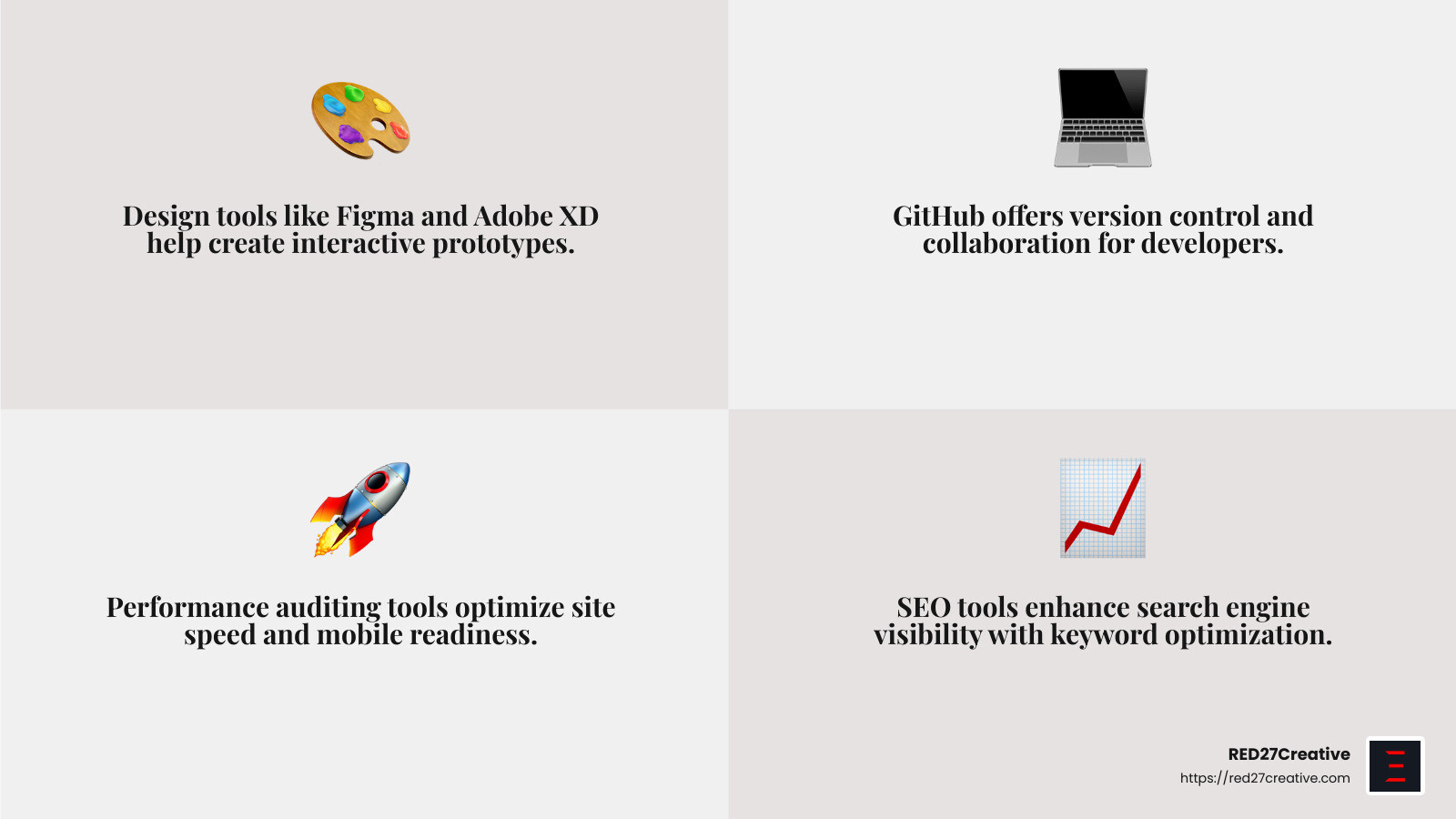
- Figma and Adobe XD: These are popular design platforms that allow teams to collaborate on wireframes and prototypes. They offer cloud-based features for sharing designs and gathering feedback, making it easier to create interactive and high-fidelity designs.
Development Tools
Development tools are the backbone of coding and collaboration.
- GitHub: This platform provides version control and collaboration features. Developers use it to manage code changes, work together on projects, and streamline the development workflow. It includes features like issue tracking and code review, ensuring a smooth development process.
Performance and SEO Tools
Performance and SEO tools help ensure that a website runs efficiently and ranks well in search engines.
-
Performance Auditing: Tools that analyze website speed, mobile-friendliness, and other metrics help identify areas for improvement. This ensures that websites load quickly and perform well across devices.
-
SEO Optimization: Tools for keyword research and competitive analysis help optimize website content, improving search engine rankings and visibility.
Analytics Tools
Analytics tools provide insights into how a website is performing and how users interact with it.
- Google Analytics: This tool tracks website traffic, user behavior, and conversion rates. It helps developers and business owners make data-driven decisions to improve website performance.
All-in-One Solutions
Sometimes, an all-in-one platform can simplify the web development process.
- Mailchimp: Known for its marketing capabilities, Mailchimp also offers website development tools. It provides customizable templates, drag-and-drop interfaces, and built-in e-commerce functionality. This makes it easy to create and manage websites without extensive coding knowledge.
Mailchimp integrates marketing tools with website analytics, offering a centralized place to manage campaigns, social media, and customer relationships. This integration helps businesses grow by providing insights into website performance and visitor behavior.
In the website design and development process, these tools and technologies empower developers to create effective, user-friendly, and high-performing websites. By leveraging the right tools, businesses can ensure their online presence is both visually appealing and functionally robust.
Next, we’ll dive into frequently asked questions about the website design and development process.
Frequently Asked Questions about Website Design and Development Process
What are the 7 phases of website development?
The website design and development process is a journey. It involves seven key phases:
-
Analysis: This is where it all starts. Understand the goals, audience, and competition. It’s like drawing a map before a journey.
-
Planning: Here, you decide what your website will look like and how it will work. This includes creating a sitemap and wireframes to organize content and layout.
-
Design: This phase is all about creativity. Designers bring the wireframes to life, adding colors, fonts, and images to create a visually appealing site.
-
Content: Content is king. Write and assemble the text, images, and videos that will communicate your message to your audience.
-
Development: Now, the coding begins. Developers use HTML, CSS, JavaScript, and other languages to build the site. This is where the design becomes a functional website.
-
Testing: Before going live, test everything. Check for broken links, browser compatibility, and mobile responsiveness to ensure a smooth user experience.
-
Maintenance: The journey doesn’t end at launch. Regular updates and improvements keep the website running smoothly and securely.
What are the steps in web design?
Designing a website involves several steps to ensure it meets both aesthetic and functional needs:
-
Goal Identification: Define what you want the website to achieve. This could be anything from driving sales to providing information.
-
Scope Definition: Outline the project’s boundaries. What features and pages will the website include?
-
Sitemap and Wireframe Creation: Plan the website’s structure and layout. A sitemap shows the hierarchy of pages, while wireframes outline each page’s elements.
-
Content Creation: Develop the text and multimedia that will populate the website. This should align with the site’s goals and audience.
-
Visual Elements: Style the website with colors, fonts, and images to create a cohesive look and feel.
-
Testing: Check that the design works across different devices and browsers.
-
Launch: Make the website live, ensuring all elements are in place and functioning correctly.
What are the differences between web design and web development?
Web design and web development are like two sides of the same coin, each playing a unique role in the website design and development process:
-
Design vs. Functionality: Web design focuses on aesthetics and user experience. It’s about how the website looks and feels. Development, on the other hand, is about making the design work. It’s the coding that brings the design to life.
-
User Experience (UX): Designers prioritize UX, ensuring the site is easy to steer and visually engaging. Developers ensure the site is functional and responsive, working seamlessly across devices.
-
Coding: Developers write the code that powers the website. This includes both front-end (what users see) and back-end (server-side) development.
-
Optimization: Both designers and developers work on optimization. Designers ensure fast-loading visuals, while developers focus on code efficiency and SEO.
Understanding these differences helps in creating a website that is both beautiful and functional, meeting the needs of users and business goals alike.
Next, we’ll explore the conclusion and how RED27Creative can help you achieve your digital marketing goals.
Conclusion
In the website design and development process, every step counts toward creating a successful online presence. At RED27Creative, we understand that a well-designed website is not just a digital brochure but a powerful tool for business growth. Our comprehensive services cover every aspect of digital marketing, ensuring that your brand doesn’t just exist online but thrives.
Our approach is simple yet effective. We start by understanding your unique needs and goals, ensuring that every pixel on your site serves a purpose. From crafting visually stunning designs to implementing robust SEO strategies, we tailor our services to lift your brand and drive growth.
With locations in Geneva, Batavia, Aurora, St. Charles, Plainfield, Oswego, Naperville, and Chicago, we are well-positioned to support businesses across the region. Our team of experts is dedicated to providing results-driven solutions that improve your online presence and scale your business for sustained success.
Whether you’re looking to dominate local markets or expand globally, we’re here to support your journey. Our website design and development services are designed to transform your digital dreams into reality.
Join us at RED27Creative, where we turn ideas into exceptional websites that not only captivate but convert. Let’s fuel your business growth together.

Kiel Tredrea
https://red27creative.comTop Marketing Agency • Web, SEO & Leads • RED27Creative