From Zero to Hero: Starting Your Lead Generation Business From Scratch
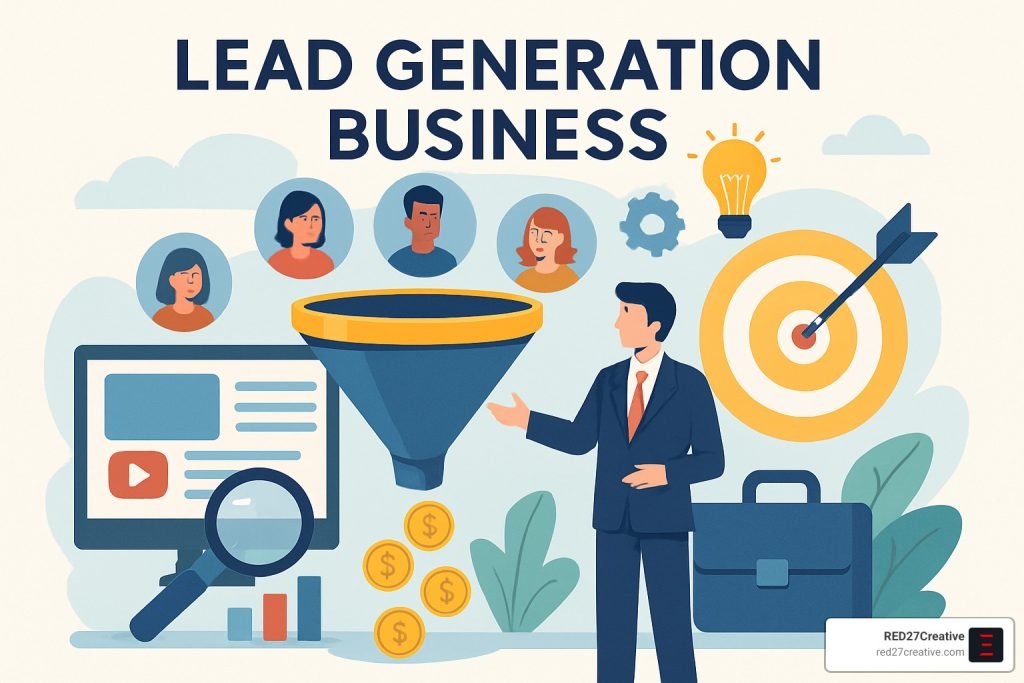
Starting a Profitable Lead Generation Business in 2024
Ever noticed how some businesses seem to have a never-ending stream of customers while others struggle to get the phone to ring? That’s where a lead generation business comes in – the behind-the-scenes partner that connects companies with their future customers.
A lead generation business finds and qualifies potential customers for other companies, then either charges for these qualified leads or takes a commission when those leads convert to sales. Think of it as being the matchmaker of the business world – introducing companies to the prospects they’ve been looking for all along.
If you’re considering starting your own lead gen venture, here’s what you should know about the investment and potential:
Starting costs vary widely based on your ambitions. You can launch as a solopreneur for as little as $800-$1,500 with just the essential tools and your expertise. Small agencies typically require $10,000-$30,000 to build a team and robust systems, while large operations might invest $100,000+ for enterprise-level capabilities.
When it comes to making money, you have several proven options. Many lead gen businesses charge on a pay-per-lead basis, while others operate on monthly retainers for consistent income. Some prefer a revenue-share model, typically taking 5-20% of the sales their leads generate.
Of course, with great opportunity comes responsibility. You’ll need to steer important regulations like GDPR, CAN-SPAM, CCPA, and CASL to ensure your lead collection and sharing practices remain above board. Your toolkit will likely include an email outreach platform, CRM system, visitor tracking software, and LinkedIn Sales Navigator as foundational elements.
The timing couldn’t be better to enter this space. With over 61% of marketers citing lead generation as their biggest challenge, companies are actively seeking specialized partners to fill their sales pipelines. This creates a perfect opportunity for entrepreneurs with marketing and sales know-how who want to build a scalable business without developing physical products.
What makes this model particularly attractive is its flexibility. You can start small, refine your approach, and scale gradually as you perfect your processes. The multiple revenue models let you adapt to different client needs and industries while building predictable income streams.
I’ve seen this firsthand. I’m Kiel Tredrea, founder of RED27Creative, and I’ve spent over two decades developing lead generation strategies that create measurable revenue for businesses across industries. My approach combines proven outbound tactics with sustainable inbound methods to build lead generation machines that deliver consistent results month after month.
That said, success in this space isn’t without challenges. You’ll need to steer increasing competition, maintain high lead quality standards, and stay current with constantly evolving privacy regulations. But for those willing to put in the work, the rewards can be substantial.
If you’re looking to dive deeper into specific aspects of lead generation business services, check out these resources:
– B2B LinkedIn Lead Generation Service
– Inbound B2B Lead Generation Services
– B2B Lead Generation and Appointment Setting Services
Ready to learn exactly how to build your own lead generation engine? Let’s explore the foundations, strategies, and tools you’ll need to succeed in this dynamic industry.
What is a Lead Generation Business?
A lead generation business acts as a matchmaker in today’s competitive marketplace—connecting hungry businesses with their ideal customers. Unlike traditional marketing agencies that try to be everything to everyone, lead generation specialists focus on one critical mission: finding qualified prospects who are ready to buy.
Think about it this way: while most business owners are busy managing day-to-day operations, a lead generation business works behind the scenes, keeping their clients’ sales pipelines flowing with promising opportunities. This service is particularly valuable in the B2B world, where complex products, lengthy sales cycles, and hard-to-reach decision-makers create unique challenges.
As Kevin O., Group Manager at SmartSource, puts it: “If you’re looking at building a sustainable business model, lead generation offers a perfect balance of low startup costs and high scalability. The beauty is you’re selling something every business needs—more customers.”
How a lead generation business works in 2024
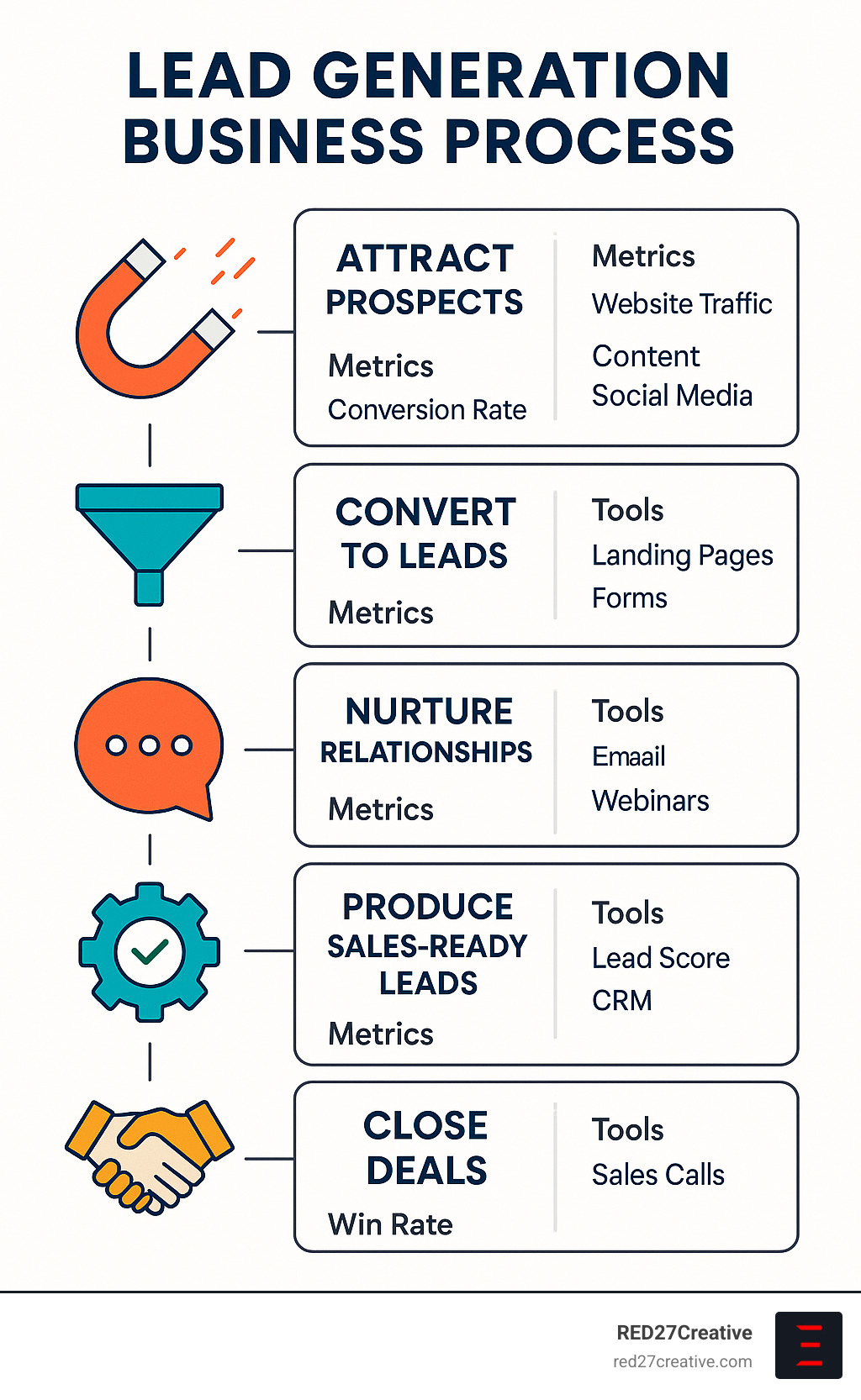
Modern lead generation businesses don’t just collect random contact lists—they operate through a sophisticated, systematic approach:
- Source data and identify prospects: Using specialized tools to build targeted lists that precisely match clients’ ideal customer profiles
- Engage and capture interest: Deploying strategic outbound methods (like personalized cold emails) or inbound tactics (such as SEO-optimized content)
- Qualify leads: Carefully assessing each prospect based on budget, authority, need, and timing (BANT)
- Deliver qualified leads: Seamlessly transferring these vetted opportunities to clients through CRM integration or white-glove handoffs
Throughout this process, leads typically fall into two main categories:
Marketing Qualified Leads (MQLs) show initial interest but aren’t quite ready to pull the trigger. Think of someone who downloaded your white paper but hasn’t requested a demo yet.
Sales Qualified Leads (SQLs) are the golden tickets—prospects actively considering a purchase who meet all your qualification criteria. These are the opportunities your sales team dreams about.
| Approach | Inbound Lead Generation | Outbound Lead Generation |
|---|---|---|
| Methods | SEO, content marketing, social media | Cold email, LinkedIn outreach, cold calling |
| Timeline | 3-6+ months to see results | Days to weeks for initial results |
| Control | Limited targeting precision | Highly targeted prospect selection |
| Cost | Higher upfront investment | Lower initial costs |
| Scalability | Scales well once established | Limited by spam filters and platform rules |
| Best for | Long-term, sustainable growth | Quick results, testing new markets |
Benefits & Risks of the lead generation business model
The appeal of starting a lead generation business is clear, but it’s important to understand both sides of the coin.
On the bright side, you’ll enjoy recurring revenue as clients typically need ongoing lead generation services, creating predictable monthly income. The high margins can be particularly attractive—once your systems are dialed in, operational costs remain relatively stable while your revenue grows.
Another major advantage is measurable ROI. Unlike traditional marketing, lead generation provides clear metrics that demonstrate your value to clients. Your business model is also highly scalable—systems that work for one industry can often be replicated across different niches with minimal adjustments.
Perhaps most appealing is the low barrier to entry. You can start with minimal investment and basic marketing skills, then grow as you refine your approach.
But challenges exist too. Increasing competition means you’ll need to continuously differentiate your services. Lead quality can be difficult to maintain at scale, requiring constant optimization. Compliance risks around data privacy laws like GDPR and CCPA present serious considerations, while tool dependence means you’re somewhat at the mercy of third-party platforms that may change policies or pricing.
Finally, there’s client retention pressure—customers expect continuous results and may quickly switch providers if leads dry up or quality diminishes.
Foundations: Legal, Costs & Essential Tools
Before diving into your lead generation business trip, let’s lay some solid groundwork. Think of this as building the foundation of your house – get it right, and everything else stands stronger.

Data privacy isn’t just a buzzword – it’s the new reality for anyone handling customer information. Several major regulations now govern how we collect and use data:
The GDPR keeps watchful eyes over EU citizens’ data, demanding clear consent before you collect anything. You can read the full GDPR guidelines here. Meanwhile, the CAN-SPAM Act polices commercial emails in the US, ensuring recipients can opt out when they want. If you’re targeting Californians, the CCPA gives them special rights over their personal information, and our neighbors up north enforce CASL for electronic messages sent to Canadians.
Breaking these rules isn’t just frowned upon – it can be financially devastating. GDPR violations can cost you up to €20 million or 4% of your global annual revenue. As one industry expert told me recently, “Over 20% of outreach emails never reach their destination because new accounts aren’t properly warmed up.” This highlights why technical setup matters from day one.
Budgeting your lead generation business at any scale
Your lead generation business budget will vary dramatically based on your ambitions. Let me break this down into three common starting points:
If you’re going solo ($800-$1,500), you can start lean with the basics: a domain name ($10-20/year), email provider ($5-10/month), an email outreach tool ($49-99/month), a free or low-cost CRM, LinkedIn Sales Navigator ($79.99/month), and simple website hosting ($5-20/month). For tips on choosing the right domain, see this scientific research on choosing domains.
Moving up to a small agency ($10,000-$30,000), you’ll expand your toolkit with premium plans for multiple users ($500-1,000/month), extra domains for email protection, data enrichment services ($200-500/month), and virtual assistants ($1,000-3,000/month). You’ll also need proper legal setup ($1,000-3,000) and a professional website ($2,000-5,000).
For those aiming at enterprise-level operations ($100,000+), the investment increases significantly with full-time employees ($50,000-100,000/year each), enterprise-grade tools ($2,000-5,000/month), possibly office space, advanced marketing automation ($1,000-3,000/month), and comprehensive legal and accounting services ($10,000-20,000/year).
These are just starting points. As your lead generation business grows, reinvesting in better tools and talent will fuel further expansion. At RED27Creative, we’ve seen clients successfully scale from solopreneur to agency by strategically reinvesting profits into growth areas. For more on B2B lead generation, check out our B2B Lead Generation guide.
Compliance checklist for a lead generation business
Staying on the right side of regulations isn’t just good ethics – it’s good business. Here’s what you need to have in place:
Your email setup needs proper authentication protocols: SPF prevents email spoofing, DKIM adds a digital signature to verify you as the sender, and DMARC combines both for improved protection. These technical standards help your emails actually reach inboxes instead of spam folders.
For consent management, implement crystal-clear opt-in mechanisms and keep detailed records of when and how people agreed to hear from you. Make unsubscribing painless (it’s not just nice, it’s the law), and honor these requests promptly – CAN-SPAM requires action within 10 business days.
Your privacy documentation should include a comprehensive privacy policy, terms of service for your website, data processing agreements for clients, and clear data retention policies. Think of these as the “rules of engagement” for how you’ll handle sensitive information.
On the technical side, use separate domains for your company website and cold outreach efforts, implement email warmup protocols for new domains, and ensure your data storage systems are secure. Regular security audits aren’t just for big companies – they’re essential for businesses of any size handling prospect data.
We always recommend consulting with a legal professional who understands digital marketing regulations in your target markets. The few hundred dollars spent on proper legal guidance can save you thousands in potential penalties.
Must-have software stack
Building an effective lead generation business requires the right digital toolbox. Here’s what you’ll need:
A robust email outreach platform serves as your communication headquarters. Tools like SalesHandy, QuickMail, or Lemlist let you manage campaigns, personalize messages, schedule sends, and track results. This becomes your primary channel for scaling personalized outreach.
Your CRM system functions as the brain of your operation. Options like HubSpot (which offers a free tier), Pipedrive, or Zoho CRM organize your contacts, score leads, and track your sales pipeline. Without a good CRM, you’re essentially flying blind.
LinkedIn Sales Tools, particularly LinkedIn Sales Navigator ($79.99/month), open up powerful prospecting capabilities on the world’s largest professional network. Interestingly, LinkedIn users with complete “All-Star” profiles are 40 times more likely to receive opportunities – a compelling statistic for both you and your clients.
Website visitor tracking tools like Leadfeeder or Dealfront reveal who’s visiting your site even when they don’t fill out forms. This turns anonymous traffic into actionable leads – almost like having X-ray vision for your website.
Round out your stack with lead enrichment tools (ZoomInfo, RocketReach, Hunter.io) to complete partial contact information, marketing automation (ActiveCampaign, Mailchimp, Klaviyo) to nurture leads automatically, and a solid landing page builder (Unbounce, Leadpages, Instapage) for creating high-converting destinations.
This technology foundation enables you to find, engage, qualify, and deliver leads at scale – the four essential functions of any successful lead generation business.
Building Your Lead Engine: Outbound & Inbound Tactics
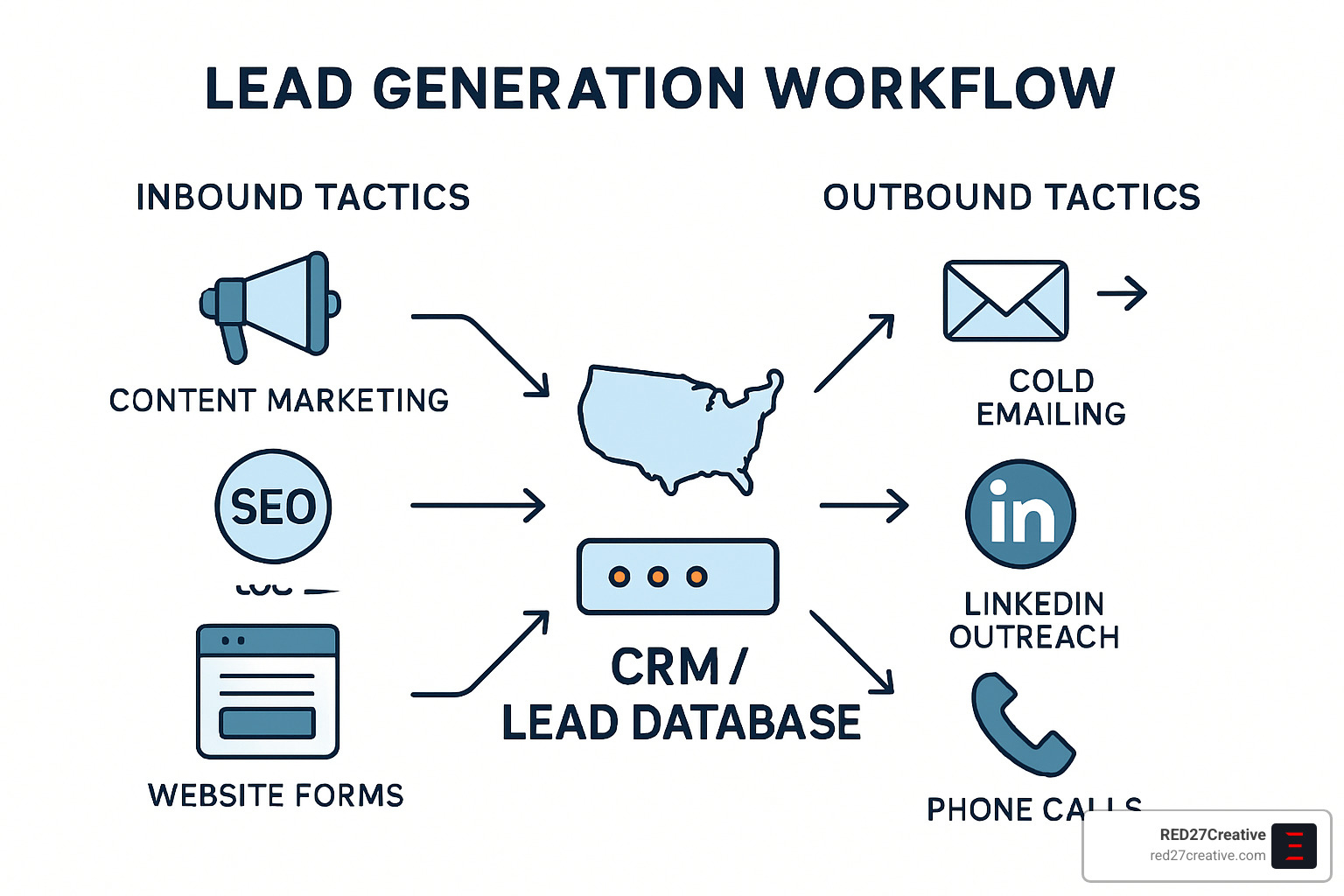
The heart of any successful lead generation business is a well-oiled lead engine that combines both outbound and inbound tactics. This multi-channel approach ensures you’ll keep seeing a steady stream of leads even when one channel hits a rough patch.
Outbound mastery for your lead generation business
Outbound lead generation is like being the friendly party host who introduces themselves to everyone, rather than waiting for guests to approach you. It’s often the quickest way to get your lead generation business off the ground and seeing results.
When it comes to cold email campaigns, success lies in the details. Protect your main domain reputation by using secondary domains for outreach—think of it as keeping your Sunday best separate from your work clothes. Before diving into full-scale campaigns, take time to warm up your email domain over 2-4 weeks, gradually increasing your sending volume to build trust with email providers.
Personalization makes all the difference in a crowded inbox. As one of our lead generation experts shares: “I’ve found that personalized opening lines referencing something specific about the prospect’s business can increase response rates by 30-40%. It takes more time, but the ROI is worth it.”
Don’t forget about the power of following up. Most deals happen after the 5th contact, yet many give up after just 1 or 2 emails. Set up a sequence of 4-7 follow-ups spaced 3-5 days apart to catch prospects when the timing is right for them.
LinkedIn outreach has become the digital equivalent of a professional networking event. Start by optimizing your profile to “All-Star” status by completing all sections—this isn’t vanity, it’s visibility. When connecting with prospects, always personalize your requests rather than using LinkedIn’s default message.
A smart approach is to engage with your prospects’ content before reaching out. Comment thoughtfully on their posts to warm up the relationship, then develop a messaging sequence that provides genuine value before asking for anything in return. With LinkedIn’s connection limits, slow and steady wins the race—aim for 15-25 personalized connection requests daily.
Inbound strategies that keep leads flowing
While outbound tactics deliver quick wins, inbound strategies create sustainable, long-term lead flow for your lead generation business—like planting fruit trees that will yield harvests for years to come.
SEO and content marketing form the foundation of most inbound strategies. Begin with thorough keyword research focused on industry-specific terms that show commercial intent. Rather than creating random content, organize your efforts around content clusters—comprehensive guides on core topics supported by related articles that link back to the main piece.
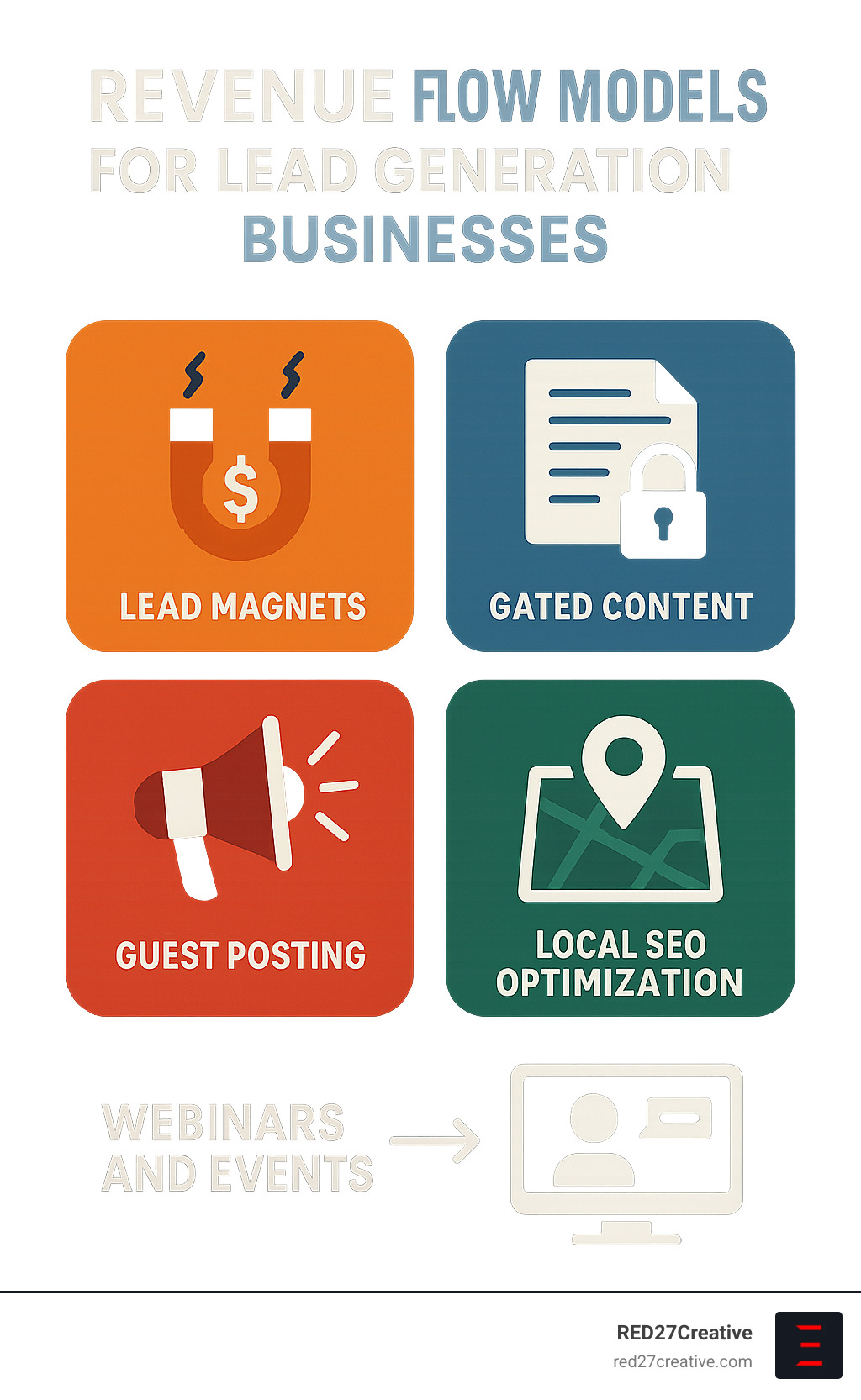
Lead magnets are your secret weapon for converting visitors into leads. Develop valuable downloadable resources like templates, checklists, or case studies that your target audience would gladly exchange their email address to receive. At RED27Creative, we’ve found that gated content with a clear, specific benefit converts significantly better than generic offers.
Don’t overlook the power of local SEO optimization if you’re targeting specific geographic areas. Create and optimize your Google My Business listing, target location-specific keywords, and ensure your NAP (Name, Address, Phone) information is consistent across all online directories. Location-specific landing pages can dramatically improve your visibility for local searches.
Webinars and events create opportunities for deeper engagement with prospects. Educational sessions that showcase your expertise without feeling like sales pitches can position you as a trusted authority. Consider co-marketing partnerships with complementary businesses to expand your reach—this approach lets you tap into established audiences while providing value to your partner.
After each event, implement automated follow-up sequences custom to both attendees and no-shows. Convert live webinars into on-demand resources to continue generating leads long after the event has ended.
At RED27Creative, we’ve finded that the most resilient lead generation business models don’t rely on a single channel. By blending these outbound and inbound strategies, you create a system that continues producing results even when individual channels face challenges. This diversified approach not only stabilizes your lead flow but also allows you to optimize each channel based on its unique strengths.
For industry-specific strategies, check out our guides on B2B Lead Generation and Lead Generation for Manufacturing Companies to see how these principles apply in different contexts.
Monetization, Scaling & Differentiation Strategies
Once you’ve established your lead generation methods, it’s time to focus on monetization, scaling operations, and standing out in an increasingly competitive market.
Pricing models to grow a profitable lead generation business
Choosing the right pricing model can make or break your lead generation business. Let’s explore the options that could work for you:
The Pay-Per-Lead model is perfect if you’re just starting out. You simply charge clients a fixed fee—anywhere from $20 to $250+—for each qualified lead you deliver. I’ve seen this work beautifully for new agencies and industries with shorter sales cycles. Imagine investing $10,000 in Google Ads to generate 1,000 leads, then charging clients $10 per lead plus a 10% commission on resulting sales. It’s straightforward and ties your compensation directly to performance.
Many established agencies prefer the Monthly Retainer model. With this approach, you charge a consistent monthly fee (typically $1,500-$10,000+) for delivering an agreed number of leads. One of our clients at RED27Creative pays $3,000 monthly for 15-20 qualified leads in the financial services sector. This model creates predictable income for you and consistent lead flow for your client—a win-win when you have reliable lead sources.
For those working with high-ticket industries, the Revenue Share model can be incredibly lucrative. You take a percentage (usually 5-20%) of the revenue generated from your leads. This works particularly well with subscription businesses where the lifetime value of a customer is substantial. I’ve seen SaaS lead generation businesses charge a 10% commission on $1,000 monthly subscriptions, creating an impressive recurring revenue stream.
Don’t feel limited to just one approach—Hybrid models often provide the best balance. Combining a smaller retainer (say $1,000 monthly) with performance fees ($50 per qualified lead or 5% of sales) helps share risk between you and your client while ensuring you’re compensated for your baseline work.
For agencies managing paid advertising, charging a Percentage of Ad Spend (typically 10-20%) aligns your interests with your client’s. When their campaigns perform well, everyone wins.
When setting your prices, remember to factor in your cost per lead (including time, tools, and advertising), industry standards (insurance leads command higher prices than retail), lead exclusivity (exclusive leads deserve premium pricing), and quality (highly qualified leads justify higher rates).
Scaling operations without killing deliverability
Growing your lead generation business requires careful planning to maintain quality while increasing volume. Here’s how to scale without sacrificing performance:
Your email infrastructure needs special attention as you grow. Implement domain rotation using multiple sending domains to protect your reputation. We’ve found that setting up separate IP addresses for different outreach campaigns significantly improves deliverability. Always create a systematic email warmup protocol for new domains—this isn’t optional, it’s essential. And keep a close eye on those deliverability metrics (open rates, spam complaints) so you can catch issues before they become catastrophes.
Building a team is your next scaling challenge. Start by documenting everything with detailed SOPs—your future self will thank you. Hire virtual assistants for those repetitive tasks like list building and data entry. As you grow, bring on specialists for key functions like copywriting and campaign management. Don’t forget to implement quality control checkpoints throughout your process.
Automation becomes your best friend during scaling. Connect your tools via APIs and Zapier for seamless data flow. Implement lead scoring to help your team focus on high-potential prospects. Create decision trees for automated lead nurturing, and build dashboards so you can monitor performance in real time.
As one of our lead generation experts at RED27Creative always says, “Don’t scale what isn’t working. Perfect your process with small volumes before ramping up. It’s easier to fix issues when you’re handling 50 leads per day than 500.” This advice has saved countless headaches for our clients.
Finally, orchestrate your multi-channel approach carefully. Coordinate timing across channels like email, LinkedIn, and retargeting. Implement cross-channel attribution tracking so you know what’s actually working. Develop omnichannel sequences that maintain context as prospects move between touchpoints. And always test new channels systematically before going all-in.
Standing out in a saturated market
With the low barrier to entry, the lead generation business landscape has become increasingly crowded. Here’s how to make your agency shine:
Industry specialization creates instant differentiation. Instead of being a generalist, focus on specific verticals like healthcare, manufacturing, or financial services. Develop deep industry knowledge and learn the terminology that resonates with decision-makers. Create industry-specific case studies that showcase your understanding of unique challenges. Attending and speaking at industry conferences puts you in front of the right audience while building credibility.
Developing a proprietary methodology gives clients a reason to choose you over competitors. Create a branded lead generation process that becomes your signature approach. Build custom technology integrations that no one else offers. Develop unique lead qualification frameworks that demonstrate your expertise. One of our most successful clients created a proprietary lead scoring model that became their main selling point.
Nothing builds trust like results guarantees. Consider implementing performance-based pricing components that show your confidence. Offer lead replacement for any leads that don’t meet qualification standards. Provide transparent reporting so clients can see exactly what they’re getting. Share detailed client success stories with concrete metrics that prove your approach works.
Adding value beyond basic lead generation helps justify premium pricing. Offer lead nurturing services that extend beyond initial capture. Provide sales training to help clients better handle the leads you deliver. Create industry insights reports that help clients understand market trends. Develop co-marketing opportunities that benefit both you and your clients.
Establishing yourself as a thought leader creates long-term differentiation. Publish original research and data that gets cited by others in your industry. Host webinars and podcasts that showcase your expertise. Contribute to respected publications to build your authority. Focus on building a strong personal brand as a lead generation expert.
At RED27Creative, we’ve found that combining industry specialization with transparent reporting and consistent results has been our most effective differentiation strategy. Our clients stay because they trust our expertise and can clearly see the ROI we deliver—and that’s what turns a one-time client into a long-term partnership.
Conclusion
Launching a successful lead generation business is like planting a garden – it takes careful preparation, the right tools, and consistent attention to yield beautiful results. Throughout this guide, we’ve walked through everything you need to know to build a thriving business that connects companies with their ideal customers.

The journey isn’t always easy, but the rewards can be substantial. By now, you understand that success in this space comes down to five essential elements:
First, build on solid foundations. Just like you wouldn’t build a house on sand, your business needs proper legal compliance, the right technology stack, and scalable systems from day one. This groundwork might not be glamorous, but it prevents painful problems down the road.
Second, accept a multi-channel approach. The most resilient lead generation businesses don’t put all their eggs in one basket. By combining quick-win outbound tactics with long-term inbound strategies, you create a business that can weather algorithm changes and market shifts.
Third, quality trumps quantity every time. In a world drowning in mediocre leads, being known for delivering genuine prospects who are ready to buy will set you apart. One perfect-fit lead is worth more than twenty tire-kickers, both to your clients and your reputation.
Fourth, price strategically for sustainable growth. Whether you choose pay-per-lead, monthly retainers, or revenue sharing, your pricing model should reflect the true value you provide while covering your costs and supporting reinvestment in your business.
Finally, find your unique angle. The lead generation space is getting crowded, but there’s always room for specialists who truly understand specific industries or bring innovative approaches to the table. Your distinct perspective is your competitive advantage.
What makes the lead generation business model so appealing is its accessibility. You can start small, prove your concept, and scale methodically as you refine your approach. With relatively modest startup costs and unlimited scaling potential, it’s an entrepreneur’s dream – especially as businesses continue to prioritize growth in an increasingly competitive landscape.
At RED27Creative, we’ve helped countless businesses implement effective lead generation strategies that drive measurable growth. Our approach combines data-driven insights with creative execution to deliver results that speak for themselves. If you’re looking to take your own lead generation to the next level, explore our B2B lead generation solutions and find how we can help fuel your growth engine.
Frequently Asked Questions about Starting a Lead Generation Business
What does a lead generation business do?
A lead generation business acts as a matchmaker between companies and their potential customers. We find and qualify prospects who match our clients’ ideal customer profiles, using various marketing tactics to identify people with genuine interest and buying potential. Once we’ve verified these leads meet specific criteria (like budget and timing), we deliver them to our clients who can then focus on what they do best – converting qualified prospects into happy customers.
How much does it cost to start?
Starting a lead generation business is remarkably flexible cost-wise. Solo entrepreneurs can launch with as little as $800-$1,500, covering basic essentials like domain registration, email software, and outreach tools. If you’re building a small agency, budget around $10,000-$30,000 to include additional team members, more sophisticated tools, and proper legal setup. Larger operations with full-time staff and enterprise-level technology typically require $100,000+ investment. The beauty is you can start small and reinvest as you grow.
How do I keep my emails out of spam?
Email deliverability is the lifeblood of many lead generation businesses. To stay in the inbox, implement proper technical authentication (SPF, DKIM, DMARC), gradually warm up new email domains before sending in volume, and use separate domains for outreach campaigns. Personalize your messages genuinely, keep your lists clean by removing unengaged contacts, and avoid language that triggers spam filters. For larger operations, rotating sending domains and using email warmup services can maintain deliverability even at scale.
What industries pay the most for leads?
Financial services leads typically command premium prices, particularly in mortgage, insurance, and wealth management where customer lifetime values are substantial. Legal services (especially personal injury and business law), healthcare (particularly elective procedures), B2B technology, higher education, and specialized home services also pay well for qualified leads. These industries can justify paying anywhere from $50 to several hundred dollars per lead because their average customer value makes the math work beautifully.
How long does it take to become profitable?
With focused effort and the right strategy, a lead generation business can become profitable within 3-6 months. Solo operations often reach profitability faster by keeping overhead minimal and targeting high-margin industries. Agencies typically take longer due to higher fixed costs but can ultimately achieve greater scale. The key is consistent reinvestment in your marketing, tools, and team to build sustainable growth rather than short-term profits.
Should I focus on inbound or outbound lead generation?
The most successful lead generation businesses blend both approaches. Outbound methods like cold email and LinkedIn outreach can generate quick wins and immediate cash flow, while inbound strategies like SEO and content marketing build a sustainable lead engine over time. Think of outbound as your sprint and inbound as your marathon. We typically recommend starting with targeted outbound campaigns to fund your operation while simultaneously building inbound assets that will pay dividends for years to come.
(Results-driven marketing insights provided by RED27Creative.)

Kiel Tredrea
https://red27creative.comTop Marketing Agency • Web, SEO & Leads • RED27Creative