Beyond Pretty Pixels: SEO Website Design for Local Businesses and Marketing Success

Your Website Is More Than a Digital Brochure—It’s a Growth Engine
SEO website design is the practice of building websites that are optimized for both search engines and human users, combining visual appeal with technical performance to improve rankings, drive organic traffic, and convert visitors into leads.
Key Elements of SEO Website Design:
- Mobile-first responsive design that adapts to all devices
- Fast page load speeds (under 2.5 seconds ideal)
- Clean site structure with logical navigation and URL hierarchy
- Optimized content including title tags, meta descriptions, and header tags
- Indexable HTML content that search engines can easily crawl
- High-quality images with descriptive alt text and compressed file sizes
- Internal linking to distribute page authority and guide users
- XML sitemaps to help search engines find all pages
For any business, a beautiful website that doesn’t generate leads is just an expensive digital brochure. The first search result on Google gets over 25% of all clicks, meaning visibility is everything. Your site must do more than look good—it needs to be found and trusted by both search engines and potential customers.
The problem? Most web design projects focus on aesthetics first, treating SEO as an afterthought. When SEO is added later, critical opportunities in the site’s architecture and technical foundation are already missed. This results in wasted time and a site that fails to deliver measurable business growth.
The solution is integrating SEO into every phase of the web design process, from initial planning through content creation and ongoing optimization. This approach creates a unified system where design, user experience, and search visibility work together to attract high-intent traffic and convert visitors into qualified leads.
I’m Kiel Tredrea, founder of RED27Creative, and over the past 20+ years I’ve helped hundreds of businesses build high-performing websites that combine strategic SEO website design with conversion-focused marketing systems. This guide breaks down exactly how to create a website that ranks well, converts visitors, and supports long-term business growth.
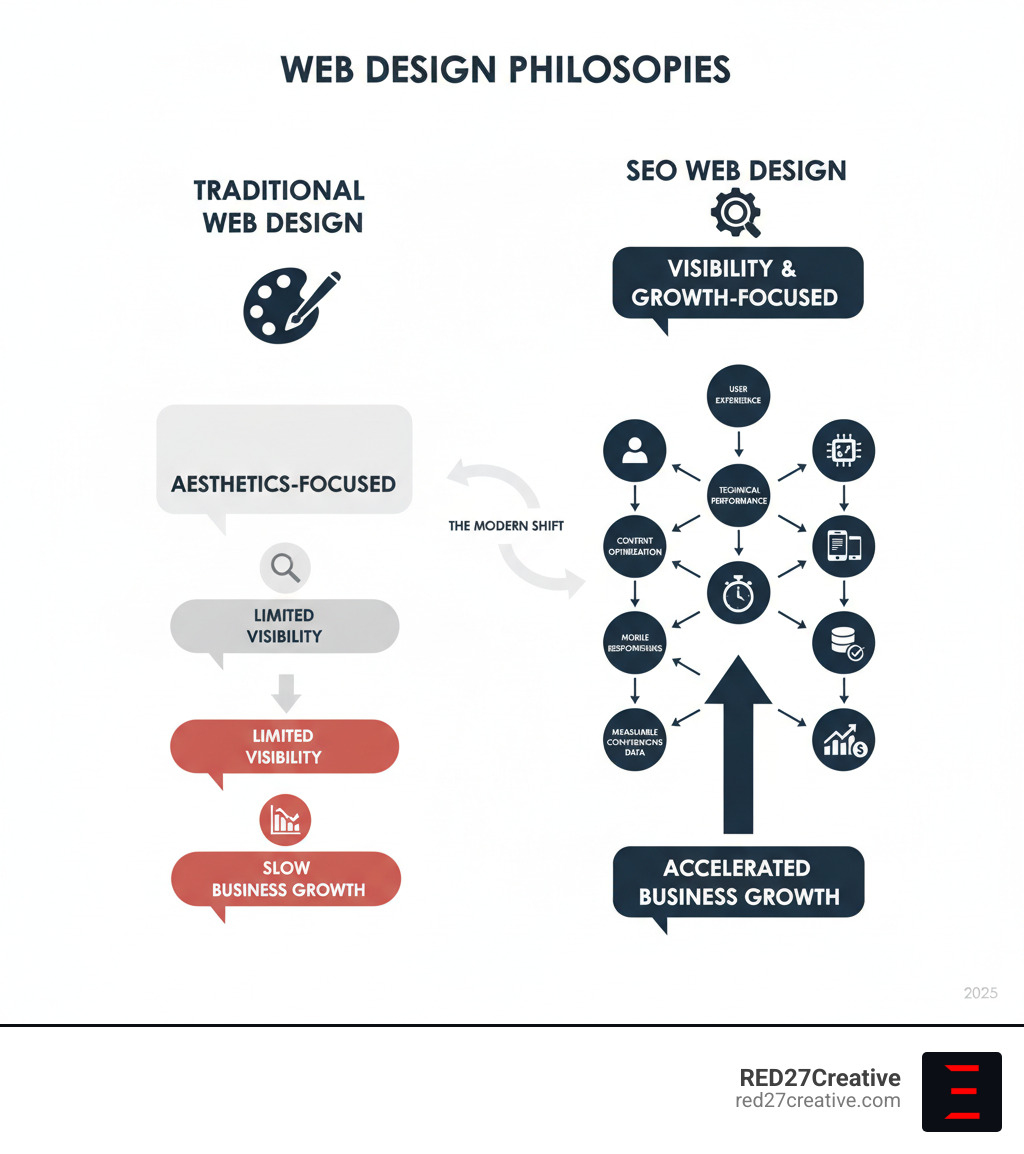
Why SEO-Driven Web design is Non-Negotiable for Local Success
A great Web Design is the foundation of your Digital Brand Presence. But without SEO, it’s like a billboard in the desert—beautiful, but invisible to your audience.
Many businesses invest in stunning websites that generate zero leads. The design is flawless and the brand feels polished, but competitors show up in search results instead. This happens because the site was built without search engines in mind.
SEO website design changes that equation entirely. It ensures your ideal customers can find you at the exact moment they’re searching for your services. For local businesses in Geneva, Naperville, Aurora, and throughout the Chicago area, this visibility isn’t just nice to have—it’s the difference between thriving and struggling.
Integrating SEO into your web design process unlocks powerful advantages. You’ll see increased organic traffic from people actively searching for your services. This improved user experience leads to higher conversion rates and delivers better ROI than traditional ads.
The Symbiotic Relationship Between UX and SEO
User experience (UX) and SEO are two sides of the same coin. Google’s algorithm rewards sites that satisfy both. When visitors have a good experience—indicated by signals like longer dwell times and lower bounce rates—it tells search engines your site is valuable, directly boosting your rankings. This creates a virtuous cycle: better UX leads to better rankings, which brings more traffic and more customers. The business impact is significant; according to Forbes, every dollar invested in UX can yield an ROI of 9,900%. This synergy is the core of modern SEO Services, and we design every site to ensure what delights visitors also signals quality to search engines.
Attracting High-Intent Traffic That Converts
There’s a critical difference between random website traffic and qualified leads. A website optimized for search doesn’t just attract more visitors—it attracts the right visitors at the right time.
When someone searches for “industrial equipment manufacturer in Chicago” or “emergency HVAC repair near me,” they’re not casually browsing. They have a specific need and they’re actively looking for a solution. By understanding search intent and targeting the keywords your ideal customers actually use, you can align your site’s structure and content with what people are searching for.
This focus on attracting high-intent traffic is crucial whether you’re a local service provider in St. Charles or a B2B company working on Lead Generation for Manufacturers. When visitors find your site through specific, relevant searches, they arrive already interested in what you offer. They’re not learning about their problem—they’re looking for someone to solve it.
That’s why SEO website design delivers such strong conversion rates. You’re not interrupting people with ads or hoping they stumble across your business. You’re making sure that when they actively search for what you provide, your business is right there with the answer. These are the visitors who fill out contact forms, pick up the phone, and become paying customers.
The Core Elements of High-Ranking SEO Website Design
Google uses over 200 factors to rank websites—a number that can feel overwhelming. The good news? You don’t need to master them all. By focusing on the foundational elements of SEO website design, you can put your website far ahead of the competition. These principles are the backbone of our Custom Web Design and Development process and separate websites that exist from those that generate business.
Technical Foundations for Search Engine Visibility
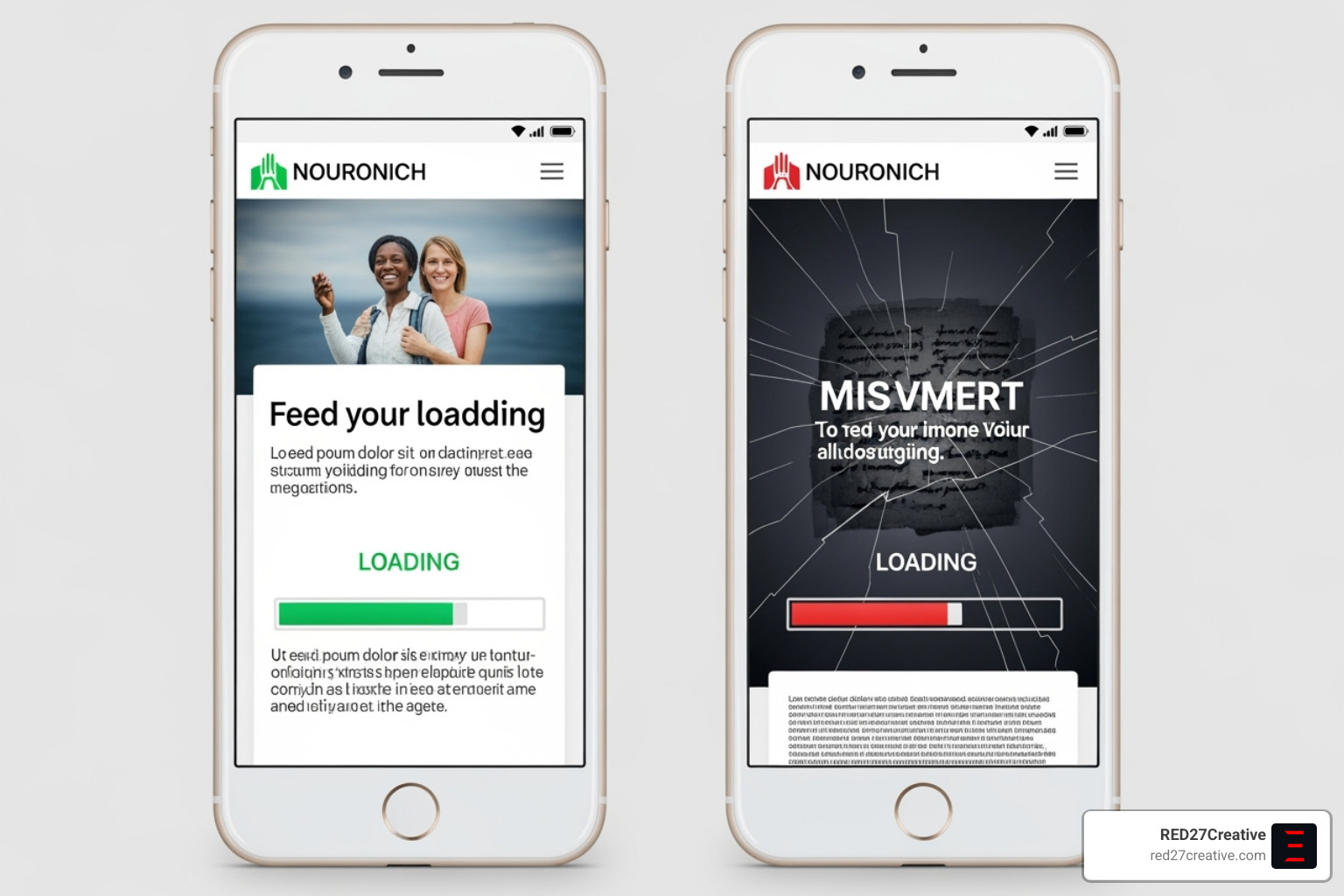
The technical backbone of your website determines if search engines can find and understand your content. Without a solid foundation, you’re building a store Google can’t map. Key elements like mobile-first indexing, website speed, sitemaps, and indexable content ensure search engines can efficiently crawl and assess your site to show it to the right people.
How Mobile-Friendliness and Page Speed Impact Rankings
With over half of all web traffic coming from mobile, Google uses mobile-first indexing, ranking your site based on its mobile version. A slow or unresponsive mobile site hurts your rankings and turns away customers. Page speed is equally critical. Most users abandon a site that takes more than a few seconds to load, a negative signal Google tracks. We aim for load times under 2.5 seconds, using tools like Google’s PageSpeed Insights to ensure a fast experience on all devices as part of our Responsive Website Development.
Making Your Content Findable with Sitemaps and Indexable Content
An XML sitemap is a roadmap for search engines, listing all your important pages to ensure they are found and crawled. Submitting it to Google Search Console is a crucial step, especially for large or new sites. Beyond the sitemap, your content must be indexable—written in HTML text, not locked in images or complex code that bots can’t process. If Google can’t read your content, it can’t rank it. You can check your site’s index status by using the site:yourdomain.com search on Google; missing pages indicate a technical problem.
On-Page Optimization: Content, Structure, and User Signals

Once your technical foundation is solid, on-page optimization is where you align your content and structure with what users and search engines want. It’s the difference between a page that just exists and one that actively works to attract and convert visitors.
Structuring Content for Readability and SEO
Clear headings (H1, H2, H3) create a logical hierarchy, helping users scan for information and signaling topics to search engines. Your H1 should state the page’s purpose, with H2s and H3s breaking down supporting points. Beyond headings, readability keeps people engaged. Use short sentences, bullet points, and large, high-contrast fonts. When content is easy to read, visitors stay longer, sending positive dwell time and bounce rate signals to search engines, which helps improve rankings.
The Power of Optimized URLs, Metadata, and Images
Your URL structure should be clean and descriptive (e.g., your-site.com/services/hvac-repair), not generic (your-site.com/page?id=12345). Your title tag (under 60 characters) and meta description (under 160 characters) are your sales pitch on Google. A compelling title with your main keyword is crucial, as 36% of SEO experts consider it the most important on-page element. The meta description drives clicks, which influences performance. Images also require optimization: use descriptive alt text for accessibility and search engine context, and compress files for faster page loads. This detail is central to our SEO for Manufacturing Companies strategy.
Measuring Performance and Avoiding Common Mistakes
Building an SEO website design is just the beginning; the real work starts after launch. You must track how users interact with your site and how search engines respond to your content. Ongoing, data-driven decisions are critical to maintain and improve rankings as the digital landscape shifts.
Using Analytics to Refine Your SEO and Design
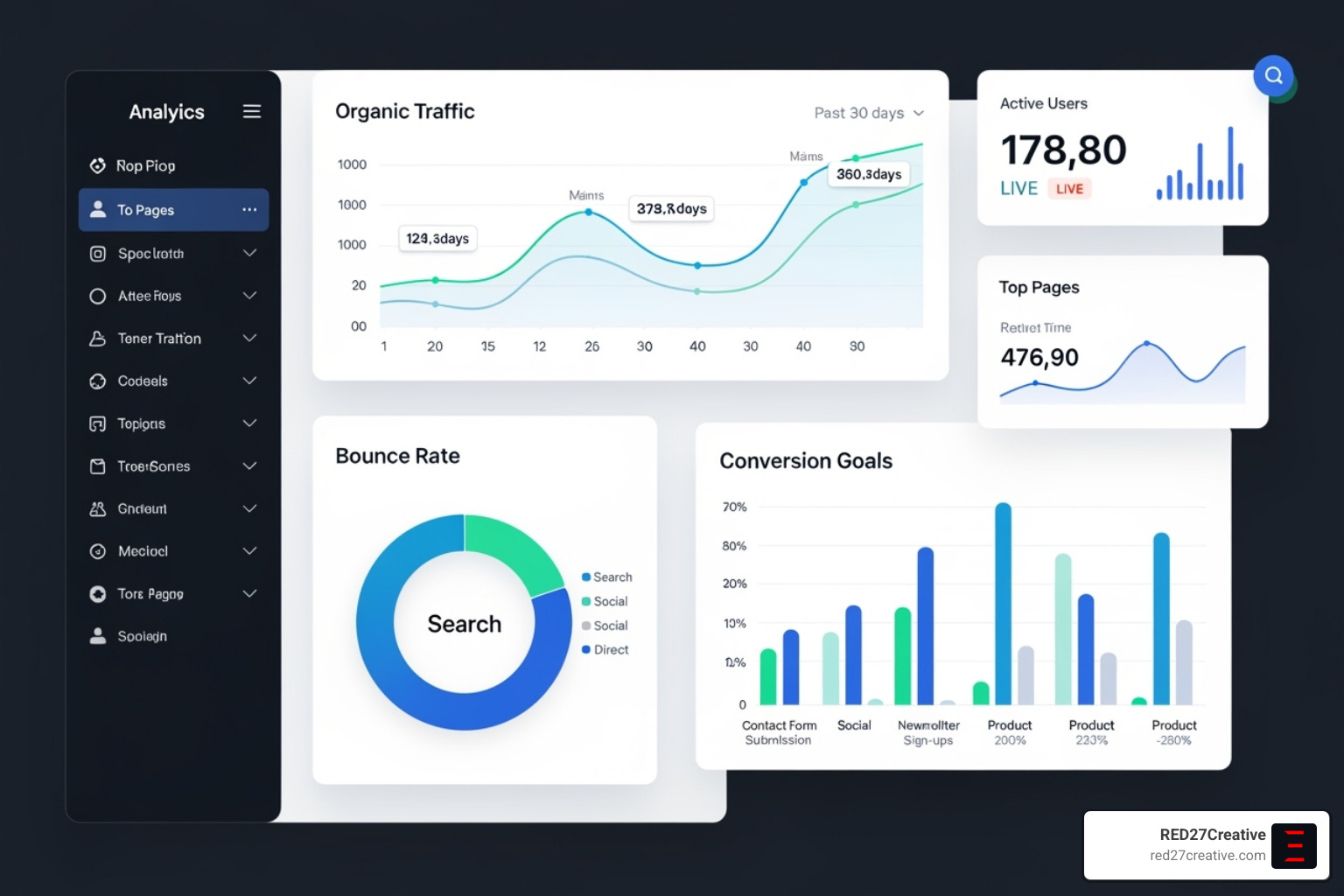
Website analytics tools like Google Analytics are essential for refining your SEO website design. They show how visitors find and interact with your site, revealing what’s working. Key metrics include organic traffic, bounce rate, and conversion goals (e.g., form fills, calls). High traffic with low conversions signals a problem. For technical insights, Google Search Console’s URL Inspection Tool helps find crawling or indexing errors. This data-driven approach informs our Marketing Strategies, ensuring every adjustment is purposeful.
Common SEO Web Design Mistakes to Avoid
Even experienced businesses make mistakes that undermine their SEO efforts. Here are the most common pitfalls we see—and how to avoid them:
Neglecting mobile is the most damaging mistake. With mobile-first indexing, a poor mobile experience tanks your rankings. If your site is slow or broken on phones, you’re invisible to over half your audience.
Slow page speed kills conversions and rankings. Visitors leave slow sites, signaling low value to search engines. Nearly 70% of consumers admit that page speed impacts their willingness to buy.
Poor site structure confuses users and search engines, leading to “orphaned” pages with no traffic. A clear hierarchy with intuitive navigation is essential for helping crawlers and visitors find content.
Ignoring on-page SEO means missing easy opportunities. Every page needs an optimized title tag, meta description, and header tags to tell Google what it’s about and convince users to click.
Lack of quality content is the ultimate SEO killer. Thin or unhelpful content fails to satisfy user intent. Google’s algorithm prioritizes helpful, people-first content that solves problems; without it, technical optimization won’t be enough to rank.
At RED27Creative, we help businesses avoid these common, preventable mistakes. Regular monitoring and a commitment to user experience are key to sustained performance.
Frequently Asked Questions about SEO Web Design
What is the difference between website design and SEO?
Website design focuses on the visual look and user experience of a site—its layout, colors, and navigation. SEO (Search Engine Optimization) is the technical process of making that site visible to search engines like Google. An effective SEO website design merges both, ensuring a beautiful site also ranks well to attract visitors.
How long does it take to see results from SEO changes?
Minor technical SEO fixes can show results in a few weeks, but broader strategies take longer. Expect to see meaningful ranking improvements from new content and authority-building in 3-6 months. SEO is a long-term investment in sustainable growth, with results compounding over time for a strong ROI.
How can I check if my website is SEO-friendly?
Use free tools like Google’s Mobile-Friendly Test and PageSpeed Insights to check performance and responsiveness. Manually review your site for clear navigation, descriptive title tags, and high-quality content that answers user questions. A professional SEO Consultant Chicago can provide a deeper analysis of technical issues and opportunities for improvement.
Build a Website That Works as Hard as You Do
A successful website is the perfect blend of art and science—stunning design built on a foundation of strategic SEO website design. When you focus on user experience, technical performance, and high-quality content, you create more than just an online presence. You build a powerful asset that attracts qualified leads, nurtures trust, and drives real business growth.
Too many business owners settle for websites that look beautiful but generate zero leads. They invest thousands in sleek designs and modern layouts, only to watch their site sit idle while competitors capture all the search traffic. This happens when design and SEO are treated as separate projects instead of working together from day one.
Don’t settle for just a pretty website. Demand one that delivers measurable results—one that shows up when your ideal customers search, keeps them engaged when they arrive, and guides them naturally toward taking action. That’s the difference between a digital brochure and a genuine growth engine.
The team at RED27Creative specializes in building data-driven websites that unify design, SEO, and lead generation into a single, cohesive system. Our more than 20 years of experience have shown us that when design, development, and SEO work together from the start, the results are transformative. We’ve helped hundreds of businesses in Geneva, Naperville, Aurora, and across the Chicago area turn their websites from static placeholders into their most valuable marketing tools.
If you’re ready to stop wondering why your website isn’t generating leads and start seeing real results from your online presence, we should talk. Your website can work as hard as you do—it just needs to be built the right way.
Explore our Website Design Chicago Best Practices 2025 to learn more about how we approach modern, results-driven web design.

Kiel Tredrea
https://red27creative.comTop Marketing Agency • Web, SEO & Leads • RED27Creative