Don’t Just Spend, Optimize: A Guide to PPC ROI That Pays Off

Why Most PPC Campaigns Leak Profit (And How to Fix Yours)
PPC ROI optimization is the process of making your pay-per-click campaigns more profitable. It involves cutting wasted spend, targeting high-intent audiences, and making every dollar count.
Most businesses celebrate clicks, but clicks don’t pay the bills—profit does. The harsh reality is that many advertisers lose money because they track the wrong things. They focus on impressions and clicks instead of the actual return on their investment.
Here’s the problem: vanity metrics feel good but don’t reflect business health. A campaign with a high click-through rate might be wasting money on unqualified traffic. Meanwhile, a campaign with fewer clicks could be driving your most profitable customers.
The gap between ad spend and profit is where most PPC campaigns fail. With rising costs and fierce competition, a data-driven approach isn’t just an option; it’s a necessity. Without it, you’re just guessing with your marketing budget.
I’m Kiel Tredrea, founder of RED27Creative. For over 20 years, I’ve helped businesses turn underperforming PPC campaigns into profit engines. My approach ensures every part of your campaign works together to drive measurable returns.
From Ad Spend to Profit: Why PPC ROI is the Only Metric That Matters
It feels good to see thousands of clicks or a low cost-per-click (CPC). But here’s the uncomfortable truth: those numbers don’t pay your bills. High click-through rates and low CPCs are vanity metrics. They look impressive but don’t tell you if you’re actually making money.
This is why PPC ROI optimization is the only metric that truly matters for business growth. While Google says businesses make $2 for every $1 spent on their platform, that’s just an average. Many advertisers lose money by celebrating clicks instead of tracking profit.
The gap between ad spend and actual profit is where most campaigns fail. With rising CPCs and fierce competition, a data-driven approach focused on real returns is essential. Otherwise, you’re just gambling with your marketing budget.
PPC ROI provides a clear picture of profitability—actual dollars earned after all costs. This focus is crucial for proving marketing value, making smart budget decisions, and stopping problems before they drain your resources.
When you shift from vanity metrics to genuine ROI, you stop chasing clicks and start building campaigns that drive measurable growth. You transform your PPC efforts from an expense into a reliable growth engine. That’s the foundation of effective PPC ROI optimization.
The Foundation: Understanding and Calculating True PPC ROI
Without an accurate understanding of your true PPC ROI, you’re making marketing decisions in the dark. At RED27Creative, we help businesses in Geneva, Aurora, and Naperville build a foundation of accurate ROI calculation to turn ad spend into measurable profit.
How to Accurately Calculate PPC ROI
The basic PPC ROI optimization formula is:
ROI = ((Revenue from PPC – Total PPC Costs) / Total PPC Costs) × 100
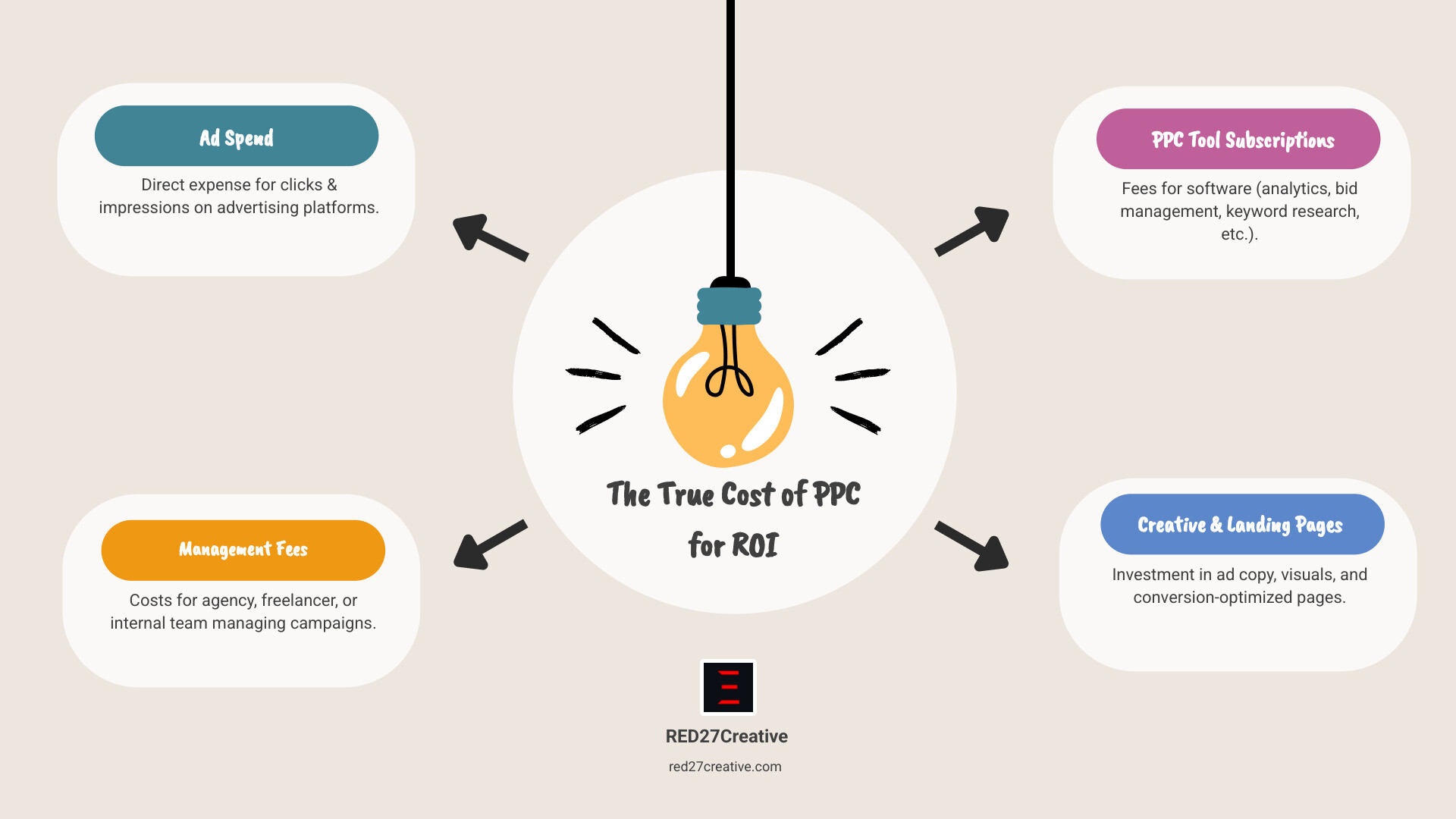
The mistake most businesses make is underestimating “Total PPC Costs.” It’s not just your ad spend. True ROI accounts for every dollar that makes your campaigns run.
- Ad Spend: What you pay platforms like Google or Microsoft for clicks.
- Management Fees: Costs for your agency or in-house team.
- Tool Costs: Subscriptions for keyword research, bid management, or analytics software.
- Creative & Landing Page Costs: Expenses for ad design, copywriting, and landing page development.
Accurate revenue tracking is also key. This includes the value of leads generated, customer lifetime value, and your actual profit margins. This complete view is crucial for making smart budget decisions and proving marketing value.
The Critical Difference: PPC ROI vs. ROAS
Many people ask, “Isn’t ROI the same as ROAS?” They are not the same, and knowing the difference is vital.
ROAS (Return on Ad Spend) measures revenue generated per dollar of ad spend. It’s a simple metric (Revenue / Ad Spend) used for tactical optimization, like comparing ad copy or keyword performance.
PPC ROI measures the overall profitability of your entire campaign effort. It includes all costs—management, tools, and creative—not just ad spend. ROI is for strategic business decisions, like setting budgets or choosing marketing channels.
Think of it this way: high ROAS looks good, but if other costs are high, your ROI could be negative. We use ROAS for daily tactical adjustments and ROI to ensure our campaigns are driving real business growth.
Core Strategies for PPC ROI Optimization
Effective PPC ROI optimization is a continuous process of refinement, testing, and adjustment. The best campaigns are built on a solid structure, reach the right audiences, and maintain relevance from search to conversion. When these elements align, your ad spend becomes a true investment.

Master Your Keywords for Better PPC ROI Optimization
Keywords are the foundation of your PPC strategy, but not all are created equal. Focusing on the right ones is key.
- Keyword Intent: Prioritize high-intent keywords that signal a readiness to buy. A search for “emergency HVAC repair Naperville” is far more valuable than “what is HVAC.”
- Long-Tail Keywords: These longer, more specific phrases have lower competition and higher conversion rates. They are a secret weapon in strategic PPC for Industrial Companies.
- Branded vs. Non-Branded: Separate campaigns for branded terms (your company name) and non-branded terms (your services) allow for precise budget control and messaging.
- Negative Keywords: Use search term reports to find and exclude irrelevant queries like “jobs” or “free.” This simple step is a cornerstone of PPC ROI optimization because it eliminates wasted spend.
Finally, use tightly themed ad groups and a smart mix of match types to ensure your ads are highly relevant without bleeding your budget on the wrong traffic.
From Click to Conversion: Ads and Landing Pages That Pay Off
Getting profitable clicks that convert into customers is where strategy truly pays off.
Google’s Quality Score measures the relevance of your ads, keywords, and landing pages. A higher score isn’t just a vanity metric; a 1-point improvement can cut costs by 7-9%. It’s based on expected click-through rate, ad relevance, and landing page experience.
Compelling ad copy with a strong call-to-action (CTA) pre-qualifies visitors and encourages clicks from serious prospects. Our Google Ads Creation Ultimate Guide explores how to write ads that convert.
Message match is non-negotiable. If your ad promises a specific offer, your landing page must reflect it perfectly. Any disconnect creates confusion and wastes the click.
Your landing page is where the conversion happens. It must be fast, mobile-friendly, and clear. Use benefit-focused copy, trust signals, and simple forms. Businesses with more landing pages generate significantly more leads because custom pages for specific campaigns always outperform generic ones.
Smart Bidding and Budgeting for Maximum PPC ROI Optimization
Your bidding and budget strategy determines whether your campaigns are profitable.
Manual bidding offers total control and is great for new campaigns or high-value keywords. However, it’s time-intensive. Automated bidding uses Google’s machine learning to optimize for goals like Target CPA (Cost Per Acquisition) or Target ROAS (Return on Ad Spend). These strategies work best with sufficient conversion data.
Smart budget allocation means shifting funds to what works. We use device and location bid adjustments to focus spend on high-performing segments. Ad scheduling concentrates your budget during peak conversion times, preventing waste on low-intent, off-hours clicks.
This flexible approach is central to our Google Ads Budget Management philosophy. We let performance data guide your budget, maximizing every dollar.
Advanced Plays: Elevating Your ROI with Sophisticated Tactics
Once the fundamentals are solid, advanced tactics can open up the next level of PPC ROI optimization. These strategies separate good campaigns from great ones and create a significant competitive advantage for our clients.
Leverage Advanced Audiences and Ad Formats
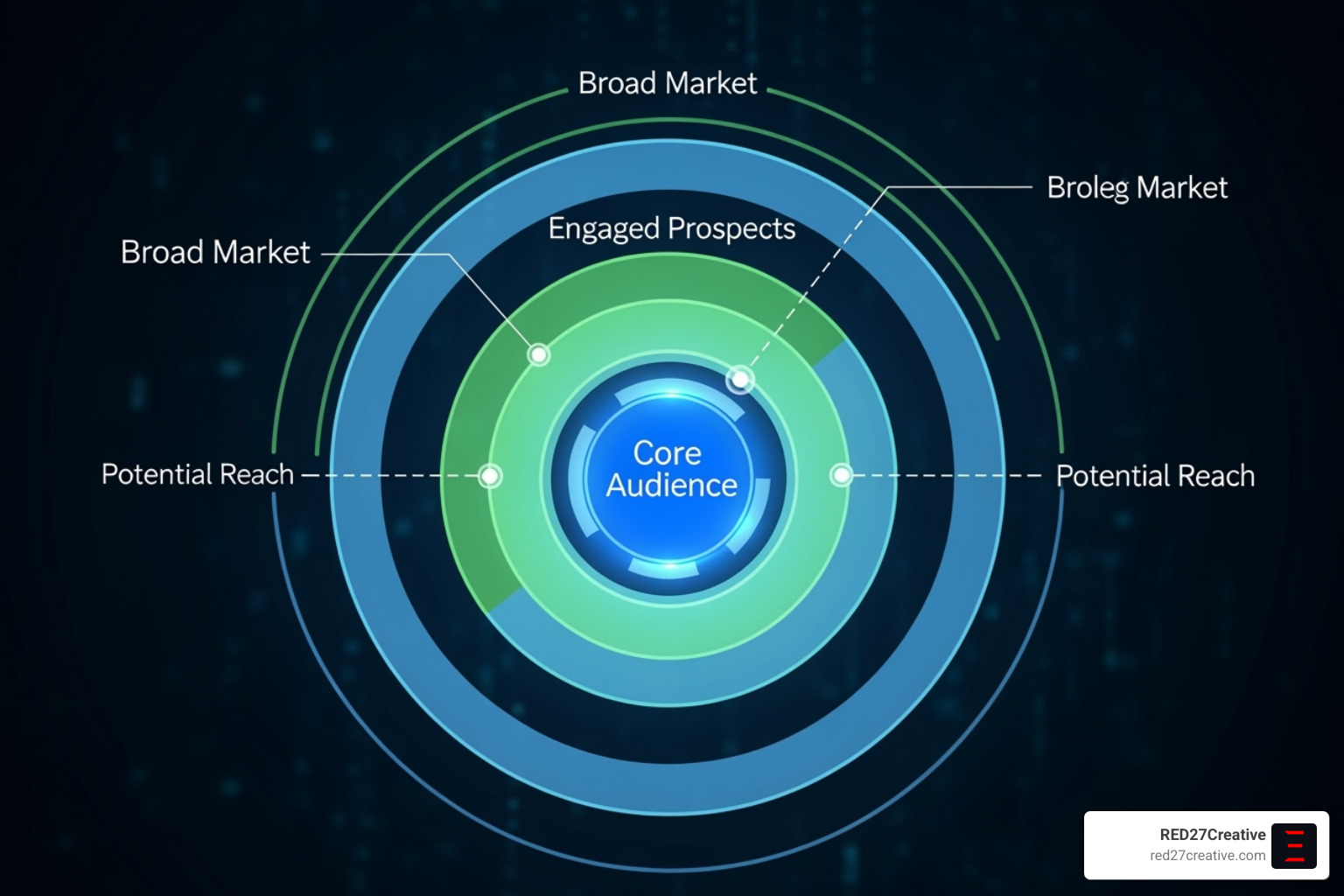
Advanced audience targeting is like moving from a fishing net to a spear. It allows for surgical precision.
- Customer Match: Upload your customer email lists to target them with upsell offers or exclude them from certain campaigns to save money.
- Similar Audiences: Google finds new users who behave like your existing customers, efficiently expanding your reach to a qualified audience.
- In-Market Audiences: Target users Google has identified as actively researching products or services in your category. They are already in a buying mindset.
- Remarketing: Reconnect with past website visitors. These warmer leads often deliver conversion rates 2-3 times higher than cold traffic.
For businesses with large inventories, Google Ads Dynamic Search Ads automatically generate ads to capture valuable long-tail searches. E-commerce brands can also leverage Performance Max campaigns to optimize across all of Google’s channels.
Diversify Platforms to Find Untapped ROI
Google Ads isn’t the only place to find profitable customers. Some of the best ROI opportunities come from other platforms.
Microsoft Advertising often has lower competition and costs. With an average CPC of $1.54 versus Google’s $2.69, it can be a cost-effective way to reach a slightly older, more affluent audience, which is ideal for services like HVAC Pay Per Click.
Social media PPC is also powerful. LinkedIn Ads offer best B2B targeting, while Meta Ads (Facebook and Instagram) are excellent for building brand awareness and running remarketing campaigns. The key is to test strategically on the platforms where your audience spends their time.
The Optimization Engine: Tracking, Testing, and Continuous Improvement
Here’s the truth about PPC ROI optimization: it’s never actually “done.” The digital advertising world never stops moving. Consumer behavior shifts, algorithms update overnight, and competitors adjust their strategies. What worked brilliantly last quarter might be hemorrhaging budget today.
We view optimization as a continuous engine, not a one-time tune-up. It requires consistent attention, systematic testing, and the willingness to adapt based on what the data tells us—even when it contradicts our assumptions.
The Non-Negotiable Role of Tracking and Analytics
You can’t optimize what you can’t measure. Many businesses run campaigns with broken or incomplete tracking, forcing them to make decisions based on guesswork.
Proper conversion tracking is the starting point. We track every meaningful action, from form submissions and phone calls to offline sales. We also use UTM parameters to see exactly which campaigns, ad groups, and ads drive results, a key part of our process for Scoring Traffic Sources for Better ROI.
For businesses with long sales cycles, offline conversion tracking is essential for connecting ad spend to actual business outcomes. Finally, moving beyond last-click attribution models to data-driven models provides a complete picture of how all your marketing touchpoints work together.
A/B Testing and Monitoring for Sustained Growth
Successful campaigns are built on evidence from systematic testing, not hunches.
A/B testing is how we turn good campaigns into great ones. By testing one variable at a time—like ad headlines, CTAs, or landing page layouts—we can identify exactly what drives improvement. A simple wording change can sometimes boost conversions significantly.
A disciplined monitoring schedule is also critical. Weekly monitoring allows us to add negative keywords, pause underperforming ads, and spot trends. Monthly strategic reviews ensure campaigns remain aligned with business goals and that budget is allocated to top performers.
This continuous cycle of tracking, testing, and adapting is what separates campaigns that deliver consistent returns from those that become unprofitable. It’s the difference between hoping your ads work and knowing they do.
Frequently Asked Questions about PPC ROI Optimization
What is a good PPC ROI?
A good PPC ROI depends on your industry and margins, but a 4:1 ratio (400%) is an excellent benchmark. This means you generate $4 in revenue for every $1 in total cost. An ROI of 200-300% is solid and sustainable, while anything below 100% means you are losing money.
How often should you optimize PPC campaigns for the best ROI?
New campaigns require daily monitoring for the first week to catch early issues. For mature campaigns, a weekly check-in is standard for tactical adjustments like adding negative keywords. A deeper strategic review should happen monthly to align performance with business goals, reallocate budgets, and identify long-term trends.
Can you improve PPC ROI without increasing your ad spend?
Absolutely. Smart PPC ROI optimization focuses on efficiency. You can boost ROI without a bigger budget by improving your Quality Score to lower click costs, adding negative keywords to eliminate waste, and optimizing landing pages to increase conversion rates. These strategic changes help you get more from your existing spend.
Conclusion: Turn Your PPC from an Expense into a Growth Engine
The difference between a profitable PPC campaign and one that drains your budget is PPC ROI optimization. It’s not about spending more; it’s about spending smarter. By committing to data-driven decisions and continuous improvement, you can transform your ad spend from an expense into a reliable growth engine.
This guide covered the essentials: calculating true ROI, mastering keywords, aligning ads with landing pages, and using smart bidding. We also explored advanced tactics and the non-negotiable role of tracking and testing. These are the strategies that separate winning campaigns from losing ones.
The businesses we partner with in Geneva, Aurora, and Naperville see PPC as a strategic investment, not a gamble. Their campaigns are built on a solid foundation where every element works together to attract the right visitors, build trust, and prove its value through clear ROI.
At RED27Creative, we build marketing systems that drive real, measurable growth. Our approach unifies your website, SEO, and PPC into a single engine designed to turn visibility into qualified opportunities.
If you’re ready to stop guessing and start seeing clear returns on your ad spend, let’s talk. Our Google Ads Management Services are built to deliver the clarity, strategy, and results you need to grow with confidence.

Kiel Tredrea
https://red27creative.comTop Marketing Agency • Web, SEO & Leads • RED27Creative