PPC Power: Optimizing Campaigns for Industrial Companies
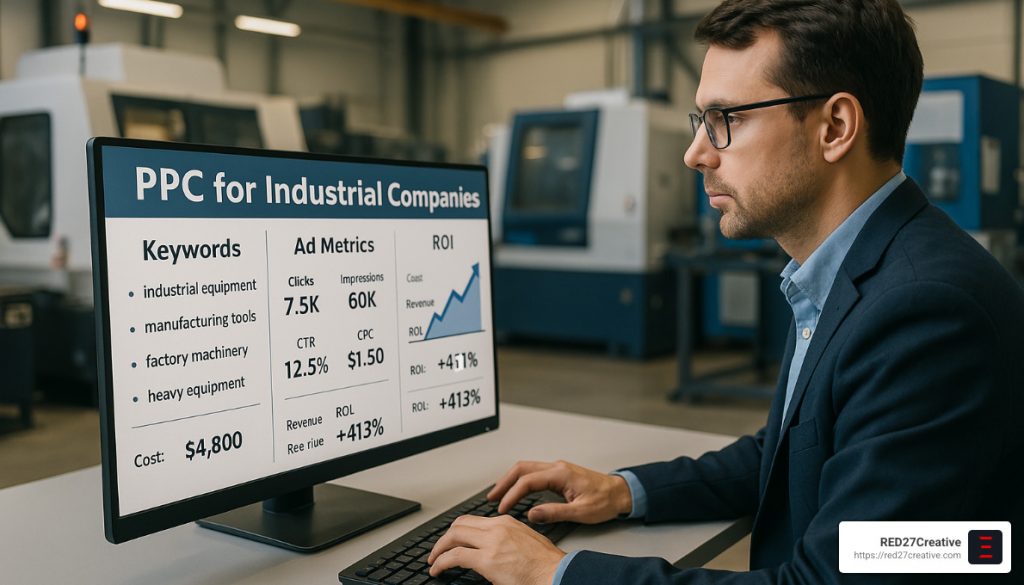
Why PPC for Industrial Companies is Crucial for Growth
PPC for industrial companies is a powerful digital marketing tool that helps B2B manufacturers and suppliers generate highly-qualified leads, increase online visibility, and achieve measurable ROI. To quickly optimize your PPC campaigns, focus on these essential steps:
- Conduct Thorough Keyword Research — Focus on long-tail industry-specific terms.
- Craft Technical Ad Copy — Address your audience’s pain points clearly.
- Design Conversion-Optimized Landing Pages — Ensure relevance and excellent user experience.
- Use Negative Keywords Effectively — Avoid irrelevant clicks to save budget.
- Continually Monitor Key Metrics — Track CTR, CPC, conversion rate, and ROAS to refine your strategy.
Industrial companies face unique challenges—like highly technical products and long sales cycles—that traditional marketing methods often can’t tackle effectively. PPC advertising allows you to reach your ideal customers precisely when they’re searching for your solutions, resulting in highly targeted leads and more efficient budget use. As one satisfied industrial company summed it up:
“Thanks to your PPC ads, we had the best month of lead generation I’ve ever seen.”
I’m Kiel Tredrea, a strategic marketing leader and founder of RED27Creative, with over 20 years of experience managing PPC for industrial companies. I’ve successfully developed and optimized PPC campaigns focusing on targeted lead generation and measurable returns.
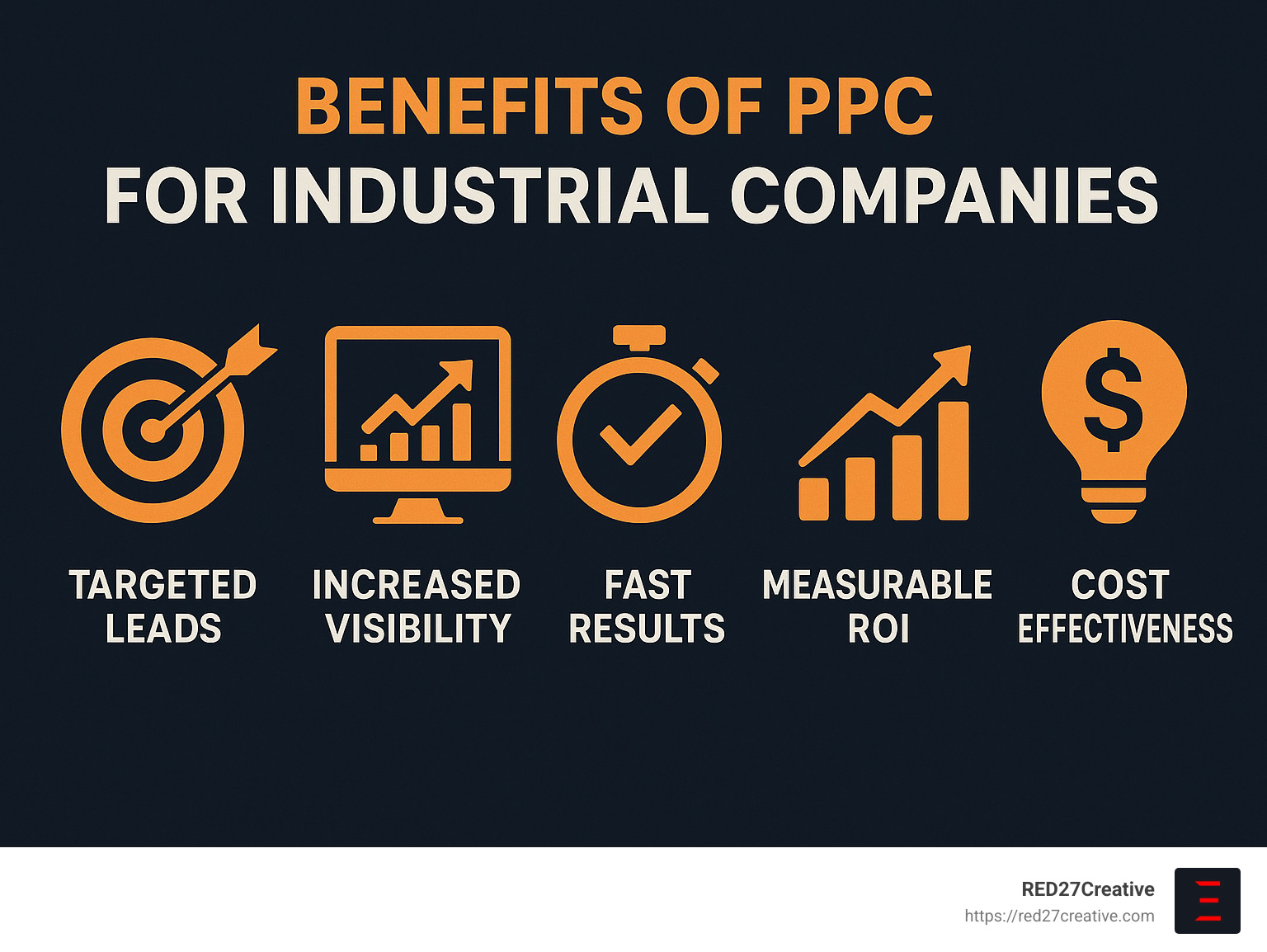
Here’s a quick infographic summarizing the key benefits of PPC advertising for industrial companies:
PPC for industrial companies definitions:
– Digital marketing for manufacturers
– digital marketing for manufacturing companies
– lead generation for manufacturing companies
Understanding PPC Power for Industrial Companies
Pay-per-click (PPC) advertising might sound technical—but trust me, it’s simpler than it seems. At its heart, PPC is a digital marketing method where you pay for each click your ads receive, effectively buying highly targeted visits to your website rather than waiting for organic traffic.
If you’re operating in the industrial sector—where your customers are often looking for specialized, technical solutions—PPC advertising is like having a neon sign that lights up exactly when decision-makers are searching for products or services like yours.
The real magic behind PPC for industrial companies boils down to one word: precision. Traditional marketing tactics often cast a wide net, hoping to catch a few interested leads. PPC flips the script, allowing you to zero in on very specific, industry-focused keywords. That way, you’re connecting directly with potential customers actively searching for products that match your expertise.
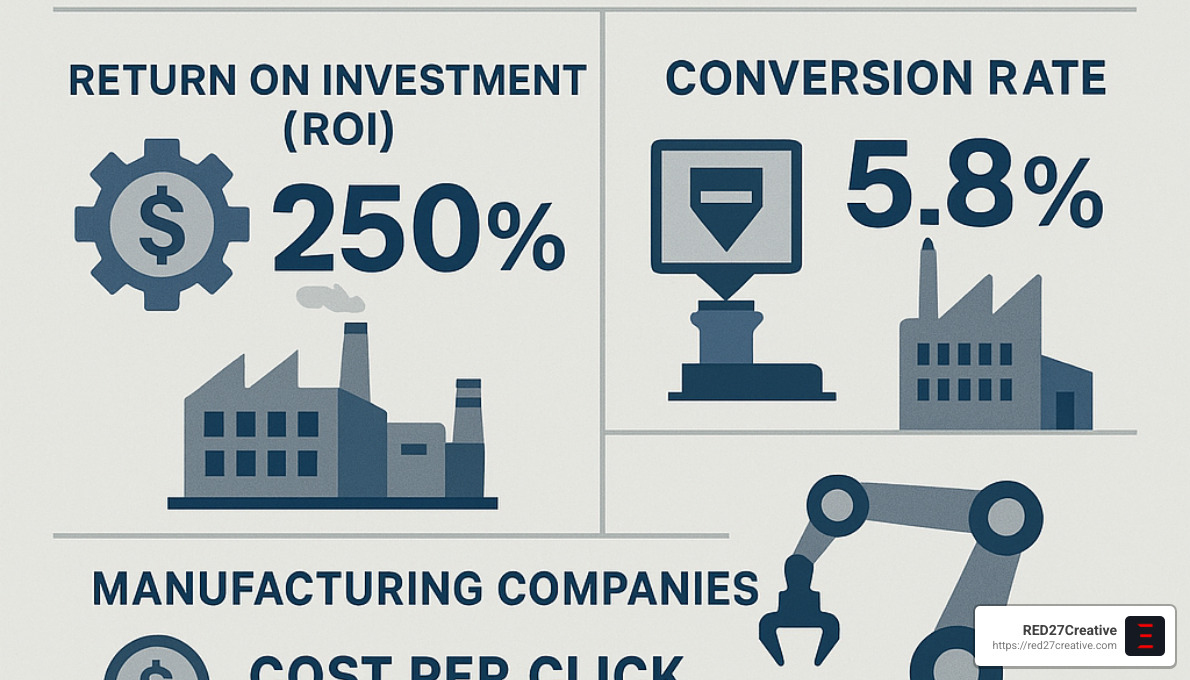
Recent industry data shows that manufacturing PPC ads typically have a click-through rate (CTR) around 2%, with conversion rates near 2.1%. While these figures might initially seem modest, they’re actually impressive because each click represents a highly qualified lead with genuine purchasing intent. In the industrial sector, each conversion can mean substantial revenue, making every click count.
The Role of PPC in Industrial Marketing
When it comes to industrial marketing, generating high-quality, qualified leads is often the toughest nut to crack. That’s precisely where PPC shines. With PPC, your ads target specific technical terms and industry jargon that your potential buyers actively search for. This ensures you’re not just getting traffic—you’re getting the right traffic.
Another advantage is how PPC boosts your visibility, especially in competitive industrial markets. Often, searches for industrial solutions are dominated by well-established companies. PPC campaigns level the playing field, allowing even smaller manufacturers and suppliers to appear beside—or even above—larger competitors in search results.
Speed matters too. While strategies like SEO and content marketing deliver great results over time, PPC provides immediate visibility. Launch your campaign today, and your targeted customers can start finding you immediately—no waiting involved.
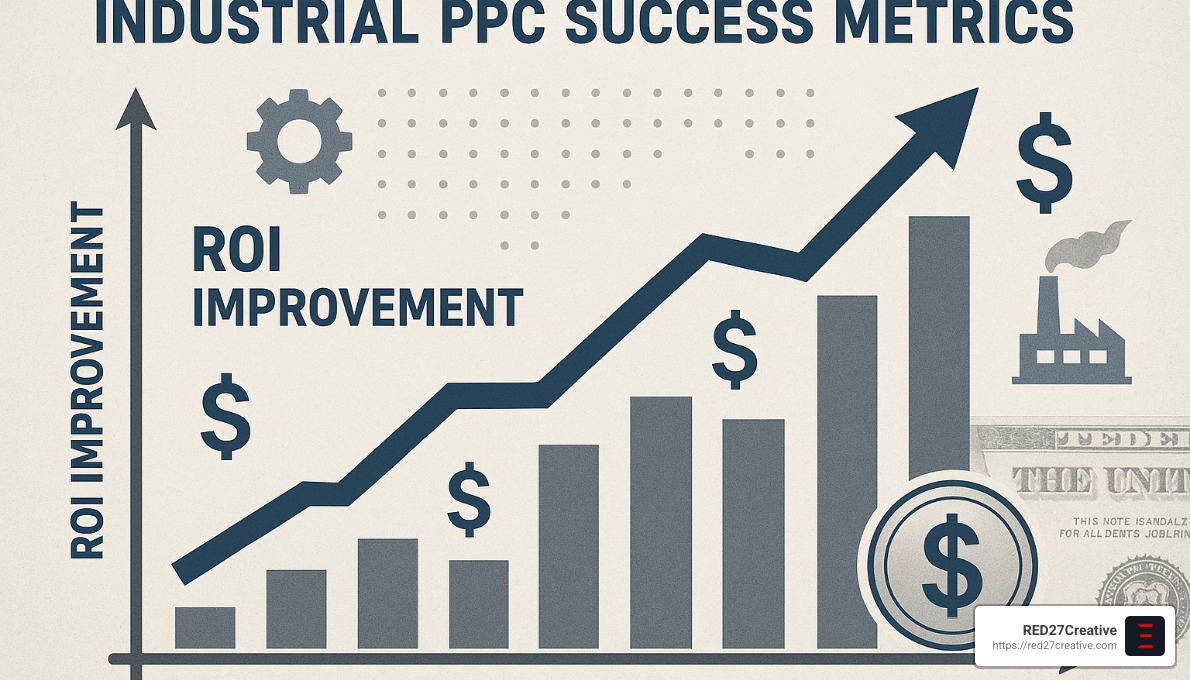
Additionally, PPC campaigns deliver measurable ROI, which is essential for tight industrial marketing budgets. Industry benchmarks indicate industrial businesses typically earn around $2 for every $1 spent on PPC—representing a solid 2x ROI.
One manufacturing client summed it up nicely after implementing PPC:
“We’ve seen a 129% increase in monthly online leads after refining our PPC tactics. The ability to target specific technical terms has transformed our lead generation process.”
Why PPC is Essential for Industrial Companies
Industrial marketing is uniquely challenging—you’ve got extended sales cycles, niche markets, and multiple decision-makers to steer. Here’s where PPC for industrial companies becomes especially powerful.
Industrial sales cycles can take a long time, often involving months of consideration and multiple stakeholders. PPC helps by ensuring your brand remains visible at every stage of the buying journey, with custom messaging for each phase of the decision-making process.
Because industrial solutions are often highly specialized, niche targeting is essential. PPC allows you to precisely target terms your ideal customers search for—like “precision CNC aluminum parts” or “industrial silica dust vacuum systems.” You’re speaking directly to the exact audience that matters most.
Finally, PPC is incredibly effective at reaching decision-makers. Platforms like LinkedIn Ads, for instance, let you target users based on their job titles, industries, or even company size. You can ensure your ads appear directly in front of procurement managers, engineers, and C-suite executives—the people with actual decision-making power.
Considering that up to 70% of B2B buyers complete most of their research online before ever contacting you directly, PPC ensures your company is front and center during this critical research phase. Being visible at just the right time positions your business as the go-to provider when buyers are ready to move forward.

Curious to learn more about digital marketing for manufacturers or how PPC can boost your lead generation? Check out these helpful resources on our website:
- Digital marketing for manufacturers
- Digital marketing for manufacturing companies
- Lead generation for manufacturing companies
Key Components of an Effective PPC Campaign
When it comes to creating successful PPC for industrial companies, you can’t just throw some keywords together and hope for the best. Trust me, I’ve seen too many manufacturing companies waste their budgets that way! Let’s walk through the essential elements that will transform your industrial PPC campaigns from money-drainers to lead-generating machines.
Conducting Effective Keyword Research for PPC for Industrial Companies
Think of keyword research as the foundation of your PPC house—if it’s shaky, everything else will eventually collapse. For industrial companies, this process requires extra attention because of the technical nature of what you’re selling.
Long-tail keywords are your secret weapon here. Instead of competing for broad terms like “air compressors” (which might cost you a whopping $15 per click!), you’ll get much better results targeting phrases like “industrial rotary screw air compressors for manufacturing.” Yes, it’s more specific, but at around $8 per click, you’re not just saving money—you’re connecting with people who know exactly what they want.
The industrial world speaks its own language, and your keywords should reflect that. Terms like “5-axis CNC machining services” or “ASME-certified pressure vessel fabrication” might sound like gibberish to the average person, but they’re music to the ears of the procurement managers and engineers you want to reach.
Finding these golden keywords doesn’t have to be guesswork. Several excellent tools can help you uncover what your ideal customers are searching for:
- Google Keyword Planner
- SEMrush
- Ahrefs
- Moz Keyword Explorer
- Wordstream’s Free Keyword Tool
I love the story of an industrial vacuum equipment company that switched from targeting general terms to the specific phrase “silica dust vacuum.” Not only did they cut their cost-per-click, but that landing page quickly became one of their top 20 converting pages. That’s the power of getting specific with your PPC for industrial companies!
Remember to consider search intent when selecting keywords. A term like “industrial metal supply” might get lots of searches, but are they all from legitimate business buyers? Adding modifiers like “wholesale,” “bulk,” or “commercial” helps filter out the DIY hobbyists and attract serious B2B prospects.
Crafting Compelling Ad Copy for Industrial Audiences
Industrial buyers aren’t looking to be entertained—they want solutions to specific problems. Your ad copy needs to speak their language and address their unique concerns.
Technical language isn’t just acceptable in industrial PPC ads—it’s expected. Using industry terminology correctly signals to potential clients that you know what you’re talking about. When an engineer sees that you understand the difference between milling and turning, or that you’re familiar with ISO standards relevant to their industry, they’re much more likely to trust you.
Always address specific pain points that keep your prospects up at night. Are they struggling with equipment downtime? Component durability issues? Supply chain reliability? Speak directly to these challenges: “Struggling with durable parts for high-wear equipment? Find custom solutions built to last. Contact us now!”
In the industrial world, certifications and compliance matter enormously. Mentioning your ISO 9001 certification, ASME compliance, or OSHA standard adherence can instantly lift your credibility and reassure potential clients about your quality standards.
Don’t forget to include strong calls-to-action that make sense for the industrial buying process. Rather than generic “Learn More” buttons, use specific CTAs like “Request a Custom Quote,” “Download Technical Specifications,” or “Schedule an Engineering Consultation.”
Industrial buyers are typically engineers, procurement specialists, or technical managers who value substance over style. They want precision, reliability, and expertise—not marketing fluff. Keep your ad copy clear, factual, and focused on how your capabilities solve their specific challenges.
Designing Landing Pages That Convert
One of the biggest mistakes I see in PPC for industrial companies is directing all that carefully targeted traffic to a generic homepage. That’s like inviting someone to a steak dinner and serving them a buffet—they might eventually find what they want, but they’ll probably leave first.
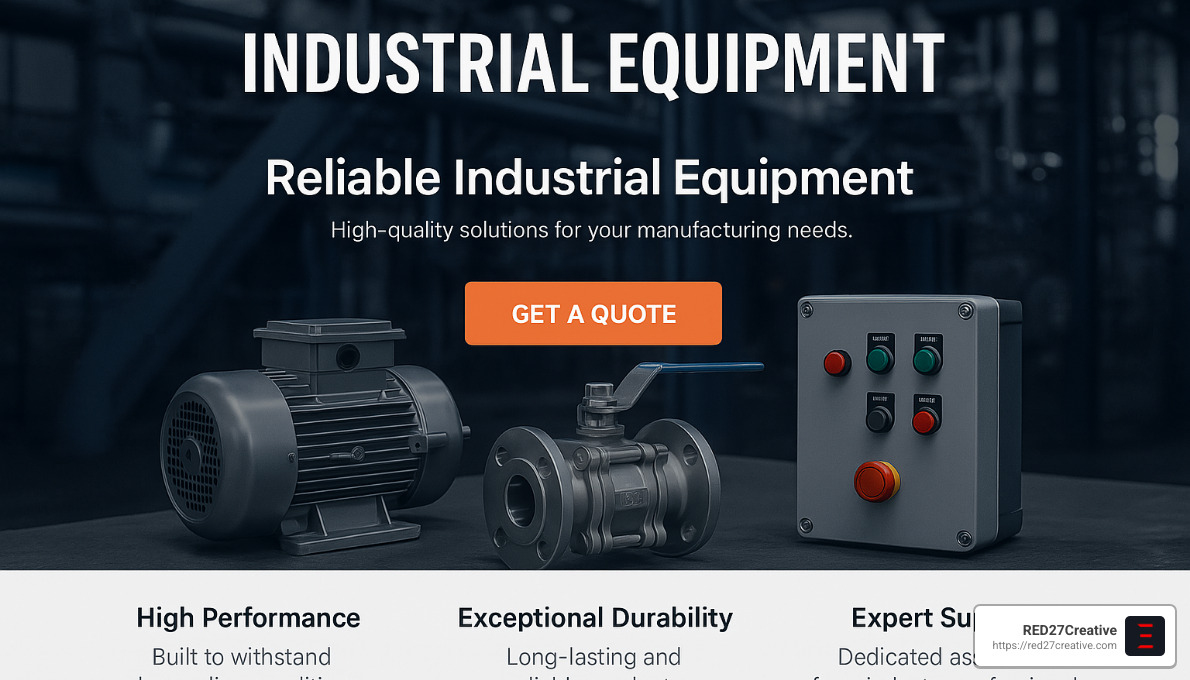
Your landing pages should feel like they were created specifically for the person who just clicked your ad. If someone clicks on an ad for “custom steel fabrication,” they should land on a page that’s all about your custom steel fabrication capabilities—not your company history or full service catalog.
Relevance is non-negotiable. The content on your landing page must directly connect to the ad that brought visitors there. This not only improves your conversion rates but also boosts your Quality Score in Google Ads, potentially lowering your cost per click.
Industrial buyers need to quickly understand what sets you apart. Is it your precision tolerances? Your rapid turnaround times? Your specialized equipment? Make your value proposition immediately clear so they know they’ve come to the right place.
Technical specifications are the meat and potatoes of industrial landing pages. Include relevant details about materials, tolerances, compliance information, and capabilities. Engineers and procurement specialists often need this information to determine if your solution meets their requirements.
Keep your landing page navigation simple. Each additional link is an exit opportunity that could lead potential customers away from converting. Consider removing your standard site navigation on landing pages to keep visitors focused on the action you want them to take.
Trust signals are particularly important in the industrial sector. Include relevant certifications, client logos (especially recognizable names in your industry), case studies, and testimonials from other industrial companies. These elements help overcome the natural caution of industrial buyers who often have a lot riding on their purchasing decisions.
With more professionals conducting research on mobile devices, mobile optimization is no longer optional. Ensure your landing pages load quickly and function perfectly on smartphones and tablets, even when viewed from the shop floor or a construction site.
Speaking of loading speed, industrial landing pages often include technical diagrams and detailed images that can slow things down. Optimize these elements for fast loading to prevent visitor abandonment. Every second of delay can reduce conversions.
Finally, focus on a single, clear call-to-action. Do you want visitors to request a quote? Download a specification sheet? Schedule a consultation? Pick one primary action and make it stand out visually on the page.
One manufacturer I worked with saw a 7% increase in conversions and a 12% reduction in cost-per-conversion after simply refining their landing pages to better match their ad messaging. These seemingly small adjustments can make a big difference to your bottom line when running PPC for industrial companies.
How to Optimize Your PPC Campaign for Industrial Companies
Once you’ve laid the groundwork for your PPC for industrial companies campaign, the real work begins. Optimization isn’t a one-time task—it’s an ongoing journey that can transform good results into exceptional ones. Think of it as fine-tuning a precision machine; small adjustments can make a significant difference in performance.
Utilizing Negative Keywords to Improve Campaign Efficiency
Let me tell you about the unsung heroes of industrial PPC campaigns: negative keywords. These powerful filters tell advertising platforms which search terms should not trigger your ads, helping you avoid wasted clicks and preserve your precious marketing budget.
For industrial companies, negative keywords are particularly valuable because many technical terms can have dual meanings or attract consumer searches. Imagine you manufacture commercial-grade air compressors—you probably don’t want your ads showing up for people searching for small DIY models. You might add negative keywords like “DIY,” “home use,” “portable,” “small,” “cheap,” or “rental” to keep your ads focused on qualified business buyers.
I recently worked with an industrial packaging company that diligently built a list of over 1,684 negative keywords. This extra effort ensured their ads only appeared for businesses seeking high-volume contract packaging solutions—not individual consumers looking for shipping supplies. The result? Their cost per qualified lead dropped by nearly 40%.
“Don’t ignore negative keywords. They’re just as important as your targeted keywords—perhaps even more so for controlling costs. Most manufacturers throw cash at Google Ads like they’re playing monopoly – and lose big.”
Make it a habit to regularly review your search term reports. Look for irrelevant terms triggering your ads and add them to your negative keyword list. This simple practice can dramatically reduce wasted spend and improve your campaign’s efficiency. Many of our industrial clients are surprised by how much this single optimization tactic improves their results.
A/B Testing for Continuous Improvement
In PPC for industrial companies, gut feelings aren’t enough. A/B testing (or split testing) provides the concrete data you need to make smart decisions about your campaigns. It’s like having a scientific laboratory for your advertising—you create multiple versions, measure the results, and follow the evidence.
When running A/B tests for industrial PPC campaigns, focus on these key elements:
Ad Headlines can be tested with different approaches—perhaps one highlights a specific technical capability while another focuses on problem-solving. I’ve seen industrial clients test headlines like “ISO 9001 Certified Metal Fabrication” against “Custom Metal Solutions for Challenging Applications” to see which resonates better with their audience.
Ad Descriptions offer another testing opportunity. Try different calls-to-action, benefit statements, or technical specifications. Sometimes a simple change from “Request a Quote” to “Get Custom Specifications” can significantly improve click-through rates for industrial buyers.
Landing Page Elements should also be tested methodically. The layout, form length, technical content presentation, and calls-to-action can all impact conversion rates. One manufacturing client finded that adding detailed engineering specifications directly on their landing page (rather than requiring a download) increased form submissions by 23%.
Bid Strategies deserve testing too. Compare manual bidding versus automated strategies to find the most cost-effective approach for your industrial keywords.
When conducting A/B tests, change only one element at a time so you can clearly identify what’s driving improvements. And be patient—industrial PPC campaigns often have lower traffic volumes than consumer campaigns, so you might need to run tests for 60-90 days to gather statistically significant data.
One of our manufacturing clients tested different technical specifications in their ad headlines and saw their click-through rate jump by 39% with a 7.37% improvement in conversion rate. Small changes can lead to big results!
For more insights on using data to drive your marketing decisions, check out our guide on The Impact of Data-Driven Marketing Strategies.
Measuring Key Performance Metrics in PPC for Industrial Companies
You can’t improve what you don’t measure. For PPC for industrial companies, tracking the right metrics is essential for making informed optimization decisions. Let’s explore the KPIs that really matter for industrial marketers:
Click-Through Rate (CTR) shows the percentage of people who click your ad after seeing it. While consumer campaigns might aim for CTRs of 5% or higher, industrial PPC campaigns typically see CTRs around 2-3%. Don’t be discouraged by this—industrial searches are often more specific and qualified.
Cost Per Click (CPC) reflects how much you’re paying for each click. Industrial terms can be quite variable, ranging from $1.38 for awareness-stage terms to $7.90 or more for high-intent keywords like “custom precision machining service quote.” These higher costs are often justified by the value of industrial leads.
Conversion Rate is perhaps the most critical metric—it shows the percentage of visitors who complete your desired action. Manufacturing PPC campaigns average around 2.1-3.4% conversion rates. While this might seem low compared to e-commerce, each industrial lead can be worth thousands or even millions in potential business.
Cost Per Acquisition (CPA) tells you how much you’re paying for each conversion. This number varies widely by industry, but knowing your CPA helps you determine if your campaign is economically viable.
Return on Ad Spend (ROAS) measures how much revenue you generate for every dollar spent on PPC. Industrial companies should aim for at least a 2:1 ratio (200% ROAS), though many of our clients achieve 4:1 or better once their campaigns are fully optimized.
Quality Score is Google’s rating of your keywords and ads, affecting both your CPC and ad position. For industrial companies, improving quality scores through relevant ad copy and landing pages can significantly reduce costs over time.
Impression Share shows what percentage of available impressions your ads are capturing. If you’re missing out on potential impressions due to budget or rank issues, you might be leaving opportunities on the table.
For industrial companies with longer sales cycles, it’s also crucial to look beyond immediate conversions. Track metrics like lead quality, sales cycle length for PPC-generated leads, and customer lifetime value from PPC channels. These downstream metrics help you understand the true impact of your campaigns.
One industrial parts supplier I worked with tracked these comprehensive metrics and demonstrated a 150% year-over-year increase in ROI from their PPC campaigns while simultaneously reducing cost per lead by 23%. That’s the power of measuring what matters and optimizing accordingly.
By focusing on these optimization strategies—negative keywords, A/B testing, and measuring the right metrics—you’ll be well on your way to maximizing the performance of your PPC for industrial companies campaigns. Optimization is a journey, not a destination. The most successful industrial marketers are those who continuously refine their approach based on real-world data.
Common Pitfalls to Avoid in Industrial PPC Campaigns
Even the most carefully planned PPC for industrial companies campaigns can fall short if you don’t watch out for common mistakes. By understanding these pitfalls, you can protect your budget, boost your campaign efficiency, and ultimately drive better results. Let’s explore the most frequent missteps—and how to steer clear of them.
Avoiding Overbidding on Keywords
Industrial keywords are often expensive because each lead can be valuable. Unfortunately, one of the biggest mistakes industrial companies make is overbidding. This quickly burns through your advertising budget without delivering proportional returns.
Instead of jumping straight in with high bids, start conservatively. Gradually adjust your bids upwards as you collect real performance data. Many businesses find that by improving ad relevance and landing page quality—both of which boost your Google Quality Score—you can achieve better ad positions without blowing your budget.
Another great approach is to target long-tail keywords. For instance, rather than bidding high on a broad, competitive term like “CNC machining,” look for more precise phrases such as “precision CNC aluminum parts for aerospace.” These narrower, more targeted searches typically have lower competition, cost less, and bring visitors further along the buying journey.
It’s also smart to use ad scheduling—known as dayparting—to ensure your ads appear when industrial decision-makers are actively searching, usually during regular working hours. Similarly, use geographical targeting to show ads only in regions your business actually serves. This helps you avoid wasting valuable PPC budget on unqualified clicks from outside your service reach.
One industrial company we worked with cut their cost per lead by 6% simply by shifting their strategy from broad, expensive keywords to highly specific technical terms. The bonus? Their conversion rate soared by an impressive 75%.
The Importance of Conversion Tracking
If there’s one mistake you absolutely can’t afford in PPC for industrial companies, it’s neglecting proper conversion tracking. Without tracking, you’re essentially navigating without a compass, unable to tell what’s working and what’s just draining your budget.
First, clearly define what counts as a meaningful conversion for your business. For industrial companies, valuable conversions often include quote requests, specification sheet downloads, consultation bookings, and even direct purchases for manufacturers with a transactional website.
Next, ensure you have proper tracking codes installed. Tools like Google Ads Conversion Tracking are essential for accurately measuring your campaign performance. Additionally, don’t overlook call tracking—industrial leads frequently prefer picking up the phone. Using dedicated call-tracking numbers can help attribute phone leads directly back to specific PPC ads and keywords.
Beyond initial conversions, evaluate post-click engagement metrics like time on site and pages viewed. This helps you understand lead quality and refine keyword targeting for better ROI. Connecting your PPC data to your CRM makes it even easier to track leads throughout their entire sales journey, from clicking your ad to becoming a loyal customer.
One manufacturing client of ours initially thought PPC was underperforming—that was until they implemented thorough conversion tracking. Suddenly, they finded a surprising 32% of their marketing-qualified leads actually came through PPC. Without tracking in place, they’d never have known the true value of their paid ads.
Simply put: conversion tracking isn’t optional—it’s essential. It enables data-driven decisions, helps optimize your marketing budget, and reveals what’s truly driving results. Don’t let your PPC campaigns run blind.
Maximizing ROI from Your Industrial PPC Campaign
When it comes to PPC for industrial companies, the ultimate goal isn’t just clicks—it’s driving meaningful revenue and growth. A carefully managed PPC campaign can deliver tremendous returns, especially in the industrial B2B sectors, where leads and conversions are highly valuable. Let’s explore how you can maximize your return on investment through smart, data-driven strategies and professional expertise.
Leveraging Data for Continuous Optimization
One of the greatest strengths of PPC advertising is the vast amount of actionable data it provides. For industrial businesses, which often see higher costs per click and significant revenue opportunities, effectively utilizing this data is crucial.
Start by regularly reviewing your campaign performance each week. This helps you spot patterns, pinpoint top-performing keywords, and identify ads or landing pages that need adjustments. PPC isn’t a “set it and forget it” strategy—consistent attention and fine-tuning ensure your dollars are being spent wisely.
Your keyword strategy should continually evolve. Regularly check your search term reports to identify new keyword opportunities and weed out poor performers. If you’re seeing irrelevant clicks eating up your budget, don’t hesitate to pause or adjust bids on those keywords.
Speaking of budgets, always allocate more spend toward your highest-performing campaigns and keywords. If a specific ad group consistently generates qualified leads, boost your investment there and scale back in weaker areas.
Dive deep into audience insights. Understanding who clicks your ads—by role, industry, or even geographic location—will help refine your targeting and create more relevant, persuasive messaging.
Keep an eye on your competitors too. Monitoring how they position themselves and where they invest their PPC budget can inform your own strategy, helping you stay one step ahead.
Finally, don’t ignore seasonal fluctuations. Most industrial sectors experience periods of high and low demand. Analyze historical data to anticipate these trends, then adjust campaigns proactively to maximize your ROI during peak seasons.
Leveraging data doesn’t just boost short-term performance. Over time, it cultivates steady growth and long-term efficiency. One industrial parts supplier, for instance, applied a rigorous data-based approach and saw their PPC return on investment jump an impressive 150% year-over-year, alongside a 75% increase in conversions.
If you’re curious about integrating data-driven methods across other marketing areas, check out our insightful guide: Marketing Automation Simplifies Your Efforts.
The Advantages of Partnering with PPC Experts
Managing PPC campaigns can be complex and time-consuming—especially in highly specialized industries. Many industrial companies find partnering with PPC experts to be a game-changer, open uping better performance while saving valuable resources.
One key benefit of working with PPC specialists is their specialized expertise. PPC platforms like Google Ads continually evolve, rolling out new tools, features, and best practices. Dedicated PPC professionals stay ahead of these changes, leveraging new opportunities to benefit your campaigns and quickly adjusting strategies when needed.
Another advantage is industry knowledge. It helps tremendously to have PPC experts who understand the unique language, longer sales cycles, and specific buying behaviors in industrial markets. They’re able to craft targeted, technical messaging that resonates deeply with your audience, generating more qualified leads.
Outsourcing your PPC management also means significant time savings for your internal team. Instead of spending hours analyzing keywords, budgets, and ad copy, your employees can focus on what they do best—delivering great products and services to your clients.
Professional PPC managers often bring advanced tools and techniques to the table. These sophisticated resources can be expensive and difficult to manage in-house, but PPC specialists have them ready to go, giving you deeper insights and more refined targeting capabilities.
An external team also provides an objective perspective. When you’re deeply involved with your business, it’s easy to overlook opportunities or weaknesses. PPC experts bring fresh eyes to your campaigns, spotting growth opportunities and areas for improvement you might miss.
One manufacturing company summarized their experience partnering with PPC specialists clearly:
“We’ve been utilizing PPC experts for at least 5 years now. They’re a fantastic organization. What really sets them apart is they genuinely take the time to understand our business and objectives.”
At RED27Creative, we specialize in Google Paid Search PPC for industrial companies. We’re here to ensure your PPC campaigns are precisely tuned, expertly managed, and continually optimized—ultimately driving high-quality leads and measurable business growth.
Frequently Asked Questions about PPC for Industrial Companies
What is PPC and how does it benefit industrial companies?
Pay-Per-Click (PPC) advertising is a targeted online marketing method where businesses pay each time someone clicks on their ad. For industrial companies, this approach is especially powerful because it connects you directly with decision-makers precisely when they’re looking for your specialized products or services.
Specifically, PPC for industrial companies delivers immediate visibility in online searches, precise targeting of technical and industry-specific keywords, and highly measurable returns on investment. Typically, industrial companies see around a 2x ROI, earning about $2 for every $1 spent on well-optimized campaigns. If you’ve ever searched for something like “precision CNC machining services” and seen ads right at the top, that’s PPC in action.
How can industrial companies effectively research keywords for PPC?
Keyword research for industrial PPC is all about finding the technical terms your audience uses when looking for solutions. The trick is to go beyond broad phrases and dig into specific, detailed searches known as long-tail keywords. For example, rather than simply targeting “CNC parts,” aim for something like “precision CNC aluminum parts.”
Start your research with tools like Google Keyword Planner to uncover relevant industrial terms and phrases. Look closely at the technical specifications and industry certifications your customers value, and incorporate those into your keywords. Also, don’t forget about negative keywords—these help filter out irrelevant searches (like DIY or consumer-oriented queries) and stretch your advertising dollars further.
Regularly review your search term reports. This lets you spot new keyword opportunities and fine-tune your strategy. Keeping tabs on competitor keywords can also reveal gaps and opportunities for your campaigns, ensuring you’re always staying ahead of the game.
What metrics should industrial companies track to measure PPC success?
When running PPC campaigns, especially in the industrial sector, tracking the right metrics is key to understanding performance and ensuring profitable outcomes. Key metrics industrial companies should keep an eye on include Click-Through Rate (CTR), typically averaging 2-3%, and Conversion Rate, which often ranges between 2.1-3.4% for manufacturing campaigns.
Monitoring your Cost Per Click (CPC) is essential too, as industrial terms can range widely—from around $1.38 per click up to $7.90 or even more for highly competitive keywords. Additionally, tracking your Cost Per Acquisition (CPA) helps you see exactly how much you’re spending per lead or sale, while Return on Ad Spend (ROAS) (aiming for at least a 200% return, or a 2:1 ratio) gives you a clear picture of your campaign profitability.
Google also assigns a Quality Score to your ads, based on the relevance and quality of your keywords and landing pages. A higher score can mean lower costs and better ad positions, making this an important metric to track.
Since industrial sales cycles can be lengthy, it’s crucial to also measure the quality and value of your leads over time. Pay close attention to whether PPC-generated leads are turning into actual customers, how quickly they move through your sales funnel, and what their total lifetime value is to your business.
By consistently tracking these key metrics, you’ll have the insights you need to optimize your PPC for industrial companies campaigns, ensuring that every advertising dollar delivers maximum impact and ROI.
Conclusion
PPC for industrial companies isn’t just another marketing buzzword—it’s a powerful strategy to help you reach the right customers, drive qualified leads, and truly boost your business growth. When done properly, PPC campaigns put your company directly in front of the exact decision-makers who need your specialized products and services.
Throughout this guide, we’ve explored all the vital elements of successful PPC campaigns, from conducting thorough keyword research and using technical, laser-focused ad copy, to designing landing pages that speak directly to your audience’s needs. We also discussed how important it is to continually refine campaigns based on real data, ensuring your budget is spent wisely on tactics proven to deliver results.
If you take away just a few key insights, let them be these: specificity matters—target precise technical terms and speak clearly to decision-makers. Always choose quality over quantity, knowing that a few great leads will always outweigh many unqualified clicks.
Data is your friend—use it consistently to improve your campaigns, eliminate waste, and put your money where it counts. Align your messaging across ads and landing pages so your potential customers feel immediately understood. And of course, track your conversions beyond the initial click, so you can measure true ROI throughout your entire sales cycle.
At RED27Creative, we bring years of specialized expertise to creating and optimizing high-performing PPC for industrial companies campaigns. We proudly serve clients throughout the Chicago, Aurora, Naperville, and nearby regions, helping businesses like yours generate qualified leads and measurable, sustainable results from their advertising dollars.
Ready to take your industrial PPC strategy to the next level? We’d love to help. Get in touch today to find how our SEO Marketing Services and PPC expertise can empower your industrial business to thrive online.

Kiel Tredrea
https://red27creative.comTop Marketing Agency • Web, SEO & Leads • RED27Creative