Unlock Growth: Discover Leading Pay Per Lead Providers
Why Your Marketing Budget Needs a Pay-Per-Lead Strategy
A pay per lead company delivers potential customers to your business and charges you only when a qualified lead is provided–eliminating wasted spend on clicks that don’t convert. This performance-based model shifts risk away from you and puts accountability on the provider to generate real opportunities.
If you’re a marketing leader frustrated with agencies that promise results but deliver only reports, you’re not alone. 54% of B2B marketers struggle with improving lead quality and conversion rates, while 55% barely meet their lead generation targets. Traditional advertising models charge you for impressions or clicks–not outcomes. You pay whether the phone rings or not.
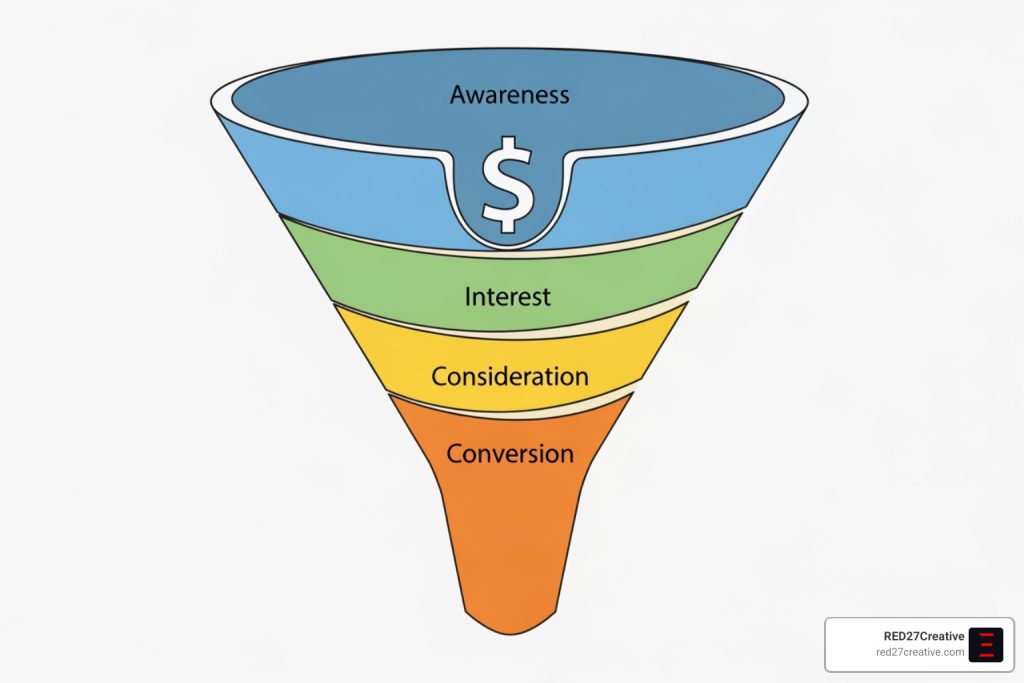
The pay-per-lead model flips that script. Instead of spending thousands on PPC campaigns where 90% of clicks bounce, you pay only when a qualified prospect enters your pipeline. This means predictable costs, higher-quality leads, and a direct line between marketing spend and revenue growth.
But not all pay-per-lead companies are created equal. Some share leads across multiple competitors. Others define “qualified” so loosely that your sales team wastes time chasing dead ends. The key is understanding how the model works, what to look for in a provider, and when it makes sense for your business.
I’m Kiel Tredrea, founder and president of RED27Creative, with over 20 years of experience building integrated marketing systems that connect SEO, web performance, and lead generation into measurable growth. Throughout my career, I’ve helped businesses evaluate and implement pay per lead company partnerships as part of holistic strategies that drive sustainable pipeline growth. Whether you’re exploring PPL as a supplement to your internal efforts or as a primary acquisition channel, understanding the landscape is critical to making the right choice.
Relevant articles related to pay per lead company:
What is a Pay-Per-Lead Company and How Does It Work?
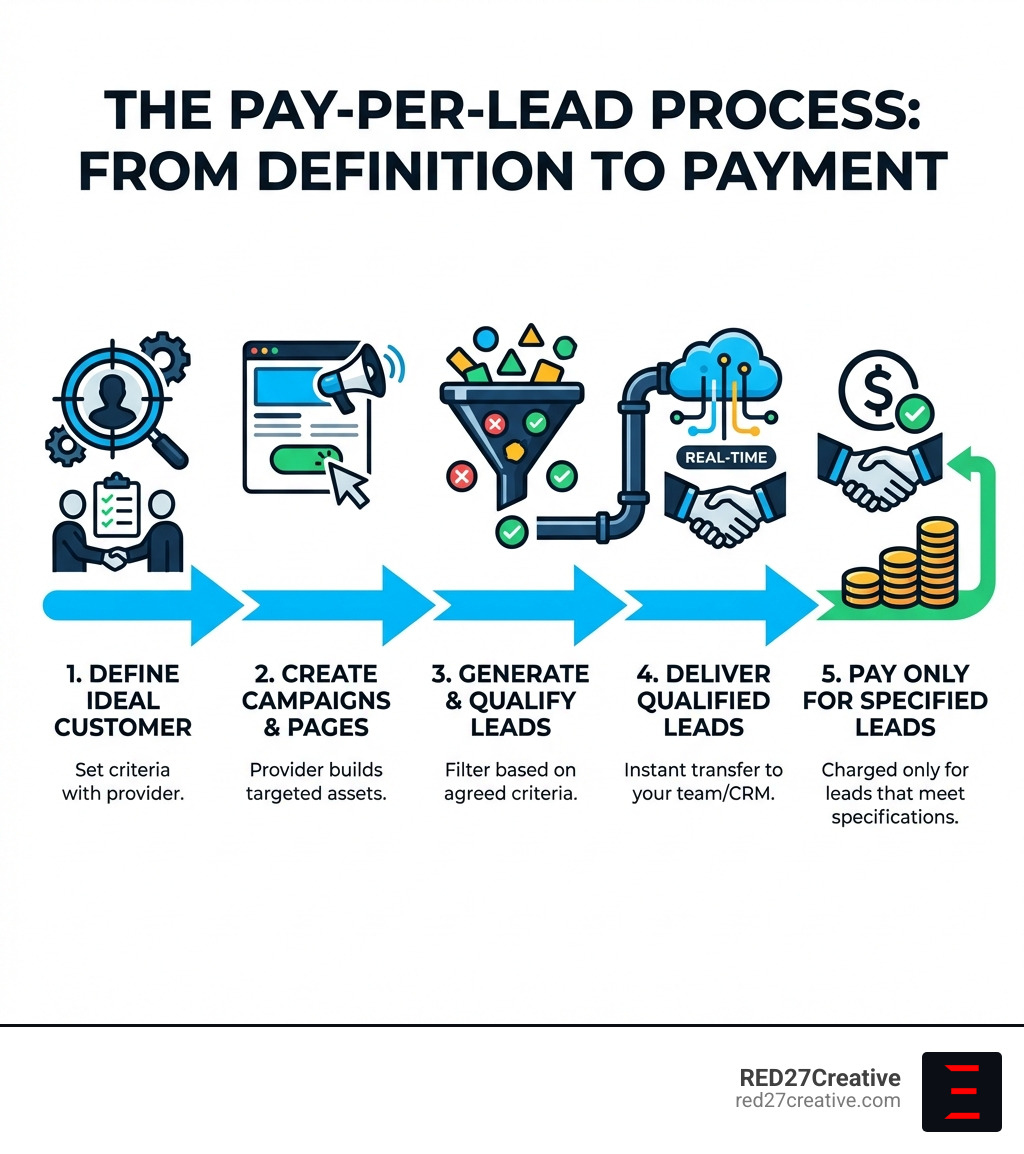
A pay per lead company operates on a performance-based model where you pay only for tangible results—actual leads meeting predefined criteria—instead of for clicks or impressions. This straightforward approach shifts financial risk from your business to the provider, ensuring a direct return on marketing investment, which is ideal for businesses in areas like Geneva, Naperville, or Chicago.
The process begins by defining a “lead” for your specific needs, creating a detailed profile of your ideal customer. The PPL company then uses various marketing channels (SEO, content, social media, email) to find prospects who fit this profile. When a potential customer shows interest, they undergo a qualification process, such as a survey or phone screening, to confirm they align with your services. Only after meeting all standards is the lead delivered in real-time to your CRM or sales team for quick follow-up.
This model’s beauty is its cost-effectiveness and predictable ROI. Since you only pay for qualified leads, your budget is tied to measurable outcomes, eliminating guesswork. With 79% of marketers prioritizing qualified leads, the PPL model directly addresses this goal by focusing on quality over quantity, helping you start more of the right conversations faster.
The Main Benefits of a PPL Model
A well-executed pay-per-lead strategy offers several compelling advantages. The most significant is reduced financial risk; unlike traditional advertising, you only invest when a qualified lead is delivered, protecting your budget and ensuring every dollar contributes to your sales pipeline.
This model also accelerates pipeline growth. Pay-per-lead services can fill your pipeline with quality leads faster than building from scratch, tapping into the specialized expertise of a PPL company. This allows your sales team to focus on closing deals rather than lead generation.
Scalability is another huge plus, especially for businesses in competitive markets like Aurora or St. Charles. PPL models let you adjust lead volume based on your capacity and goals without the overhead of an internal team, freeing up resources for core business activities.
The PPL model is built on paying for performance, not promises. As one source notes, “Brands should pay when their partners deliver true results, not empty promises.” This makes it an attractive option for businesses seeking a direct ROI. If you’re looking for a partner who delivers, we invite you to Let’s Talk.
Potential Drawbacks and Hidden Costs
While the PPL model has advantages, it’s crucial to understand potential drawbacks. Lead quality is a primary concern; some providers prioritize quantity over qualification, sending leads with low buying intent that waste your sales team’s time.
Another issue is shared versus exclusive leads. Some PPL companies sell the same lead to multiple businesses, increasing competition and lowering your conversion chances. We advocate for exclusive leads, especially for businesses in Plainfield or Oswego, to maximize your opportunity.
Brand control can also be a limitation. An external company generating leads may not align with your brand voice or messaging if not managed carefully. Clear communication and brand guidelines are vital.
Finally, be mindful of hidden costs and workflow challenges. Integrating leads into your CRM and ensuring prompt follow-up requires planning. Scrutinize the service level agreement (SLA) for setup fees, contract terms, lead qualification guarantees, and return policies to avoid unexpected costs or poor service.
How to Choose the Right Pay Per Lead Company for Your Business
Selecting the right pay per lead company is a critical decision. It’s about finding a strategic partner who understands your business and goals. We emphasize due diligence and transparency for businesses in Chicago and greater Illinois.
First, conduct a thorough vetting process. Look beyond pricing and dig into their methodology. A reputable provider will be transparent about their lead generation tactics, channels, and quality assurance. Ensure their methods align with your brand’s ethical standards.
Next, clearly define what a “qualified lead” means for your business and agree upon it before starting. This definition should include specific criteria indicating a strong conversion potential. Also, inquire about their policies for returning or replacing unqualified, unresponsive, or fraudulent leads.
Finally, review client testimonials and case studies, especially from businesses similar to yours. This provides real-world proof of their capabilities. For us, providing the ultimate B2B lead generation solution means building partnerships on trust and proven results.
Differentiating Reputable PPL Providers
Distinguishing a trustworthy pay per lead company requires a strategic approach. Reputable providers are committed to quality, compliance, and transparency.
A hallmark of a good provider is a robust lead verification process. They should validate contact information using tools like TrustedForm or RealValidation and methods like OTP PIN verification to ensure data accuracy and consent, minimizing wasted effort.
Data compliance is non-negotiable. Your partner must adhere to regulations like GDPR and TCPA, obtaining proper opt-in consent to avoid legal issues and protect your brand. Always ask about their compliance protocols.
We also suggest requesting sample leads or a trial period to assess quality firsthand. Understanding their traffic sources—whether they buy lists or generate interest through ethical marketing—provides insight into their methods and audience alignment.
Variations of the Pay-Per-Lead Model
The landscape of performance-based lead generation is diverse, offering several variations beyond the standard “pay per lead” model. Each variation is designed to deliver leads at different stages of the sales funnel, catering to specific business needs and sales processes.
Pay-Per-Qualified-Lead (PQL): This model requires paying only for leads meeting stringent criteria, indicating higher interest and a closer fit to your ideal customer. It ensures your sales team engages with prospects ready for a sales conversation, which is powerful for B2B businesses in areas like Batavia or Aurora.
Pay-Per-Appointment (PPA): Ideal for businesses with long sales cycles, this model means you pay only when a qualified appointment (e.g., a demo or consultation) is scheduled. It’s a bottom-of-funnel service that lets your sales team focus on conversion. We often help clients implement B2B appointment setting.
Pay-Per-Call (PPCall): Popular in service-based industries, this model charges for qualified inbound phone calls from interested prospects. It’s excellent for businesses that thrive on immediate interaction, like home service providers.
Pay-Per-Download (for content syndication): Common in B2B content marketing, you pay when a prospect downloads gated content like a whitepaper. These top-of-funnel leads have shown interest in your expertise and can be nurtured into sales opportunities.
Each model has unique advantages; the best choice depends on your sales process, audience, and desired lead quality.
Is a Pay-Per-Lead Model Right for You?

Deciding if a pay per lead company is right for you requires assessing your sales and marketing infrastructure. While PPL can be a strategic powerhouse, it’s not a one-size-fits-all solution.
PPL is a strategic fit if you have a clear ideal customer, a defined sales process, and a team that can follow up on leads quickly and effectively. It’s especially useful for scaling rapidly, testing new markets, or managing seasonal demand without building an in-house team. For businesses in competitive markets like Naperville or Plainfield, a consistent flow of opportunities is a game-changer.
However, PPL may not be ideal if your sales process is disorganized, your CRM isn’t optimized, or your team struggles with prompt follow-up. PPL leads have a short shelf life; their value diminishes if they aren’t acted on quickly. Early-stage businesses still refining their product-market fit may benefit more from building their own systems first for greater control and learning.
The key is to assess your sales readiness. A pay per lead company provides the fuel, but your internal engine must be ready to use it.
Best-Suited Industries for PPL
While the pay per lead company model can benefit a wide array of businesses, certain industries are particularly well-suited to thrive with this approach. These sectors often have clear customer needs, defined service areas, and a direct path from lead to sale.
- Home Services: Industries like HVAC, plumbing, and roofing are prime candidates. Homeowners often have immediate needs, making a qualified call or inquiry highly valuable for businesses in areas like Geneva and St. Charles.
- Legal Services: Lawyers specializing in areas like personal injury or family law benefit from pre-qualified leads from motivated clients seeking counsel.
- Financial Services: Insurance providers, mortgage brokers, and financial advisors can connect with individuals actively looking for their products or advice.
- Healthcare & Medical: Dentists, chiropractors, and specialized clinics can use PPL to attract new patients seeking specific treatments.
- B2B Tech & SaaS: Companies with high customer lifetime values find PPL, especially PQL or PPA models, effective for reaching decision-makers. This also applies to lead generation for manufacturing companies.
These industries share a clear value proposition, a defined audience, and a transactional nature that benefits from immediate, qualified engagement.
Alternative Lead Generation Strategies
While a pay per lead company is a powerful tool, it’s best integrated into a holistic marketing strategy. We believe in building unified marketing engines that combine PPL with other robust tactics.
One alternative is in-house SEO and content marketing. Optimizing your site and creating valuable content builds long-term authority and a sustainable inbound pipeline. Strategic PPC campaign management offers immediate traffic, but with over 90% of clicks bouncing, it highlights the value of paying for leads, not just clicks.
Social media lead generation on platforms like LinkedIn and Facebook can build brand awareness and capture leads through community engagement and content offers.
Finally, an in-house outreach team for cold email, calling, or LinkedIn outreach provides maximum control. Though it requires significant investment, it offers deep audience learning and unparalleled brand control. A hybrid approach, combining PPL with in-house efforts, is often most effective for sustained growth.
Understanding Lead Quality, Compliance, and Pricing
When engaging with a pay per lead company, three critical pillars underpin the success of your partnership: lead quality, compliance, and pricing. Understanding these elements in detail is crucial for maximizing your return on investment and protecting your brand.
Ensuring lead quality goes beyond simple contact information. It involves a multi-layered approach to verification and scoring. Reputable PPL providers employ rigorous methods to filter out unqualified or fraudulent leads. This can include:
- Data Validation: Checking email addresses, phone numbers, and physical addresses for accuracy.
- Behavioral Scoring: Assessing a prospect’s engagement with marketing materials or their expressed intent.
- Demographic/Firmographic Matching: Confirming that the lead aligns with your pre-defined ideal customer profile.
- Real-time Delivery: Providing leads immediately so your sales team can follow up while interest is highest.
For us, delivering generate qualified leads is about ensuring every lead has a genuine potential for conversion.
Data compliance is non-negotiable in today’s regulatory landscape. Your PPL partner must adhere to privacy laws like GDPR and TCPA, ensuring all leads are obtained with proper opt-in consent. This protects your business from legal repercussions and maintains your brand’s reputation for ethical practices. Always ask about their consent mechanisms and data storage policies.
Pricing for pay-per-lead services is determined by several factors, making it vary widely. The Cost-Per-Lead (CPL) depends on:
- Industry and Niche: Some industries have higher lead values and thus higher CPLs. For example, the CPL for leads within the tech industry is $208 per lead.
- Lead Qualification Level: The more qualified a lead (e.g., pay-per-appointment vs. basic contact info), the higher the cost.
- Exclusivity: Exclusive leads, which are not sold to your competitors, command a higher price.
- Volume: Larger lead volumes might sometimes come with a slight discount per lead.
- Geographic Targeting: Leads targeted to specific, high-demand areas like Chicago or Naperville might be more expensive than broader regional leads.
We always advise our clients to understand the full breakdown of pricing and what each cost component covers. Transparency here prevents surprises and helps you accurately calculate your potential ROI.
Frequently Asked Questions about Pay-Per-Lead Services
What is a “qualified lead” in a PPL model?
A qualified lead is a contact who meets pre-defined criteria agreed upon by you and the pay per lead company, such as accurate contact information, expressed interest, and alignment with your ideal customer profile. This ensures your sales team focuses on high-potential prospects.
How much do pay-per-lead services typically cost?
Costs vary by industry, lead exclusivity, and qualification level. Local home service leads may cost $25–$75, while highly qualified B2B leads can range from $100 to over $500 per lead, depending on the complexity of the target and the lead’s readiness to buy.
Is pay-per-lead better than pay-per-click (PPC)?
PPL and PPC serve different goals. PPL is lower risk if you want leads that directly translate into sales opportunities, as you only pay for actual prospects. PPC is ideal for brand visibility and top-of-funnel engagement, driving traffic that you then need to convert yourself.
Partner with an Expert for Sustainable Growth
In our journey to open up growth, we’ve explored the intricate world of the pay per lead company. We’ve seen its immense benefits—reduced risk, accelerated pipeline, and predictable ROI—balanced against potential drawbacks like lead quality concerns and the need for careful vendor selection. The key takeaway is that PPL, when implemented strategically, can be a powerful engine for customer acquisition, especially for businesses in dynamic markets like Chicago, Naperville, or Geneva.
At RED27Creative, we understand that true growth comes not from isolated tactics, but from a holistic, integrated approach. We don’t just see a PPL provider as a simple vendor; we view them as a strategic partner in building a unified lead generation system. Our expertise lies in connecting every part of your marketing—your website, SEO, local presence, and lead generation efforts—into one cohesive engine that drives measurable results.
We help businesses like yours steer the complexities of lead generation, ensuring that every marketing dollar contributes directly to your bottom line. Our data-driven strategies are designed to attract visitors, build trust, and convert opportunities into consistent, qualified leads. If you’re ready to move beyond empty promises and invest in marketing that truly works, we invite you to Explore our comprehensive lead generation services and find how we can build a sustainable growth path for your business.

Kiel Tredrea
https://red27creative.comTop Marketing Agency • Web, SEO & Leads • RED27Creative