The Future of Selling with AI Tools

Why Sales AI Tools Are Changing How B2B Teams Sell in 2026
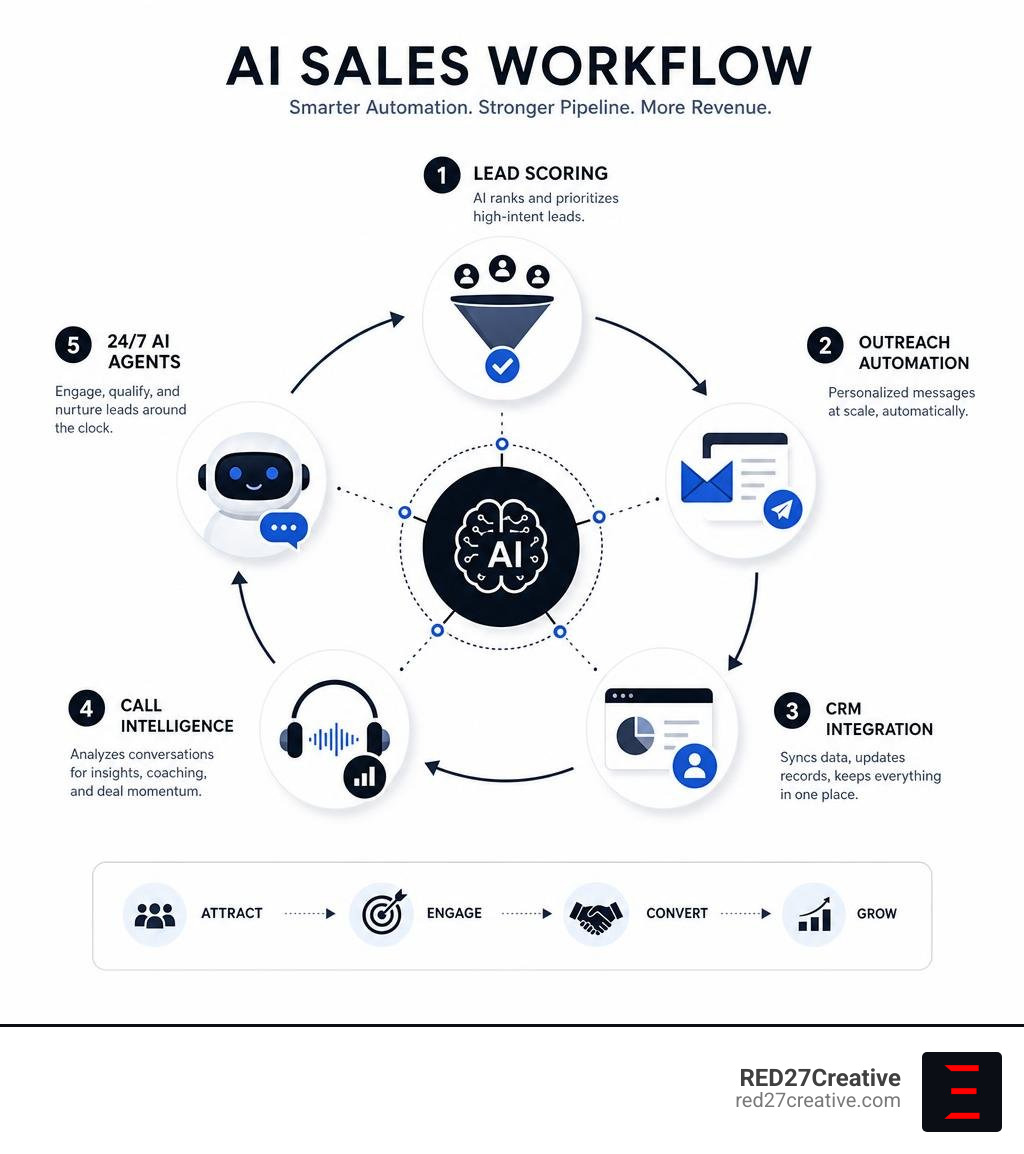
Sales AI tools are software platforms that use artificial intelligence to automate and improve key parts of the sales process — from finding leads to closing deals.
Here are the most impactful ways they help revenue teams right now:
| What They Do | How It Helps |
|---|---|
| Lead scoring and qualification | Prioritize high-intent prospects automatically |
| Personalized outreach at scale | Send tailored emails and messages without manual effort |
| Conversation intelligence | Analyze calls for coaching, objections, and patterns |
| Sales forecasting | Predict pipeline outcomes using historical data |
| 24/7 AI sales agents | Engage and qualify leads around the clock |
| CRM automation | Keep records clean and updated without manual entry |
Sales teams have always had too much to do. Prospecting, follow-ups, pipeline management, meeting prep — the list never ends. And most of that work never directly touches a customer.
That’s the problem AI is solving right now.
78% of B2B organizations have already adopted AI for sales. Yet fewer than half are using it in a way that actually moves the needle. The tools are there. The gap is in how they’re used.
Whether you’re a sales leader trying to hit quota faster or a business owner looking to scale without adding headcount, AI is no longer optional — it’s a competitive advantage.
I’m Kiel Tredrea, founder of RED27Creative and a marketing strategist with 20+ years of experience helping B2B and service-based businesses build smarter, more efficient growth systems — including implementing sales AI tools that connect prospecting, lead generation, and conversion into one measurable revenue engine. In the sections ahead, I’ll break down exactly which tools are worth your attention and how to put them to work in your business.
Sales ai tools vocab to learn:
How Modern sales ai tools Drive Revenue Growth
The ultimate goal of any sales team is to drive predictable, scalable revenue growth.
Modern sales AI tools make this possible by removing the guesswork from daily activities. Instead of relying on gut feelings, sales reps use machine learning models that analyze historical data, customer interactions, and market trends to make highly accurate recommendations.

When organizations implement artificial intelligence correctly, the financial impact is undeniable. Industry data shows that businesses adopting AI see their sales profits increase by 10% to 20%, alongside a 50% increase in overall leads and appointments booked.
These aren’t just minor adjustments; they represent a fundamental shift in how sales departments operate.
For example, companies using AI for Sales | Salesforce report 33% faster meeting preparation times.
Even better, they experience a 10% increase in overall win rates.
By utilizing features like Einstein Opportunity Scoring within their sales cloud, teams can easily identify at-risk pipelines and focus their energy on the accounts most likely to close, resulting in a 14% improvement in win rates.
Streamlining the Pipeline with sales ai tools
A healthy sales pipeline requires continuous movement.
Unfortunately, many sales reps spend up to 70% of their time on non-selling activities like manual data entry, building lists, and sending generic follow-up emails.
By deploying sales AI tools directly into your pipeline management, you can automate these tedious tasks and keep your pipeline flowing smoothly.
In the prospecting phase, AI algorithms scan millions of data points to surface high-intent accounts.
Instead of cold-calling random contacts, your reps receive prioritized lists enriched with buying signals.
Once those prospects enter your funnel, an Ai Chatbot Lead Generation system can automatically qualify them based on real-time behavior, budget parameters, and business needs.
Furthermore, AI-driven territory optimization ensures that leads are distributed fairly and strategically among your team.
Using natural language processing, sales operations managers can define logical groupings and rules for segments, allowing the AI to balance territories automatically.
To explore the best options for your prospecting workflow, check out this guide on the 7 Best AI Prospecting Tools to Empower Your Sales Team – SalesAi.
Enhancing Conversation Intelligence and Call Insights
Once a prospect is in the pipeline, the real work begins.
This is where conversation intelligence platforms shine.
Instead of sales managers spending hours listening to random call recordings, AI analyzes every single conversation automatically.
These tools flag key moments in real time, such as competitor mentions, pricing objections, or strong buying signals.
This deep level of call coaching helps reps refine their pitch on the fly.
It also ensures that winning strategies are documented and shared across the entire sales team.
For a comprehensive look at how top-performing revenue organizations utilize these insights, review the 10 of the best AI sales tools: 2026 edition – Highspot report.
By analyzing talk ratios, customer sentiment, and common objections, go-to-market teams can continuously optimize their messaging to align with exactly what buyers want to hear.
Key Categories of AI Sales Assistant Software
Not all sales AI tools are built for the same job.
To build an efficient tech stack, it is helpful to categorize these tools by their primary function.
Understanding the differences between email automation, call coaching, and content generation allows you to target specific friction points in your sales cycle.
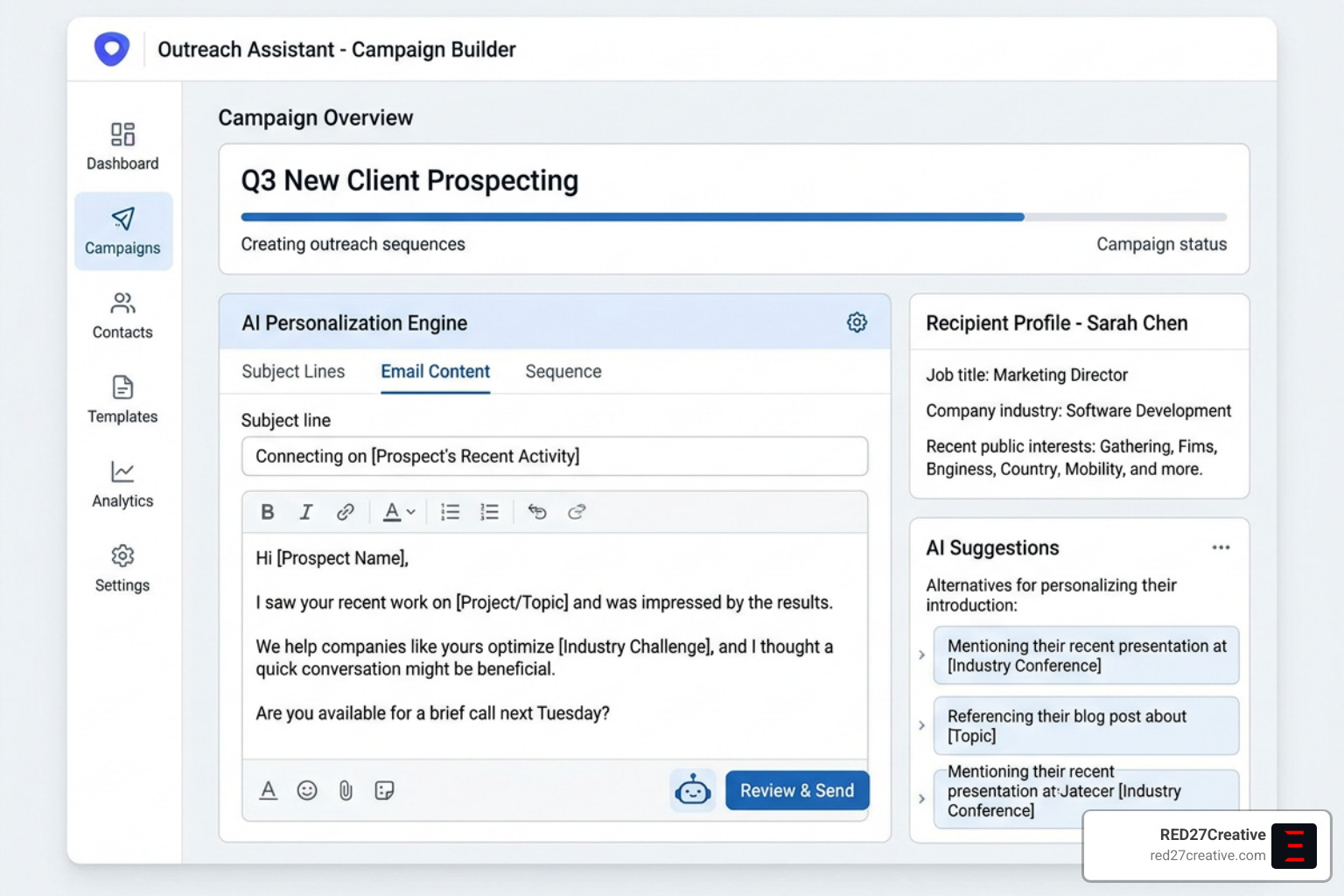
Here is a breakdown of the primary categories of AI sales assistants:
- Email Automation and Coaching: Tools like Lavender and Regie.ai act as real-time writing assistants. They score your emails based on deliverability, readability, and psychological impact, helping reps write highly personalized messages in seconds.
- Conversation Intelligence: Platforms like Gong.io and Dialpad specialize in call coaching. They transcribe meetings, analyze speaker sentiment, and pinpoint exactly why certain deals close while others stall.
- Lead Scraping and Enrichment: Software like Clay and Seamless.AI automates the process of finding and verifying contact information. They scan the web to find verified business emails and phone numbers, saving reps hours of manual research.
To find the perfect match for your team’s specific daily needs, you can read more about The best AI sales assistant software | Zapier, which highlights how standalone tools can be connected to automate your entire outreach workflow.
Autonomous AI Sales Agents for 24/7 Engagement
One of the most exciting developments in 2026 is the rise of autonomous AI sales agents.
Unlike traditional chatbots that simply repeat pre-written scripts, modern AI agents use advanced machine learning to hold natural, fluid conversations across multiple channels.
These agents can manage early-stage customer relationships entirely on their own.
They handle inbound inquiries, qualify leads, and even schedule meetings directly on your reps’ calendars.
Because they operate 24/7, your business never misses an opportunity to engage a high-intent visitor, even on weekends or holidays.
For companies that rely heavily on live conversations, platforms like AI Sales Agent That Closes Deals 24/7 | SalesCloser.ai show how AI can conduct discovery calls and product demonstrations in over 32 languages with native fluency.
This allows B2B teams to scale their global reach without the massive overhead of hiring international sales representatives.
Choosing the Right sales ai tools for Your Stack
With hundreds of new applications hitting the market, choosing the right software can feel overwhelming.
The secret is to avoid “shiny object syndrome” and focus on your team’s biggest friction points.
Start by mapping out your sales process and identifying where deals tend to stall or where reps spend the most non-selling time.
When evaluating vendors, ask these key questions:
- How does the AI learn from our specific data?
- Does it offer native integration with our existing CRM?
- What measurable outcomes can the vendor prove with similar clients?
At RED27Creative, we help local businesses across Chicago, IL, Naperville, IL, and Geneva, IL evaluate their technology needs.
We design Ai Chatbot Solutions For Businesses that align with existing workflows, ensuring high adoption rates and a clear path to return on investment.
We also build Custom Ai Chatbot Solutions that serve as a direct bridge between your website visitors and your sales pipeline.
For larger organizations, deploying an Ai Chatbot For Enterprise can unify data across sales, marketing, and customer service departments.
This ensures that your brand voice remains consistent across every single touchpoint.
Integrating AI with Existing CRMs and Workflows
An AI tool is only as good as the data it can access.
If your new software doesn’t talk to your CRM, your sales reps will end up doing more manual work to keep systems in sync.
Seamless integration is the key to unlocking the true power of artificial intelligence.
Most leading sales AI tools are built to integrate directly with major platforms like Salesforce, HubSpot, and Slack.
This allows the AI to automatically log calls, update deal stages, and send real-time alerts directly to your team’s communication channels.
| AI Tool Category | CRM Compatibility | Key Integration Feature |
|---|---|---|
| Enterprise CRM AI | Salesforce, Slack | Native pipeline forecasting and automated stage updates |
| Outbound Prospecting | HubSpot, Salesforce | Automatic contact enrichment and sequence triggering |
| Conversation Intelligence | Zoom, Teams, major CRMs | Auto-generated meeting summaries pushed directly to deal records |
Automating Back-Office Sales Operations
While front-line reps benefit from email assistants and call coaching, your sales back-office is where some of the biggest efficiency gains happen.
Processing orders, generating quotes, and managing complex contract documents can slow down your sales cycle significantly.
By automating these back-office tasks, you can reduce human error and speed up deal closure.
AI agents can read incoming purchase orders, extract key data points, and automatically enter them into your ERP or CRM system.
To compare how different tools handle these complex operational workflows, check out the Best AI Agents for Sales: Tool Comparison 2026.
Security, Compliance, and ROI of AI Sales Platforms
When dealing with customer data, security is non-negotiable.
Before adopting any new sales platform, your IT and procurement teams must verify that the vendor meets strict enterprise-grade security standards.
Look for tools that hold SOC 2 Type II certifications and are fully compliant with GDPR and CCPA regulations.
Additionally, always ensure the platform uses secure, OAuth-managed connections.
This ensures your CRM credentials are never exposed directly to the AI models.
When your data is secure, the return on investment becomes much easier to realize.
By combining secure data with intelligent automation, businesses can transform their bottom line.
To learn more about how these modern systems drive growth, read about how Ai In Marketing Transforms Business Growth.
Frequently Asked Questions About AI in Sales
How do AI tools improve sales lead qualification?
Sales AI tools analyze real-time prospect behavior, demographic data, and buying signals to score leads automatically. By identifying high-intent accounts instantly, AI ensures your sales reps focus their time on the prospects most likely to convert, eliminating manual research and cold-calling guesswork.
Can AI sales agents fully replace human sales representatives?
No, AI sales agents do not replace humans. Instead, they handle repetitive, early-stage tasks like lead qualification, meeting scheduling, and basic discovery. This frees up human sales professionals to focus on building deep relationships, negotiating complex deals, and applying strategic human judgment.
What security standards should enterprise sales AI tools meet?
Enterprise sales AI tools must hold SOC 2 Type II certification and maintain full compliance with GDPR and CCPA regulations. They should also feature robust data encryption, secure hosting, and OAuth-managed integrations to guarantee that sensitive customer data remains entirely protected.
Conclusion
The future of selling isn’t about working longer hours; it’s about selling smarter.
By integrating the right sales AI tools into your workflow, you can eliminate manual administrative work, gain deep insights into your customer conversations, and build a highly predictable revenue engine.
At RED27Creative, we specialize in building the digital foundations that make this level of growth possible.
From our offices in Geneva, IL, Batavia, IL, Aurora, IL, St. Charles, IL, Plainfield, IL, Oswego, IL, Naperville, IL, and Chicago, IL, we help businesses connect their websites, search visibility, and sales systems into one unified growth engine.
If you’re ready to stop wasting time on manual outreach and start generating consistent, qualified opportunities, we are here to help.
Explore our B2B Lead Generation Services or contact us today to schedule a strategic consultation. Let’s build a smarter way to sell, together.

Kiel Tredrea
https://red27creative.comTop Marketing Agency • Web, SEO & Leads • RED27Creative