Lead Generation Mastery: A Manufacturer’s Guide to B2B Success

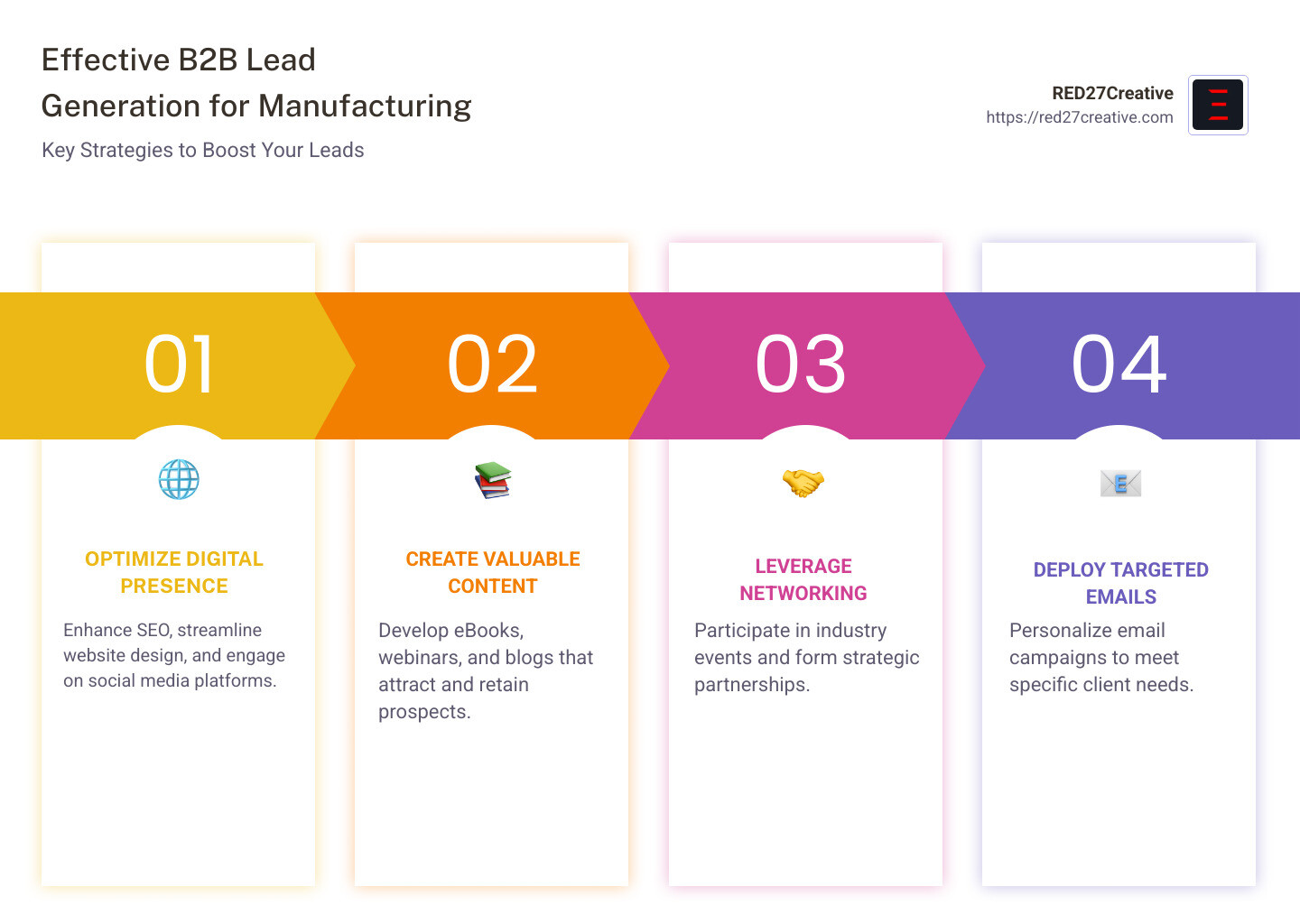
Generating b2b leads for manufacturing is crucial in today’s competitive market. To quickly improve your manufacturing lead generation, focus on these key strategies:
- Optimize your digital presence: Ensure strong SEO, user-friendly website designs, and active social media engagement.
- Create valuable content: Engage prospects with informative eBooks, webinars, and SEO-friendly blogs.
- Leverage networking: Use industry events and partnerships to connect with potential clients.
- Deploy targeted emails: Personalize campaigns that address specific needs and solutions.
The digital landscape is a game-changer for manufacturing companies committed to expanding their sales pipeline and fostering growth with high-quality leads. Companies must capitalize on digital marketing strategies to differentiate themselves and engage prospects. The focus on generating b2b leads for manufacturing empowers businesses to remain competitive by nurturing relationships and converting interested parties into loyal customers.
As we dive deeper into this guide, you’ll explore proven methods to amplify your reach, fostering robust digital connections that translate into business growth and profitability.
My name is Kiel Tredrea, a seasoned expert with experience in generating b2b leads for manufacturing. My journey has equipped me with the skills to craft marketing strategies that drive growth and optimize sales performance. Let’s explore actionable insights that can steer your business forward.
Glossary for generating b2b leads for manufacturing:
– Marketing automation for manufacturing
– Web design for manufacturing companies
Understanding B2B Lead Generation for Manufacturing
When it comes to generating B2B leads for manufacturing, understanding the nuances of lead generation is vital. Let’s break down the essentials.
Lead Generation vs. Demand Generation
These two terms often get mixed up, but they play distinct roles in your marketing strategy.
-
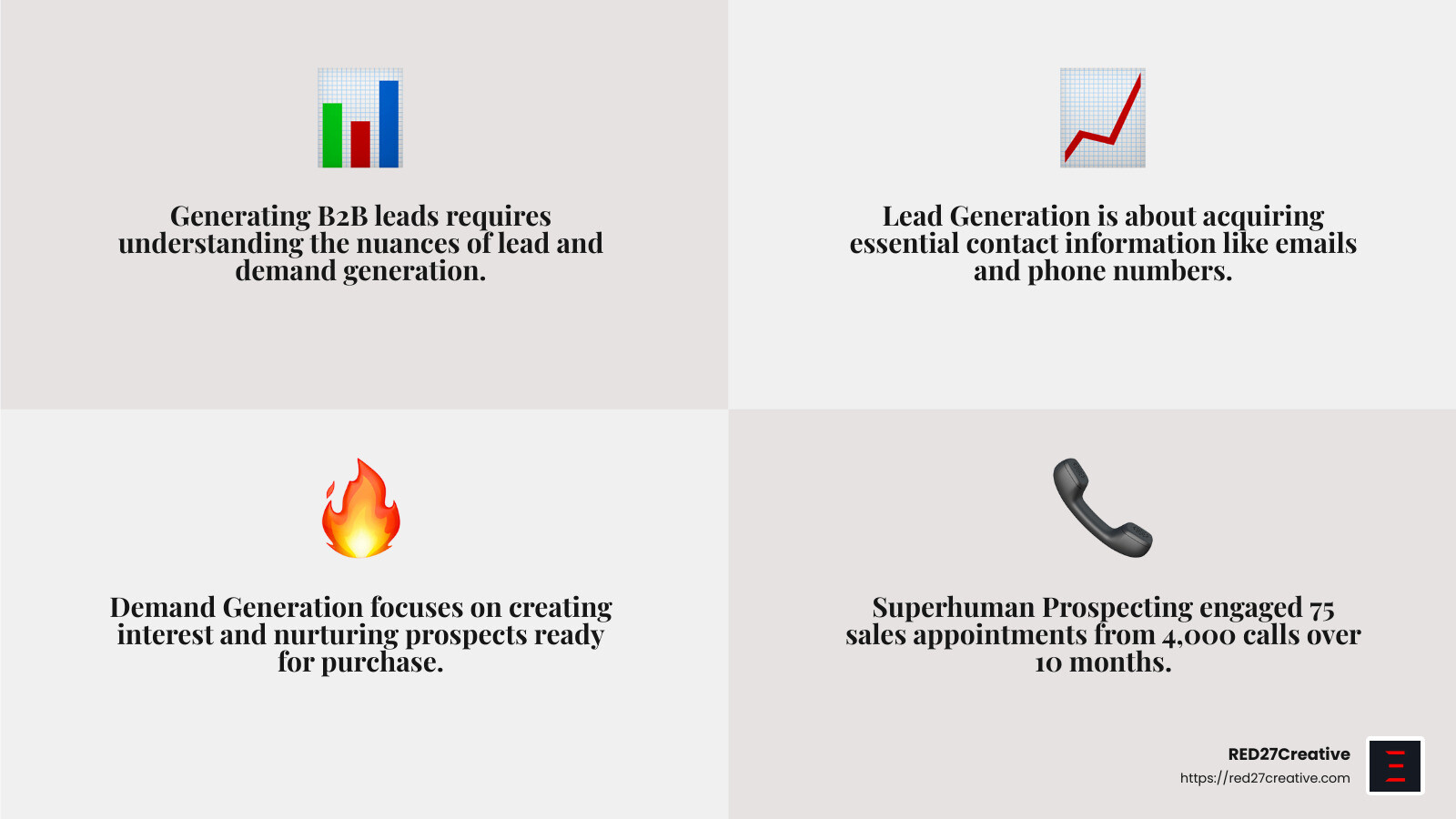
Lead Generation is about acquiring contact information. This can include names, emails, and phone numbers. It’s the first step in building a customer profile and is crucial for developing a relationship with potential clients.
-
Demand Generation focuses on creating interest and desire for your products or services. This involves engaging with prospects who have already shown some interest, nurturing them until they’re ready to make a purchase.
In manufacturing, both processes are essential to ensure a steady flow of potential customers into your sales pipeline.
Contact Acquisition: The Building Block
At the heart of lead generation is contact acquisition. This involves gathering key information from potential clients. Successful contact acquisition relies on several elements:
- Offers and Incentives: High-value resources like eBooks or product demonstrations entice prospects to share their contact details.
- Landing Pages: These are dedicated pages where your ads or social media posts direct potential leads. They focus on specific products or offers, aiming to convert visitors into leads.
- Forms: Simple forms on your website can capture essential information, making it easy for interested parties to connect with you.
Tools to Manage Leads
Once you have acquired leads, managing them effectively is crucial. Implementing a robust CRM system that integrates with existing tools like QuickBooks can streamline your lead management process. This ensures you can track interactions, follow up promptly, and nurture leads through the sales funnel.
Real-World Example: Superhuman Prospecting
Consider the case of Superhuman Prospecting, a lead generation company specializing in B2B cold calling for manufacturing firms. They successfully engaged with a chemical manufacturing company over a 10-month period, resulting in 75 sales appointments from over 4,000 calls. This example underscores the importance of a targeted approach and specialized expertise in generating high-quality leads.
By understanding the differences between lead and demand generation, and focusing on effective contact acquisition, manufacturers can create a robust strategy to attract and convert potential clients. This sets the stage for deeper engagement and long-term business relationships.
In the next section, we’ll dig into specific strategies for generating B2B leads, exploring how content marketing, SEO, and social media can amplify your reach and impact.
Strategies for Generating B2B Leads for Manufacturing
In manufacturing, generating B2B leads is crucial for business growth. Let’s explore some effective strategies to attract and convert potential clients.
Content Marketing: The Power of Valuable Information
Content marketing is about creating and sharing valuable content to attract and engage your target audience. For manufacturers, this could mean producing:
- Whitepapers and Case Studies: Highlight how your solutions have helped other businesses. This builds credibility and trust.
- Blogs and Articles: Share insights and trends in the manufacturing industry. This positions your company as a thought leader.
- Videos and Webinars: Demonstrate product features and benefits. Visual content can be more engaging and easier to digest.
By providing valuable information, you not only attract potential leads but also nurture them through the sales process.
Social Media: Engage Where Your Audience Is
Social media platforms are excellent for connecting with potential leads. Here’s how manufacturers can leverage them:
- LinkedIn: Ideal for B2B marketing. Share industry news, company updates, and engage in professional discussions.
- Twitter: Use it for quick updates and to engage with industry influencers.
- Instagram: Showcase your products and behind-the-scenes content to humanize your brand.
Engaging on social media helps build relationships and keeps your brand top-of-mind.
SEO: Boost Your Online Visibility
Search Engine Optimization (SEO) is essential for driving organic traffic to your website. For manufacturers, this means:
- Keyword Optimization: Identify and use keywords that your target audience is searching for, like “industrial machinery solutions.”
- High-Quality Content: Create content that answers common industry questions. This improves your chances of appearing in search results.
- Backlinks: Get links from reputable industry sources to improve your site’s authority.
By optimizing your site for search engines, you increase the likelihood of being finded by potential leads.
Email Marketing: Personalized Communication
Email marketing allows you to communicate directly with potential leads. Here’s how to make it effective:
- Segment Your Audience: Tailor messages to different segments based on their interests and stage in the buying process.
- Personalized Content: Use the recipient’s name and provide relevant information or offers.
- Regular Updates: Keep leads informed about new products, industry news, and special promotions.
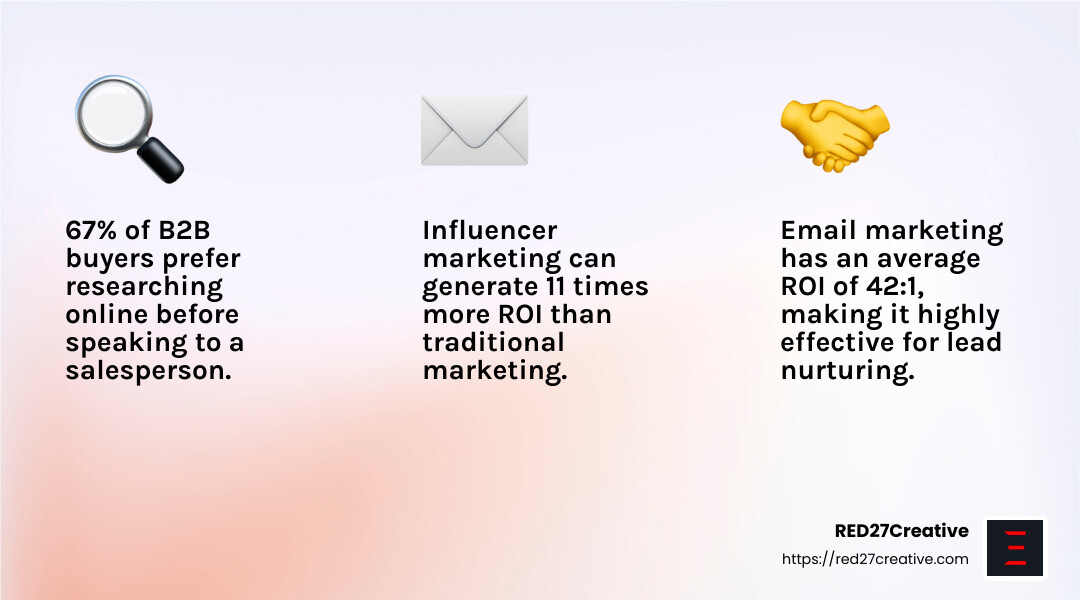
Email marketing is a powerful tool for nurturing leads and guiding them through the sales funnel.
Influencer Marketing: Leverage Industry Experts
Partnering with industry influencers can amplify your reach. Here’s how:
- Identify Key Influencers: Find those who are respected voices in the manufacturing sector.
- Collaborate on Content: Work with them to create content that highlights your products or services.
- Leverage Their Network: Their endorsement can introduce your brand to a wider audience.
Influencer marketing can boost your credibility and expose your business to new potential leads.
By integrating these strategies, manufacturers can effectively generate high-quality B2B leads. Each approach complements the others, creating a comprehensive lead generation strategy that drives business growth.
In the next section, we’ll explore how to optimize your digital presence, including website optimization, landing pages, and CTAs, to further improve your lead generation efforts.
Optimizing Your Digital Presence
To succeed in generating B2B leads for manufacturing, optimizing your digital presence is essential. A well-structured website, effective landing pages, and strategic CTAs can make all the difference. Let’s explore these key components.
Website Optimization: Your Digital Storefront
Your website is often the first impression potential clients have of your business. It’s crucial to make it count.
-
Navigation: Ensure your site is easy to steer. Clean, logical menus help visitors find what they need quickly. According to McKinsey, seamless user experiences are key to customer satisfaction.
-
Page Load Speed: Slow websites can turn visitors away. Compress images and use caching to improve load times. Fast-loading content not only boosts SEO but also keeps users engaged.
-
Value Propositions: Clearly highlight what sets your company apart. Use data and testimonials to support your claims. This builds trust and demonstrates your expertise.
Landing Pages: Focused and Effective
Landing pages are designed to convert visitors into leads. They should be focused and free of distractions.
-
Clarity and Simplicity: Communicate your offer clearly. Avoid clutter to ensure the message is easily understood.
-
Targeted Content: Tailor landing pages to different audience segments or campaigns. This increases relevance and conversion rates.
-
Strong CTAs: Place CTAs prominently. They should encourage visitors to take the next step, whether it’s downloading a brochure or scheduling a demo.
CTAs: Guiding the User Journey
Calls-to-action (CTAs) are crucial for guiding users through the sales funnel.
-
Visibility and Design: Use contrasting colors to make CTAs stand out. They should be easy to find and click.
-
Action-Oriented Language: Use verbs that encourage action, like “Download Now” or “Get Your Free Sample.”
-
Relevance: Align CTAs with the user’s stage in the buying process. Early-stage CTAs might offer educational content, while later-stage CTAs could focus on consultations or demos.
Forms: Simplifying Contact Acquisition
Forms are an essential tool for capturing lead information. Keep them user-friendly.
-
Concise and Relevant: Only ask for necessary information. Long forms can deter potential leads.
-
Clear Instructions: Ensure users know what to do. Use labels and placeholders to guide them.
-
Mobile-Friendly: With more users accessing sites on mobile, forms must be easy to fill out on any device.
By optimizing your digital presence, you set the stage for successful B2B lead generation. A well-optimized website, along with effective landing pages and CTAs, improves your ability to attract and convert potential clients.
In the next section, we’ll explore how leveraging events and networking can further boost your lead generation efforts.
Leveraging Events and Networking
In generating B2B leads for manufacturing, events and networking play a crucial role. They offer unique opportunities to connect with industry leaders, showcase your expertise, and build lasting relationships.
Industry Events: A Goldmine for Connections
Attending industry events is a powerful way to expand your network and meet potential clients face-to-face. Here’s how you can make the most of these opportunities:
-
Participate Actively: Don’t just attend—engage. Participate in panels, host workshops, or give presentations. This positions your company as a thought leader.
-
Showcase Innovations: Use events to display your latest products or technologies. Live demonstrations can captivate audiences and create memorable impressions.
-
Gather Insights: Events are a great place to learn about industry trends and challenges. Use this knowledge to tailor your marketing strategies and product offerings.
Networking: Building Lasting Relationships
Effective networking goes beyond exchanging business cards. It’s about building genuine connections that can lead to partnerships and collaborations.
-
Be Genuine: Approach networking with sincerity. Listen actively and show genuine interest in others’ businesses. This fosters trust and rapport.
-
Follow Up: After meeting someone, send a personalized follow-up message. Reference your conversation to show you remember and value the connection.
-
Leverage LinkedIn: Connect with new contacts on LinkedIn. Share relevant content and engage with their posts to stay on their radar.
Customer Retention: The Key to Sustained Growth
While acquiring new leads is important, retaining existing customers is equally crucial. Loyal customers often lead to repeat business and referrals.
-
Provide Exceptional Service: Consistently deliver high-quality products and services. Happy customers are more likely to stay and recommend your business to others.
-
Stay Engaged: Keep in touch with your clients through regular updates, newsletters, or personalized offers. This shows you value their business.
-
Seek Feedback: Ask for customer feedback to identify areas for improvement. This not only helps you improve your offerings but also shows customers that their opinions matter.
By leveraging industry events, networking effectively, and focusing on customer retention, you can improve your B2B lead generation efforts. These strategies not only help in acquiring new leads but also in building a strong, loyal customer base.
In the next section, we’ll dig into creating engaging content offers that captivate your audience and drive conversions.
Creating Engaging Content Offers
In the field of generating B2B leads for manufacturing, crafting engaging content offers is pivotal. Let’s explore some effective strategies like scarcity, newsjacking, high-value offers, and content formats that can significantly boost your lead generation efforts.
Scarcity: The Power of Limited-Time Offers
Scarcity is a psychological trigger that can drive urgency and action. When potential customers feel that an offer is limited, they are more likely to act quickly.
-
Limited-Time Discounts: Offer special discounts for a short period to encourage immediate purchases.
-
Exclusive Access: Provide early access to new products or services for a select group of customers.
-
Stock Alerts: Notify customers when products are low in stock to prompt quick decisions.
By leveraging scarcity, you can create a sense of urgency that compels potential leads to engage with your offers.
Newsjacking: Riding the Wave of Current Events
Newsjacking involves leveraging current events or trending topics to boost your brand’s visibility and relevance.
-
Stay Informed: Keep an eye on industry news and global events. Use platforms like Google Trends or social media feeds to identify trending topics.
-
Timely Content: Create content that ties your products or services to these trends. For example, if sustainability is trending, highlight your eco-friendly manufacturing processes.
-
Engage with Influencers: Collaborate with industry influencers who can amplify your message and reach a broader audience.
Newsjacking allows you to position your brand as relevant and in tune with current market dynamics.
High-Value Offers: Enticing Your Audience
High-value offers are incentives that provide significant value to your audience, encouraging them to take the desired action.
-
Free Resources: Offer valuable resources like eBooks, white papers, or case studies that address specific industry challenges.
-
Consultations: Provide free consultations to demonstrate your expertise and build trust with potential clients.
-
Product Demos: Host live demonstrations or webinars showcasing your products’ capabilities and benefits.
These offers not only attract potential leads but also establish your company as a knowledgeable and reliable partner in the industry.
Content Formats: Diversifying Your Approach
Different audiences prefer different types of content. Offering a variety of content formats can help you reach a wider audience.
-
Video Content: Create engaging videos that explain complex manufacturing processes or highlight customer success stories.
-
Infographics: Use infographics to present data and statistics in a visually appealing and easily digestible format.
-
Interactive Content: Develop interactive content like quizzes or calculators that engage users and provide personalized insights.
By diversifying your content formats, you can cater to different audience preferences and increase engagement.
Creating engaging content offers is a dynamic way to capture and nurture leads in the manufacturing industry. These strategies not only attract attention but also drive meaningful interactions with your brand.
In the next section, we’ll address frequently asked questions about generating B2B leads for manufacturing, providing clear and concise answers to common queries.
Frequently Asked Questions about Generating B2B Leads for Manufacturing
How do manufacturers generate leads?
Manufacturers often turn to digital marketing to generate leads effectively. By leveraging SEO, they ensure their websites rank high in search results, making it easier for potential clients to find them. Social media platforms like LinkedIn offer a direct line to industry professionals, allowing manufacturers to connect with decision-makers. For instance, LinkedIn has over 620,000 system engineers, making it a goldmine for reaching technical professionals.
What is the lead generation process?
The lead generation process involves creating consumer interest in your products or services and guiding them through your sales pipeline. It starts with attracting prospects through targeted content and SEO strategies. Once you’ve captured their interest, the next step is to nurture these leads by providing valuable information and building a relationship. This journey aims to convert prospects into paying customers by addressing their needs and demonstrating how your offerings solve their problems.
How can you improve sales lead generation?
Improving sales lead generation can be achieved through several strategies:
-
SEO: Optimize your website to increase visibility and attract more traffic. This involves using relevant keywords and ensuring your site is technically sound.
-
Paid Ads: Invest in paid advertisements to reach a broader audience quickly. Platforms like Google Ads and LinkedIn offer targeting options to ensure your ads reach the right audience.
-
Content Marketing: Create valuable and engaging content that addresses the pain points of your target audience. This content should position your brand as a solution to their challenges, driving interest and engagement.
By implementing these strategies, manufacturers can improve their lead generation efforts, ensuring a steady flow of high-quality leads into their sales pipeline.
In the next section, we will explore how optimizing your digital presence can further boost your lead generation success.
Conclusion
In today’s digital landscape, generating B2B leads for manufacturing is more than just a necessity—it’s a strategic advantage. At RED27Creative, we understand the complexities and nuances of this process. Our comprehensive services are designed to not only capture high-quality leads but also to fuel your business growth.
Our approach is simple yet effective. By integrating cutting-edge digital marketing strategies, we improve your online presence, making it easier for potential clients to find and engage with you. Whether through SEO, content marketing, or social media outreach, we ensure your brand stands out in a crowded marketplace.
By partnering with us, you’re not just investing in lead generation; you’re investing in a future where your business can thrive. Our custom solutions are crafted to meet the unique needs of manufacturers, helping you steer the digital world with confidence.
Find how our B2B lead generation services can transform your business. Let RED27Creative be your guide to open uping new opportunities and achieving sustainable growth.
With RED27Creative, you’re not just choosing a service provider—you’re choosing a partner dedicated to elevating your brand and scaling your business. As we look to the future, our commitment remains steadfast: to drive growth, improve your online presence, and ensure your success in the changing digital marketing industry.

Kiel Tredrea
https://red27creative.comTop Marketing Agency • Web, SEO & Leads • RED27Creative