From Prospect to Partner: B2B Manufacturer Lead Generation

The Essential Guide to Manufacturing Lead Generation
B2B manufacturer lead generation is the strategic process of identifying, attracting, and converting potential business clients into qualified leads for manufacturing companies. For manufacturers seeking to grow their customer base and increase sales, an effective lead generation strategy is crucial.
“In manufacturing, the difference between thriving and stagnating often comes down to one crucial factor: quality leads.”
Effective B2B Manufacturer Lead Generation Strategies:
- Website Optimization – Design your manufacturing website with clear CTAs and simplified forms to capture leads
- Content Marketing – Create technical guides, case studies, and industry resources that demonstrate expertise
- Digital Marketing – Implement SEO, PPC, and social media campaigns targeted to industrial buyers
- Email Marketing – Develop segmented campaigns that nurture prospects through the buying cycle
- Trade Shows & Events – Combine in-person networking with digital follow-up strategies
- Account-Based Marketing – Target specific high-value prospects with personalized outreach
For manufacturers, the digital landscape has transformed how potential clients find and evaluate suppliers. A steady influx of viable, high-quality leads makes manufacturing companies profitable, especially as traditional in-person sales models become less effective.
I’m Kiel Tredrea, founder of RED27Creative with over 20 years of experience helping manufacturing businesses implement effective b2b manufacturer lead generation strategies that drive measurable revenue growth and establish market leadership.
B2b manufacturer lead generation helpful reading:
– Email marketing for manufacturing
– Marketing automation for manufacturing
– Web design for manufacturing companies
Understanding B2B Manufacturer Lead Generation
Remember when manufacturing sales meant handshakes at trade shows and lengthy lunches with potential clients? Those days aren’t completely gone, but they’re certainly not enough anymore. Today’s manufacturing landscape demands a more sophisticated approach to finding and connecting with potential clients. That’s where b2b manufacturer lead generation comes in – and it’s become the lifeblood of growing manufacturing companies.
What is B2B Manufacturer Lead Generation?
B2b manufacturer lead generation is much more than just collecting contact information. It’s the strategic process of identifying ideal potential buyers for your manufacturing capabilities and creating meaningful connections that eventually lead to sales conversations.
Think of it as building a pipeline that continuously feeds your sales team with qualified prospects who have already shown genuine interest in what you offer.
For manufacturers specifically, effective lead generation means:
Identifying companies that could genuinely benefit from your manufacturing expertise, targeting the actual decision-makers within those organizations (not just anyone with an email address), capturing their attention through channels they actually use, collecting their information in non-intrusive ways, and qualifying them based on how likely they are to become valuable customers.
The process distinguishes between Marketing Qualified Leads (MQLs) – those folks who’ve engaged with your content or shown interest but aren’t ready to buy – and Sales Qualified Leads (SQLs) – the golden prospects who’ve demonstrated they’re ready for a sales conversation.
As one of our manufacturing clients recently told us: “We used to chase anyone who would answer our calls. Now we focus on prospects who actually need what we make – and our close rate has doubled.”
Why is B2B Lead Generation Important for Manufacturers?
For manufacturing companies, strong b2b manufacturer lead generation isn’t just a nice-to-have marketing activity – it’s absolutely essential for sustainable growth. Here’s why it matters so much:
Predictable revenue growth becomes possible when you have a systematic approach to filling your sales pipeline. Rather than riding the feast-or-famine rollercoaster that comes with relying solely on referrals, you can forecast revenue more accurately and plan for growth with confidence.
Competitive advantage in a digital landscape is crucial now that 72% of B2B buyers research extensively online before ever contacting a supplier. Manufacturers who excel at digital lead generation gain a significant edge over competitors still relying on cold calls and trade shows alone. Your website has become your most hardworking salesperson – it never sleeps, never takes vacation, and can engage with prospects 24/7.
Higher return on marketing investment comes naturally with targeted lead generation. Rather than broadcasting generic messages to everyone, you can focus resources on reaching the specific companies most likely to need your services. Some of our manufacturing clients have seen returns of 500% to 2000% on their lead generation investments.
Shortened sales cycles result when you focus on quality leads that have been properly nurtured. These prospects require less convincing because they already understand your value proposition, resulting in more efficient use of your sales team’s time and resources.
Market intelligence and feedback flows naturally from the lead generation process. As you engage with prospects, you’ll gain valuable insights into market trends, customer pain points, and competitive positioning that can inform product development and overall business strategy.
As the manufacturing director at one of our client companies shared: “We previously relied almost exclusively on trade shows and referrals. Since implementing a comprehensive digital lead generation strategy, we’ve seen a 60% increase in qualified leads and a 126% year-over-year increase in quote requests.”
The manufacturing landscape has changed dramatically. Today’s buyers expect suppliers to meet them where they are – online, researching solutions to their problems. Manufacturers who accept this reality and build robust b2b manufacturer lead generation systems will thrive, while those who cling to outdated methods risk being left behind.
Building a Strong Foundation: Identifying Your Ideal B2B Buyer
Before you launch into any lead generation tactics, you need to know exactly who you’re trying to reach. Think of it like fishing – you wouldn’t use the same bait for every type of fish, right? For manufacturers, understanding your ideal buyers is that essential first step that makes everything else more effective.

Defining Your Ideal Customer Profile (ICP)
Your Ideal Customer Profile is basically a detailed portrait of the companies that would absolutely love what you make. It’s not just any company – it’s the ones that will get the most value from your specific manufacturing capabilities.
When we work with manufacturing clients at RED27Creative, we dig into several key areas to build this profile:
The industry verticals matter tremendously. If you make precision components, you might focus on aerospace, medical devices, or automotive industries where precision is non-negotiable. Each industry has different needs and expectations, so getting specific helps tremendously.
Company size and revenue play a huge role too. Some manufacturers thrive serving Fortune 500 giants, while others create more value for mid-market companies. There’s no wrong answer – just what works best for your operation and capabilities.
Don’t overlook geographic location in your planning. While digital has expanded reach, proximity still matters for many manufacturers, especially when shipping costs or face-to-face collaboration are important factors in your business model.
The technical requirements your ideal customers have should align perfectly with what you do best. This is where your manufacturing superpowers come into play – what specific problems can you solve better than anyone else?
Finally, be realistic about the budget range that makes sense. Your ideal customers need to be able to afford your solutions while still allowing you to maintain healthy margins.
Here’s what a finished ICP might look like for a custom metal fabricator:
| Criteria | Details |
|---|---|
| Industry | Aerospace, Defense, Medical Devices |
| Company Size | 100-500 employees |
| Annual Revenue | $10M-$100M |
| Location | Midwest United States |
| Technical Needs | Precision components with tight tolerances |
| Budget | $50K-$250K annual spend |
Developing Buyer Personas
While your ICP zooms out to look at companies, buyer personas zoom in on the actual people making decisions. And in manufacturing, buying decisions rarely come down to just one person.
The decision-maker profiles in manufacturing typically include several key players. The Engineering Manager is focused on whether your components meet their exact specifications. The Procurement Officer is watching costs like a hawk while ensuring supplier reliability. C-Suite Executives want to know the big picture ROI. And Production Managers are concerned with how smoothly your products integrate into their existing processes.
Understanding their job responsibilities and pain points makes your marketing infinitely more effective. What keeps each of these people up at night? The Engineering Manager might be stressed about quality issues from current suppliers. The Procurement Officer might be dealing with unreliable delivery schedules. When you understand these challenges, you can position your manufacturing solutions as the answer they’ve been searching for.
We also need to understand their information-seeking behaviors – where do they go to learn? Some manufacturing decision-makers are traditional, reading industry trade journals and attending specific conferences. Others might be more digitally savvy, researching solutions online and participating in industry forums. Knowing these patterns helps you place your b2b manufacturer lead generation content where your ideal buyers will actually see it.
As one of our manufacturing clients recently told me: “Once we really understood who we were talking to, our messaging completely transformed. We stopped talking about our machines and started talking about the problems we solve. That’s when leads started coming in.”
By taking the time to develop detailed ICPs and buyer personas, you’re not just checking a marketing box. You’re creating the foundation for everything that follows. Your content, your website design, your trade show strategy – everything becomes more focused and effective when you know exactly who you’re trying to reach.
Strategies for Effective B2B Manufacturer Lead Generation
Let’s face it – generating quality leads is the lifeblood of any manufacturing business. But in today’s digital-first world, the old ways of simply attending trade shows and waiting for the phone to ring won’t cut it anymore. The good news? There are proven b2b manufacturer lead generation strategies that can transform your pipeline from a trickle to a steady flow.
Content Marketing for Manufacturers
Think about the last time you needed to solve a complex problem. Where did you turn? If you’re like most professionals, you probably searched for helpful information online. That’s exactly why content marketing has become such a powerful tool for manufacturers.
When you create genuinely helpful content that addresses your prospects’ technical challenges, something magical happens – you transform from “just another vendor” into a trusted advisor. And who do people prefer to buy from? Those they trust.
The most successful manufacturers are creating content that actually matters to their buyers:
Technical guides and whitepapers have become the gold standard for demonstrating deep expertise. One of our manufacturing clients told us, “After publishing a comprehensive guide on material selection for aerospace components, we saw a 144% increase in qualified leads from engineering teams at our target companies.” That’s the power of valuable technical content.
Case studies work like testimonials on steroids. They don’t just say you’re good – they prove it by showing exactly how you’ve solved similar problems for others. Engineers and technical buyers love seeing real-world applications.
Specification sheets might seem basic, but when created thoughtfully, they become essential decision-making tools that buyers reference repeatedly throughout their journey.
Comparison guides help confused buyers make sense of complex options. By objectively comparing different manufacturing approaches or materials, you position yourself as a helpful guide rather than a pushy salesperson.
But here’s where many manufacturers go wrong – they create amazing content that nobody ever sees. 87% to 94% of blog visitors leave after reading just one article. The solution? Strategic distribution through:
- Gated premium content that captures contact information
- Contributions to respected industry publications
- Regular email newsletters that nurture relationships
- Targeted social media sharing in the right professional circles
More info about Content Marketing for Manufacturers
Leveraging Digital Marketing Channels
The beauty of digital marketing for b2b manufacturer lead generation is that it allows you to meet potential customers wherever they are in their buying journey. Let’s explore the most effective channels:
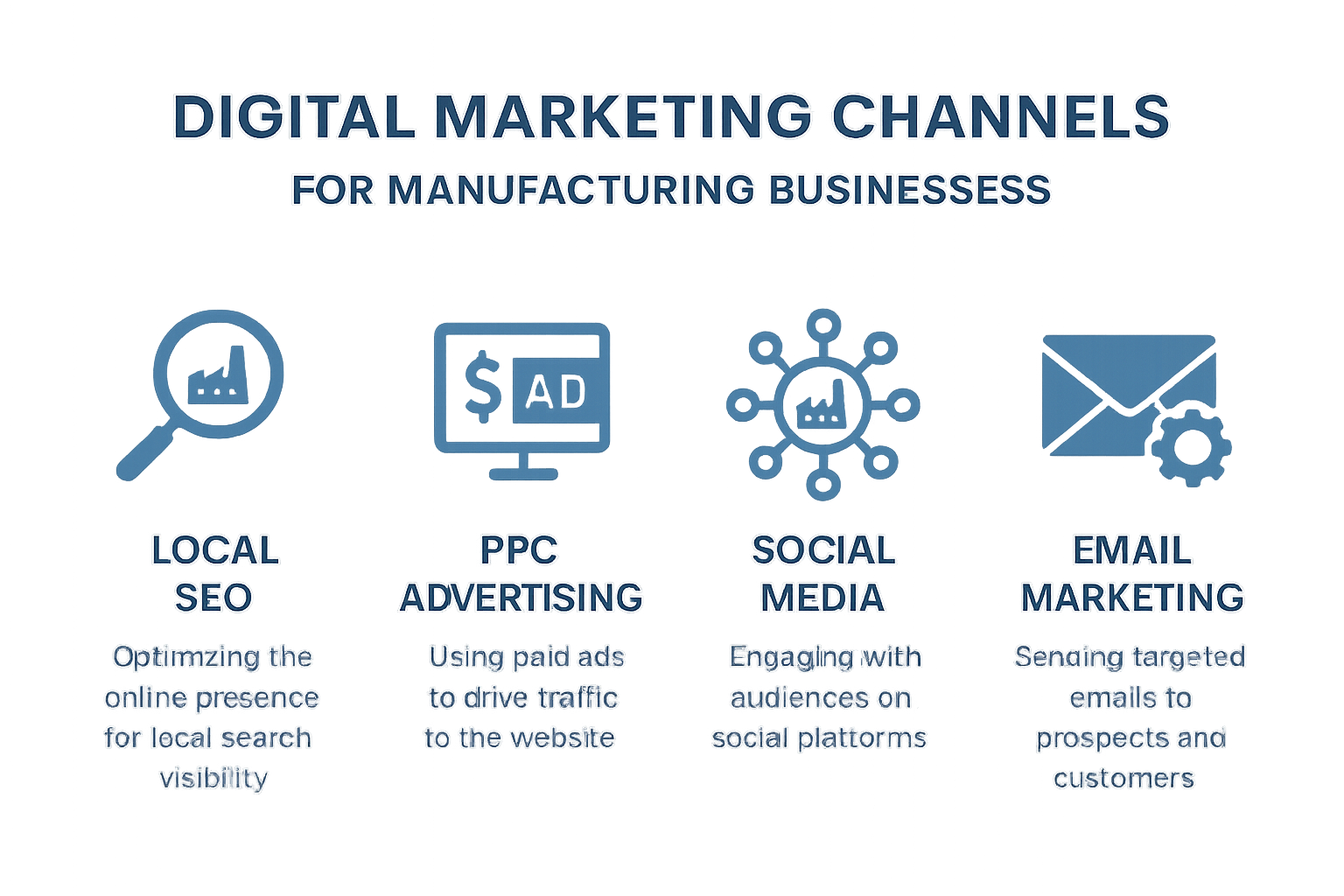
Search Engine Optimization (SEO) has become non-negotiable for manufacturers. When a potential customer types “custom precision machining for medical devices” into Google, will they find you or your competitor? Effective SEO means targeting the specific technical terms your ideal customers use when searching for solutions like yours.
I remember working with a metal fabricator who initially dismissed SEO as “marketing fluff.” Six months after implementing a targeted strategy focused on their niche capabilities, they were ranking first for their most valuable keywords – and their inquiry volume had doubled.
Pay-Per-Click (PPC) Advertising delivers immediate visibility while your organic SEO builds momentum. One industrial manufacturer we worked with implemented a laser-focused PPC campaign that yielded a 15% sales closing rate and 18 appointments scheduled in just three months. The key was targeting highly specific terms with clear buying intent.
Social Media for Manufacturing requires a strategic approach. Not every platform deserves your attention, but the right ones can be goldmines:
LinkedIn has become the undisputed champion for b2b manufacturer lead generation, with 55% of decision-makers using it to vet potential suppliers. It’s the perfect platform for sharing your technical content and directly connecting with the right people.
YouTube often goes overlooked, but video demonstrations of your manufacturing processes or capabilities can be incredibly compelling. Seeing is believing, especially for complex manufacturing solutions.
Email Marketing Campaigns remain one of the highest-ROI channels for nurturing manufacturing leads. The secret is segmentation – tailoring your messages based on the recipient’s industry, role, and stage in the buying process. A generic newsletter might get ignored, but a targeted email addressing a prospect’s specific pain points will get opened, read, and acted upon.
Utilizing Account-Based Marketing (ABM)
If your manufacturing business thrives on larger contracts with specific companies, Account-Based Marketing might be your secret weapon for b2b manufacturer lead generation.
Unlike traditional marketing that casts a wide net, ABM flips the funnel – identifying specific high-value target accounts first, then creating personalized campaigns designed just for them. It’s like switching from fishing with a net to spearfishing.
For manufacturers, implementing ABM means:
- Carefully selecting target accounts that perfectly match your ideal customer profile
- Researching the specific decision-makers and influencers within each account
- Creating custom content that speaks directly to their unique challenges
- Coordinating sales and marketing efforts for a consistent, personalized approach
- Measuring results at the account level, not just by lead volume
One manufacturing CEO shared this success story with us: “By focusing our efforts on 20 key accounts with a personalized ABM approach, we secured meetings with 16 of them and converted 9 into customers within six months, representing over $2.3 million in new business.”
The beauty of ABM for manufacturers is that it aligns perfectly with how complex B2B purchases actually happen – through multiple touchpoints with various stakeholders over time, not through a single interaction.
More info about B2B Lead Generation 101
The most effective b2b manufacturer lead generation approach usually combines multiple strategies working together. The right mix depends on your specific manufacturing business, target audience, and growth goals. At RED27Creative, we help manufacturers design and implement custom lead generation systems that deliver consistent, qualified leads month after month.
Optimizing Your Website for Lead Conversion
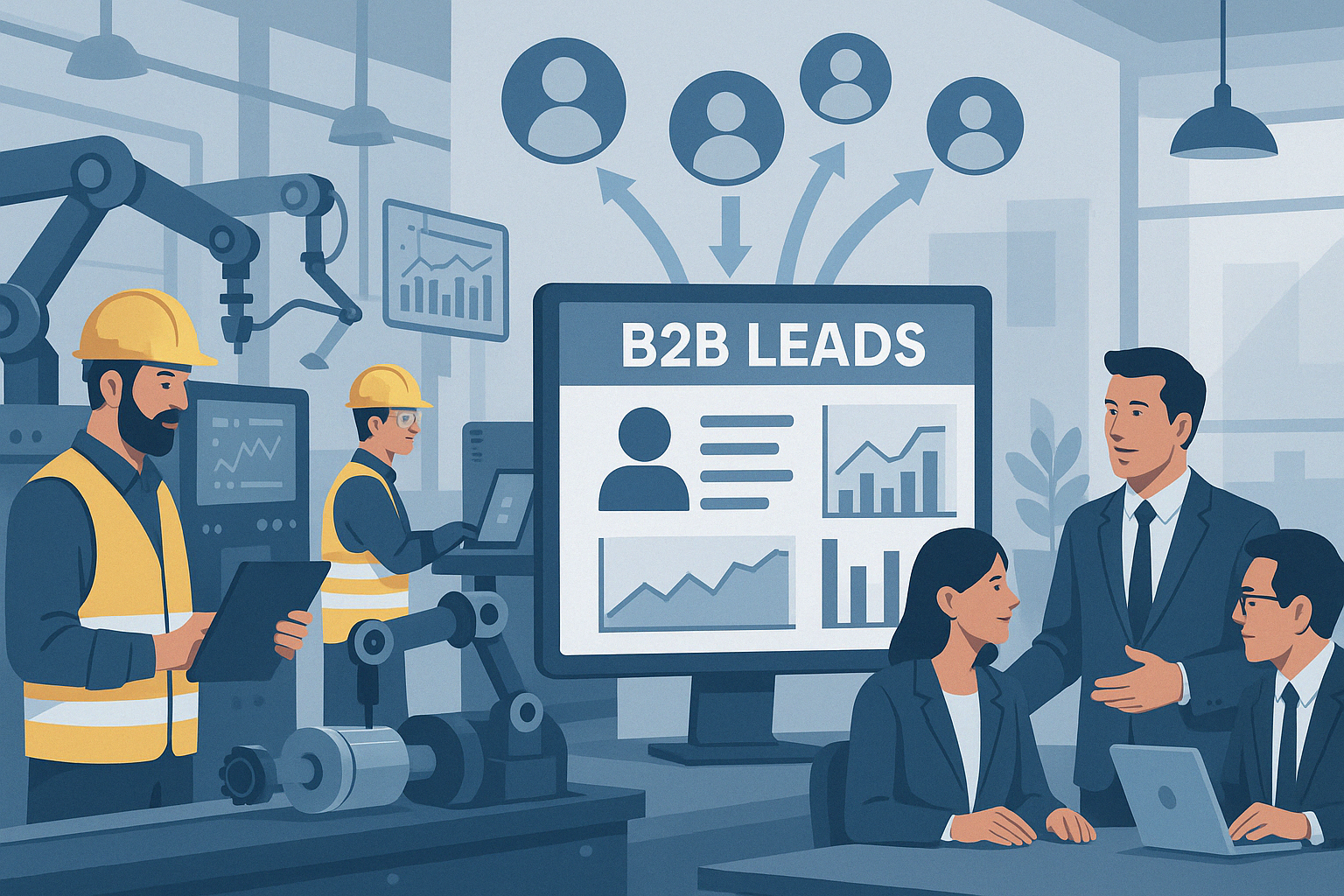
Your manufacturing website isn’t just a digital brochure—it’s the beating heart of your lead generation strategy. Whether potential clients find you through a Google search, click on an ad, or follow a recommendation from a colleague, most will visit your website before taking the next step.
Designing with Conversion in Mind
When it comes to b2b manufacturer lead generation, your website needs to strike that perfect balance between being informative and actively encouraging conversions.
Think about how manufacturing professionals steer websites. They’re looking for technical specifications, capabilities, and evidence that you understand their industry challenges. A well-designed site makes finding this information intuitive.
Clear navigation is non-negotiable for manufacturing websites. Your visitors shouldn’t need an engineering degree to find what they’re looking for! Organize your content logically by industry solutions, manufacturing capabilities, and technical resources. One manufacturing client told us, “After reorganizing our navigation structure, we saw visitors spending 40% more time exploring our capabilities pages.”
Mobile responsiveness might not seem critical in manufacturing, but the data tells a different story. A surprising 73% of mobile searches trigger additional actions, and 40% of visitors will abandon a site after a poor mobile experience. Picture your busy prospect checking out your website while walking through their facility or during a meeting break—they need your site to work flawlessly on their phone.
Building trust signals into your site design is particularly important for manufacturers. Prominently display your ISO certifications, industry compliance badges, and quality standards. One of our manufacturing clients shared, “Adding our certification badges and a detailed quality assurance section boosted our conversion rates by 32% among first-time visitors.” Your prospects need confidence in your capabilities before they’ll hand over their contact information.
Implementing Effective Calls-to-Action
Great CTAs are like helpful signposts guiding visitors toward becoming leads. They remove the guesswork about what to do next.
The language you use matters tremendously. Instead of generic “Contact Us” buttons, try action-oriented phrases that speak directly to what your manufacturing prospects want: “Request a Custom Quote,” “Download Material Compatibility Guide,” or “Schedule an Engineering Consultation.”
Where you place these CTAs is just as important as what they say. Think about your visitor’s journey through your site:
On your homepage, feature your primary conversion path prominently.
On capability pages, include specific CTAs related to each manufacturing service—a “Request Precision Machining Quote” button makes more sense on your machining page than a generic contact form.
Within technical content, add relevant CTAs at natural decision points where a reader might think, “I’d like to learn more about how this applies to my project.”
After case studies, place CTAs that invite similar solutions: “Facing a similar challenge? Let’s discuss your requirements.”
Don’t be afraid to experiment! A manufacturing client of ours saw a 27% jump in conversions after simply changing their main CTA from “Contact Us” to “Get Custom Quote.” Small tweaks can yield significant results.
Landing Page and Form Optimization
Landing pages are where the rubber meets the road in your b2b manufacturer lead generation efforts. These focused pages should be laser-targeted on a single offer or solution.
The best manufacturing landing pages strip away distractions—no navigation menus to lead visitors away, just relevant technical details, compelling visuals of your manufacturing capabilities, and a crystal-clear call-to-action.
When it comes to forms, finding the right balance is crucial. Each additional field you add creates friction—but you also need enough information to qualify leads properly. Consider using progressive profiling, where you collect basic information initially and gather more details in subsequent interactions.
Be transparent about the value exchange. Your prospects should clearly understand what they’ll receive in exchange for their information. Whether it’s a technical whitepaper, a custom quote, or an engineering consultation, spell out exactly what happens after they click “submit.”
According to research, companies that increase their landing pages from 10 to 15 may see a 55% increase in leads. This makes sense—more specialized landing pages mean more relevant experiences for different visitor needs.
Don’t forget to include trust elements near your forms. Simple statements about privacy, no-obligation consultations, or testimonials from similar companies can ease concerns about submitting information.
Scientific research on website conversion rates shows that manufacturing websites average about 2.1% conversion rates for bottom-of-funnel actions. With thoughtful optimization, you can significantly outperform this benchmark and turn your website into a lead-generating powerhouse.
Your website isn’t just about looking professional—it’s about creating clear pathways that transform interested visitors into engaged leads. When your site speaks directly to the needs of manufacturing professionals and makes taking the next step easy, you’ve created the foundation for successful b2b manufacturer lead generation.
Nurturing and Converting Leads into Partners
Let’s face it – getting leads is just the beginning of your journey. The real magic of b2b manufacturer lead generation happens when you transform those initial contacts into loyal customers who see you as a trusted partner, not just another supplier.
Lead Nurturing Strategies
In manufacturing, relationships aren’t built overnight. With sales cycles that often stretch for months (sometimes even years), nurturing your leads becomes crucial to keeping your company top-of-mind when decision time arrives.
Automated Email Sequences
Think of email sequences as your digital sales team that works 24/7. The key is making them feel personal and valuable, not like generic mass mailings.
A well-crafted email sequence for manufacturers might flow something like this:
- A warm welcome email that delivers immediate value (not just “thanks for signing up!”)
- Educational content that addresses common pain points in their specific industry
- A relevant case study showing how you solved similar problems for others
- Technical details that engineering teams crave
- A natural invitation to take the next step, whether that’s a consultation or demonstration
One manufacturing client told me, “We used to just send the same generic follow-up to everyone. Now our emails feel like they’re coming from someone who actually understands our prospect’s business. Our response rates have doubled.”
Personalized Content Delivery
Different stakeholders care about different things. Your nurturing should reflect this reality.
Your technical contacts might devour detailed specifications and quality assurance data, while financial decision-makers are scanning for ROI figures and cost comparisons. Meanwhile, operations leaders want to know about implementation timelines and integration details.
By tailoring your follow-up content to address these specific concerns, you show prospects that you understand their world and can speak their language. This builds trust faster than generic messaging ever could.
Timely Follow-Ups and Engagement
In today’s world, timing matters tremendously. When a potential customer reaches out, your response window is hours, not days.
Value-first follow-ups make all the difference. Instead of just checking in, provide something useful with each contact. Share an industry insight, a helpful resource, or an answer to a question they didn’t even know they had.
A multi-channel approach often works best in manufacturing – combining email touchpoints with phone calls for high-value prospects, and even well-timed direct mail for those critical opportunities.
One manufacturing client shared, “By implementing a structured nurturing sequence with industry-specific case studies, we saw a 35% increase in leads progressing to sales meetings within 60 days. The prospects were much more educated when they got to the sales team, making those conversations more productive.”
Measuring and Analyzing Lead Generation Success
Without measurement, you’re just guessing. Smart manufacturers track clear metrics to continuously refine their b2b manufacturer lead generation efforts.
Key Performance Indicators (KPIs)
While there are dozens of metrics you could track, focus on these critical indicators:
Visitor-to-Lead Conversion Rate tells you how effectively your website turns visitors into contacts. For manufacturing, industry benchmarks hover around 2-3%, but top performers can reach 5% or higher.
Lead-to-Opportunity Conversion Rate measures how many leads actually become genuine sales opportunities. This reveals the quality of your leads and the effectiveness of your nurturing.
Cost Per Lead (CPL) and Customer Acquisition Cost (CAC) help you understand the investment required to generate leads and close deals. In manufacturing, these figures vary widely based on your niche, but tracking them over time reveals important trends.
Time to Conversion is particularly important in manufacturing, where sales cycles can be lengthy. Understanding your typical timeline helps set realistic expectations and identify opportunities to streamline the process.
Analytics Tools and Implementation
You don’t need a complex tech stack to measure effectively. Most manufacturers can get by with:
A solid CRM system to track prospects through your pipeline
A basic marketing automation platform to monitor engagement
Website analytics to understand visitor behavior
Call tracking to connect phone inquiries back to their digital source
The key isn’t having the fanciest tools – it’s consistently using what you have to make data-driven decisions.
Continuous Optimization
The most successful manufacturers view lead generation as an ongoing experiment, not a “set it and forget it” activity.
Use your data to identify which content pieces generate the most qualified leads, which channels deliver the best ROI, and which messaging resonates most with your target audience. Then double down on what works and refine or replace what doesn’t.
Regular feedback from your sales team about lead quality is pure gold. They’re on the front lines talking to prospects every day and can tell you what’s working and what isn’t.
Aligning Sales and Marketing Teams
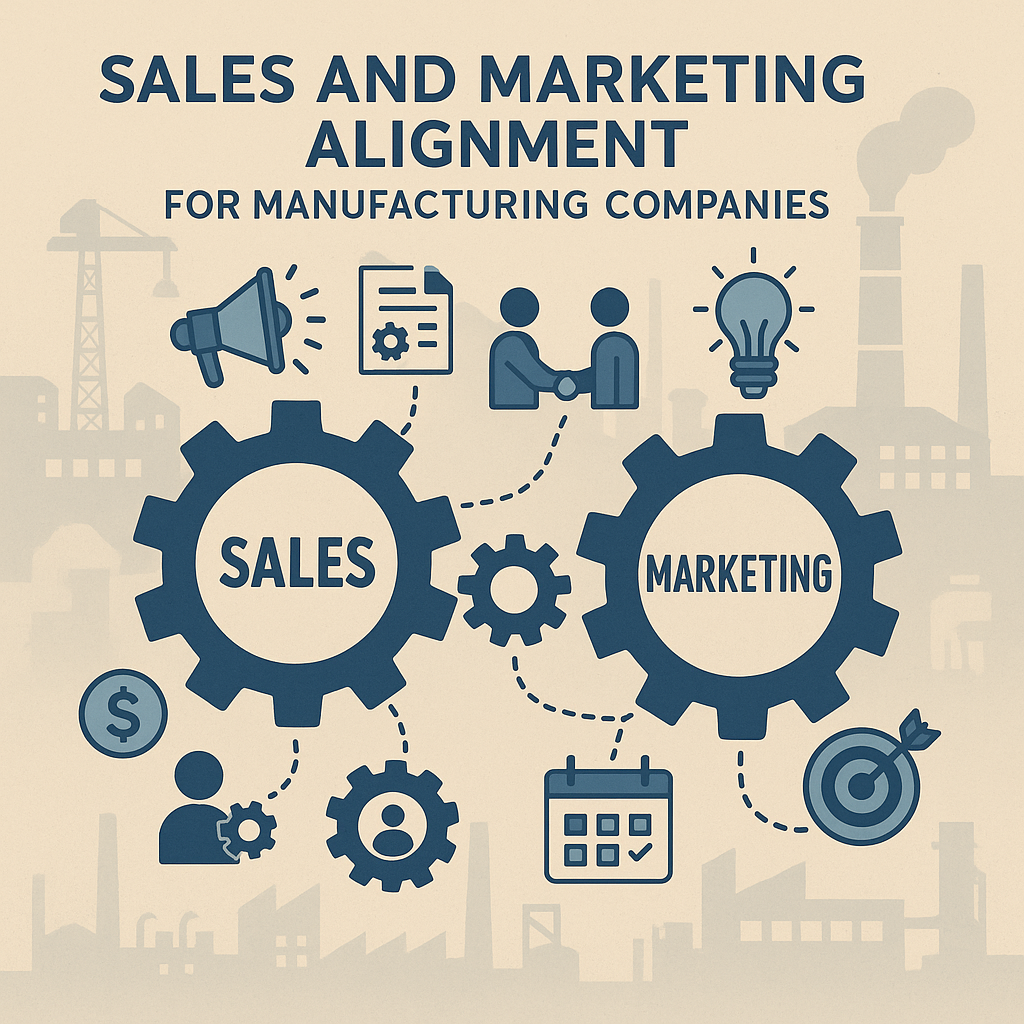
In too many manufacturing companies, sales and marketing operate in separate silos. Breaking down these walls can dramatically improve your lead conversion rates.
“Smarketing” Alignment Strategies
Start by speaking the same language. When marketing talks about an “MQL” (Marketing Qualified Lead), does sales have the same definition in mind? Establishing shared terminology prevents frustration and miscommunication.
Service Level Agreements (SLAs) between departments clarify expectations. For example, marketing commits to delivering a certain number of qualified leads each month, while sales agrees to follow up within 24 hours and provide feedback on lead quality.
Including both teams in campaign planning ensures everyone’s on the same page from the beginning. Sales brings valuable front-line insights that can make marketing efforts more effective.
Technology Integration for Seamless Handoffs
Nothing kills promising leads faster than a clunky handoff process. Your CRM should serve as a single source of truth for both teams, with clear visibility into the customer journey.
Lead scoring models help objectively determine when a prospect is ready for sales contact, reducing the subjective “these leads are no good” complaints that sometimes arise.
Quick notification systems ensure hot leads don’t cool off while waiting for follow-up. When someone downloads your technical specifications or pricing guide, sales should know immediately.
Shared Goals and Metrics
The ultimate alignment happens when both teams focus on the same north star metrics. Revenue is the obvious one, but also consider tracking:
Lead quality metrics that go beyond just counting contacts
Customer acquisition costs that reflect the full investment in winning new business
Customer lifetime value that emphasizes building long-term relationships, not just quick sales
A manufacturing sales director put it perfectly: “When we finally aligned our sales and marketing teams around shared definitions and goals, our lead-to-customer conversion rate improved by 23%, and our sales cycle shortened by nearly a month. We stopped arguing about lead quality and started collaborating on lead conversion.”
Effective lead nurturing isn’t just about following a process – it’s about building relationships. When done right, your prospects don’t feel “nurtured” – they feel understood, valued, and eager to work with a partner who gets their business.
Frequently Asked Questions about B2B Manufacturer Lead Generation
Let’s tackle some of the most common questions we hear from manufacturing companies looking to improve their lead generation efforts. These insights come from our years of experience helping manufacturers transform their marketing approach.
How do manufacturers generate high-quality leads?
Manufacturing companies often struggle with lead quality over quantity. The secret to generating truly valuable leads isn’t just casting a wider net—it’s fishing in the right pond with the right bait.
Successful b2b manufacturer lead generation typically combines several approaches working together. Start by developing a crystal-clear ideal customer profile that helps you recognize your most valuable prospects when you see them. This foundation guides everything else.
From there, it’s about creating the technical content your buyers actually crave—detailed whitepapers, case studies showing real results, and specification guides that address specific pain points in their industry. Your website becomes your 24/7 salesperson when optimized with strategic calls-to-action and streamlined forms that make it easy to connect.
Digital marketing channels amplify your reach through targeted SEO, carefully crafted PPC campaigns, and industry-focused social media presence. But don’t abandon traditional channels entirely—strategic participation in trade shows with proper follow-up processes still yields results when integrated with your digital efforts.
One manufacturing client told us: “We were surprised to find that our existing customers became our best lead source once we implemented a formal referral program and started showcasing their success stories.”
The manufacturers seeing the best results combine these approaches into a cohesive strategy custom to their specific capabilities and market position rather than treating them as separate tactics.
What is the lead generation process for B2B manufacturers?
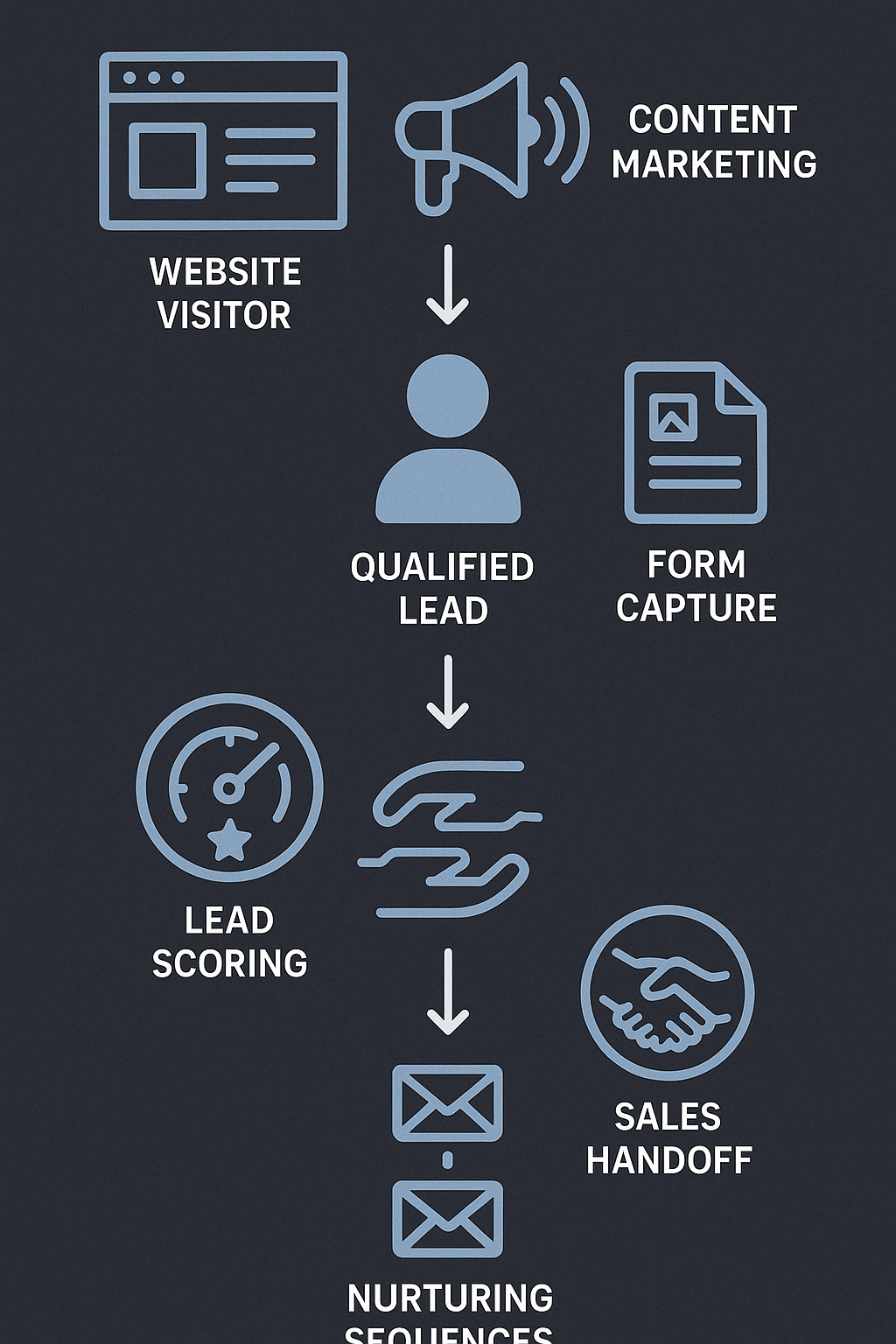
The b2b manufacturer lead generation process follows a logical progression that mirrors the buying journey of your industrial customers. Rather than a series of disconnected marketing activities, think of it as building a smooth pipeline:
First, you’ll define exactly who you’re trying to reach—both the companies and the individual decision-makers within them. This targeting prevents wasted effort on prospects who aren’t a good fit.
Next comes the attraction phase, where you implement strategies to drive relevant traffic through content marketing, SEO, industry-specific advertising, and other channels. When these visitors arrive, your optimized website captures their information through strategic forms and compelling offers.
The qualification stage is where many manufacturers stumble. Not every form submission deserves immediate sales attention. Implementing a scoring system based on both company fit and engagement level helps prioritize your follow-up efforts.
Nurturing these relationships happens through carefully crafted email sequences, valuable content, and timely outreach based on prospect behavior. When leads show sufficient interest and fit, they’re handed off to sales at precisely the right moment—not too early (when they’re not ready) or too late (when they’ve moved on to a competitor).
This entire process should be continuously analyzed and refined based on what’s working and what isn’t. The manufacturing companies seeing the best results treat lead generation as an ongoing system rather than a one-time campaign.
How can B2B manufacturers improve their sales lead generation?
If your current lead generation efforts aren’t delivering the results you need, several strategic adjustments can make a significant difference.
Start by refining your target audience definitions. Many manufacturers cast too wide a net, diluting their efforts across too many industries or company types. Narrowing your focus often counterintuitively leads to more qualified leads.
Your website likely needs attention too. Most manufacturing websites we review are built to showcase products rather than capture leads. Enhancing your conversion paths with strategic CTAs, simplified forms, and compelling offers can dramatically increase lead flow.
Developing truly valuable, industry-specific content remains one of the most effective improvements. Generic manufacturing content rarely converts well—your prospects want resources that address their specific challenges and applications.
The gap between marketing and sales teams causes major inefficiencies in many manufacturing organizations. Aligning these departments around shared definitions, goals, and processes ensures qualified leads don’t fall through the cracks.
A manufacturing marketing director we worked with shared this insight: “The biggest improvement we made was moving from a generic approach to a highly targeted strategy focused on specific industries and roles. This increased our lead quality dramatically and improved our conversion rates by over 40%.”
Many manufacturers also see significant improvements by leveraging customer testimonials more effectively, implementing marketing automation for consistent follow-up, and integrating their online and offline strategies rather than treating them as separate efforts.
Improvement is an ongoing process, not a one-time fix. The manufacturing companies seeing the best results are constantly testing new approaches, measuring outcomes, and refining their strategies based on real data.
At RED27Creative, we’ve helped dozens of manufacturing companies transform their lead generation processes from inconsistent and unpredictable to systematic and reliable. The manufacturers who succeed aren’t necessarily doing anything revolutionary—they’re just executing the fundamentals exceptionally well and adapting them to their specific market position.
Conclusion
I’ve spent the last 20 years watching the manufacturing landscape transform. One truth has become crystal clear: b2b manufacturer lead generation is now the decisive factor between thriving companies and those struggling to keep the lights on.
Remember when a firm handshake at a trade show and word-of-mouth referrals were enough? Those days are behind us. Today’s manufacturing buyers research extensively online before even considering a conversation with your sales team.
Throughout this guide, we’ve explored the essential ingredients for a lead generation system that actually works:
- Building a crystal-clear picture of your ideal customer (not just any customer—the right ones)
- Creating technical content that positions you as the expert they need
- Changing your website from a digital brochure into a lead-capturing machine
- Leveraging digital channels where your specific buyers actually spend time
- Developing nurturing processes that guide prospects through their buying journey
- Getting sales and marketing teams working together instead of pointing fingers
What I’ve seen work best isn’t choosing just one of these approaches—it’s weaving them together into a cohesive strategy custom to your specific manufacturing capabilities and markets.

Here at RED27Creative, we’ve helped manufacturers across Chicago, Geneva, Batavia, Aurora, St. Charles, Plainfield, Oswego, and Naperville transform their approach to finding and winning new business. We don’t just implement tactics—we build comprehensive systems that consistently deliver qualified leads who actually want what you make.
The most important thing to understand? Effective b2b manufacturer lead generation isn’t a one-and-done project. It’s an ongoing process of testing, measuring, and refining. The manufacturers seeing the best results are the ones who commit to this process, constantly improving based on real data about what’s working.
Ready to stop hoping the phone will ring and start proactively building a pipeline of ideal customers? Learn more about our B2B Lead Generation Services or reach out for a conversation about your specific manufacturing business challenges. We’ll help you build a custom strategy that turns strangers into partners who contribute to your company’s growth for years to come.

Kiel Tredrea
https://red27creative.comTop Marketing Agency • Web, SEO & Leads • RED27Creative