Why your brand needs both video production and marketing to survive

Why Video Production and Marketing Are No Longer Optional for Brand Survival
Video production and marketing together form the backbone of every high-performing brand strategy in 2026. If your business isn’t investing in both, you’re likely invisible to the buyers you need most.
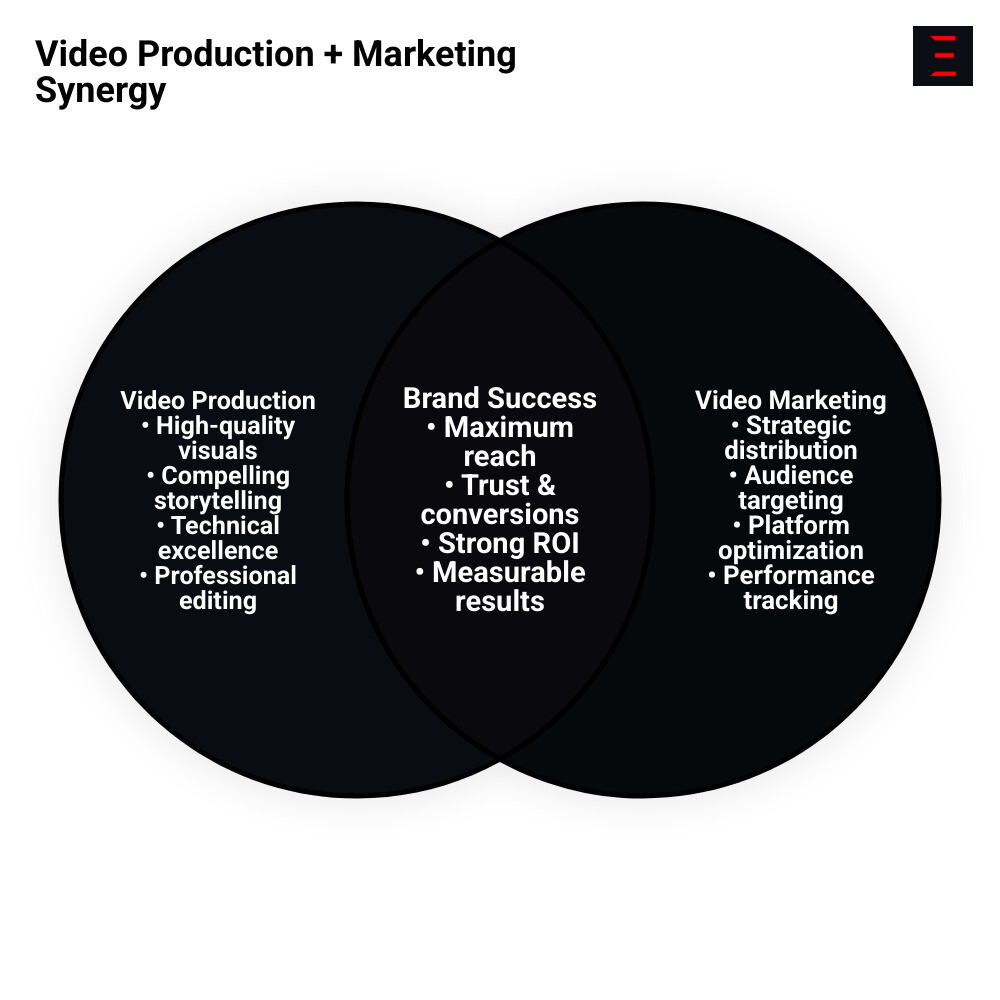
Here’s a quick breakdown of what each term means and why the combination matters:
| Video Production | Video Marketing | |
|---|---|---|
| What it is | Creating the video (scripting, filming, editing) | Distributing and promoting the video strategically |
| Primary focus | Quality, storytelling, technical execution | Reach, targeting, platform optimization, ROI |
| Key output | A finished, professional video asset | Measurable business results: leads, sales, traffic |
| Works best when | Paired with a clear marketing strategy | Supported by high-quality production |
The numbers make it hard to argue against. Social posts with video generate 1,200% more shares than text and image posts combined. 87% of consumers say video has directly convinced them to make a purchase. And 90% of marketers agree video delivers a strong return on investment.
But here’s the problem most brands run into: they invest in one without the other.
A beautifully produced video with no distribution strategy is a wasted asset. A well-promoted video with poor production quality destroys trust before it builds it. Both sides of the equation must work together.
I’m Kiel Tredrea, founder and president of RED27Creative, and over 20 years of building results-driven marketing systems for B2B and service-based businesses, I’ve seen how integrating video production and marketing into a unified strategy transforms brand visibility and lead generation. This guide will walk you through exactly how to do that.
Easy video video production and marketing word list:
Defining the Dynamic Duo: Video Production and Marketing
To succeed in the modern digital landscape, we have to stop looking at video production and marketing as two separate line items. They are a dynamic duo—one provides the “what” and the other provides the “how.” According to The State of Video Marketing, video continues to be the most effective medium for reaching audiences. Without high-quality production, your marketing lacks substance; without strategic marketing, your production lacks an audience.
Think of it like building a high-performance engine. Production is the engineering that goes into the pistons, valves, and cylinders. Marketing is the fuel and the driver that ensures the car actually reaches the finish line. In cities like Naperville and Geneva, IL, where competition for attention is fierce, this synergy is what makes local brands stand out.
The Creative Engine of Production
At its core, marketing video production is about the technical and creative execution of your story. It involves the heavy lifting: scripting, lighting, sound design, and visual story development.
When we talk about production, we are talking about technical precision. High-definition visuals and crisp audio are non-negotiable for reflecting brand authority. If a viewer can’t hear you or if the lighting looks like it was filmed in a basement, they won’t trust your professional services. Quality production fosters trust and reflects the professionalism of your brand.
The Strategic Reach of Marketing
Once the video is exported, the work of seo video marketing begins. This is where we focus on audience targeting and platform optimization. We don’t just post a video and hope for the best; we use data to ensure the right eyes see the content at the right time.
Effective marketing involves choosing the right channels—whether that’s YouTube, LinkedIn, or Instagram—and optimizing metadata so search engines can find you. By tracking key metrics like ROI and engagement, we ensure that every dollar spent on production translates into measurable business growth.
Why Video is Essential for Modern Brand Growth
In May 2026, video isn’t just a “nice to have”—it is the primary way consumers interact with brands. Research from Wyzowl’s Video Marketing Statistics shows that people spend an average of 19 hours per week watching videos online. If you aren’t showing up in those 19 hours, your competitors definitely are.
Video is the second most popular content type on social media for increasing engagement. It allows us to convey complex information quickly and emotionally, which is something text simply cannot do. Whether you are a home service provider in Aurora or a tech firm in Chicago, marketing visual content is your most powerful tool for growth.
Building Trust Through Authenticity
People don’t hire businesses they don’t trust. Video allows you to build that trust faster than any other medium by showing the real faces, spaces, and work behind your brand. It pulls back the curtain on your operations and humanizes your company.
Using digital marketing videography to capture customer testimonials or behind-the-scenes footage creates a level of transparency that stock photos can’t match. When a potential client in St. Charles sees your team in action, they feel a sense of confidence before they even pick up the phone.
Boosting Conversions and SEO
The impact of video on your bottom line is quantifiable. Including a video on a landing page can improve conversion rates by up to 80%. Furthermore, search engines like Google prioritize video-rich domains because they keep users on the page longer.
By integrating video into your social media video creation ultimate guide and website strategy, you signal to search engines that your content is valuable. This leads to higher rankings and more organic traffic, turning your website into a 24/7 lead-generation machine.

The Core Pillars of Professional Video Production
Creating a video that actually converts requires a structured process. It’s not just about hitting “record” on a smartphone. We follow a rigorous workflow that includes pre-production, production, and video post production.
Pre-production is arguably the most critical phase. This is where we define the objective, write the script, and create storyboards. Without a clear plan, you risk wasting time and budget on footage that doesn’t serve your marketing goals. To truly win, you must master digital marketing video editing to ensure the final product is polished and purposeful.
Best Practices for High-Quality Video Production and Marketing
To ensure your videos look professional, we recommend following these industry-standard best practices:
- Three-Point Lighting: Use a key light, fill light, and backlight to give your subject depth and clarity.
- High-Quality Audio: Viewers will forgive average visuals, but they will click away immediately if the audio is poor.
- Rule of Thirds: Position your subject off-center to create a more balanced and engaging shot.
- Mobile Accessibility: Always include captions. Many users watch videos on social media with the sound off.
- Color Grading: Professional color adjustments set the mood and ensure your brand colors look consistent.
Essential Video Types for 2026
Not all videos are created equal. Depending on your goals, you should utilize different formats:
- Explainer Videos: 96% of consumers watch these to learn about a product. They are highly effective for simplifying complex services.
- Social Clips: Short, punchy videos designed for quick consumption and high shareability.
- Testimonials: Real stories from real customers that build social proof and trust.
- Product Demos: Showcasing features and benefits to solve specific consumer pain points.
- Brand Stories: High-level narratives that establish your company’s mission and values.
Developing an Effective Video Marketing Strategy
A successful strategy starts with deep audience research. You need to know who you are talking to before you decide what to say. We use surveys, social analytics, and customer interviews to map out your target demographics and their challenges.
Once we understand the audience, we define clear KPIs (Key Performance Indicators). Are we looking for brand awareness, lead generation, or direct sales? This alignment ensures that your creative video marketing efforts are always focused on the buyer’s journey.
Choosing the Right Video Production and Marketing Channels
Different platforms require different approaches. YouTube is the second-largest search engine in the world and is essential for long-form, educational content. On the other hand, Instagram video marketing and TikTok are better suited for short, engaging clips that build brand personality.
For B2B brands in Plainfield or Oswego, LinkedIn is the gold standard for establishing authority. We help you choose the right mix of owned, earned, and paid media to maximize your reach across all relevant channels.
Measuring Success and ROI
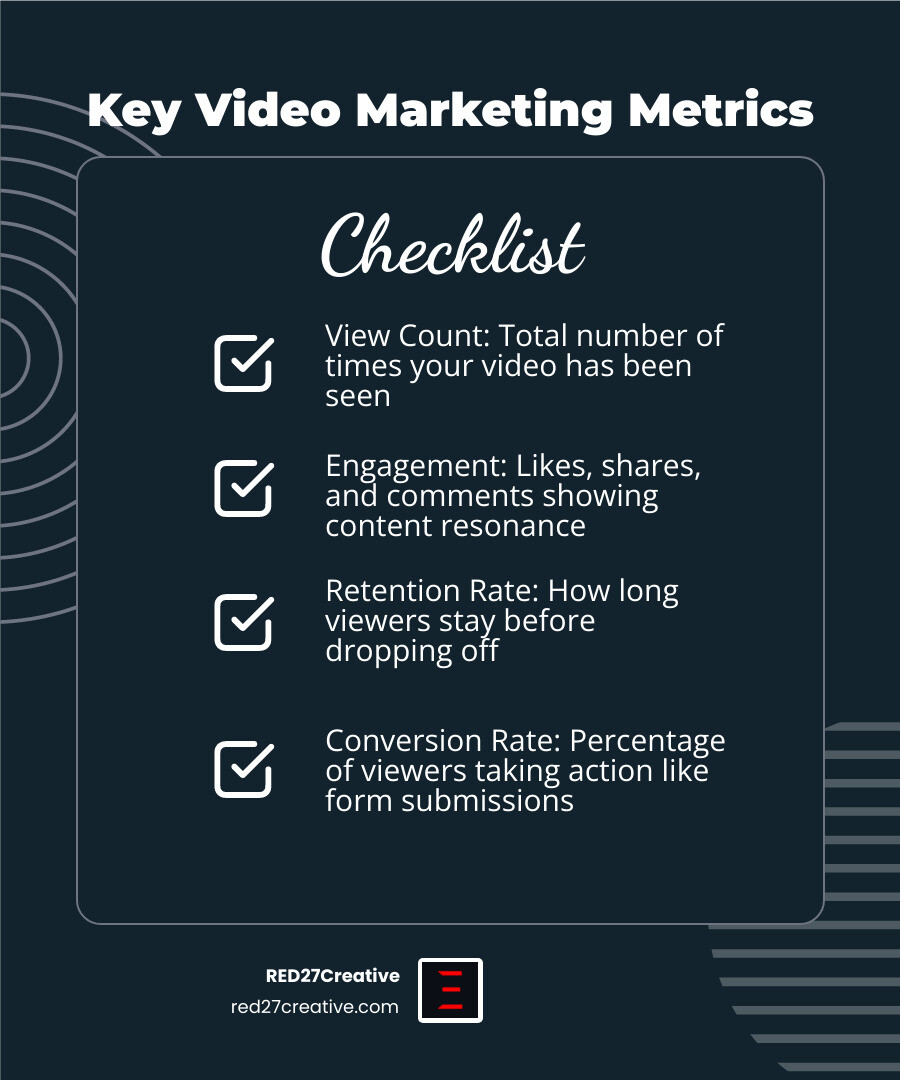
You can’t manage what you don’t measure. We track a variety of metrics to evaluate the performance of your campaigns:
- View Count: The total number of times your video has been seen.
- Engagement: Likes, shares, and comments that indicate how well the content resonates.
- Retention Rate: How long people stay tuned before dropping off.
- Conversion Rate: The percentage of viewers who take a specific action, like filling out a contact form.
By analyzing this data, we can refine your strategy and ensure you are finding your perfect video production partner to achieve long-term success.
Navigating Challenges in Video Production and Marketing
The two biggest hurdles brands face are consistency and budget. Producing high-quality video is resource-intensive, and many businesses struggle to keep up with the demand for fresh content. However, the risk of being “safe” and doing nothing is far greater in 2026.
We help businesses overcome these challenges by creating scalable systems. This might mean filming multiple videos in a single day (batching) or repurposing one long-form video into dozens of smaller social assets.
Overcoming Production Bottlenecks
Modern technology has made it easier to streamline the production process. Cloud collaboration tools allow creative and marketing teams to share feedback in real-time, eliminating the need for long email chains. AI-assisted editing tools can also speed up the rough-cut process, allowing us to focus more on the strategic storytelling.
Solving Distribution Gaps
Even the best video will fail if no one sees it. We solve distribution gaps by utilizing cross-channel promotion. This includes embedding videos in email newsletters, using them in paid ad campaigns, and optimizing them for SEO. By amplifying your content through paid media, we ensure your message reaches a wider, more targeted audience.
Frequently Asked Questions about Video Production and Marketing
What is the difference between video production and video marketing?
Video production is the technical and creative process of creating a video, including scripting, filming, and editing. Video marketing is the strategic process of distributing that video across various digital channels to reach a specific audience, drive engagement, and achieve measurable business goals like leads or sales.
Why is video content essential for modern marketing strategies?
In 2026, video is the most engaging medium, generating 1200% more shares than text and images combined. It builds trust faster than any other format, with 87% of consumers reporting that video convinced them to buy. It also significantly improves SEO and boosts website conversion rates by up to 80%.
How do you measure the ROI of a video campaign?
To evaluate performance, track key metrics such as view count, play rate, and social engagement. However, the most critical indicators of ROI are conversion rates, click-through rates (CTR), and the impact on the sales pipeline. Advanced analytics help determine how video content influences the customer journey from awareness to final purchase.
Can I do video production in-house?
While many businesses use smartphones for basic social clips, professional video production and marketing usually requires specialized equipment and expertise. High-end production ensures your brand looks authoritative and trustworthy, which is vital for high-stakes B2B and service industries.
How long should marketing videos be?
For social media, aim for 30 to 90 seconds. For educational or YouTube content, 5 to 10 minutes is often appropriate. The key is to front-load the most important information to capture attention within the first three seconds.
Conclusion
At RED27Creative, we don’t just make videos; we build growth engines. Based in Geneva, Illinois, we serve businesses across Batavia, Aurora, and the greater Chicago area, helping them navigate the complexities of video production and marketing. Our team combines 20 years of strategic consulting with data-driven results to ensure your brand doesn’t just survive—it thrives.
Ready to talk about your MARKETING STRATEGY? Contact us now for a full analysis of your current plan. Find out how you can reach your goals! Let’s Build Something Great Together. Have a project in mind or need guidance? Our team is ready to help you take the next step.

Kiel Tredrea
https://red27creative.comTop Marketing Agency • Web, SEO & Leads • RED27Creative